Artwork
Hunting trophies and a dog
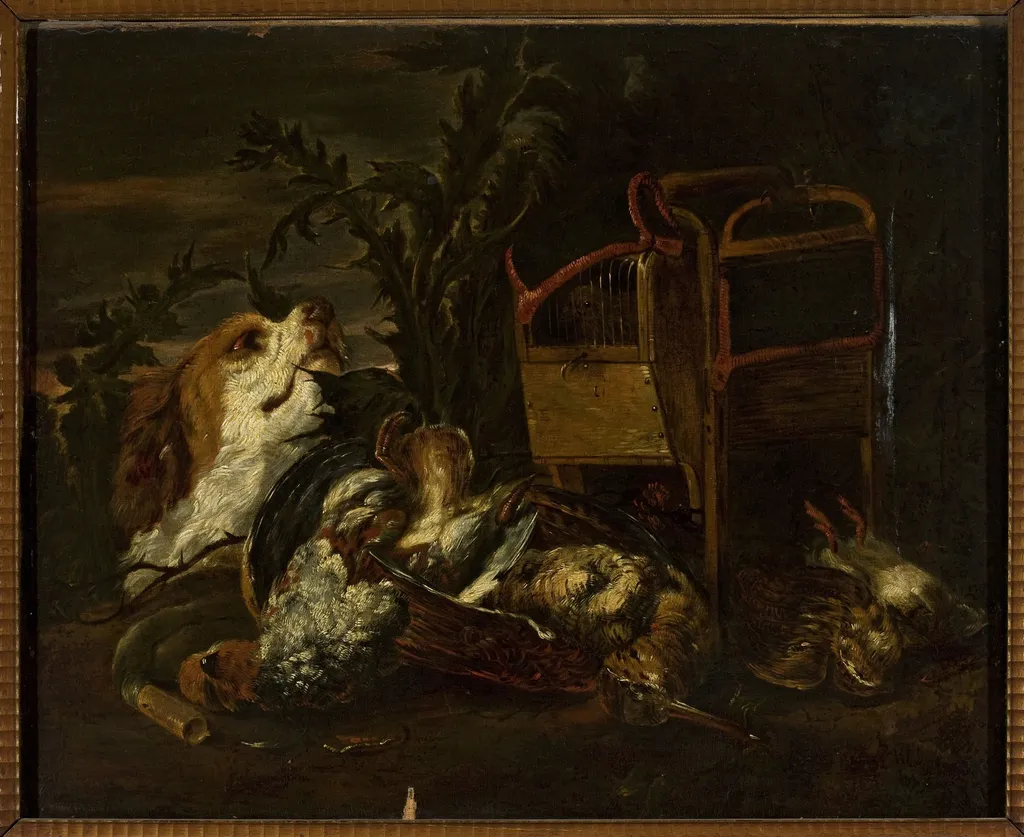
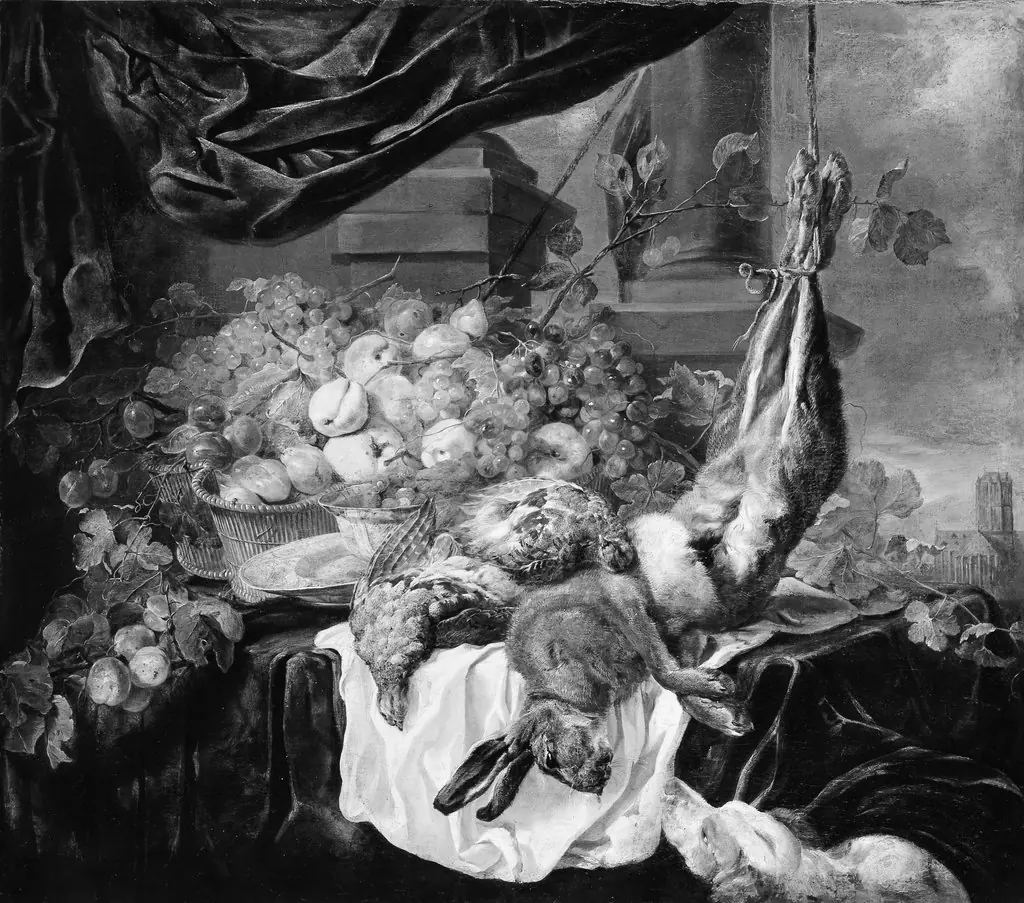
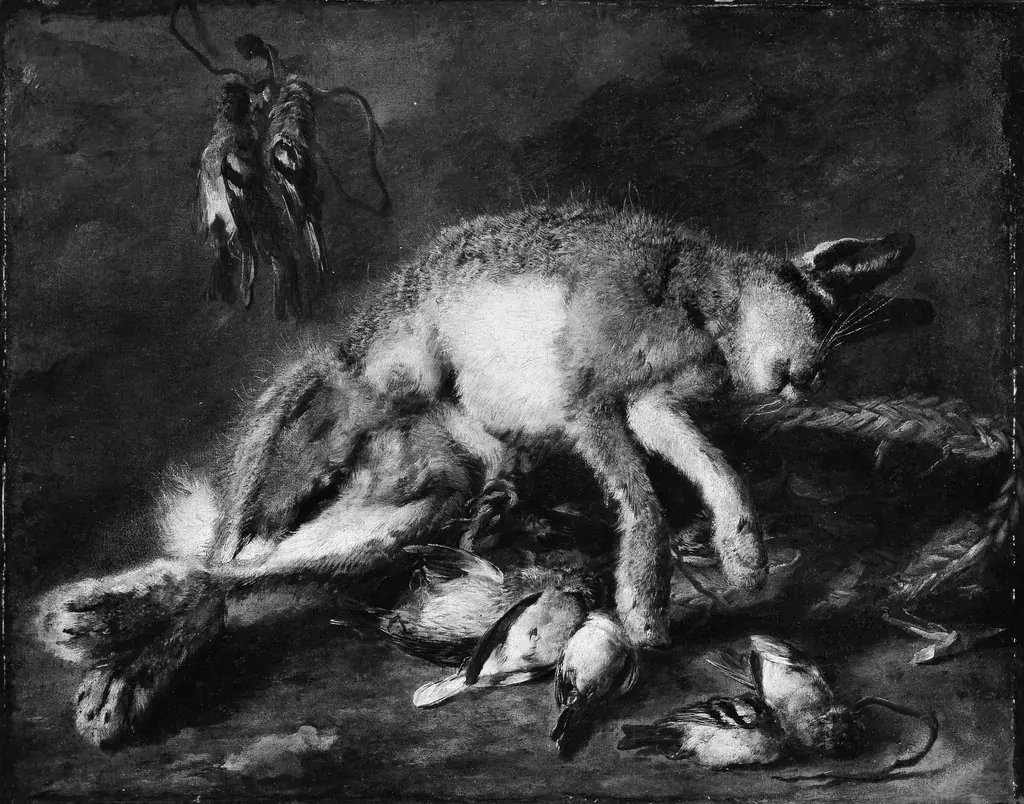
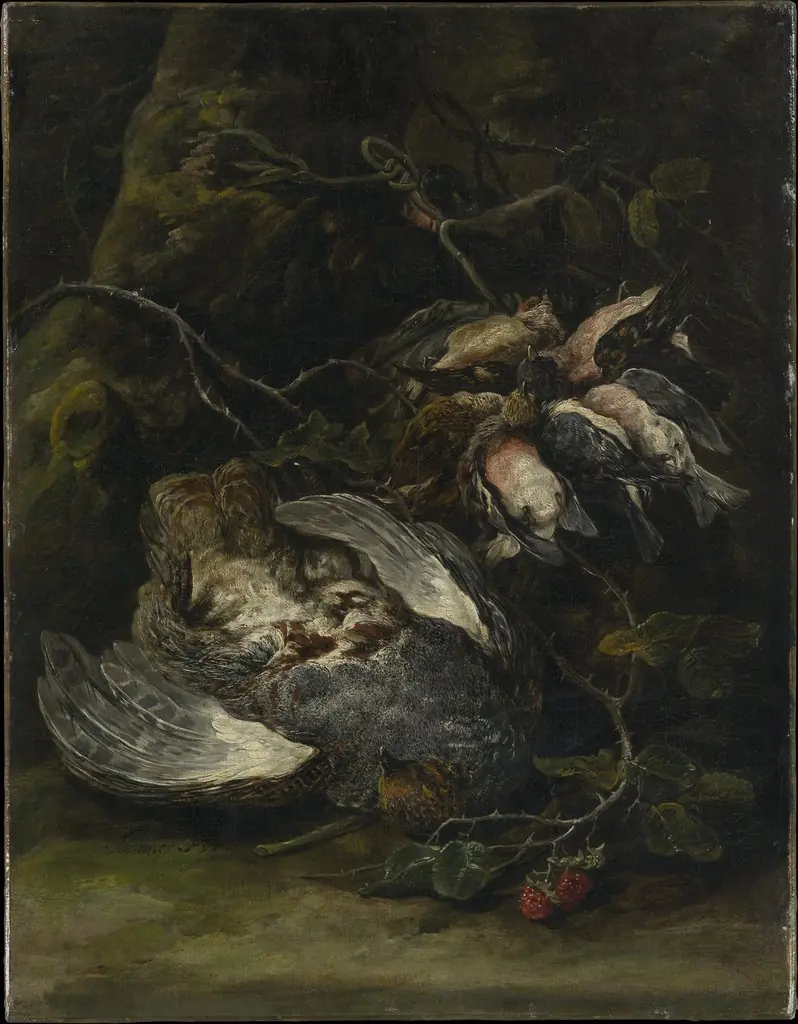
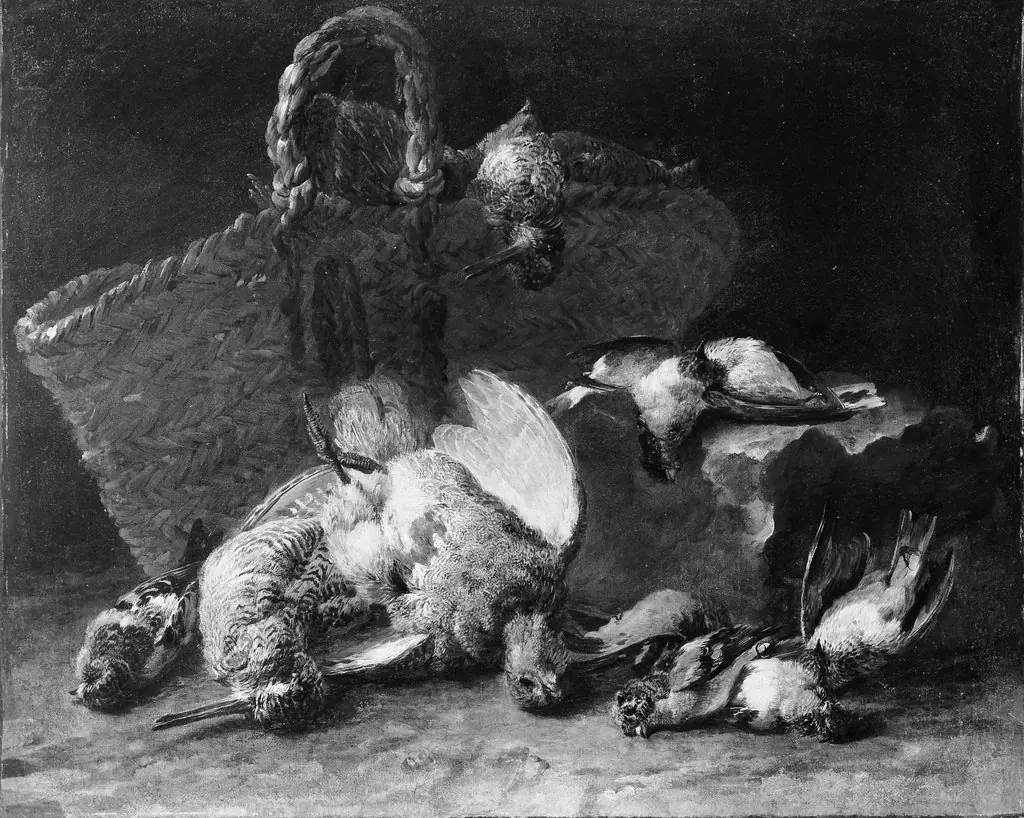
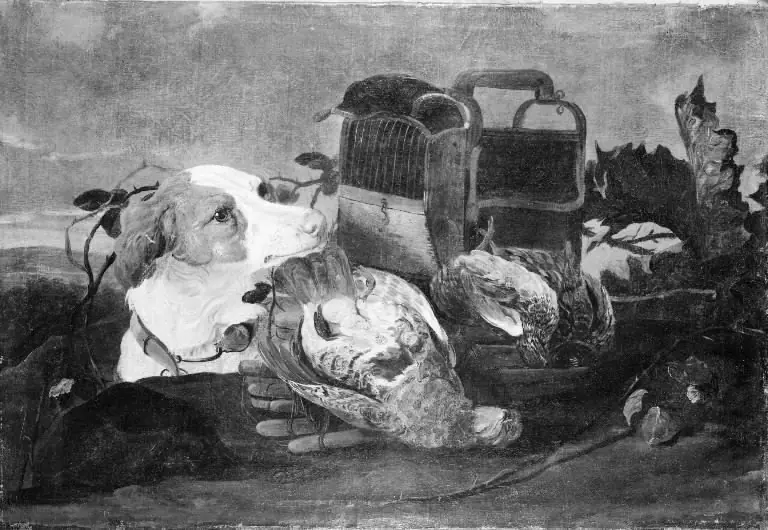
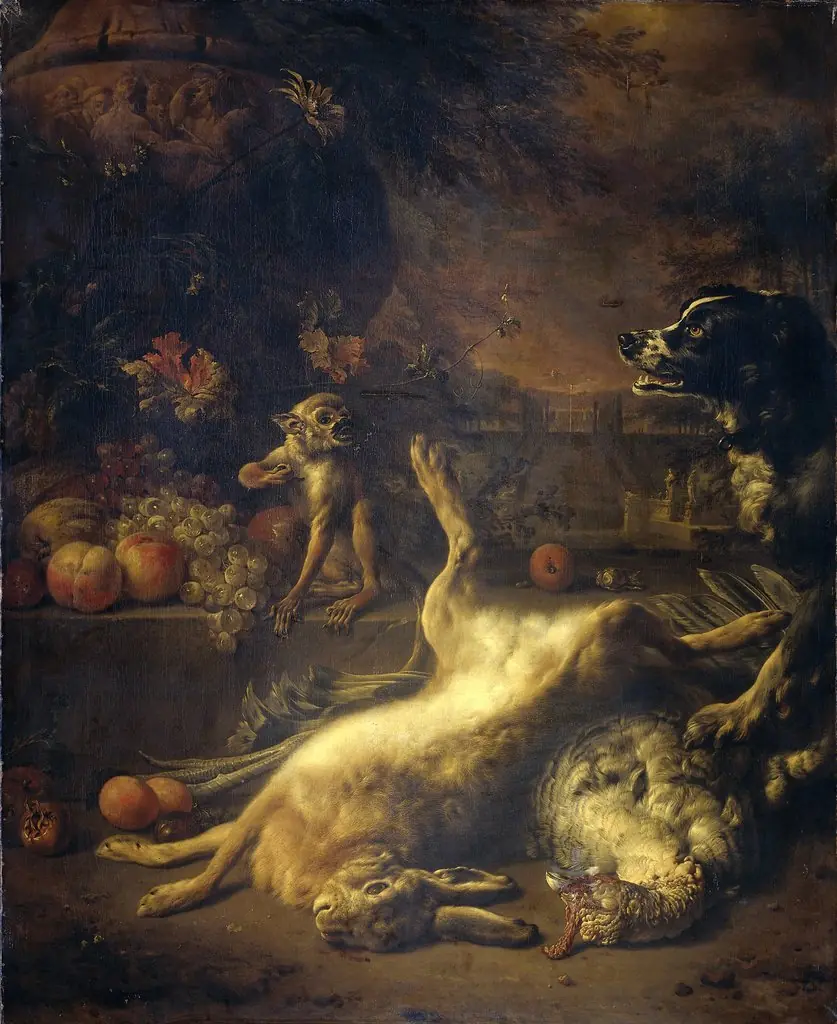
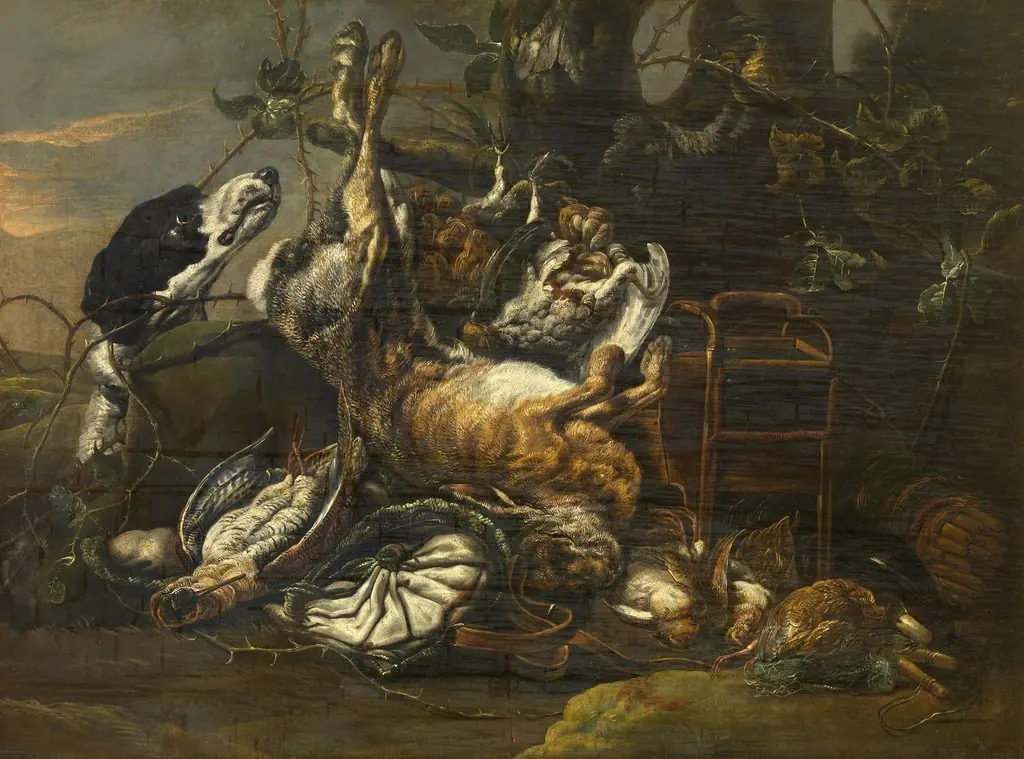
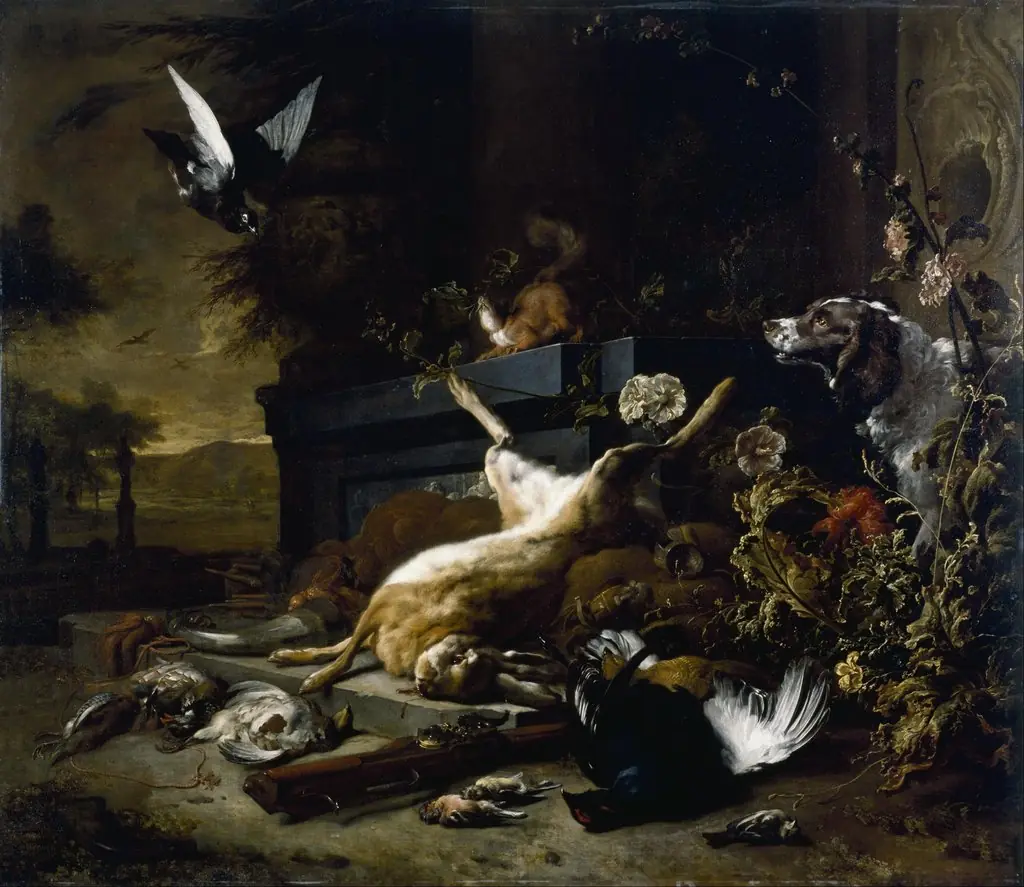
Hunting trophies and a dog is an oil painting by the Flemish Baroque painting artist Jan Fyt. It dates from 1658 and is held in the collection of the National Museum in Warsaw.
About this work
Overview
The painting is part of the National Museum in Warsaw’s collection, reflecting Fyt’s reputation for rendering animals and hunted prey with precision.
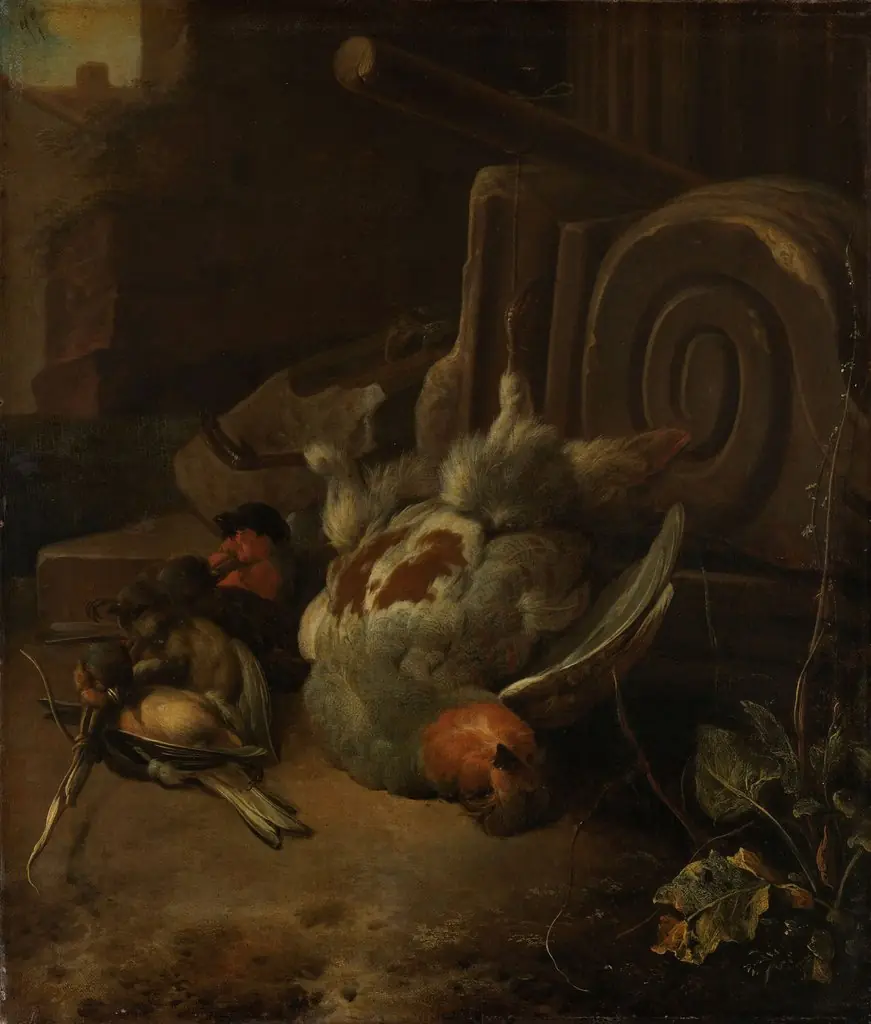
Painted in 1658 by Flemish artist Jan Fyt, this oil on canvas work belongs to the still life tradition of the Baroque period. It presents a quiet aftermath of the hunt, arranging game and a loyal hound in a composition that emphasizes naturalism and tactile detail. The painting is part of the National Museum in Warsaw’s collection, reflecting Fyt’s reputation for rendering animals and hunted prey with precision.
Subject & Meaning
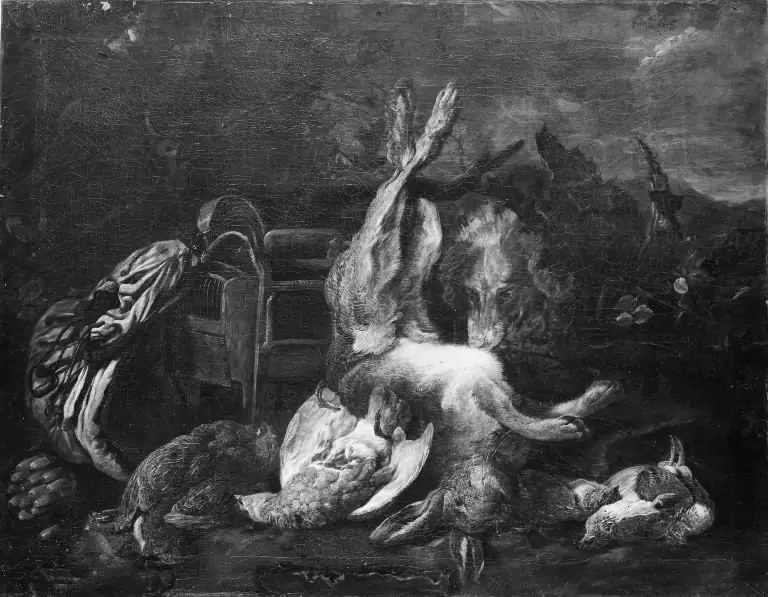
The scene depicts a rooster, rabbit, and pheasant laid out on the ground, alongside a brown-and-white dog that gazes toward the prey. These elements suggest the conclusion of a hunt, not its action. The presence of a birdcage with a tied red rope hints at domesticated birds, contrasting with the wild game. The dog’s alert posture implies loyalty and readiness, reinforcing themes of control, acquisition, and the boundary between wild and tamed nature.
Technique & Style
Fyt employs chiaroscuro to heighten the three-dimensionality of fur, feathers, and skin. Light falls selectively, illuminating textures with remarkable fidelity—each feather’s edge, each strand of dog hair is rendered with careful observation. The dark, unbroken background isolates the subjects, focusing attention on their material presence. The arrangement is neither chaotic nor formal, but deliberately composed to evoke quiet stillness after movement.
History & Provenance
Created in 1658, the painting entered the National Museum in Warsaw’s collection in the 20th century. Its earlier ownership is undocumented, but its style aligns with Fyt’s known output during his mature period in Antwerp. As a leading Flemish still life painter of the mid-17th century, Fyt’s works were sought after by collectors across Europe, though this particular piece’s journey before its arrival in Warsaw remains unclear.
Context
Fyt worked within a Flemish tradition that elevated hunting still lifes as symbols of wealth, skill, and control over nature. Unlike Dutch counterparts who often emphasized abundance, Flemish artists like Fyt infused their scenes with a sense of solemnity and physical presence. The inclusion of a domesticated cage alongside wild game reflects broader cultural attitudes toward ownership and the natural world in Habsburg-ruled territories.
Legacy
Fyt’s attention to biological detail influenced later animal painters in Northern Europe. While not widely exhibited, this painting exemplifies his technical mastery and contributes to the understanding of how Baroque still lifes conveyed more than mere decoration—they captured the quiet gravity of life, death, and human interaction with the animal realm.
Artist & collection
Artist
Jan Fijt, Jan Fijt or Johannes Fijt (or Fyt) (19 August 1609 – 11 September 1661) was a Flemish Baroque painter, draughtsman and etcher.