Artwork
Blumenstück
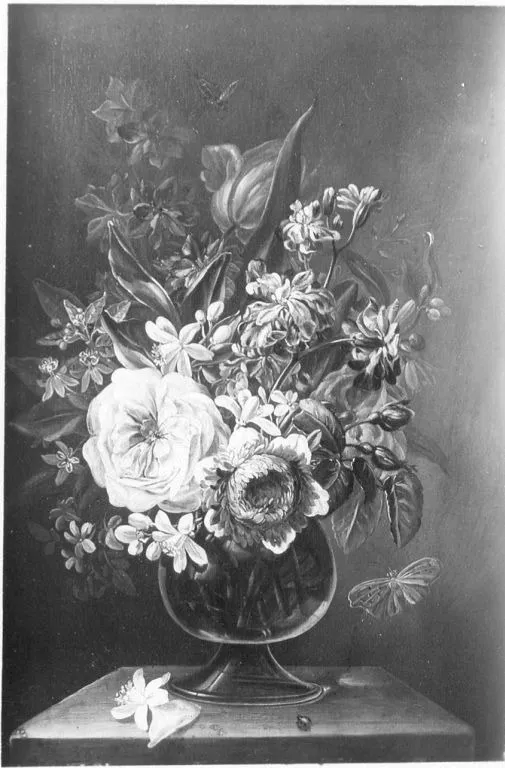
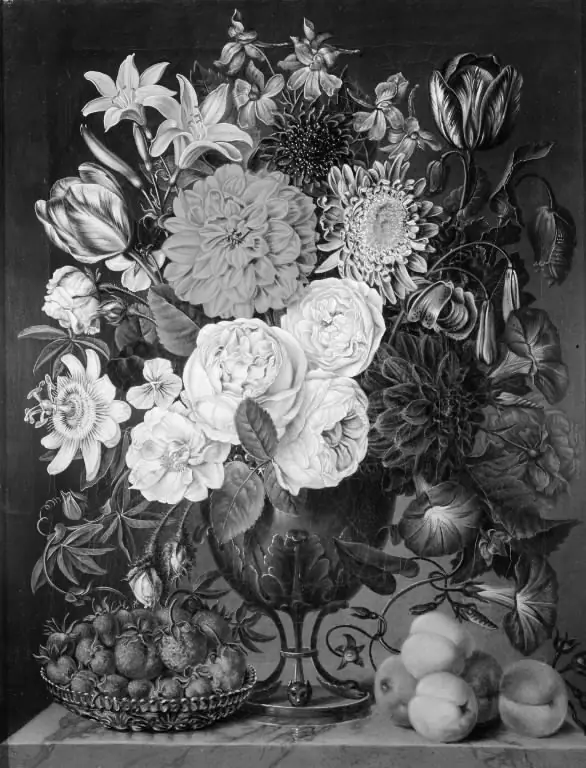
Blumenstück is an unspecified painting by the Rococo painting artist Jan Kašpar Hirschely. It dates from 1719 and is held in the collection of the Bavarian State Painting Collections.
About this work
Overview
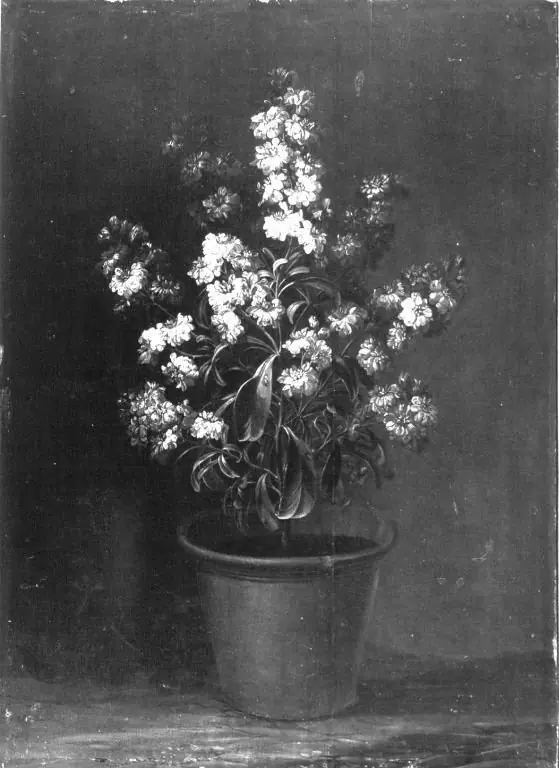
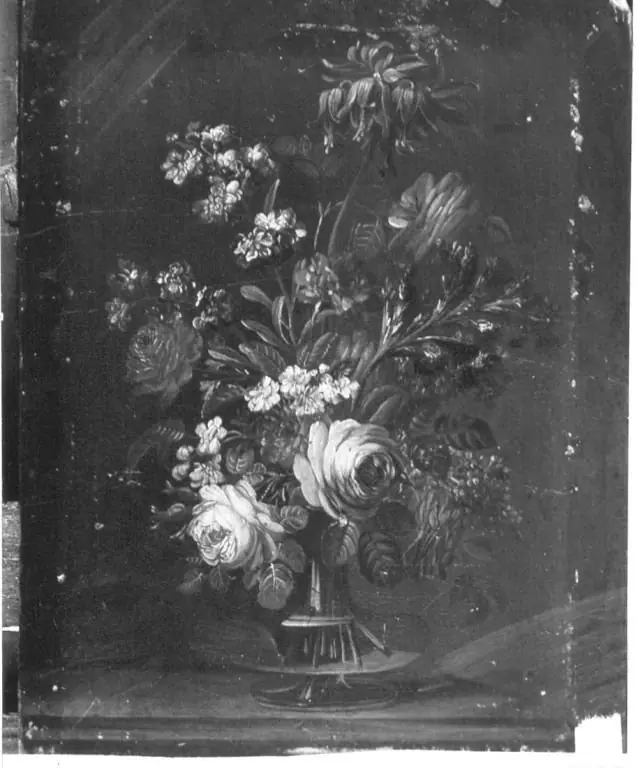
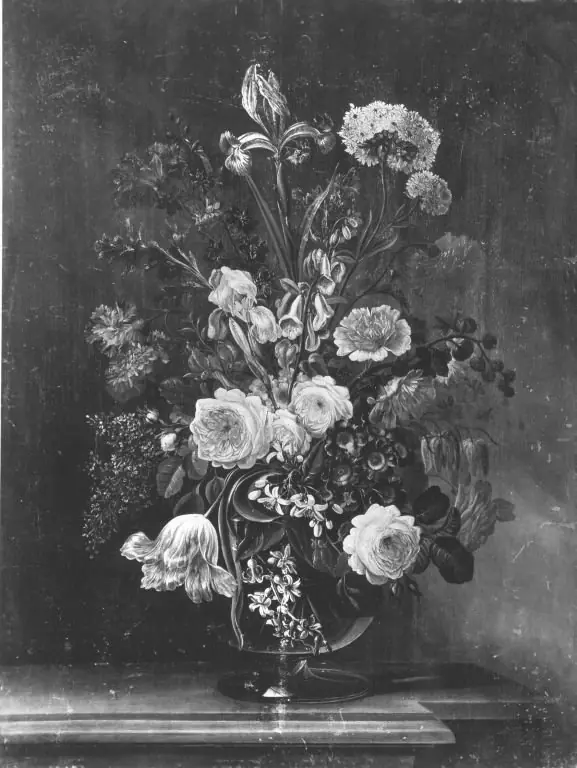
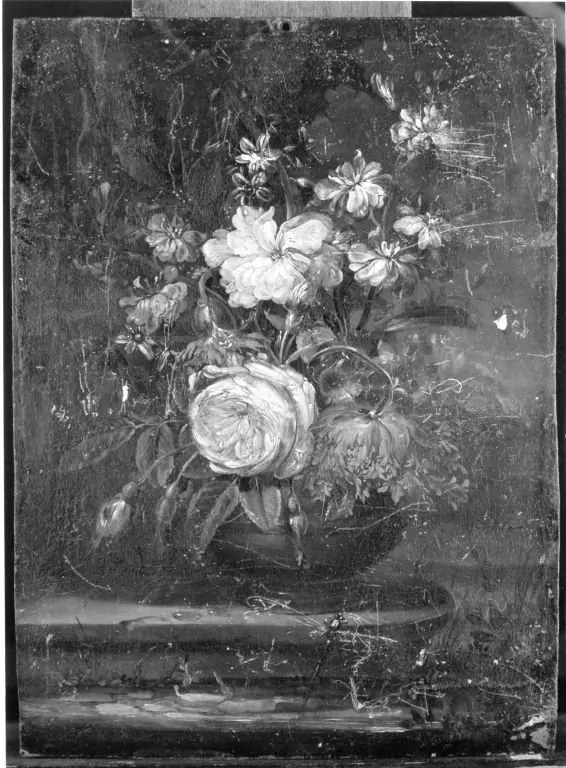
Blumenstück, a still‑life canvas executed in 1719 by Jan Kašpar Hirschely, presents a solitary floral arrangement within a tall glass vessel. The work is part of the collection of the Alte Pinakothek in Munich, where it is displayed among other Baroque period pieces.
Subject & Meaning
The composition centers on a loosely gathered bouquet of white and pale blossoms—roses, daisies, and unopened buds—interspersed with green foliage. A few stems extend beyond the rim of the vase, while a delicate butterfly hovers nearby, suggesting a fleeting moment of natural vitality captured in paint.
Technique & Style
Hirschely renders the petals with meticulous attention to the play of light, achieving a near‑photographic realism. The dark, unadorned background heightens the contrast, allowing the luminous whites to dominate the visual field. This handling of illumination reflects the chiaroscuro approach popular among early‑18th‑century painters.
History & Provenance
Created in 1719, the painting entered the Alte Pinakothek’s holdings at an unspecified date, where it has remained a representative example of Central European still‑life painting. Its provenance prior to museum acquisition is not extensively documented.
Context
During the early 1700s, still‑life works often served both decorative and symbolic purposes, celebrating the transience of beauty. Hirschely’s choice of a simple vase and natural elements aligns with contemporary trends that emphasized realism and the study of light over elaborate allegory.
Artist & collection

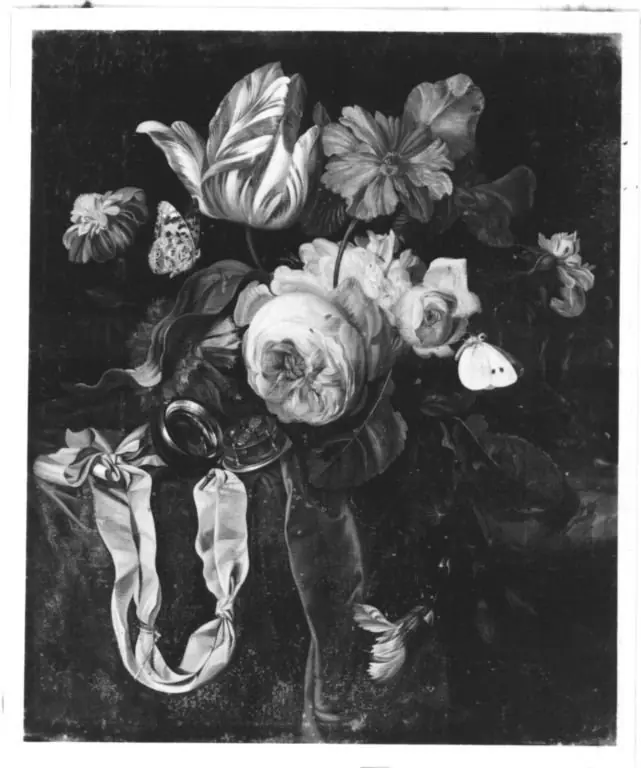 Flower still life with a watch on a partly draped marble ledge
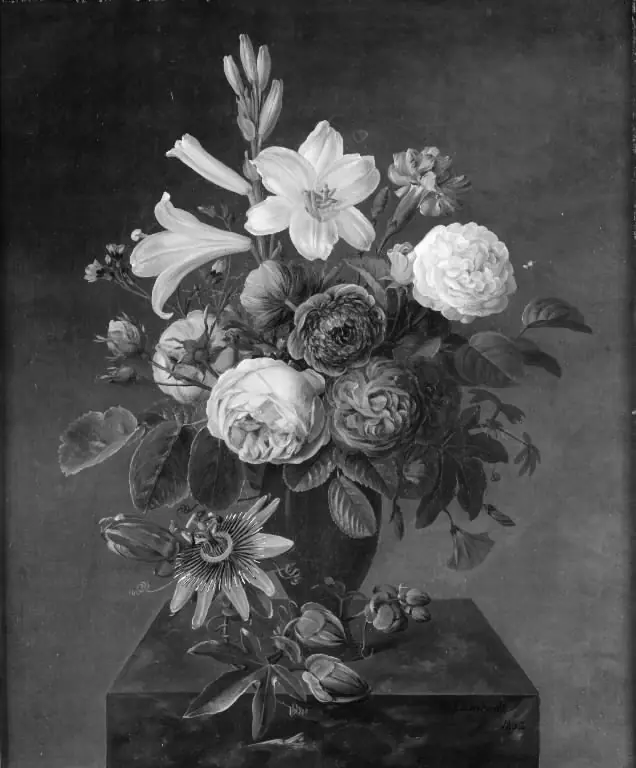 En vase med blomster
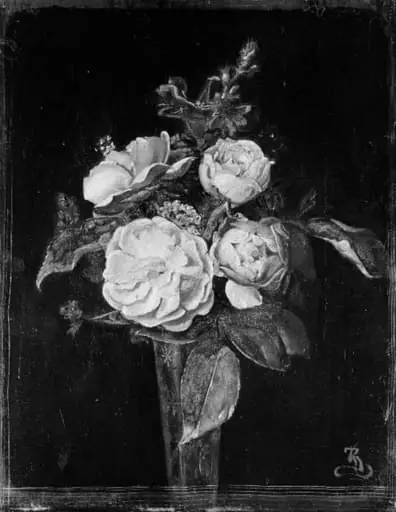 Roser og reseda i et blomsterglas
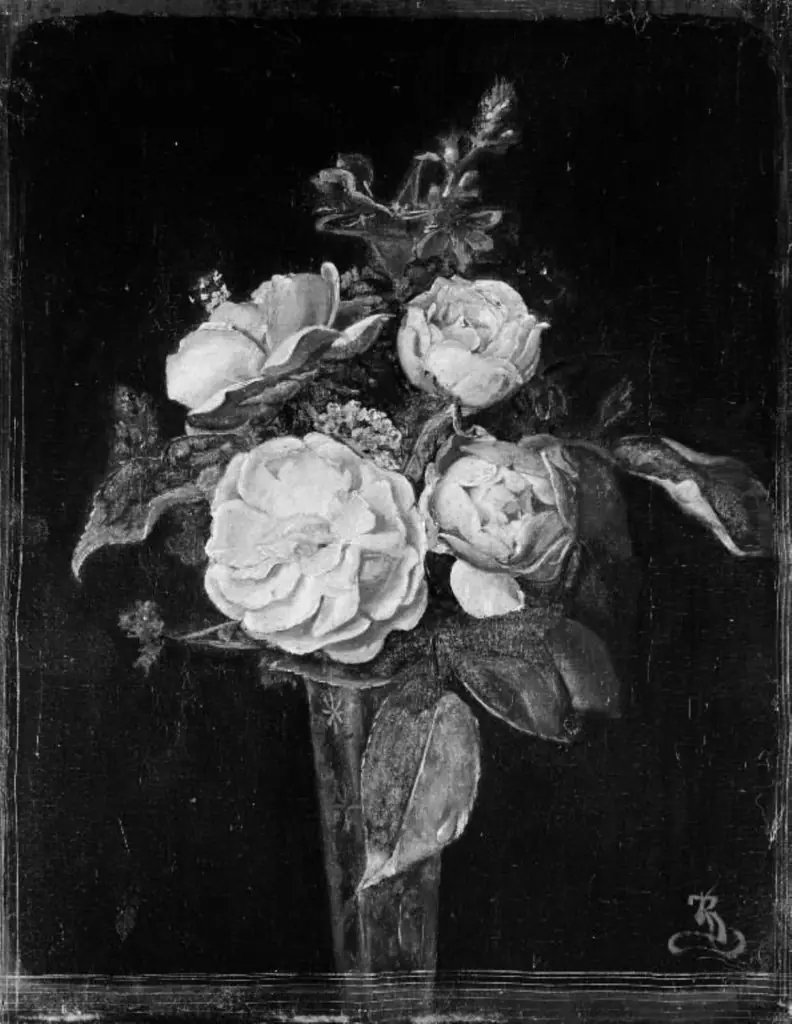 Roser og reseda i et blomsterglas
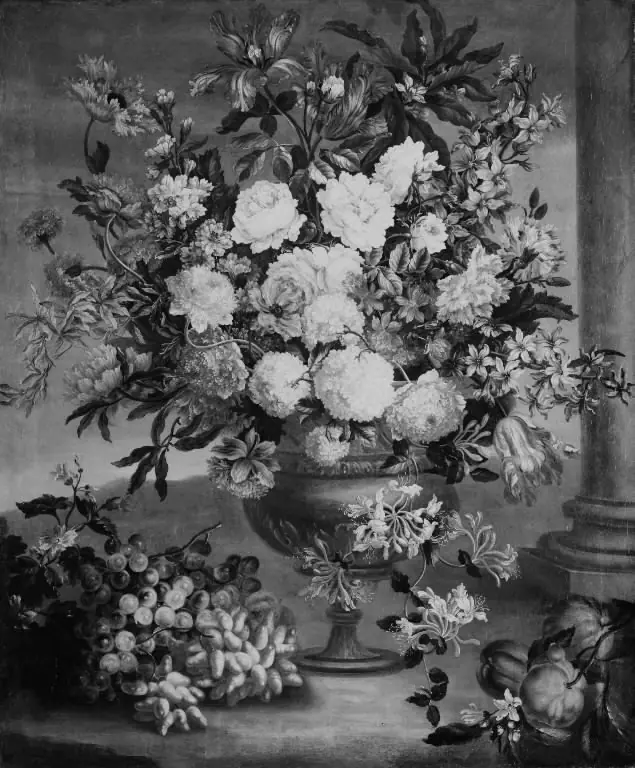 Stor blomsterbuket i en vase. I forgrunden frugter
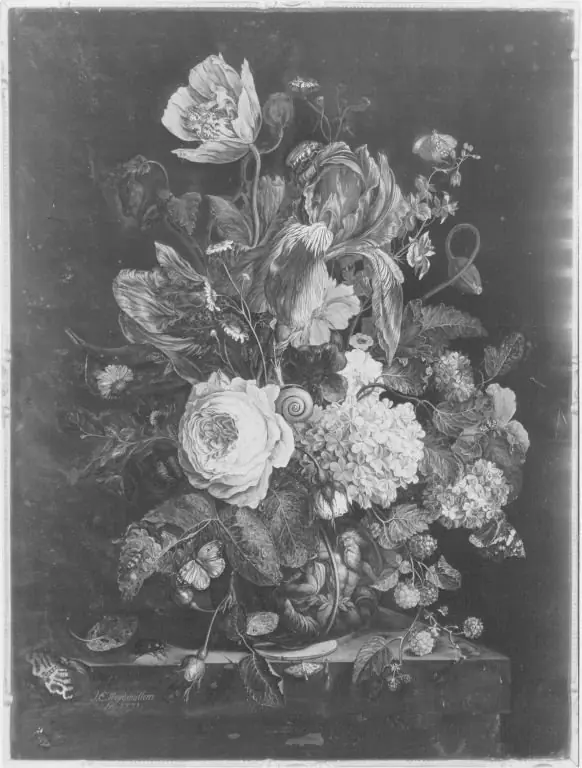 Blumenstillleben
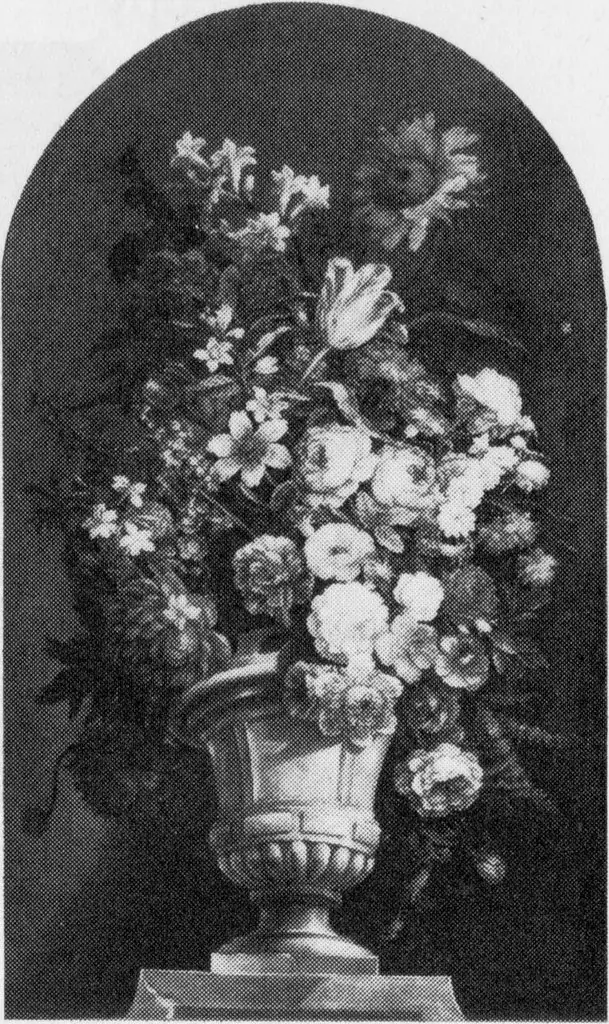 Schoorsteenstuk met bloemen in een vaas
 Blomster i en trefodet vase og en skål med jordbær