Artwork
Blumenstück
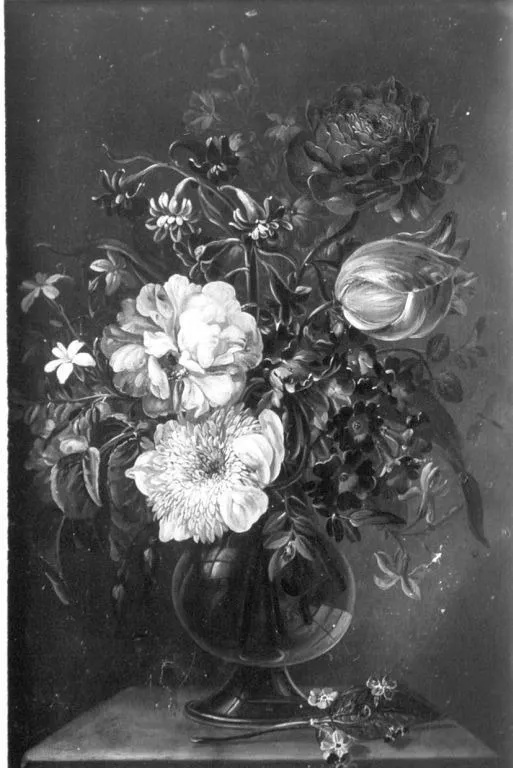
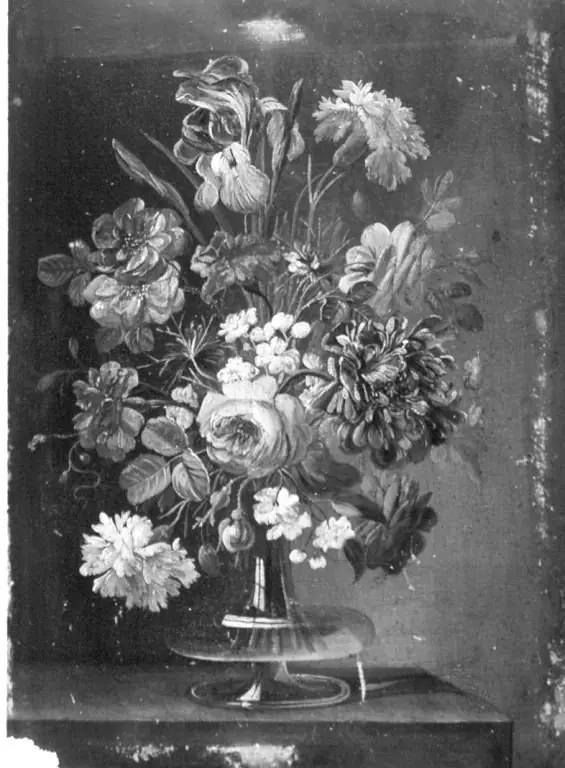
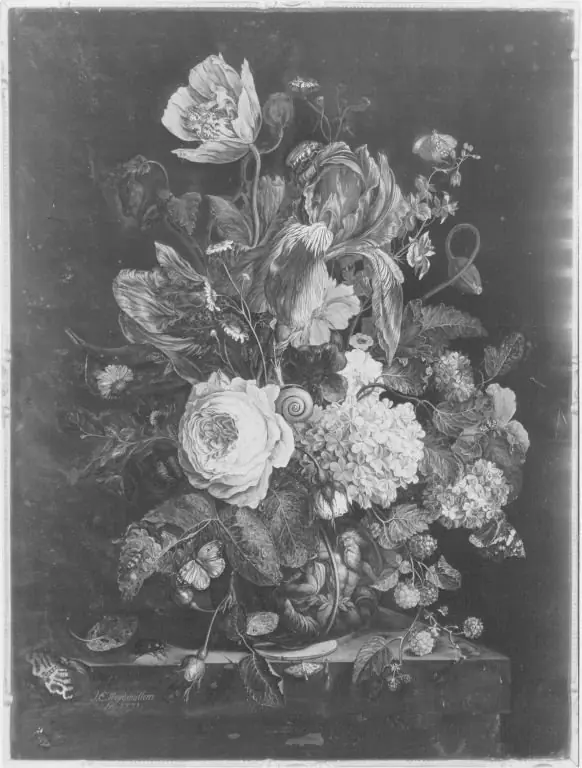
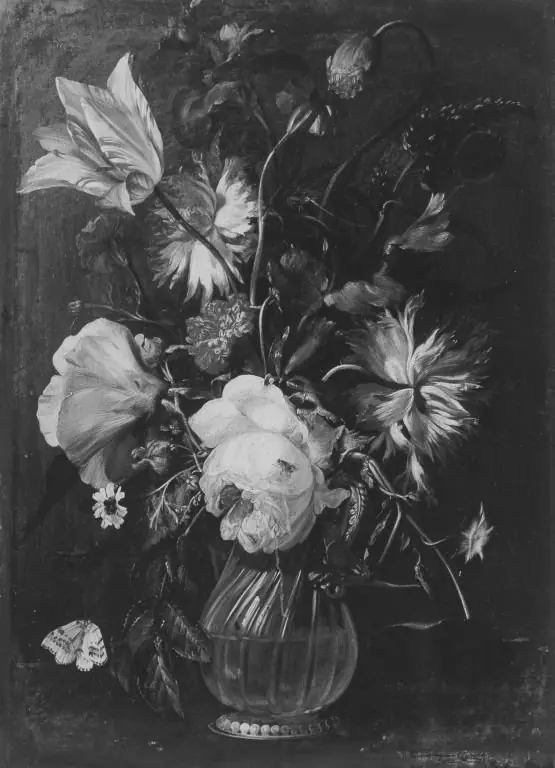
Blumenstück is an unspecified painting by the Rococo painting artist Jan Kašpar Hirschely. It dates from 1719 and is held in the collection of the Bavarian State Painting Collections.
About this work
Overview
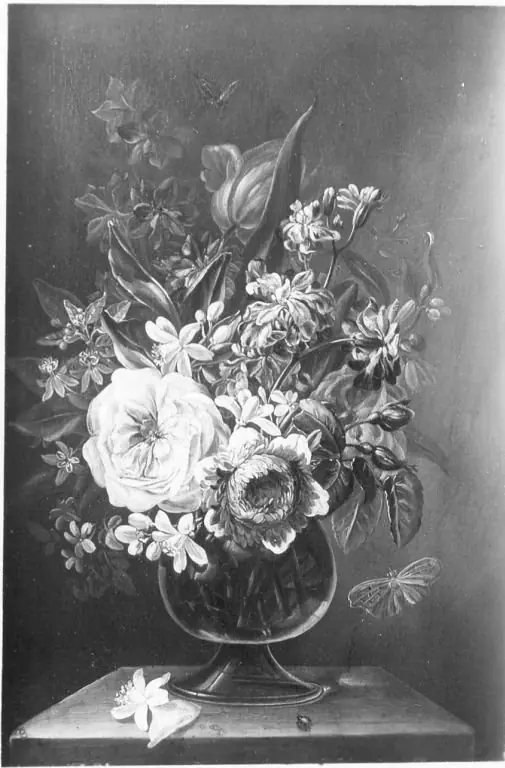
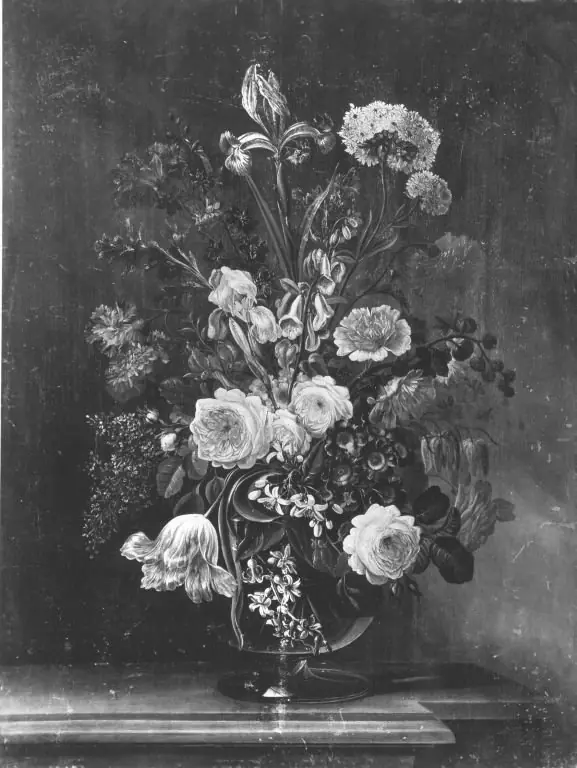
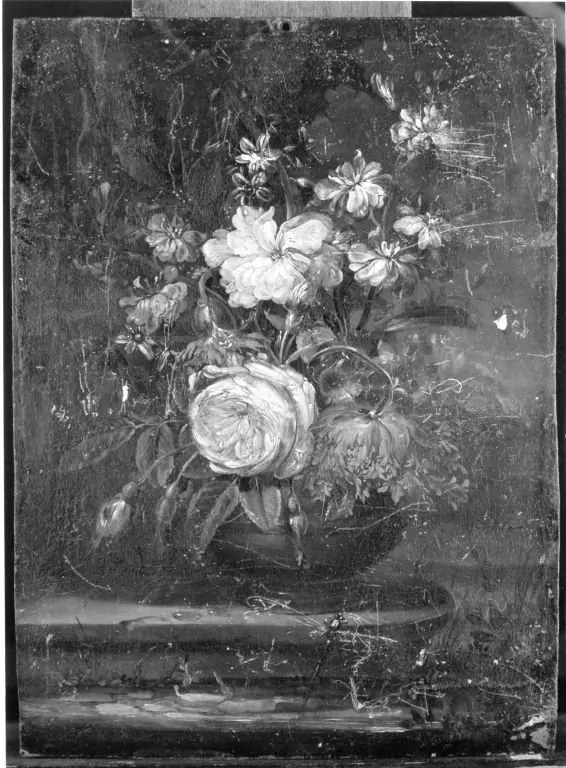
Painted in 1719 by Jan Kašpar Hirschely, this still life presents a carefully composed bouquet of flowers in a simple ceramic vase.
Painted in 1719 by Jan Kašpar Hirschely, this still life presents a carefully composed bouquet of flowers in a simple ceramic vase. Set against a deep, unmodulated background, the arrangement emphasizes quiet elegance over ornate display. The work is part of the Alte Pinakothek’s collection in Munich, where it remains as a representative example of early 18th-century Central European floral painting.
Subject & Meaning
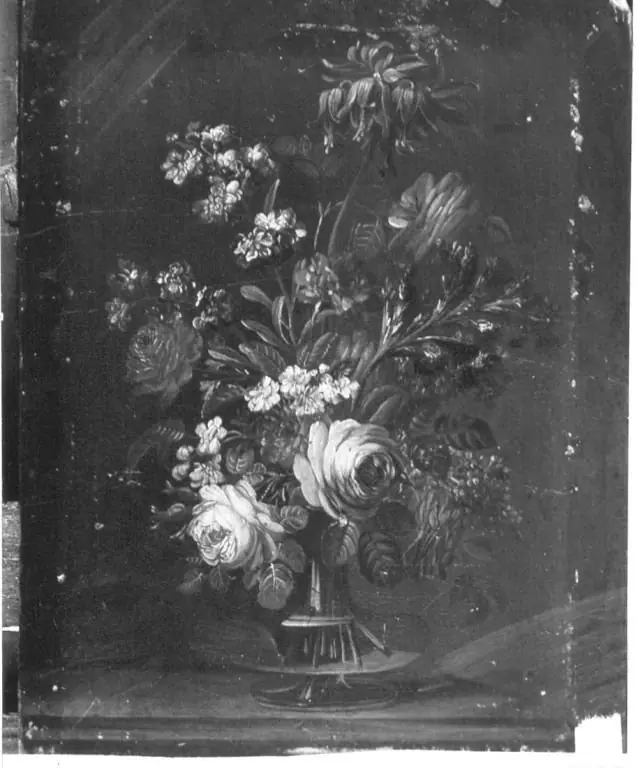
The bouquet includes peonies, roses, and other seasonal blooms, arranged with naturalistic irregularity. No single flower dominates; instead, the composition honors the transient beauty of life through the inclusion of both open blossoms and buds beginning to fade. The absence of insects or wilting leaves avoids overt moralizing, suggesting a contemplative appreciation of nature’s cycles rather than a vanitas message.
Technique & Style
Hirschely employs soft, muted tones and subtle gradations of light to model each petal and leaf. Chiaroscuro is used sparingly, creating gentle contrasts that define form without theatricality. The vase, rendered with minimal detail, anchors the scene while allowing the flowers to command attention. Brushwork is precise yet unobtrusive, favoring quiet realism over decorative flourish.
History & Provenance
The painting entered the Alte Pinakothek’s holdings in the 19th century, likely through the Bavarian royal collection. Its attribution to Hirschely, a lesser-known Bohemian painter, reflects the museum’s broader effort to document regional artistic production beyond major centers. No earlier records of ownership are documented, suggesting it may have remained in private hands until its acquisition.
Context
In early 18th-century Central Europe, floral still lifes were popular among aristocratic patrons seeking refined domestic decoration. Unlike Dutch examples, which often emphasized abundance and rarity, Bohemian works like this one favored restraint and harmony. Hirschely’s painting aligns with a regional tendency toward intimate, meditative compositions rather than ostentatious displays of wealth.
Legacy
Though Hirschely’s oeuvre is limited and largely overlooked in broader art histories, this painting contributes to understanding the diversity of still-life traditions beyond the Dutch and Flemish canon. Its quiet composition and technical restraint offer insight into how floral themes were interpreted in smaller artistic communities, preserving a nuanced strand of Baroque naturalism.
Artist & collection