Artwork
A man drinking wine
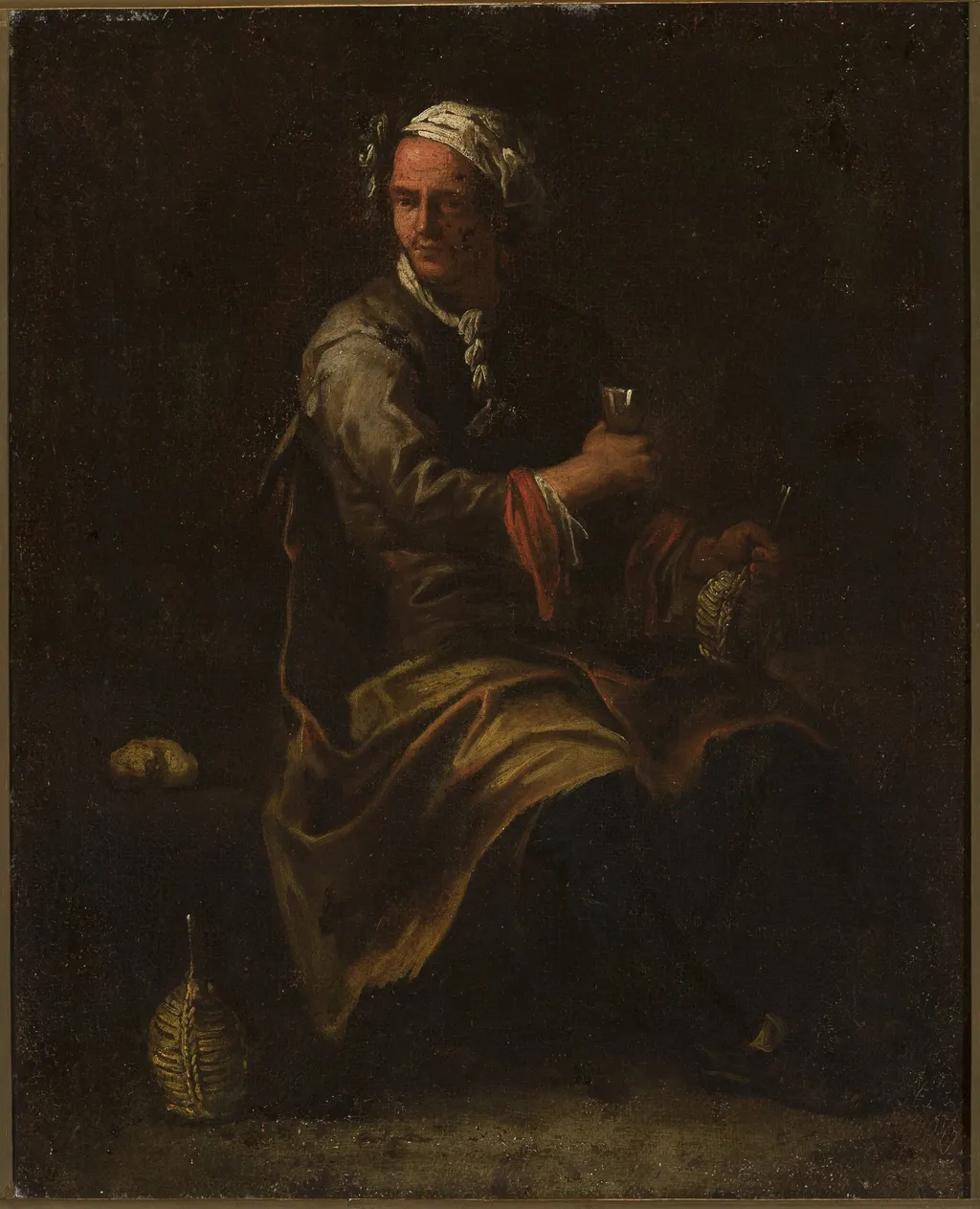
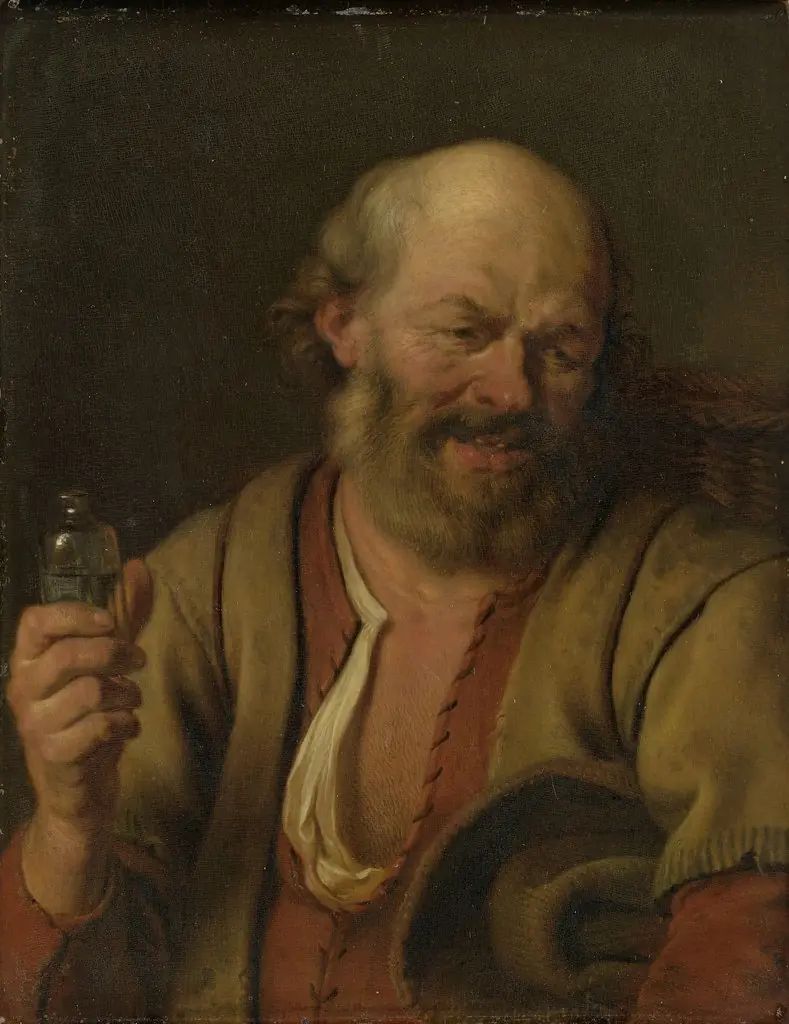
A man drinking wine is an oil painting by Jan Kupecký. It dates from 1713 and is held in the collection of the National Museum in Warsaw.
About this work
Overview
Its subdued palette and careful modeling reflect the artist’s technical precision and interest in character over narrative.
Painted around 1713 in oil, this portrait by Jan Kupecký depicts a solitary man seated on the ground, engaged in quiet contemplation while holding a glass of wine. The work belongs to the National Museum in Warsaw’s collection and exemplifies Kupecký’s focus on intimate, psychologically nuanced portraiture during his time in Central Europe. Its subdued palette and careful modeling reflect the artist’s technical precision and interest in character over narrative.
Subject & Meaning
The figure, dressed in a white headscarf and dark robe with a yellow sash, appears absorbed in thought rather than reveling in drink. His serious expression and still posture suggest introspection, possibly hinting at solitude, melancholy, or quiet resignation. The absence of overt symbolism or context invites interpretation grounded in human demeanor rather than allegory, aligning with Kupecký’s broader tendency to capture individual presence over idealized types.
Technique & Style
Kupecký employs chiaroscuro to define the figure’s form against a dark, undefined background, enhancing the three-dimensionality of the face, hands, and fabric. Brushwork is restrained yet precise, particularly in the rendering of the headscarf’s folds and the glass’s reflective surface. The muted tones and limited color palette reinforce the painting’s somber tone, while the close cropping intensifies the psychological immediacy of the subject.
History & Provenance
The painting entered the National Museum in Warsaw’s holdings as part of its 19th-century acquisitions of Central European art. It was among several portraits by Kupecký reproduced as engravings by Bernhard Vogel, indicating its recognition beyond the original commission. Though its early provenance remains unclear, its survival and reproduction suggest it was valued in its time for its quiet realism and technical mastery.
Context
Active across Hungary, Vienna, and Nuremberg, Kupecký operated within a network of Central European portraitists who favored psychological depth over grandeur. In an era dominated by aristocratic commissions, this painting stands out for its focus on an ordinary man, possibly a scholar, traveler, or artisan. Its intimacy reflects a broader shift toward individualized portraiture in the early 18th century, away from ceremonial representation.
Legacy
Though Kupecký is less widely known than his contemporaries, this work exemplifies his contribution to the development of restrained, emotionally resonant portraiture in the Baroque period. Its reproduction in engravings helped disseminate his style beyond original patrons. Today, it remains a quiet testament to the artist’s ability to convey inner life through subtle gesture and light, influencing later generations of Central European realists.
Artist & collection
Artist
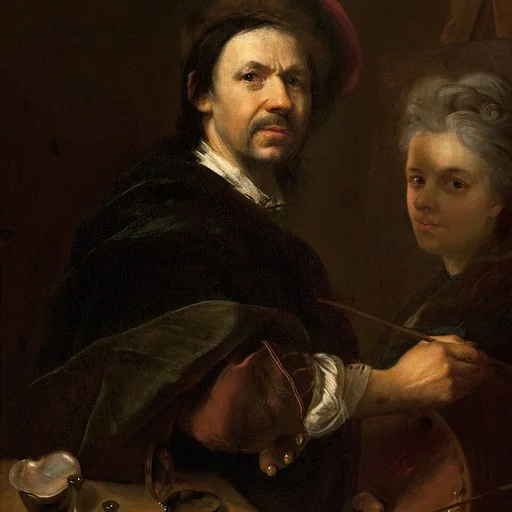
Jan Kupecký (Slovak: Ján Kupecký, German: Johann Kupetzky, Hungarian: Kupecky/Kupeczky János; 1667 – 16 July 1740) was a Czech portrait painter during the Baroque era.