Artwork
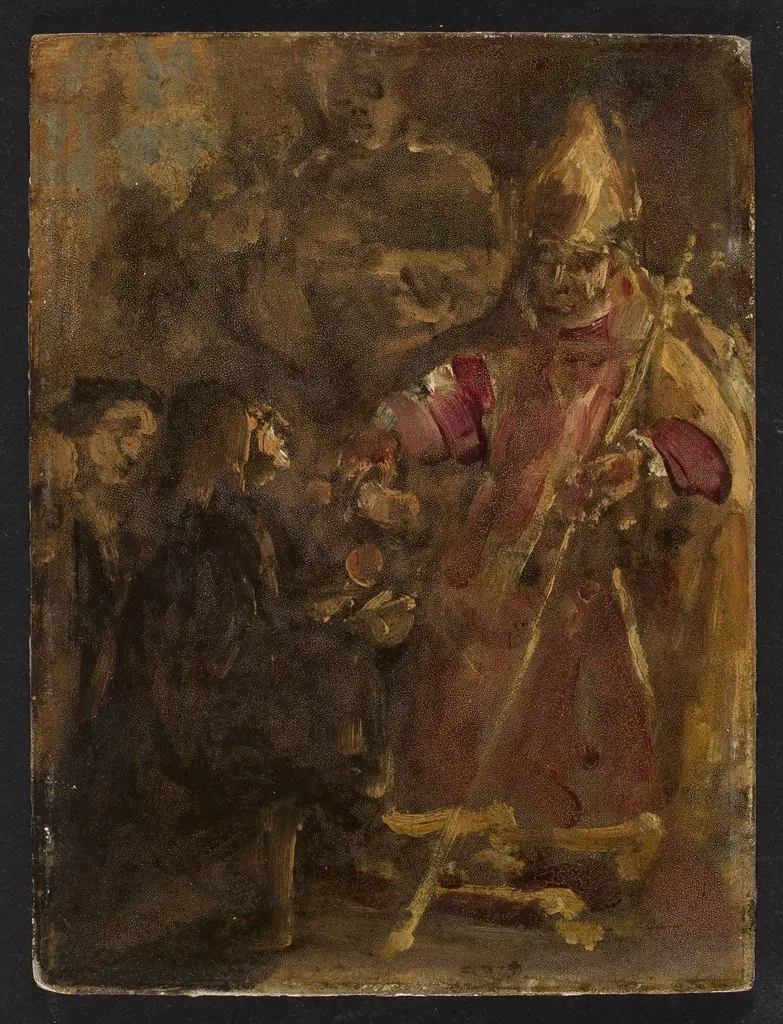
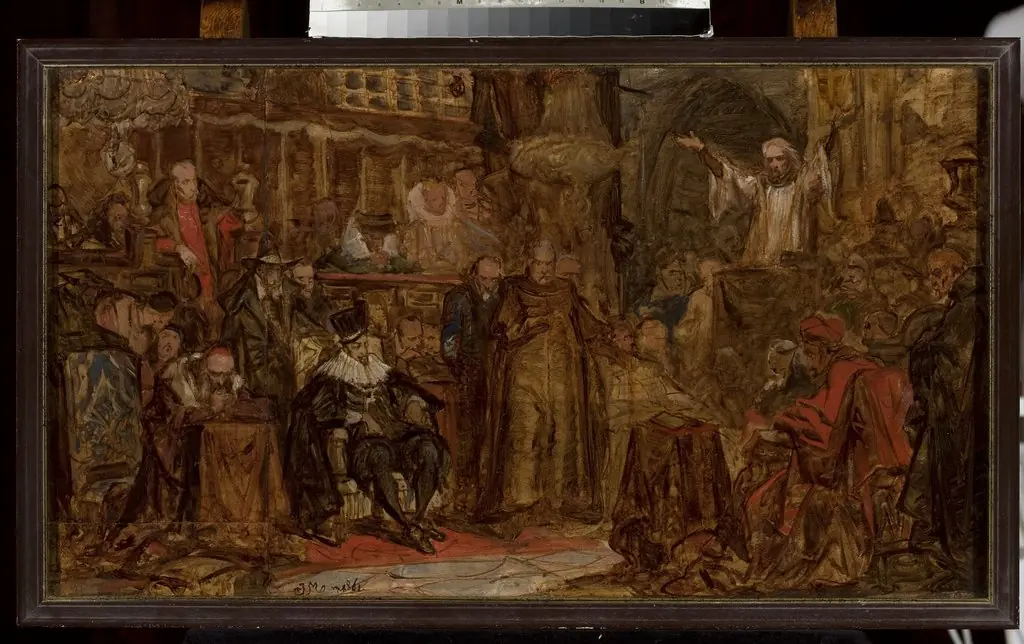
Alchemist Sendivogius and Sigismund III, sketch
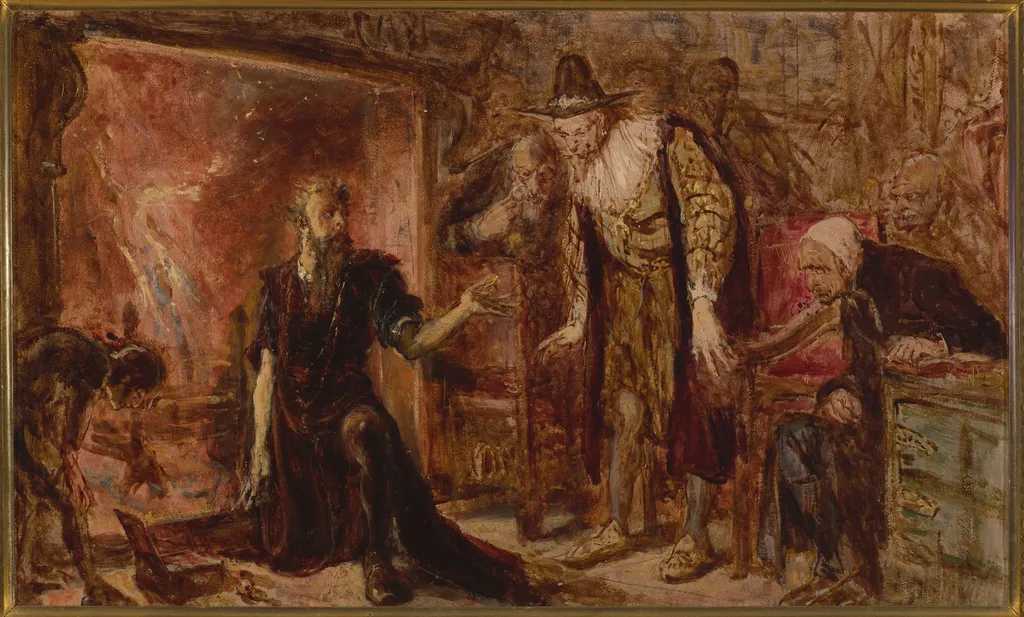
Alchemist Sendivogius and Sigismund III, sketch is an unspecified painting by Jan Matejko. It dates from 1867 and is held in the collection of the National Museum in Warsaw.
About this work
Overview
This 1867 sketch by Jan Matejko captures a moment between the Polish king Sigismund III Vasa and the alchemist Michał Sędziwój.
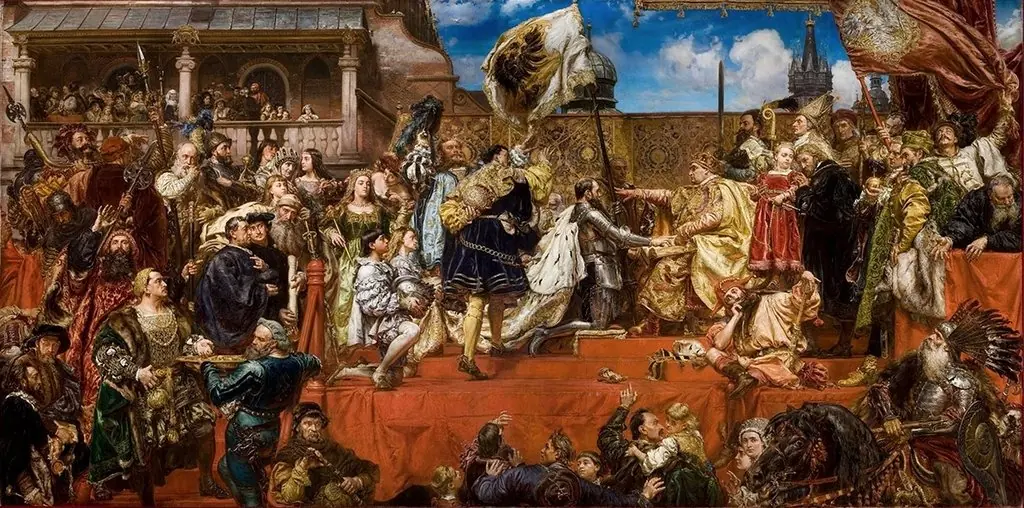
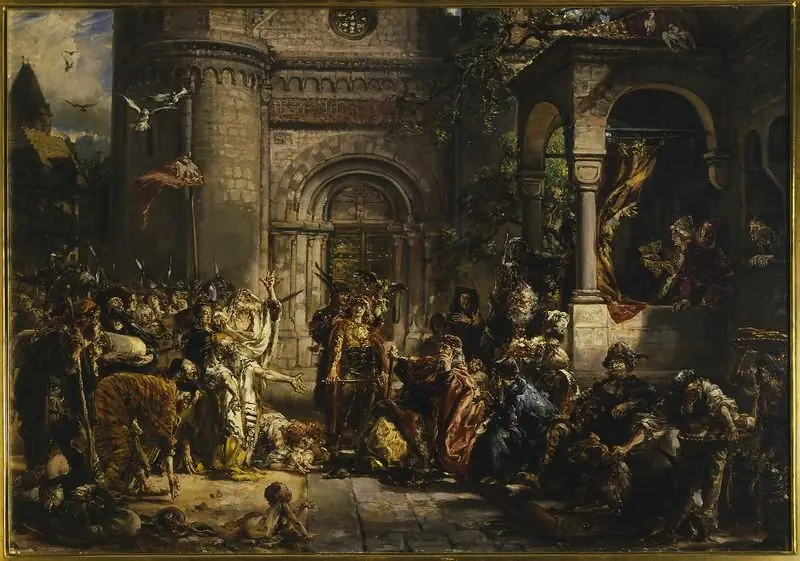
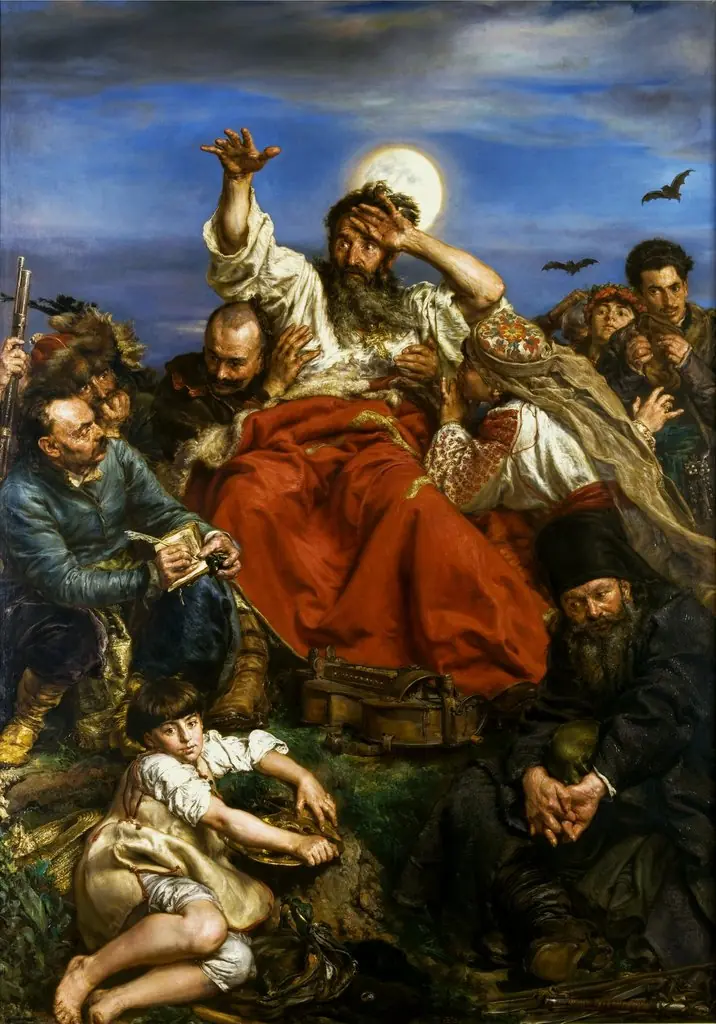
This 1867 sketch by Jan Matejko captures a moment between the Polish king Sigismund III Vasa and the alchemist Michał Sędziwój. Executed as a preparatory study, it belongs to a series of works in which Matejko explored key episodes from Poland’s past. The piece reveals his process of refining historical narratives through preliminary drawings, preceding larger finished paintings such as *Rejtan* and *Union of Lublin*. It is held in the National Museum in Warsaw.
Subject & Meaning
The scene portrays a private encounter between the monarch and the alchemist, suggesting a dialogue on science, power, or the occult. Sędziwój, known for early chemical insights, is depicted as an intellectual figure in contrast to the king’s regal bearing. The interaction implies the tension between emerging natural philosophy and royal authority, reflecting 19th-century interest in Poland’s scientific heritage amid political fragmentation.
Technique & Style
Matejko employed loose brushwork and a restrained palette of earth tones to convey immediacy and movement. The figures are rendered with attention to gesture and posture, while background elements remain indistinct, directing focus to the central pair. The sketch’s unfinished quality reveals his working method: rapid modeling of form and expression before committing to a final composition.
History & Provenance
Created in 1867, the sketch was part of Matejko’s broader project to document Poland’s historical legacy during a period of partition. It remained in the artist’s possession until entering the collection of the National Museum in Warsaw, where it is preserved as evidence of his scholarly approach to history painting. Its survival underscores its role as a critical step in his creative process.
Context
In mid-19th-century Poland, historical art served as cultural resistance under foreign rule. Matejko’s focus on figures like Sędziwój—often overlooked in mainstream narratives—highlighted indigenous intellectual achievement. This sketch aligns with his efforts to revive national identity through visual storytelling, linking past scientific curiosity with contemporary patriotic sentiment.
Legacy
Though less known than his monumental canvases, this sketch exemplifies Matejko’s disciplined methodology and enduring influence on Polish historiography. It demonstrates how preparatory works contributed to the emotional and intellectual weight of his finished pieces. Today, it remains a touchstone for understanding how history painting functioned as both art and national memory.
Artist & collection
Artist
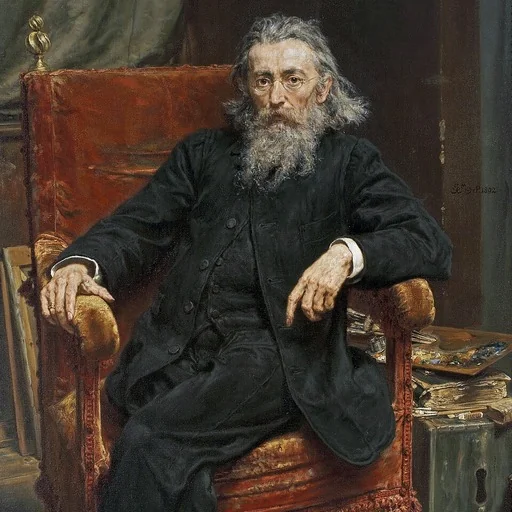
Jan Alojzy Matejko (Polish pronunciation: ; also known as Jan Mateyko; 24 June 1838 – 1 November 1893) was a Polish painter, a leading 19th-century exponent of history painting, known for depicting nodal events from Polish history.