Artwork
Beggars of Brussels (Les mendiants de Bruges)
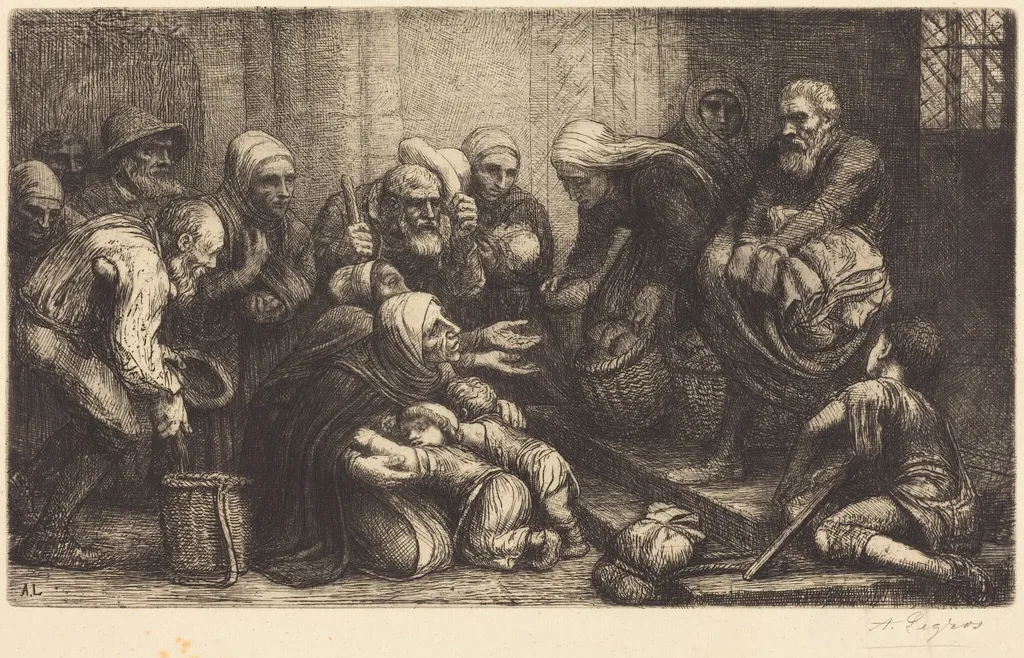
Beggars of Brussels (Les mendiants de Bruges) is an ink print by the Romanticist artist Alphonse Legros. It dates from 1874 and is held in the collection of the National Gallery of Art.
About this work
Overview
Created in 1874 by Alphonse Legros, a French-born artist who lived and taught in London, this etching captures a somber scene of poverty in Brussels.
Created in 1874 by Alphonse Legros, a French-born artist who lived and taught in London, this etching captures a somber scene of poverty in Brussels. Legros, known for his work across multiple mediums, focused on the human condition through direct observation. The print belongs to a body of work that helped renew interest in etching as a serious artistic medium in Britain during the late nineteenth century.
Subject & Meaning
The image portrays a tightly packed group of impoverished individuals in a dim interior, their postures conveying exhaustion and desperation. A central figure holds a child, while others extend hands in silent appeal. The composition avoids sentimentality, instead emphasizing collective suffering and the physical closeness of hardship. Legros presents poverty not as spectacle but as an unvarnished reality, rooted in the daily lives of the marginalized.
Technique & Style
Using etching, Legros employed fine, incised lines and dense cross-hatching to build deep shadows and textured surfaces. The figures overlap in a compressed space, their ragged clothing and angular forms rendered with sharp, deliberate strokes. The contrast between light and dark enhances the emotional weight, while the lack of clear background isolates the subjects, intensifying the sense of confinement and urgency.
History & Provenance
The print was made during Legros’s tenure at the Slade School of Fine Art, where he influenced a generation of British artists. Though the exact early ownership is undocumented, the work aligns with his broader practice of documenting social conditions through printmaking. It was likely circulated among collectors and students interested in the revival of etching as a medium for serious artistic expression.
Context
In the 1870s, European artists increasingly turned to realism, depicting working-class life with empathy and precision. Legros’s etching reflects this trend, resonating with contemporary movements in France and England that sought to elevate everyday subjects. Brussels, though not his home, served as a symbolic site of urban deprivation, echoing broader anxieties about industrialization and social inequality.
Legacy
Legros’s etchings, including this one, contributed to the reestablishment of etching as a respected fine art form in Britain. His emphasis on direct observation and emotional restraint influenced later printmakers and realist painters. The work remains a quiet but forceful record of social conditions, valued for its technical discipline and unembellished humanity.
Artist & collection

Artist
Alphonse Legros (French pronunciation: ; 8 May 1837 – 8 December 1911) was a French, later British, painter, etcher, sculptor, and medallist.

![The Slave Market [recto], by Alexandre Gabriel Decamps](https://artifactworldgallery.com/img/alexandre-gabriel-decamps--the-slave-market-recto--874eb665e814d110-w320.webp) The Slave Market [recto]
The Slave Market [recto]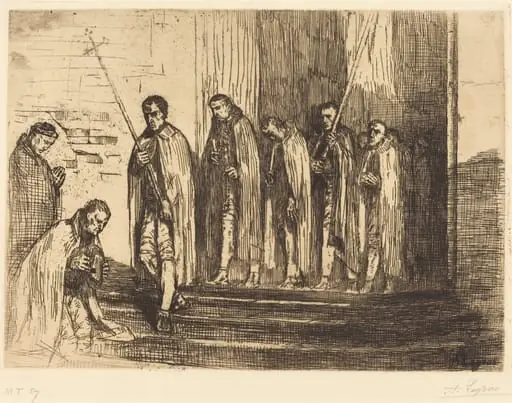 Procession Leaving a Church (La sortie de la procession)
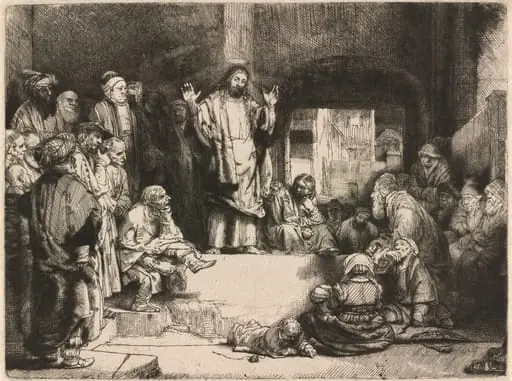 Christ Preaching (La petite Tombe)
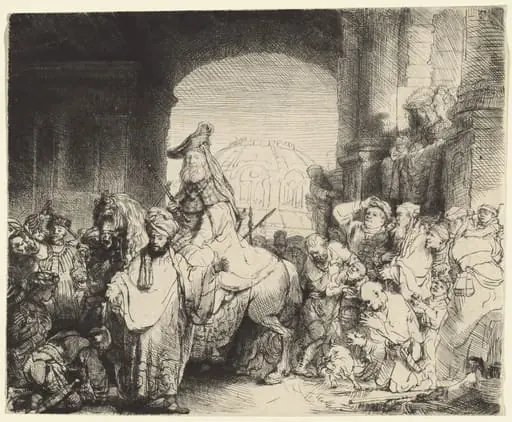 The Triumph of Mordecai
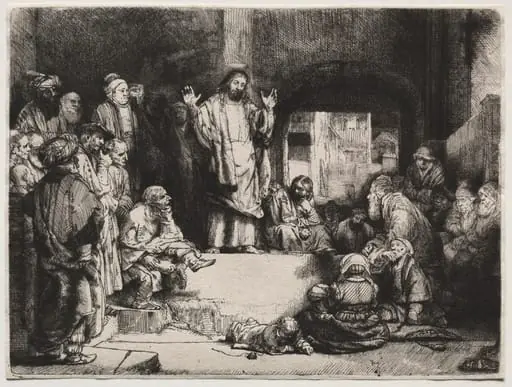 Christ Preaching ('La Petite Tombe')
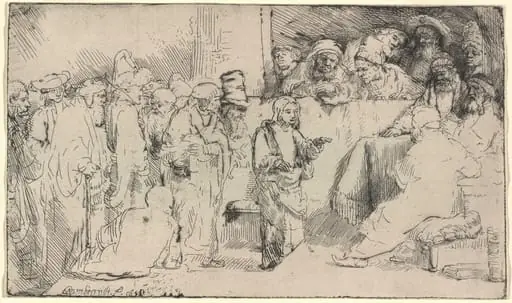 Christ Disputing with the Doctors: a Sketch
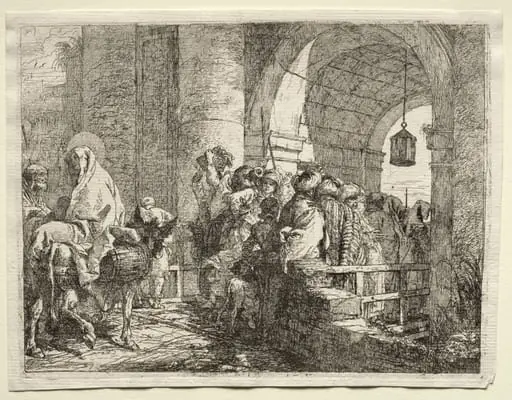 Flight into Egypt: The Holy Family Passing under an Arch
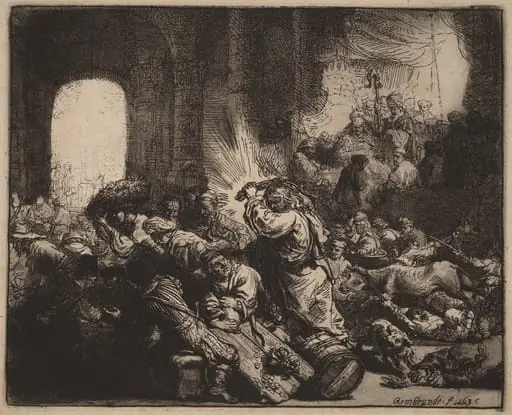 Christ Driving the Money Changers from the Temple
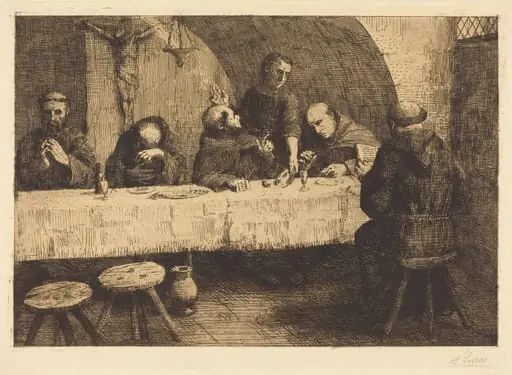 The Refectory (Le refectoire)
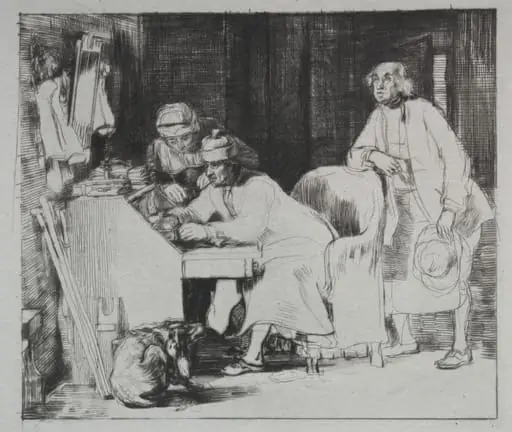 The Lost Receipt