Artwork
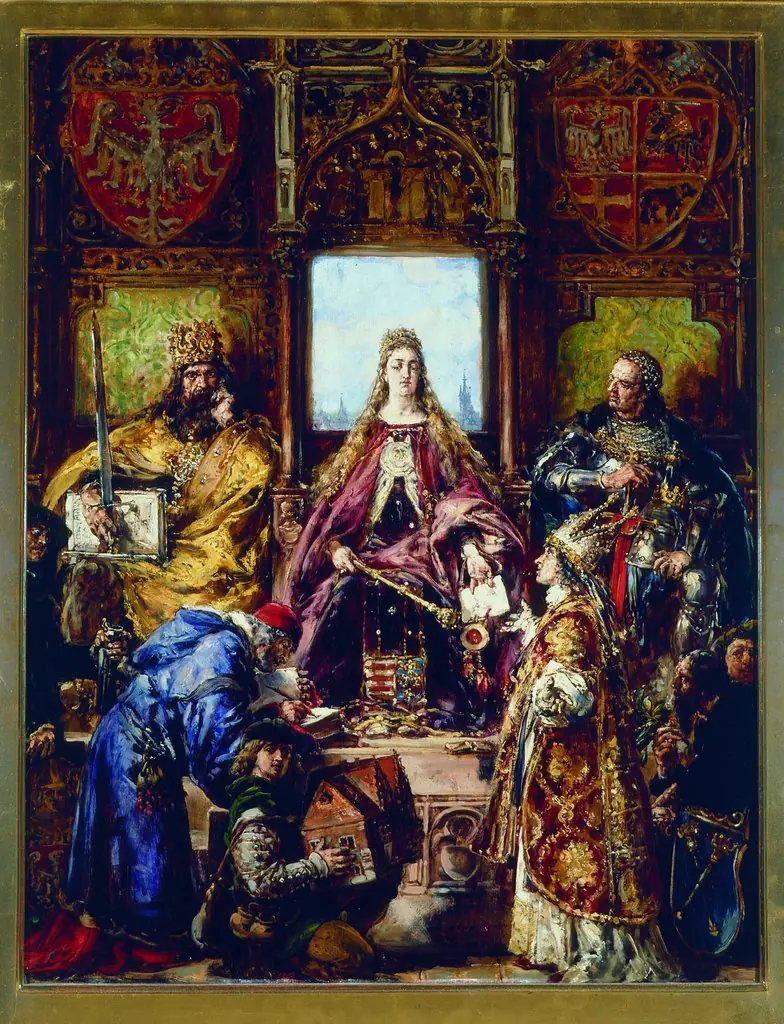
Baptism of Lithuania, from the series “History of Civilization in Poland”
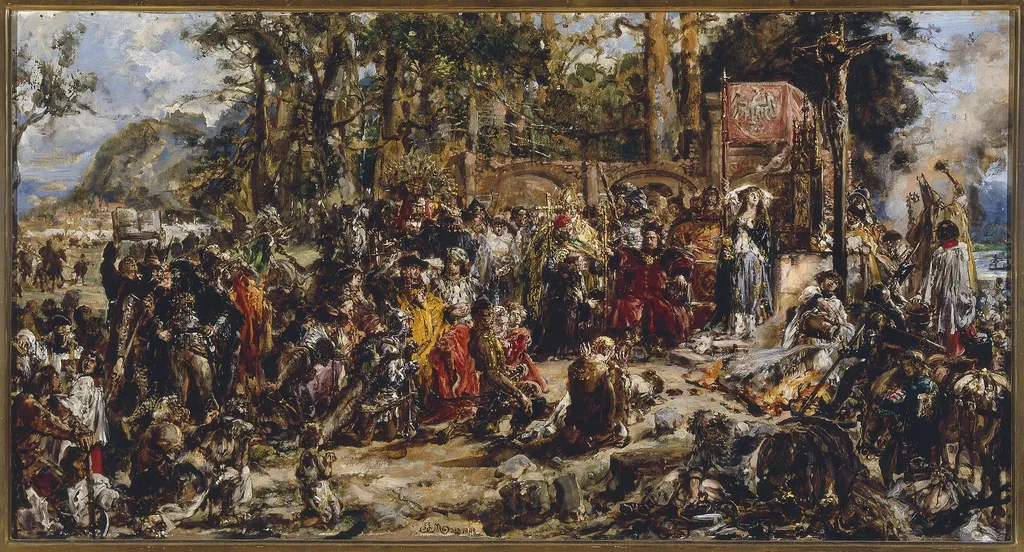
Baptism of Lithuania, from the series “History of Civilization in Poland” is an oil painting by the Realist artist Jan Matejko. It is held in the collection of the National Museum in Warsaw.
About this work
Overview
Painted in 1894 by Jan Matejko, *Baptism of Lithuania* is one of several large-scale works in the series *History of Civilization in Poland*.
Painted in 1894 by Jan Matejko, *Baptism of Lithuania* is one of several large-scale works in the series *History of Civilization in Poland*. Executed in oil on canvas, it illustrates a significant moment in the Christianization of the Grand Duchy of Lithuania. Matejko, known for his meticulous historical reconstructions, rendered the scene with attention to period detail and symbolic composition, aligning with the Realist tradition’s emphasis on factual representation over idealization.
Subject & Meaning
The painting captures the ritual baptism of Lithuanian nobility in 1387, marking their formal conversion to Christianity under Grand Duke Jogaila. Figures are arranged around a riverbank, where clergy perform the rite amid a crowd of onlookers. Banners and ceremonial attire suggest political and religious unity. The scene is not merely a religious event but a declaration of cultural alignment with Western Christendom, signaling the end of pagan traditions in the region.
Technique & Style
Matejko employed a dense, layered application of oil paint to render textures of fabric, metal, and skin with precision. The composition is crowded yet carefully structured, guiding the viewer’s eye toward the central baptismal act. Rich, varied hues—deep reds, golds, and muted earth tones—create visual energy without romanticizing the moment. Figures are rendered with individualized expressions, reinforcing the Realist commitment to authenticity over theatricality.
History & Provenance
Commissioned as part of a broader project to document Poland’s historical legacy, the painting was completed in 1894 and entered the collection of the National Museum in Warsaw shortly thereafter. It remained in public view through periods of political upheaval, including partitions and occupation, serving as a quiet assertion of cultural continuity. Its preservation reflects its status as a documented artifact of national historical consciousness.
Context
Matejko painted during a time when Polish identity was suppressed under foreign rule. His historical works, including this one, functioned as subtle acts of cultural resistance. By depicting Lithuania’s baptism—a unifying event in the Polish-Lithuanian Commonwealth—he emphasized shared heritage and the legitimacy of a once-sovereign union. The painting thus resonated beyond its immediate subject, anchoring collective memory in visual form.
Legacy
Though less frequently exhibited than Matejko’s larger battle scenes, *Baptism of Lithuania* remains a key reference in studies of 19th-century Polish historiography and national iconography. Its inclusion in the National Museum’s permanent collection underscores its role in shaping public understanding of medieval East-Central European history. Scholars continue to analyze its symbolism as both historical record and political statement.
Artist & collection
Artist
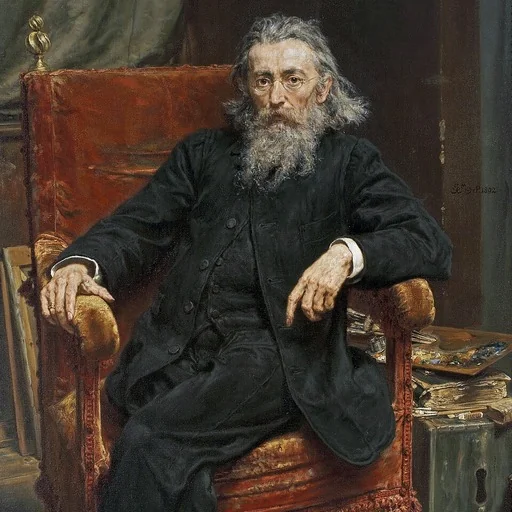
Jan Alojzy Matejko (Polish pronunciation: ; also known as Jan Mateyko; 24 June 1838 – 1 November 1893) was a Polish painter, a leading 19th-century exponent of history painting, known for depicting nodal events from Polish history.

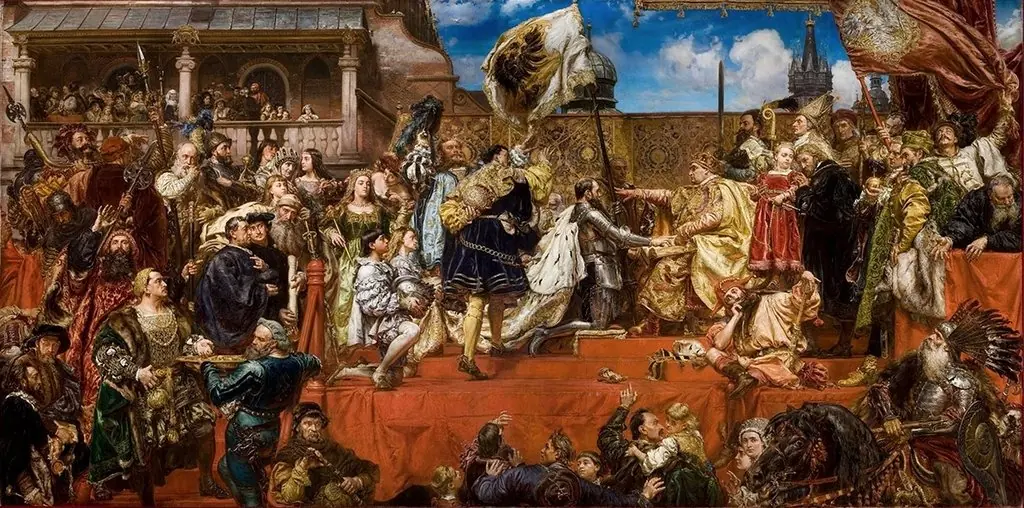
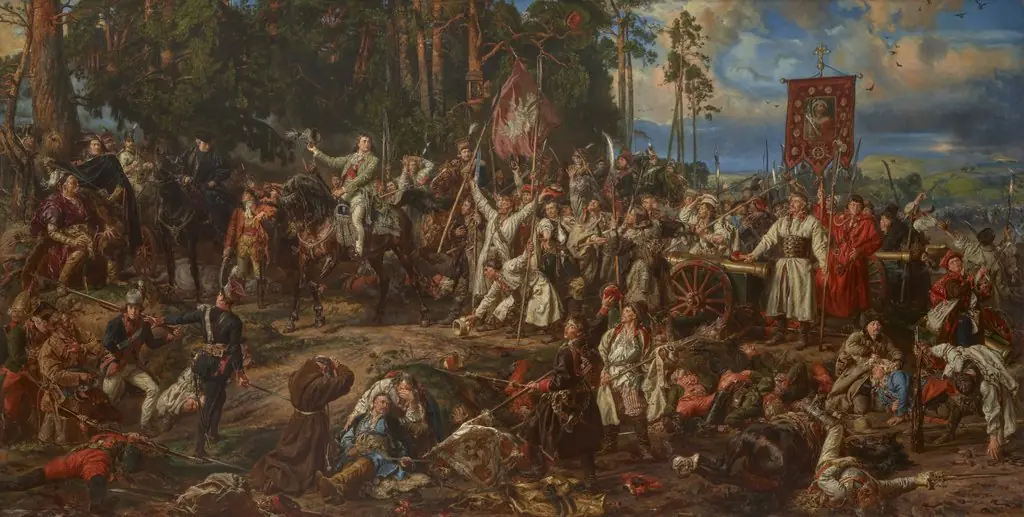
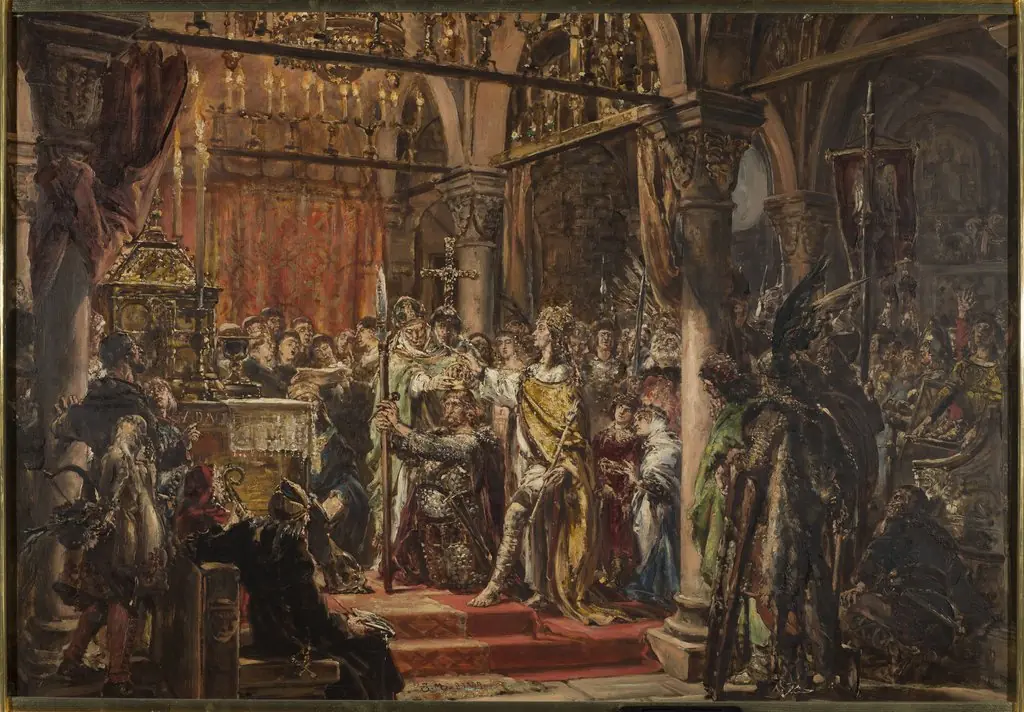 Coronation of the First King, 1001 AD, from the series “History of Civilization in Poland”
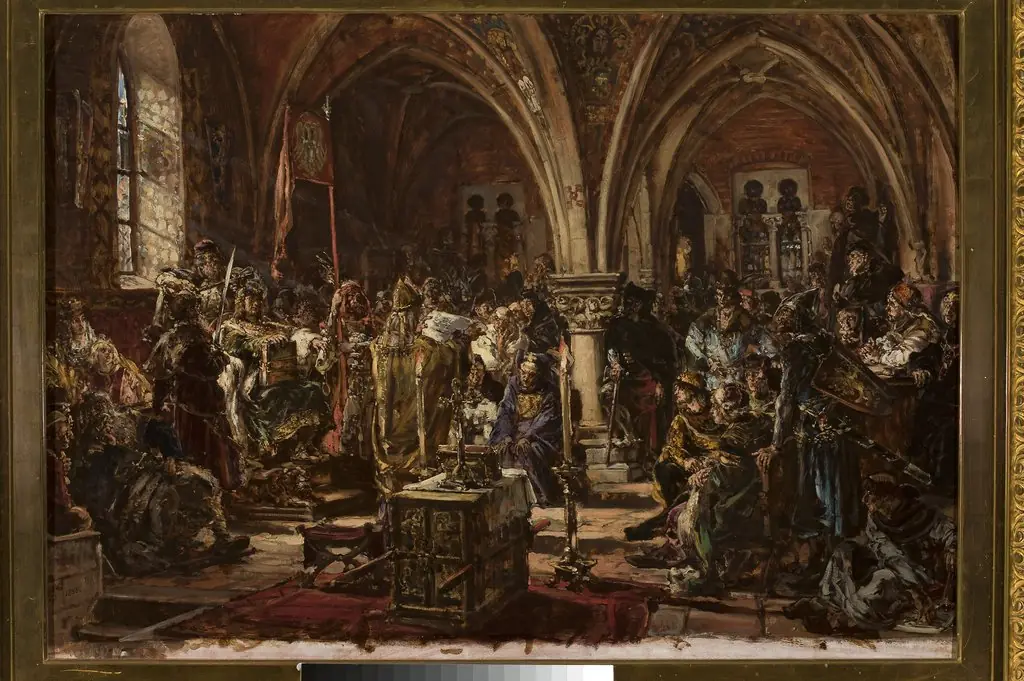 The First Parliament in Łęczyca, from the series “History of Civilization in Poland”
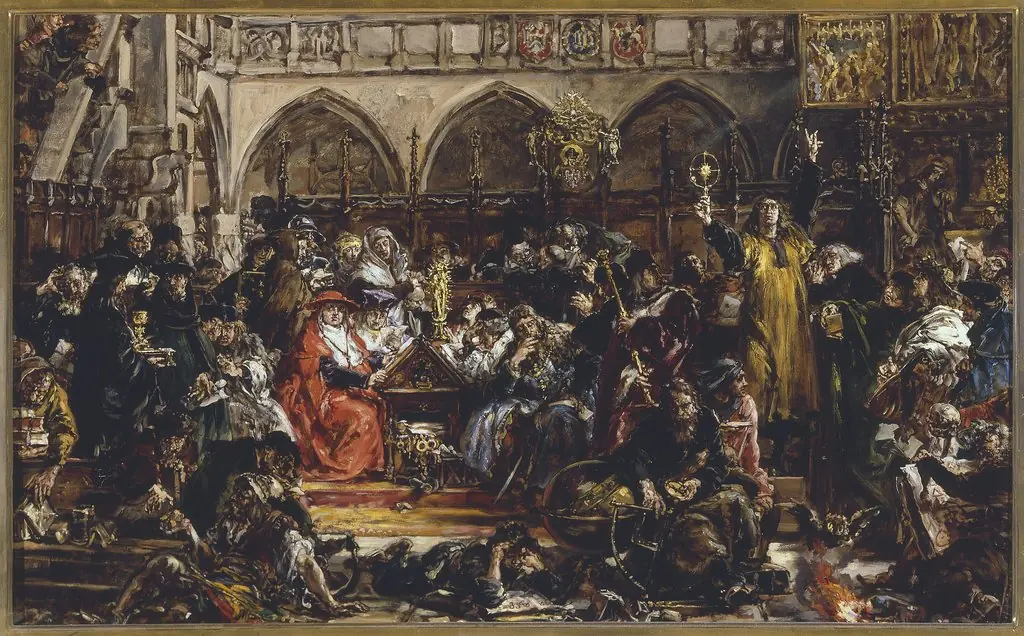 Influence of the university on the country, from the series “History of Civilization in Poland”
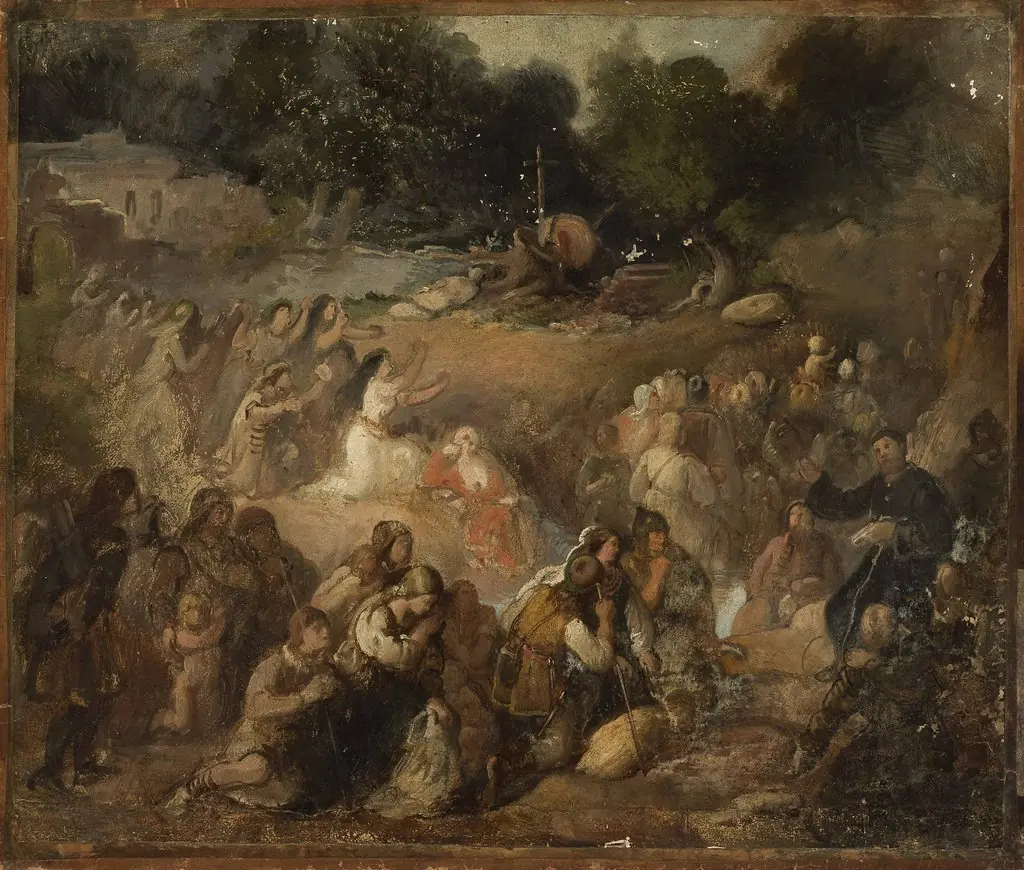 Baptism of Lithuania
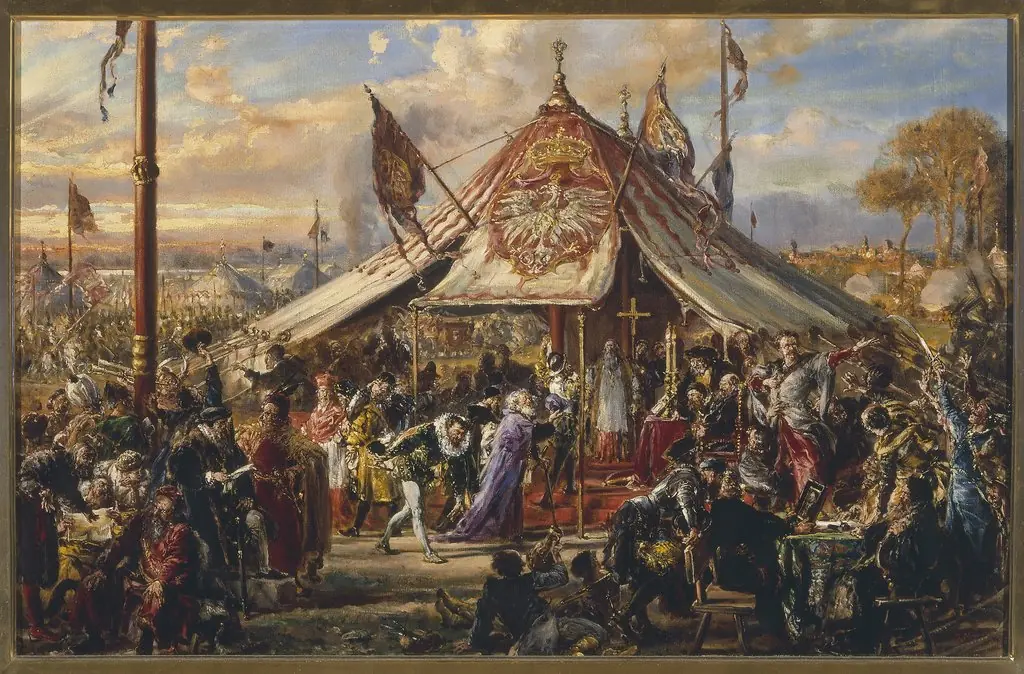 Power of Commonwealth at its Zenith, from the series “History of Civilization in Poland”
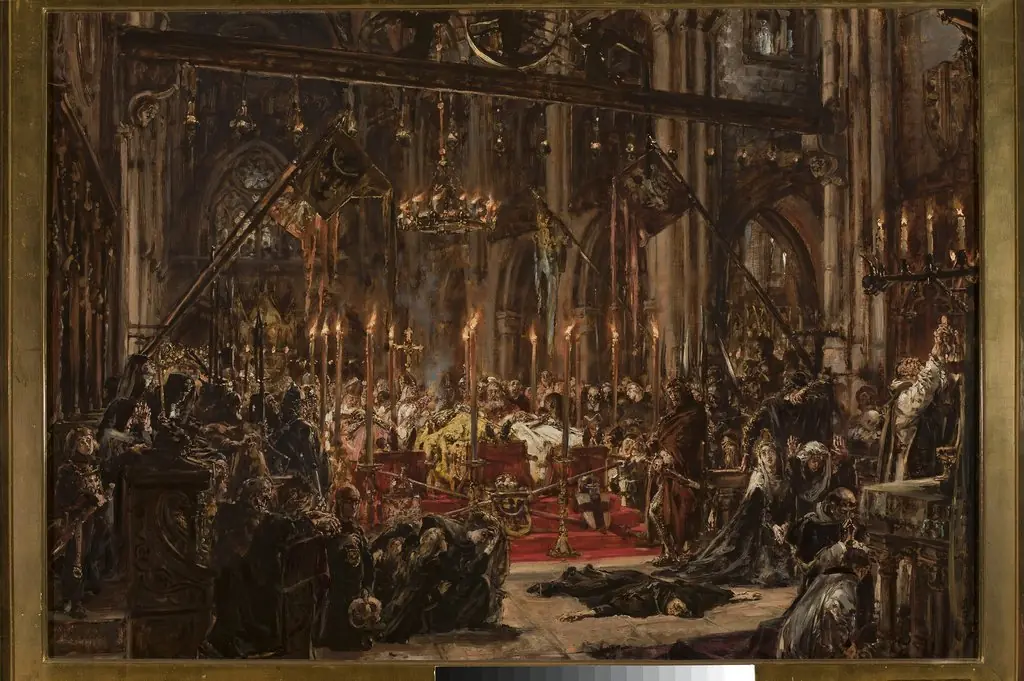 Defeat at Legnica, from the series “History of Civilization in Poland”
 Founding of the Academy, 1361–1399–1400 AD, from the series “History of Civilization in Poland”