Artwork
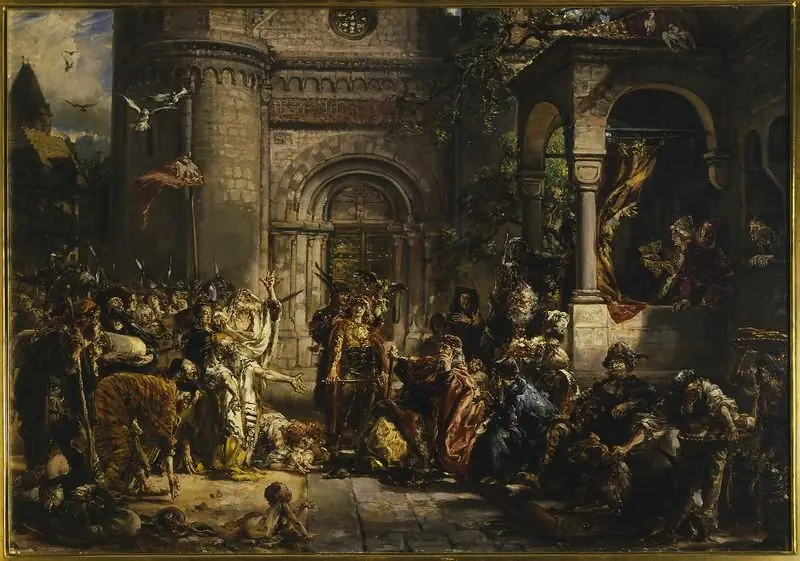
Defeat at Legnica, from the series “History of Civilization in Poland”
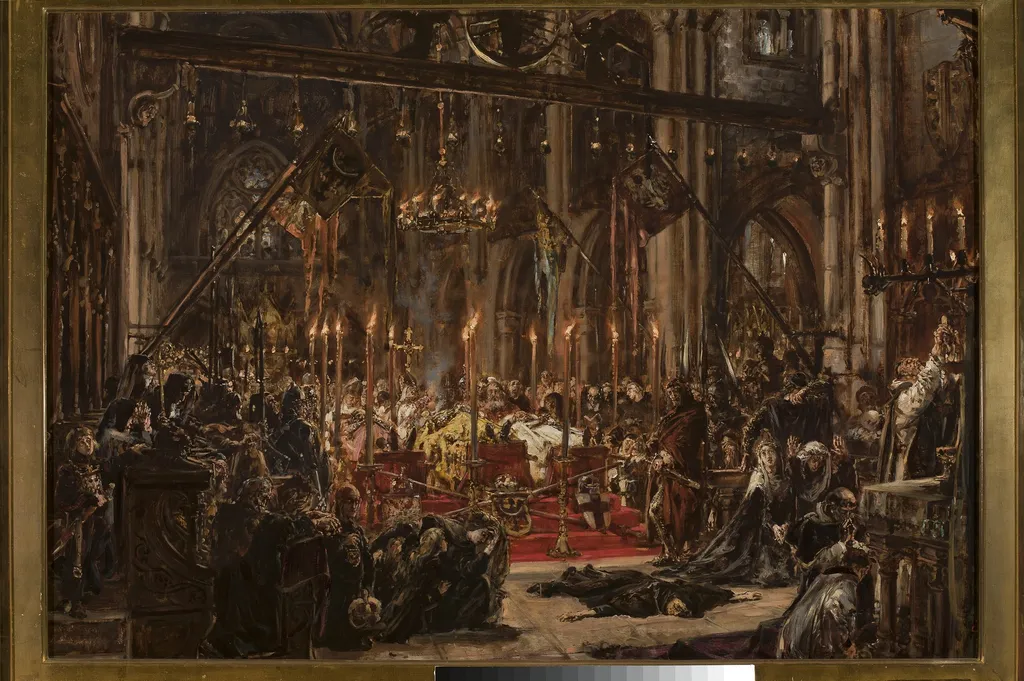
Defeat at Legnica, from the series “History of Civilization in Poland” is an oil painting by the Realist artist Jan Matejko. It is held in the collection of the National Museum in Warsaw.
About this work
Overview
Painted in 1894 by Jan Matejko, *Defeat at Legnica* is one of twelve canvases in the series *History of Civilization in Poland*.
Painted in 1894 by Jan Matejko, *Defeat at Legnica* is one of twelve canvases in the series *History of Civilization in Poland*. Executed in oil on canvas, it captures a moment of national mourning following the 1241 Mongol victory near Legnica. Matejko, known for his large historical compositions, used this work to reflect on Poland’s resilience amid loss, embedding symbolic weight within a sacred setting rather than a battlefield.
Subject & Meaning
The scene portrays the funeral rites of Henry II the Pious, Duke of Silesia, whose death marked a turning point in Polish resistance to Mongol incursions. Gathered in a dimly lit Gothic church, nobles and clergy surround his body on a raised platform, their expressions solemn. The absence of battle imagery shifts focus to the spiritual and political aftermath, suggesting that the true cost of defeat lies in the erosion of leadership and unity.
Technique & Style
Matejko employed chiaroscuro to heighten emotional tension, directing light toward the central figure and key gestures while leaving corners in deep shadow. The detailed rendering of stone architecture, embroidered vestments, and flickering candlelight demonstrates his commitment to historical accuracy and atmospheric realism. Brushwork remains precise, avoiding romantic flourish, reinforcing the gravity of the moment through restrained, almost documentary precision.
History & Provenance
Commissioned as part of a state-supported series to visually narrate Poland’s past during a period of partition, the painting entered the National Museum in Warsaw’s collection shortly after its completion. It remained largely unchanged in public display, serving as a reference point for national identity under foreign rule. Its preservation reflects its status as a cultural artifact rather than merely an artistic endeavor.
Context
Created during the late 19th century, when Poland was divided among three empires, Matejko’s series aimed to sustain collective memory through art. *Defeat at Legnica* aligns with broader efforts to elevate medieval history as a source of moral and national continuity. The choice of a funeral over a battle underscores a preference for introspection over glorification, resonating with audiences living under occupation.
Legacy
Though less frequently exhibited than Matejko’s battle scenes, *Defeat at Legnica* remains a critical work for understanding his thematic depth. It influenced later Polish artists who sought to convey national trauma through interior, symbolic spaces. The painting’s quiet solemnity continues to inform how historical loss is visually articulated in Polish cultural memory.
Artist & collection
Artist
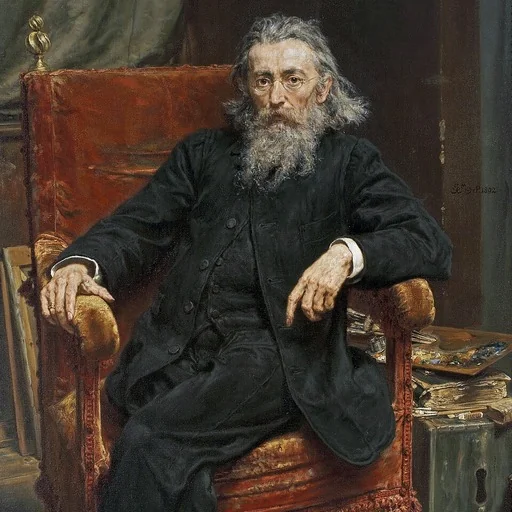
Jan Alojzy Matejko (Polish pronunciation: ; also known as Jan Mateyko; 24 June 1838 – 1 November 1893) was a Polish painter, a leading 19th-century exponent of history painting, known for depicting nodal events from Polish history.

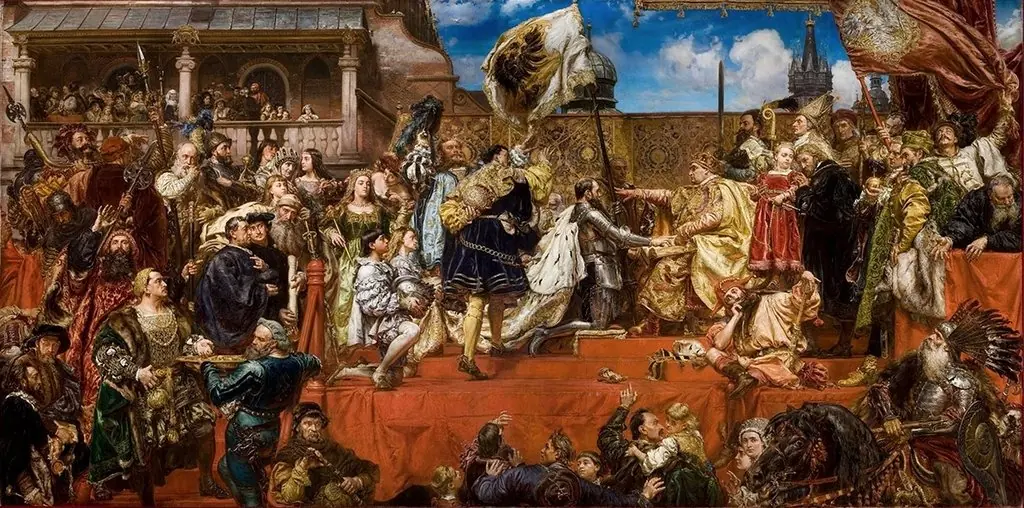
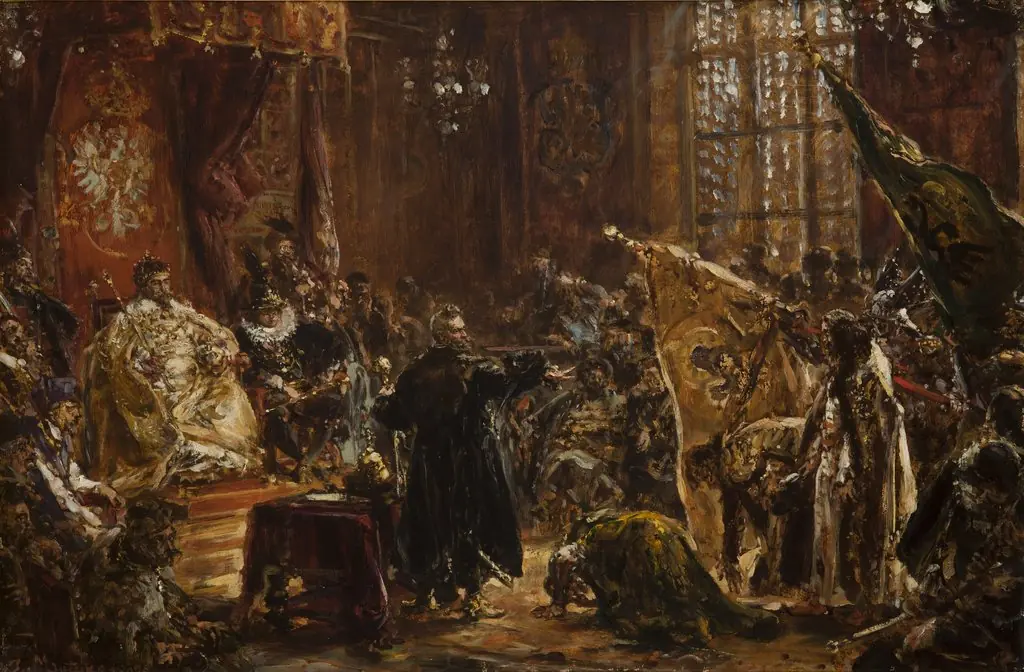 Tsars Shuyski brought by Żółkiewski to the Warsaw Sejm in front of Zygmunt III
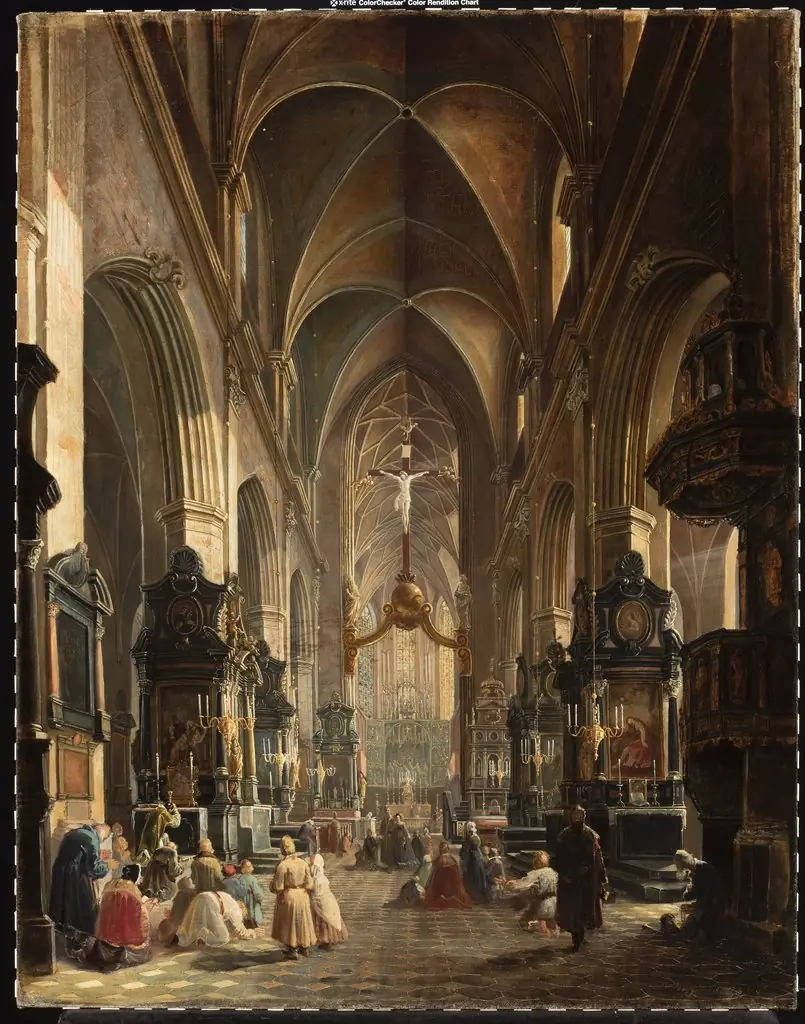 Interior of the Church of Virgin Mary in Kraków
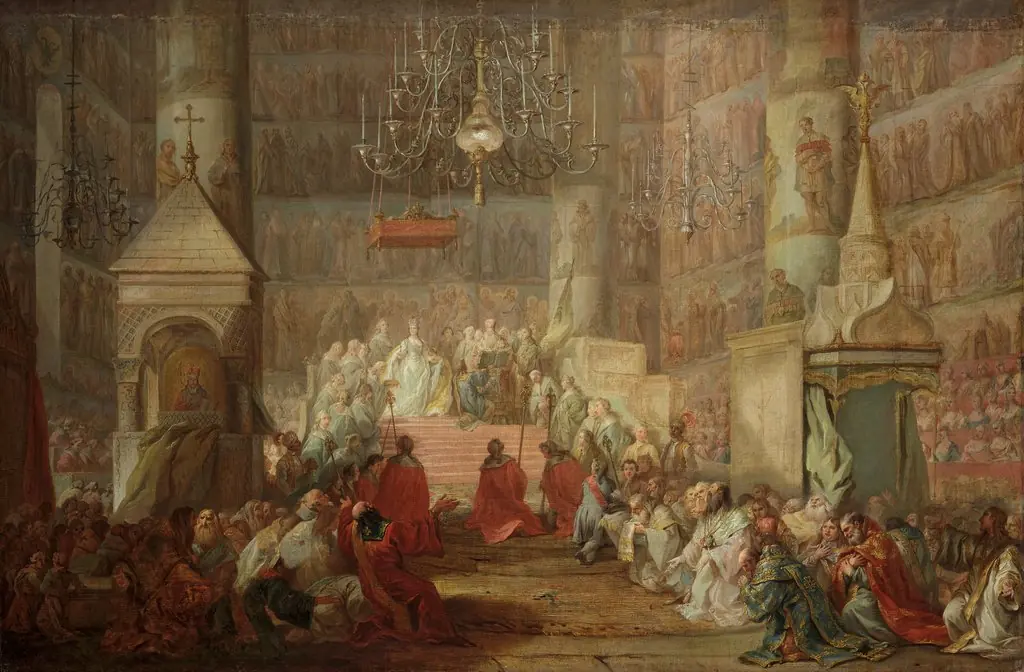 Coronation of Catherine II
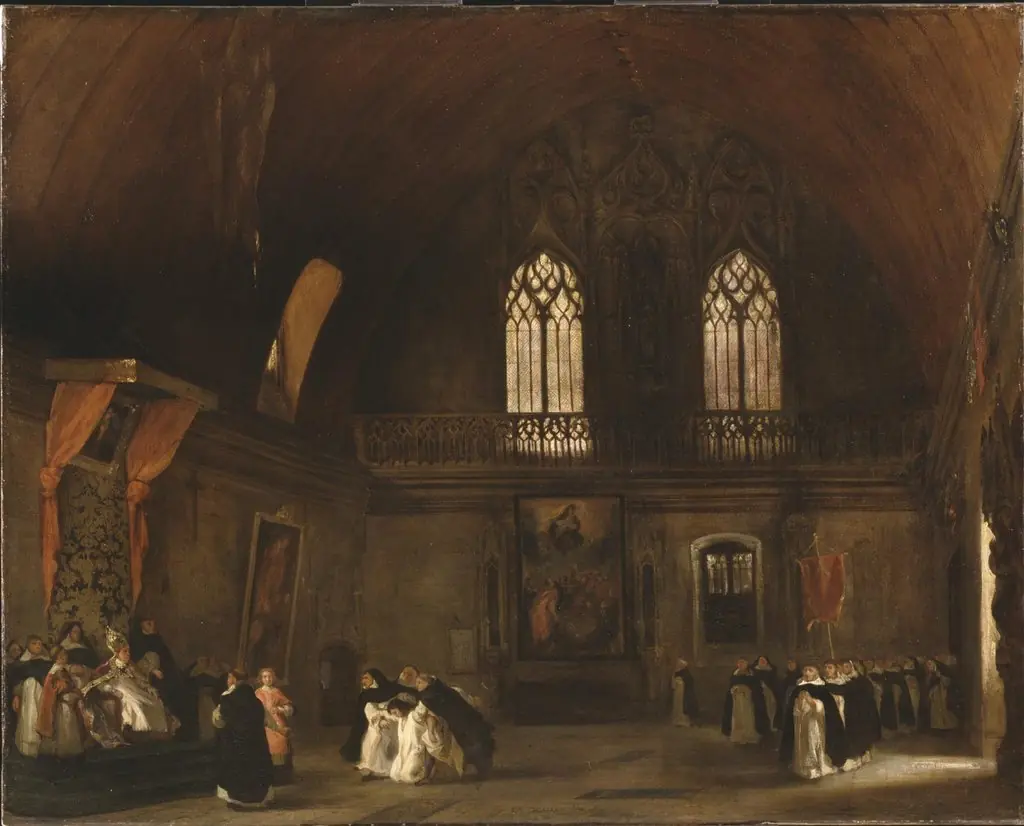 Interior of a Dominican Convent in Madrid
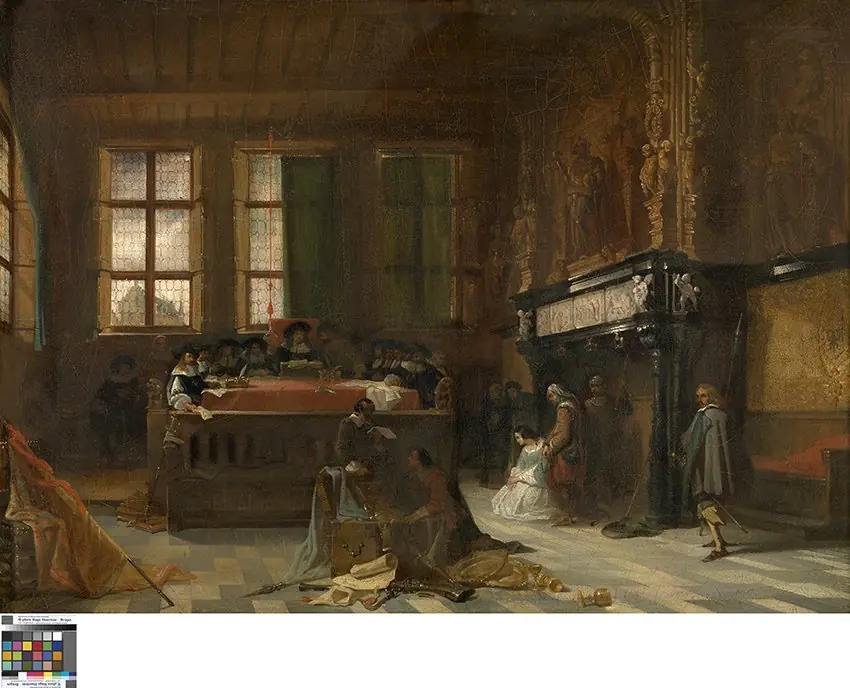 De zitting van de rechtbank
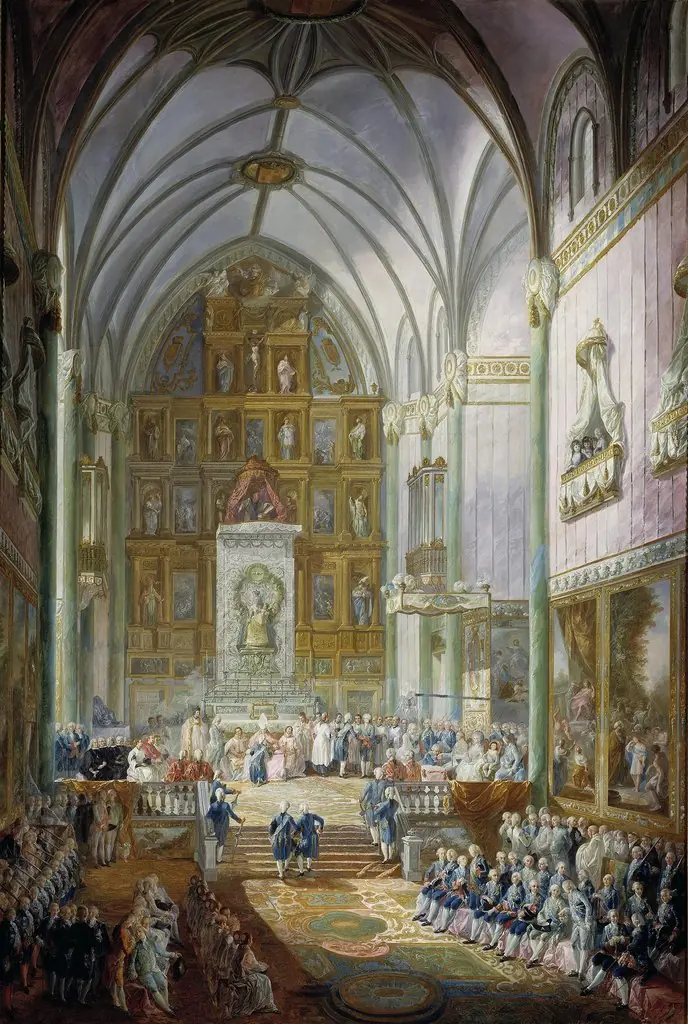 Ferdinand VII swears the Oath as Prince of Asturias
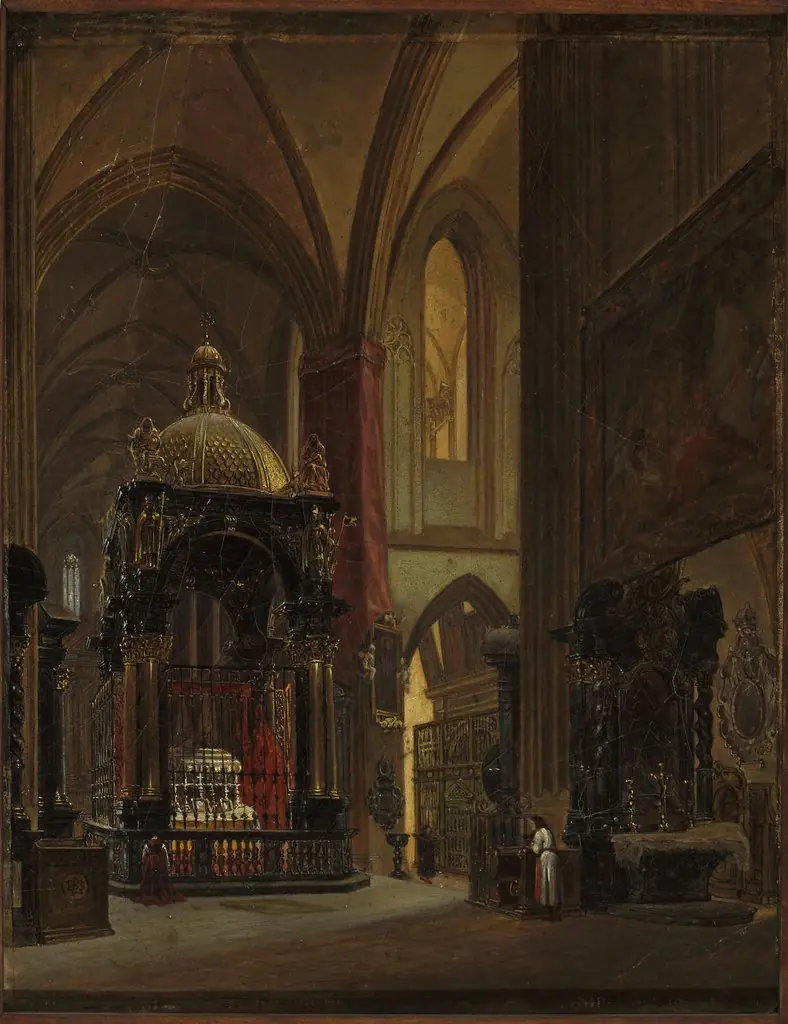 Interior of the Wawel Cathedral