Artwork
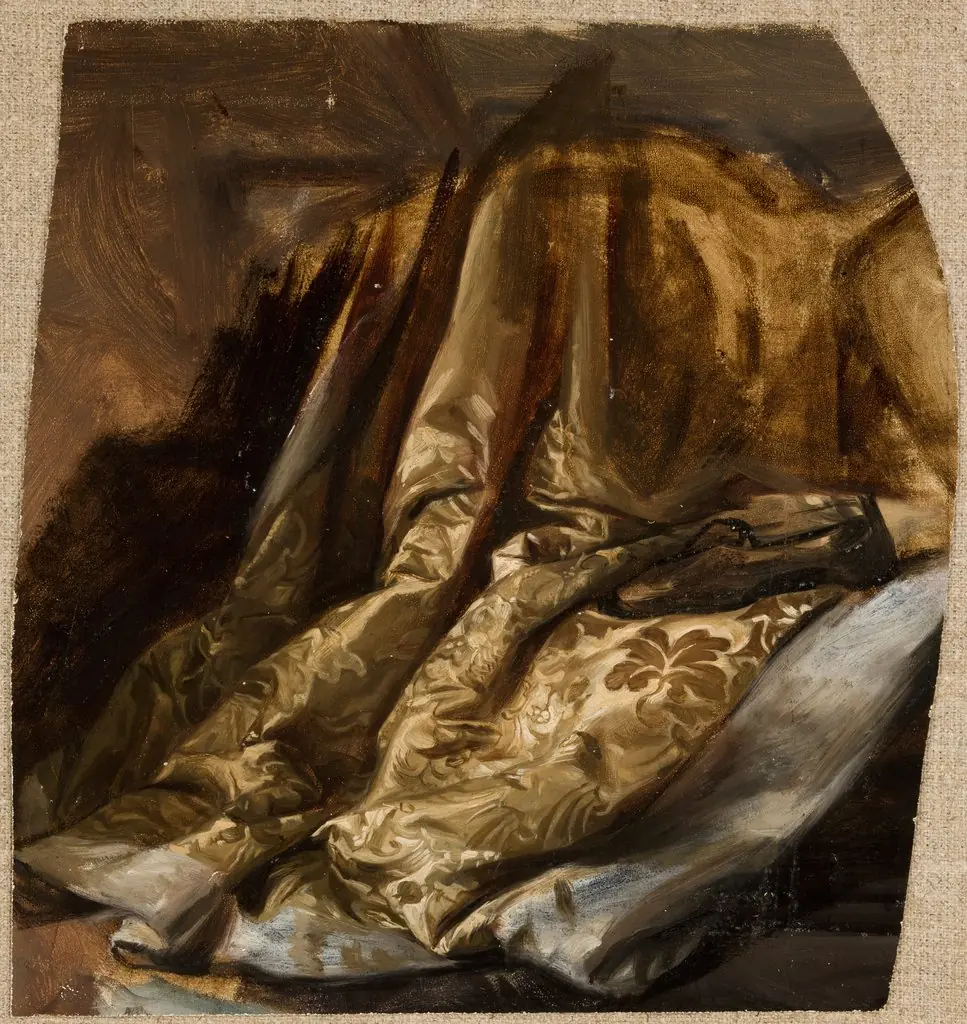
Golden fabric, study for men's attire
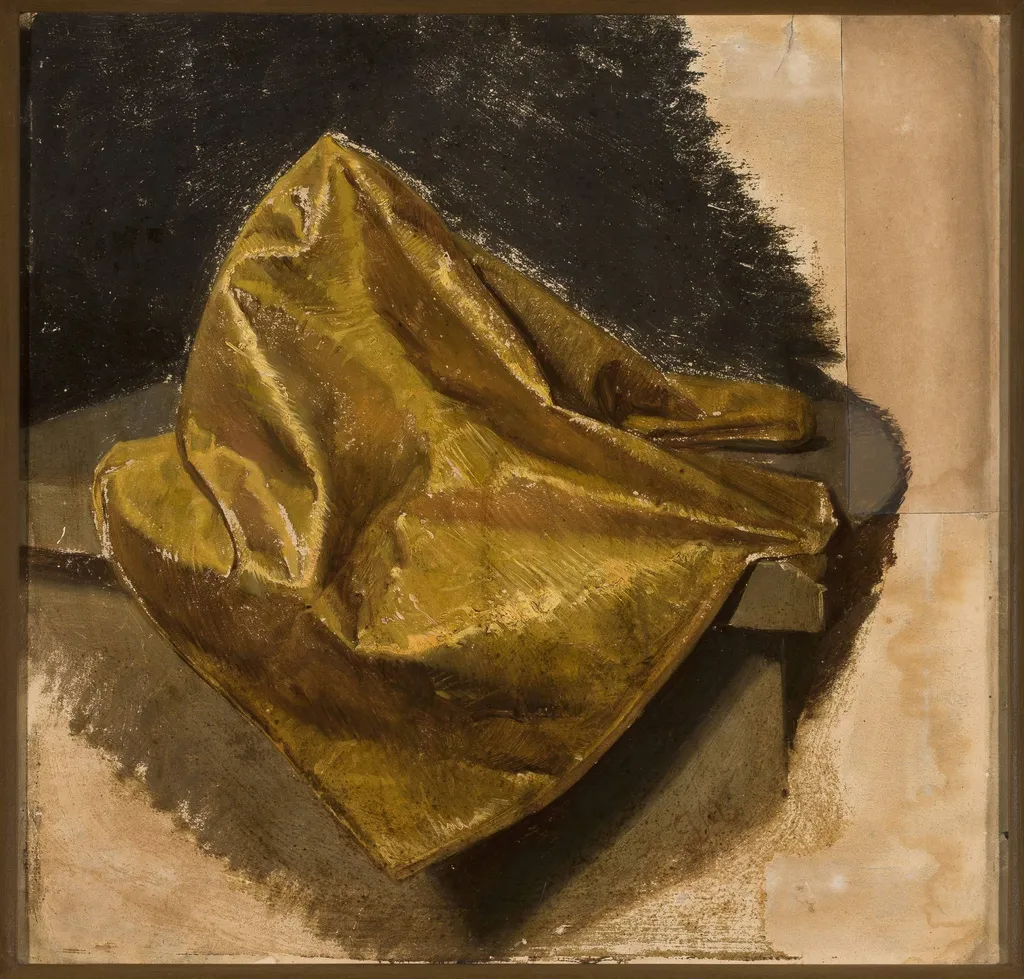
Golden fabric, study for men's attire is an unspecified painting by Jan Matejko. It dates from 1875 and is held in the collection of the National Museum in Warsaw.
About this work
Overview
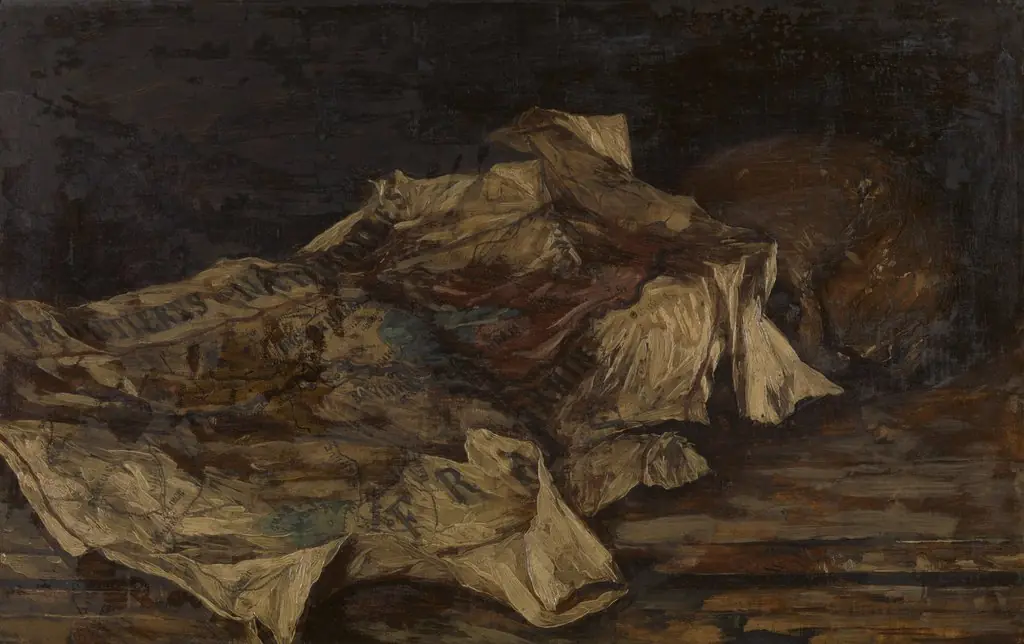
Created circa 1875, this study by Jan Matejko examines a piece of golden cloth intended for a male costume. The work functions as a preparatory sketch, focusing on the material’s surface, drapery and tonal qualities rather than a narrative scene.
Subject & Meaning
The canvas presents a single swath of gilded fabric, likely silk or satin, laid against a dark background. By isolating the textile, Matejko emphasizes the richness of the material and its role in the visual language of historic costume, underscoring his commitment to authentic representation.
Technique & Style
Matejko employs chiaroscuro to model the folds, using subtle shifts of light and shadow to convey weight and texture. The rendering of the fabric’s sheen and the crispness of its creases demonstrate a meticulous, almost photographic attention to detail, characteristic of his academic training.
History & Provenance
The study belongs to the oeuvre of Jan Matejko, a preeminent 19th‑century Polish painter noted for large‑scale historical compositions. Though not a finished portrait, the piece reflects his preparatory process for larger works. It entered the National Museum in Warsaw’s collection, where it remains on display.
Context
Matejko’s historical paintings required accurate period dress, prompting him to produce numerous costume studies. This work exemplifies the broader practice among academic artists of the era, who often created detailed fabric sketches to ensure visual fidelity in their monumental narratives.
Artist & collection
Artist
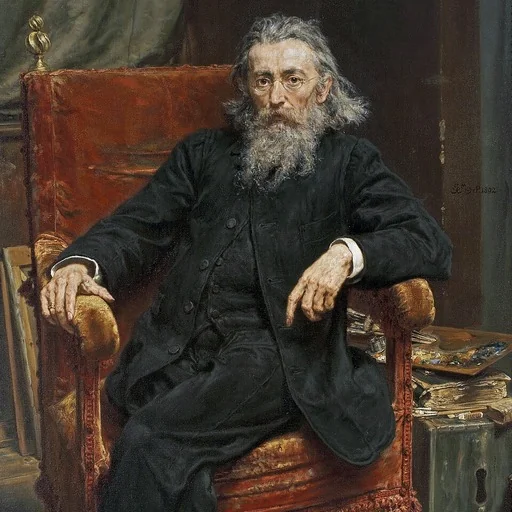
Jan Alojzy Matejko (Polish pronunciation: ; also known as Jan Mateyko; 24 June 1838 – 1 November 1893) was a Polish painter, a leading 19th-century exponent of history painting, known for depicting nodal events from Polish history.

 Fragment of the Cover of Quinn's Bed. Study to the Painting "The Death of Barbara Radziwiłł"
 Figure in Turkish Costume
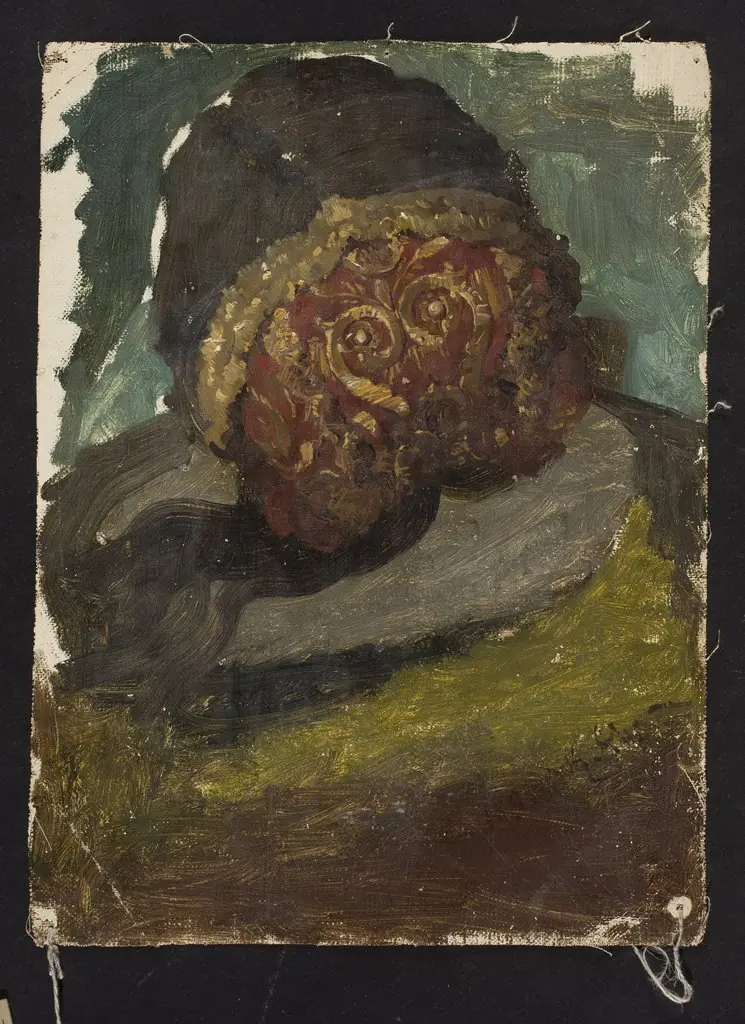 Woman's head in a cap, back view, study for the painting “Defence of Olsztyn by Karliński”
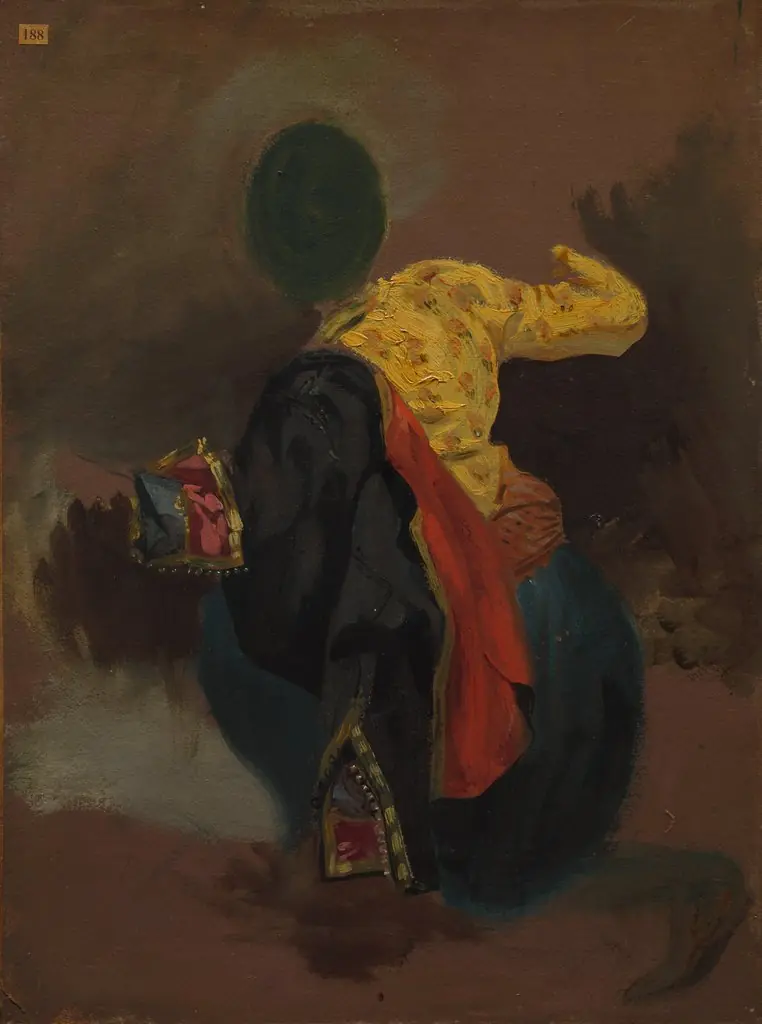 Figure in Turkish Costume
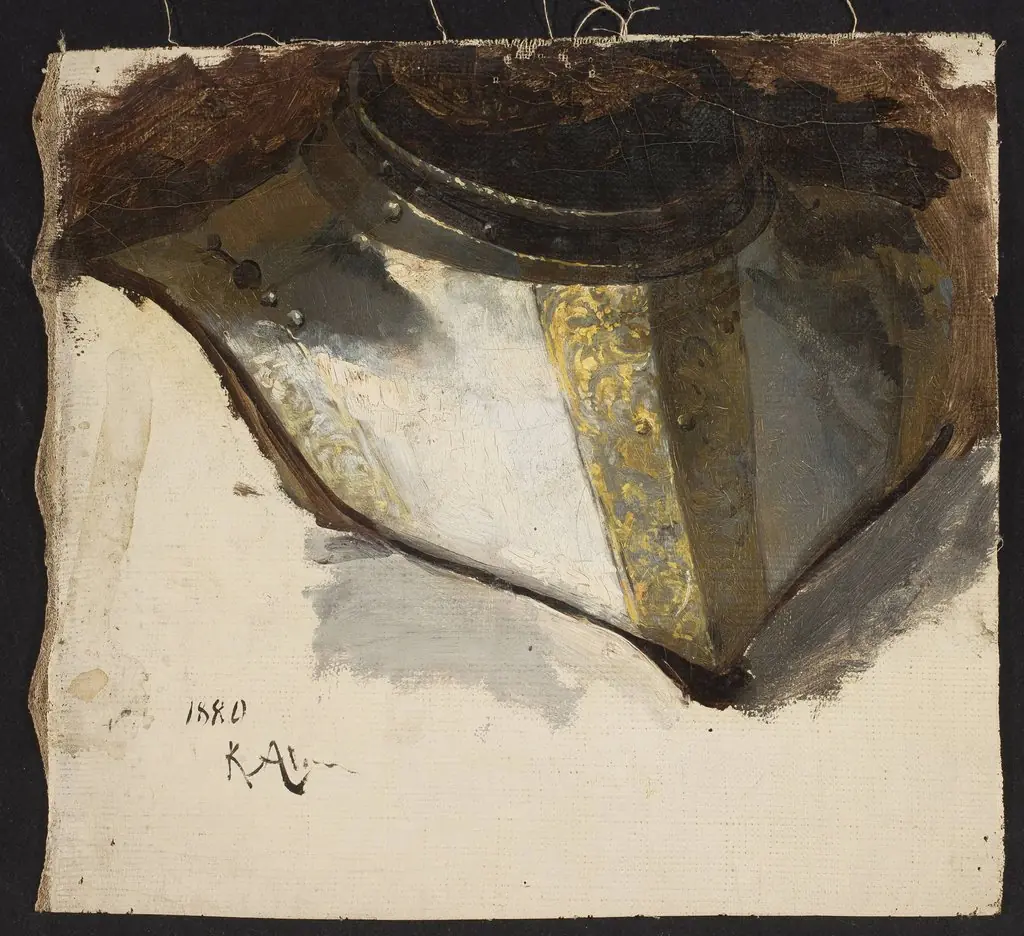 Armour bevor of Late Renaissance, study
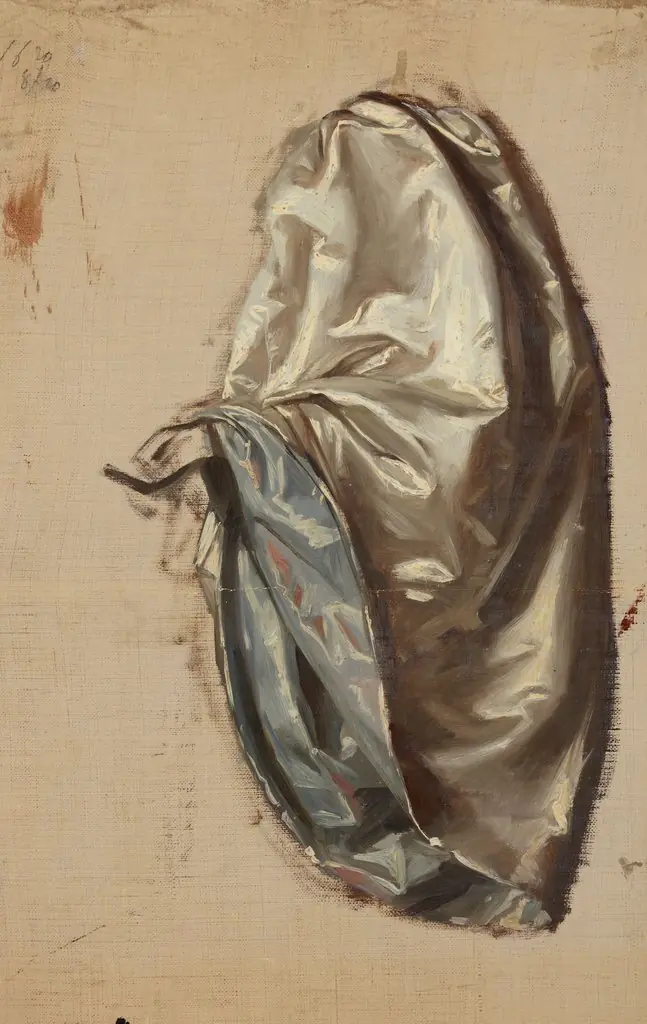 Study of a Lady with a Lute's Robe. Study to the Painting "Upbringing of Sigismund Augustus"
 Study of a flower
 Study of a Draped Figure
 Still Life