Artwork
Interior with a collection of paintings and musicians around a table
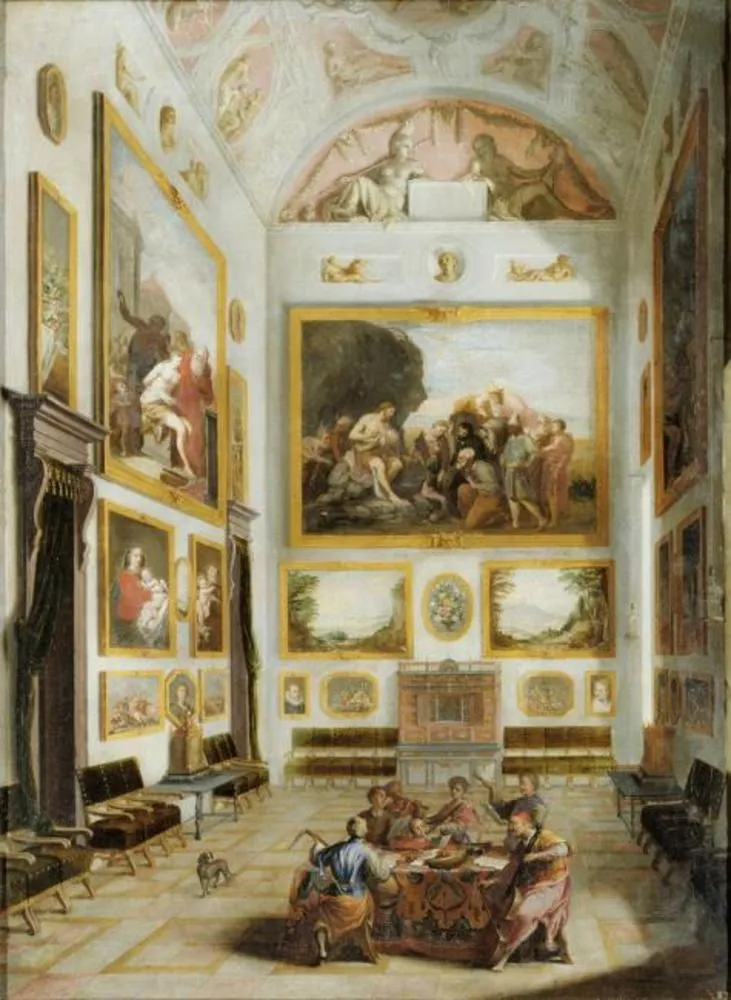
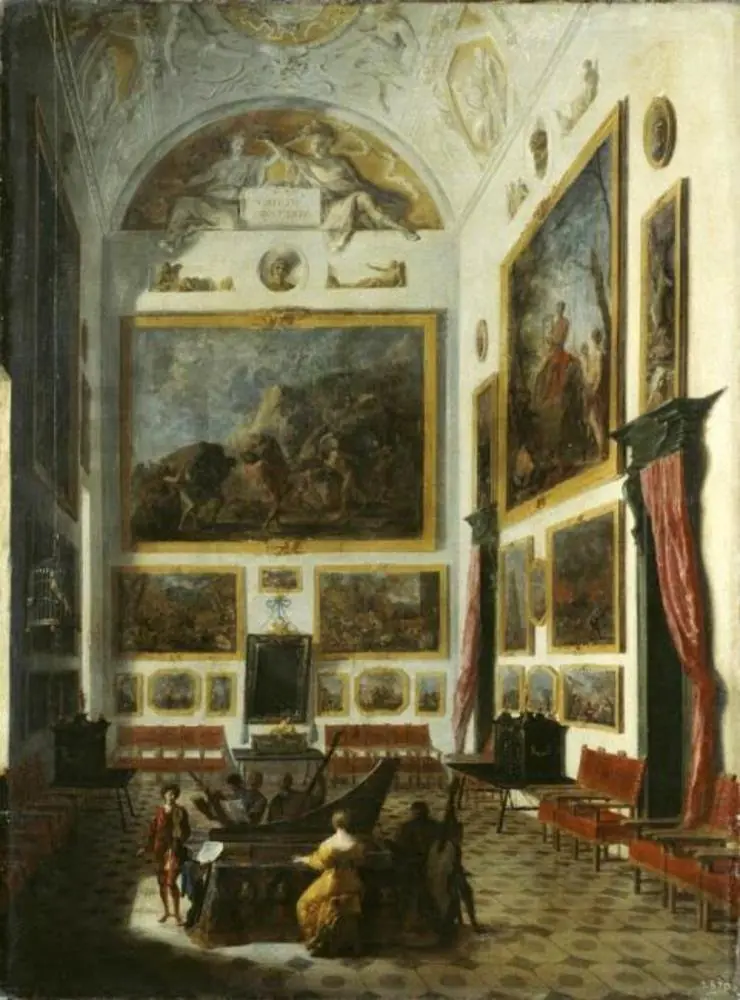
Interior with a collection of paintings and musicians around a table is an oil painting by the Dutch Golden Age artist Jan Onghers. It dates from 1698 and is held in the collection of the Staatliche Kunstsammlungen Dresden.
About this work
Overview
The composition blends domestic life with an environment saturated in artistic objects, reflecting the cultural priorities of its time.
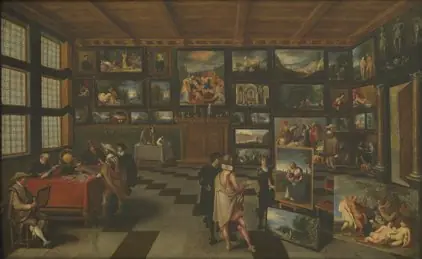
Painted in 1698 by Jan Onghers, this oil-on-canvas work presents a meticulously arranged interior scene. It captures a spacious room adorned with numerous framed artworks, where figures gather around a central table. The composition blends domestic life with an environment saturated in artistic objects, reflecting the cultural priorities of its time. The painting resides in the Gemäldegalerie Alte Meister in Dresden.
Subject & Meaning
The scene depicts musicians and companions engaged in conversation or performance, suggesting a private social gathering. Surrounding them are multiple paintings on the walls, indicating the owner’s cultivated taste and the integration of art into daily life. The presence of a wandering dog adds a quiet, observational detail, grounding the scene in lived experience rather than idealized grandeur.
Technique & Style
Onghers employs fine brushwork to render textures of fabric, wood, and gilded frames with precision. The lighting is even and diffused, enhancing the clarity of each object without dramatic contrast. The room’s architectural elements—high ceiling, white walls, ornate moldings—are rendered with careful perspective, reinforcing spatial depth and order. The arrangement of paintings on the walls suggests a deliberate curatorial intent.
History & Provenance
The painting has remained within institutional collections since at least the 18th century, entering the Gemäldegalerie Alte Meister in Dresden. Its survival through centuries reflects its status as a representative example of Dutch-influenced genre painting in the late Baroque period. No significant alterations or reworkings are documented, preserving its original composition.
Context
Created during a period when Dutch and Flemish interiors often featured art collections as symbols of status, this work aligns with a broader trend of depicting private spaces filled with cultural artifacts. Unlike overtly religious or mythological scenes, it emphasizes quiet refinement and the domestic appreciation of art, mirroring the tastes of educated urban elites in the late 17th century.
Legacy
The painting contributes to the understanding of how art was displayed and experienced in private homes during the late Baroque era. It serves as a visual record of collecting practices and social rituals among the affluent. While not widely known outside specialist circles, it remains a valuable case study in the intersection of domestic life and visual culture.
Artist & collection

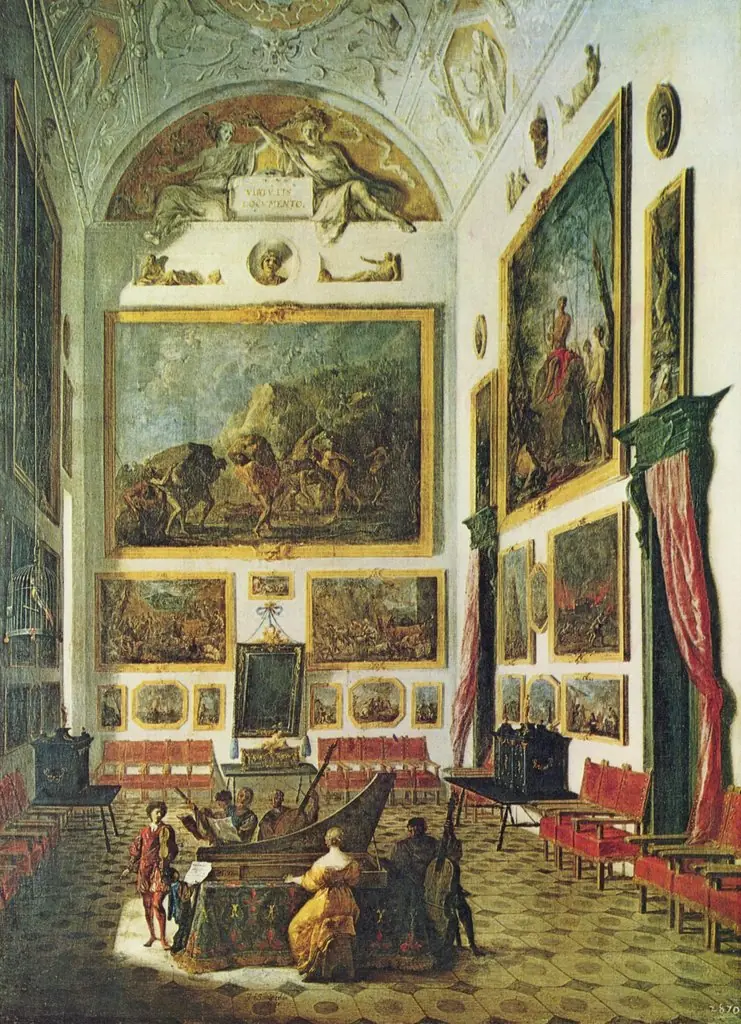 Musical Entertainment at the Spinet
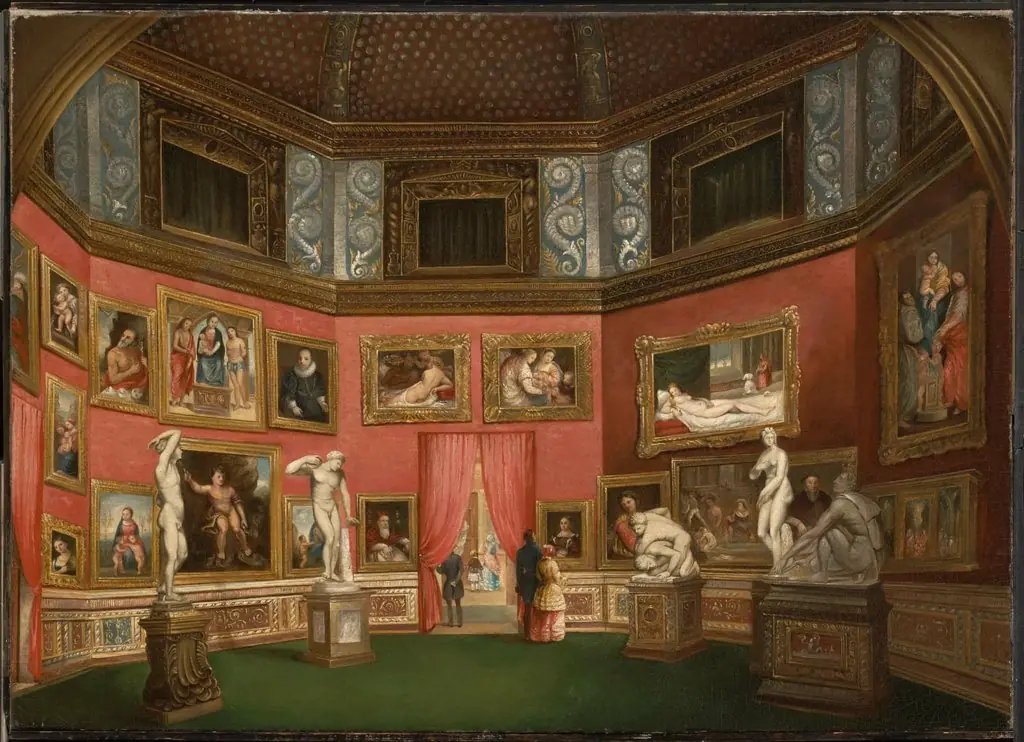 The Tribuna of the Uffizi
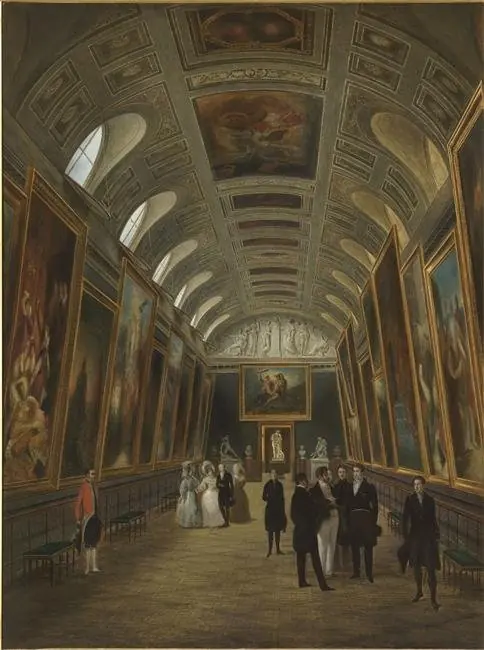 Louis-Philippe visiting the Luxembourg Museum
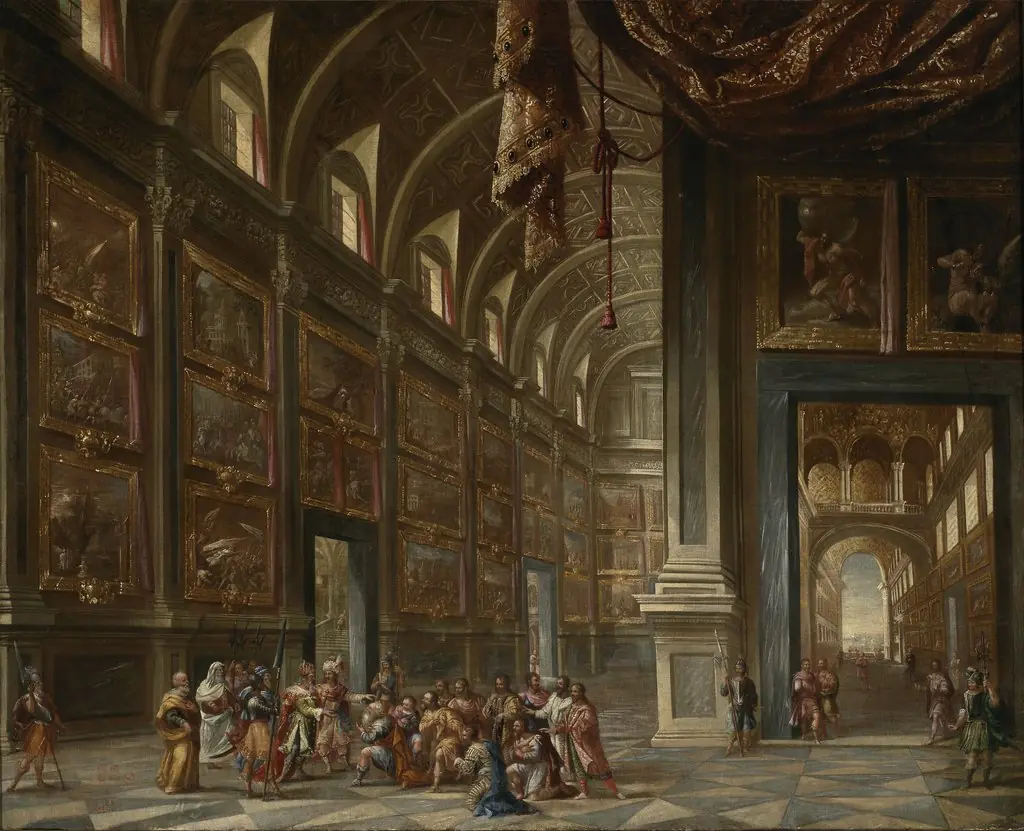 José mostrando a su padre y sus hermanos al Faraón
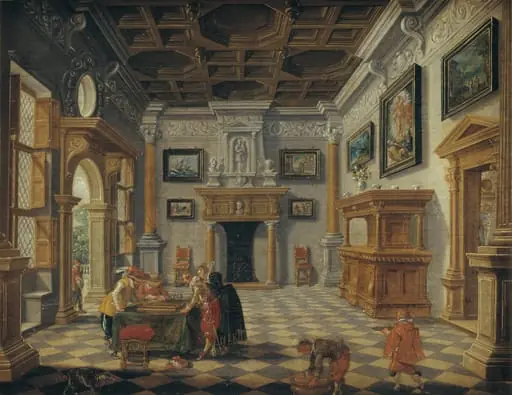 Sumptuous Renaissance Interior with Tric-Trac Players
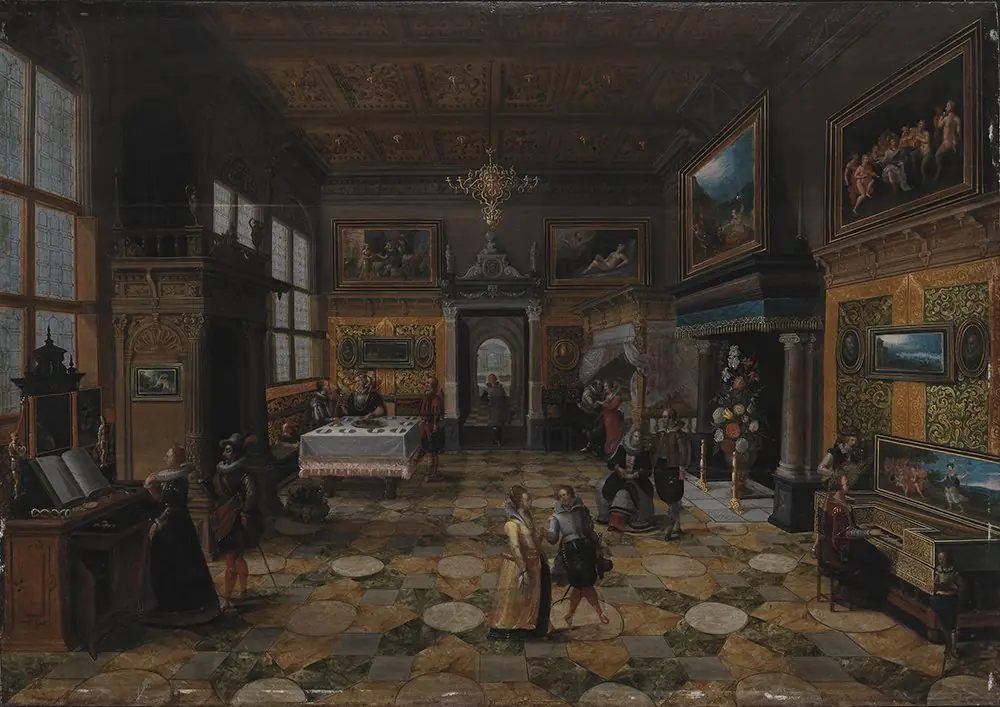 Party Scene
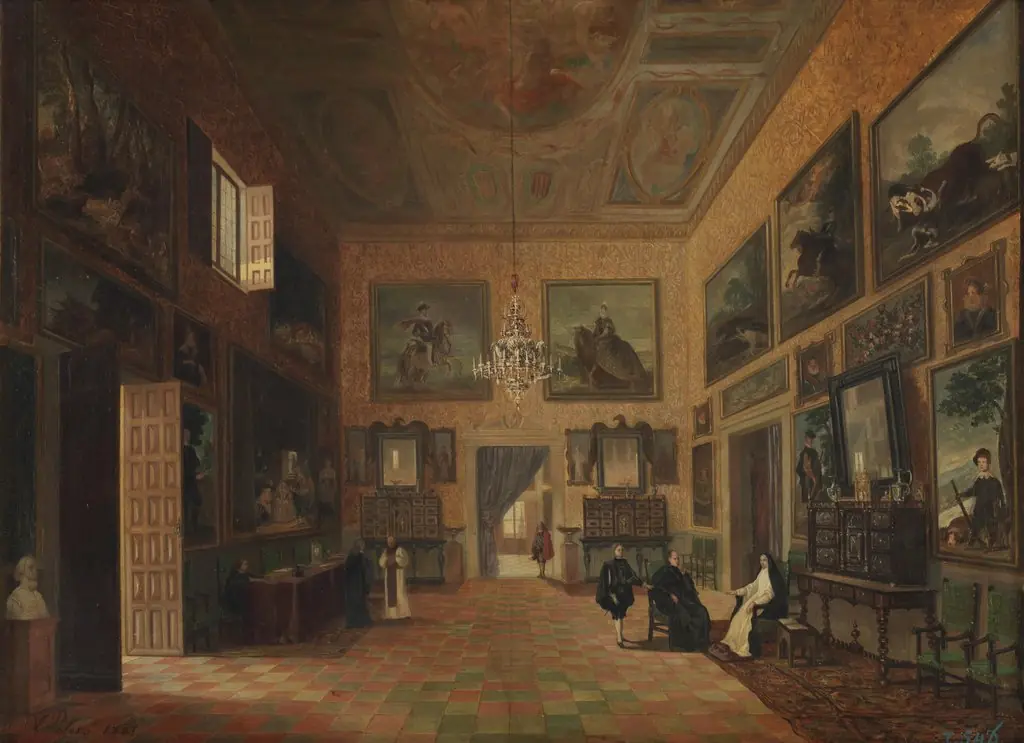 The chamber of Philip IV in the Buen Retiro Royal Palace
 Imaginary View of the Grande Galerie in the Louvre