Artwork
Venus and Cupid
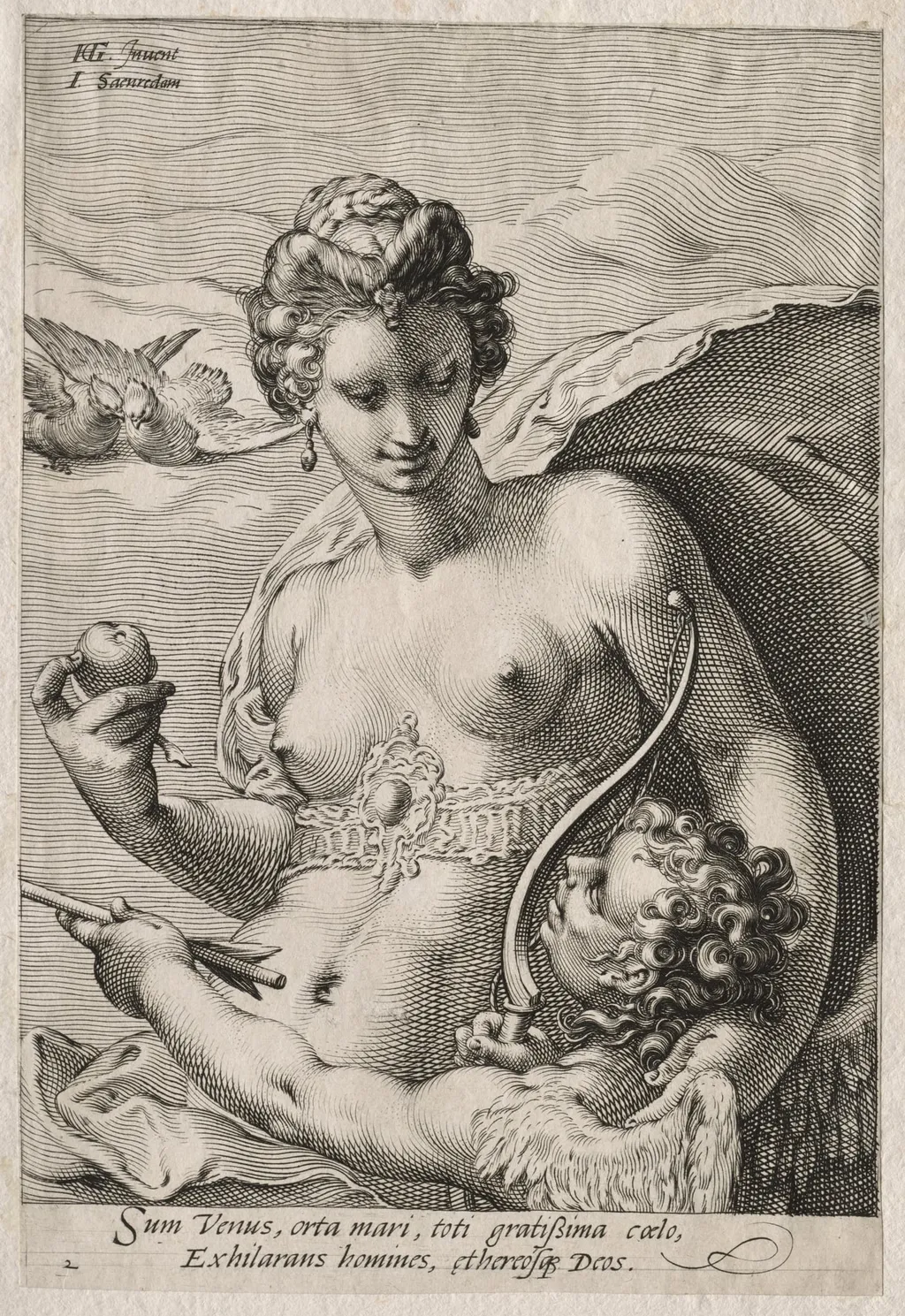
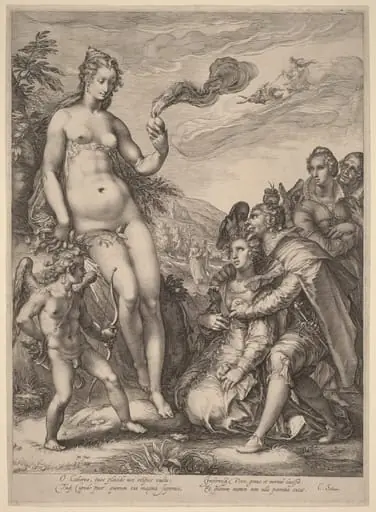
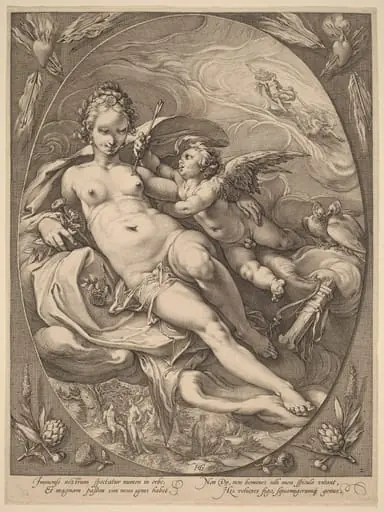
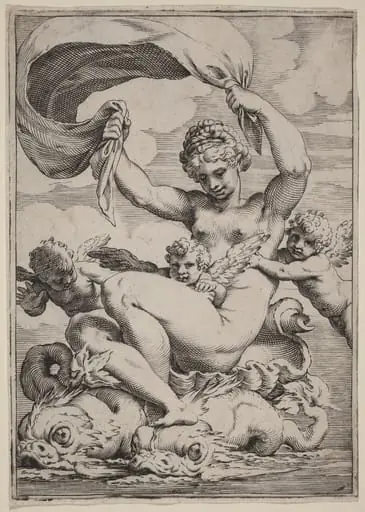
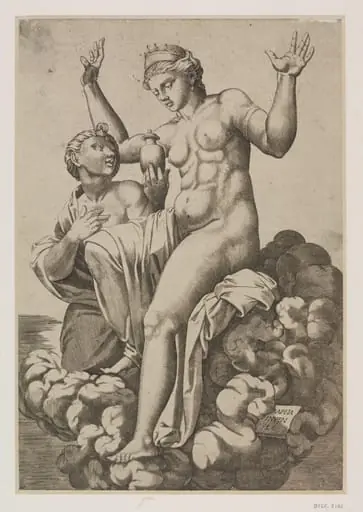
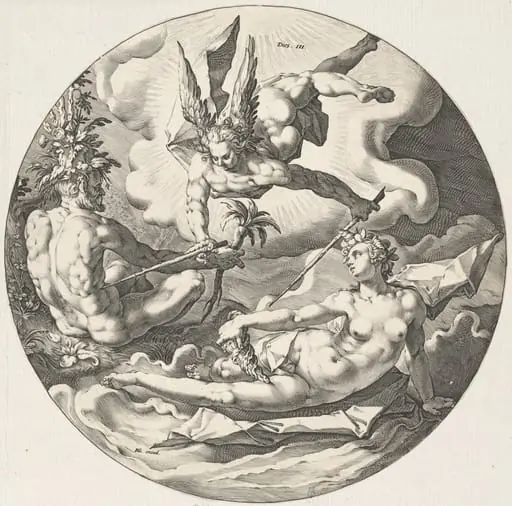
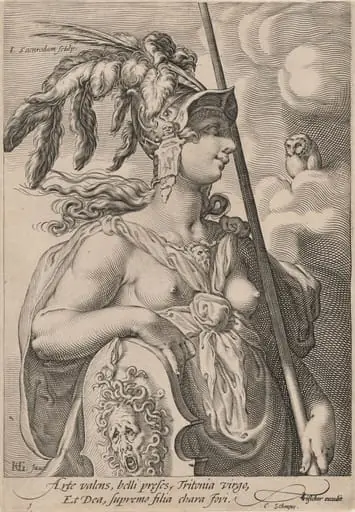
Venus and Cupid is a print by the Renaissance artist Jan Pietersz Saenredam. It dates from 1595 and is held in the collection of the Cleveland Museum of Art. This engraving by Hendrick Goltzius depicts Venus with her son Cupid, holding the golden apple from the Judgment of Paris.
About this work
Overview
This engraving by Hendrick Goltzius depicts Venus with her son Cupid, holding the golden apple from the Judgment of Paris.
This engraving by Hendrick Goltzius depicts Venus with her son Cupid, holding the golden apple from the Judgment of Paris. Created as part of a series intended for his pupil Saenredam to engrave, the work exemplifies Goltzius’s refined linear technique, where intricate, flowing lines mimic the texture of skin and fabric. The plain background directs attention to the figure’s form, emphasizing the artist’s mastery of contour and movement.
Subject & Meaning
The scene references the myth in which Venus wins the golden apple by promising Paris the love of Helen, the most beautiful woman. Unlike her rivals Juno and Athena, who offer power and wisdom, Venus’s gift is desire. The presence of Cupid reinforces her domain over love, while the apple symbolizes the moment of choice. The composition invites viewers to reflect on the nature of beauty and temptation, positioning them as silent judges in the mythic trial.
Technique & Style
Goltzius employed a highly detailed engraving method using fine, interwoven lines that curve and taper to suggest volume and motion. These lines imitate the softness of flesh and the drape of fabric, creating a tactile realism. The technique, developed to replicate the effects of painting in print, was taught to Saenredam and became a hallmark of Goltzius’s school, distinguishing his work through its rhythmic precision and sculptural clarity.
History & Provenance
The print was produced around the late 1580s as part of a series commissioned for Saenredam, Goltzius’s pupil and collaborator. Though Goltzius designed the compositions, Saenredam executed the engravings under his guidance. This collaborative approach was common in Northern Renaissance workshops, where master artists trained apprentices through direct involvement in print production, ensuring the transmission of technical and aesthetic standards.
Context
In the late 16th century, mythological subjects were favored in Northern European printmaking, reflecting humanist interests and the revival of classical themes. Goltzius’s series responded to a market that valued intellectual allegory and technical virtuosity. The division of the three goddesses into separate prints allowed collectors to display and compare them, turning myth into a visual puzzle that engaged viewers in the act of judgment.
Legacy
Goltzius’s linear style influenced generations of engravers, establishing a new standard for detail and expressiveness in printmaking. His pedagogical role ensured that his techniques spread widely through his students. The Venus and Cupid print, though one of three in the series, remains a key example of how Northern Mannerism merged classical narrative with technical innovation, bridging painting and print in early modern Europe.
Artist & collection
Artist
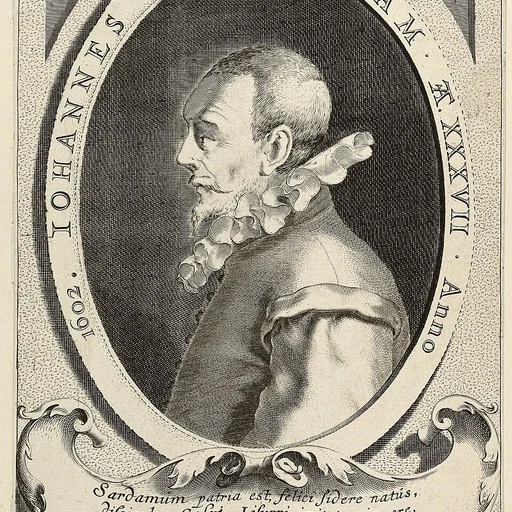
Jan Pieterszoon (abbr. Pietersz.) Saenredam (c. 1565 – 6 April 1607) was a Dutch Northern Mannerist painter, printmaker in engraving, and cartographer, and father of the painter of church interiors, Pieter Jansz…