Artwork
Pallas Athena
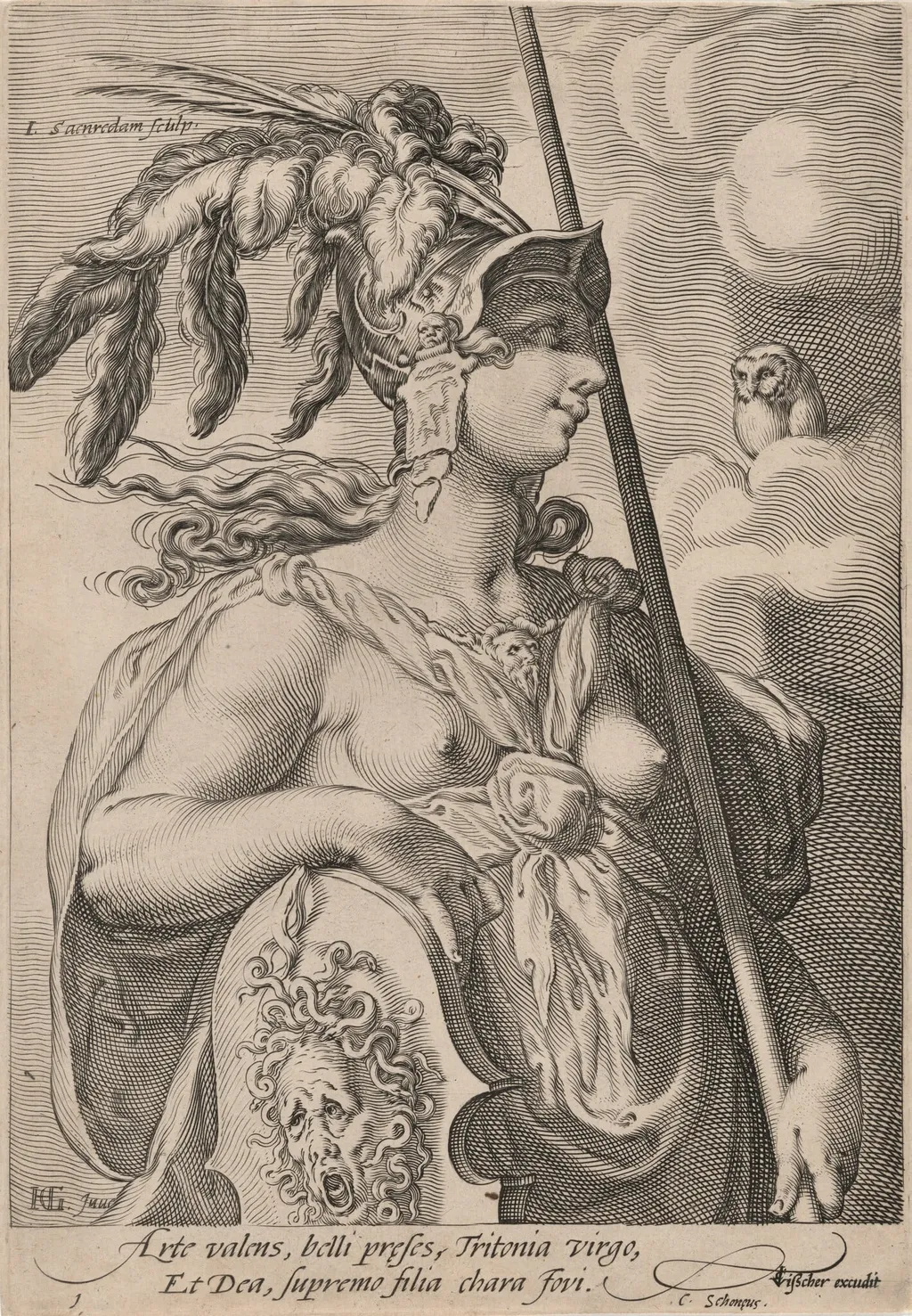
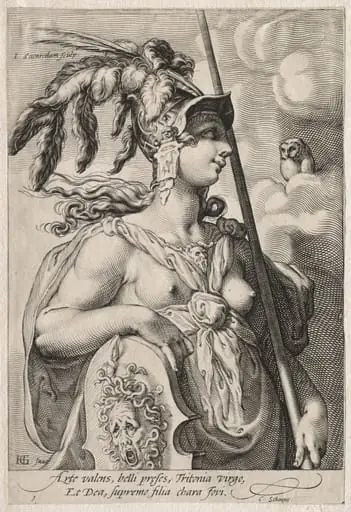
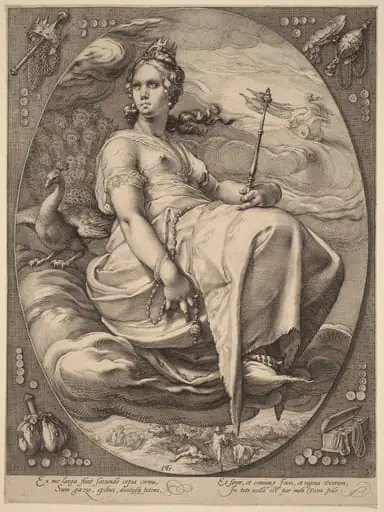
Pallas Athena is an ink print by the Renaissance artist Jan Pietersz Saenredam. It dates from 1595 and is held in the collection of the National Gallery of Art. Created around 1595, this black-and-white engraving by Jan Pietersz.
About this work
Overview
Executed on laid paper, the work exemplifies Saenredam’s skill as a printmaker and his engagement with classical allegory.
Created around 1595, this black-and-white engraving by Jan Pietersz. Saenredam portrays the Greek goddess Pallas Athena, rendered in the Northern Mannerist tradition. Executed on laid paper, the work exemplifies Saenredam’s skill as a printmaker and his engagement with classical allegory. It resides today in the National Gallery of Art in Washington, D.C., alongside other prints from the late Renaissance period.
Subject & Meaning
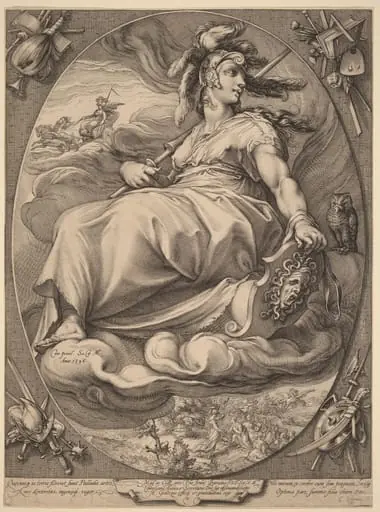
The figure of Athena, goddess of wisdom and strategic warfare, is depicted in armor, holding a spear and shield. A small owl, her traditional symbol, rests near her hand, reinforcing the theme of intellect. Her helmet partially obscures her face, emphasizing her divine authority over human form. The Latin inscription below functions as a poetic commentary, aligning the image with humanist ideals of knowledge and virtue prevalent in late 16th-century Europe.
Technique & Style
Saenredam employed fine, controlled lines typical of engraving on copper plates, creating texture through cross-hatching and delicate contours. The background swirls with dynamic, rhythmic strokes suggesting wind or flowing fabric, a hallmark of Mannerist exaggeration. The contrast between the rigid armor and fluid surroundings enhances the tension between order and movement, characteristic of Northern Mannerist aesthetics.
History & Provenance
Jan Pietersz. Saenredam was a Dutch artist known for his engravings and mapmaking, active in the late 1500s. Though less famous than his son Pieter Jansz. Saenredam, who specialized in architectural interiors, the father’s prints circulated widely in intellectual circles. This engraving entered the National Gallery of Art’s collection as part of its broader effort to document the evolution of printmaking in the Northern Renaissance.
Context
In the late 16th century, Dutch artists increasingly turned to classical mythology as a vehicle for moral and philosophical expression. Engravings like this one served both decorative and didactic purposes, often owned by scholars and civic leaders. The use of Latin text and symbolic imagery reflected humanist education, while the medium allowed for wide dissemination among literate audiences across Europe.
Legacy
Saenredam’s *Pallas Athena* reflects the enduring influence of classical iconography in Northern European print culture. While not widely reproduced today, it stands as an example of how allegory and technical precision coexisted in early modern printmaking. The work contributes to understanding the transition from religious to secular symbolism in Dutch art before the Golden Age.
Artist & collection
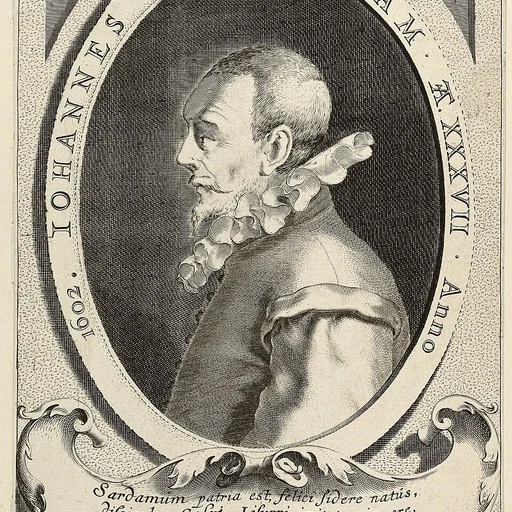
Artist
Jan Pieterszoon (abbr. Pietersz.) Saenredam (c. 1565 – 6 April 1607) was a Dutch Northern Mannerist painter, printmaker in engraving, and cartographer, and father of the painter of church interiors, Pieter Jansz…