Artwork
Ships off the Coast
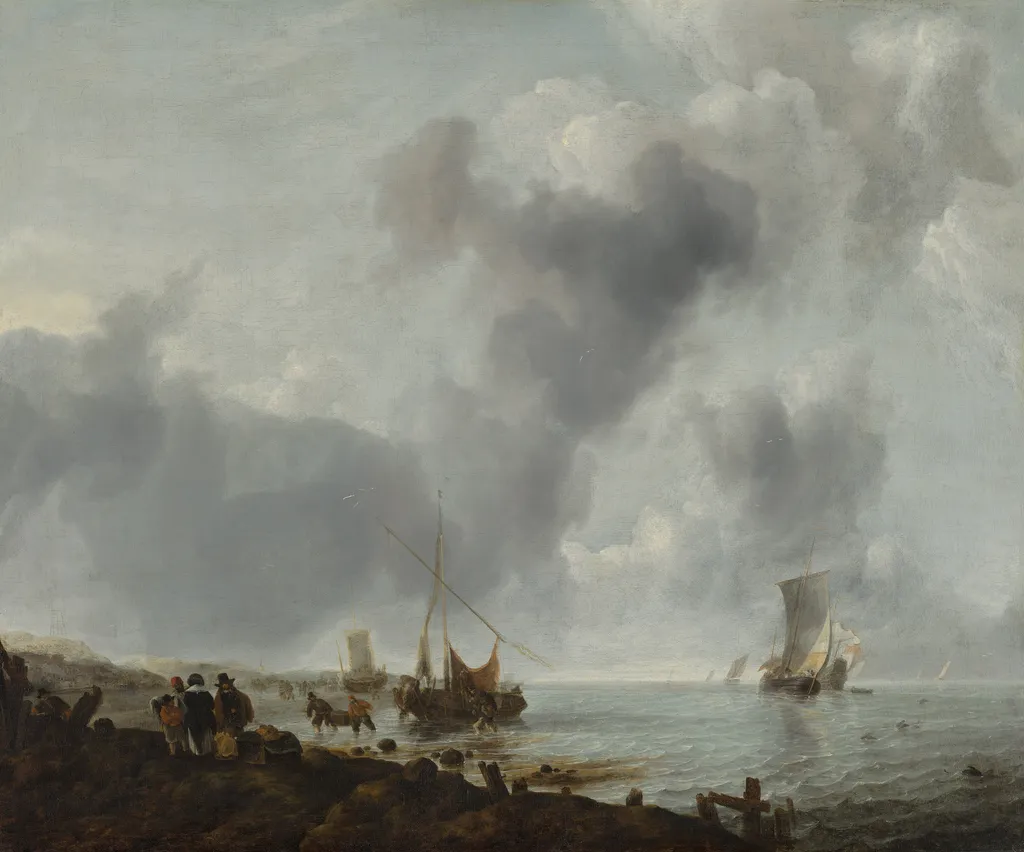
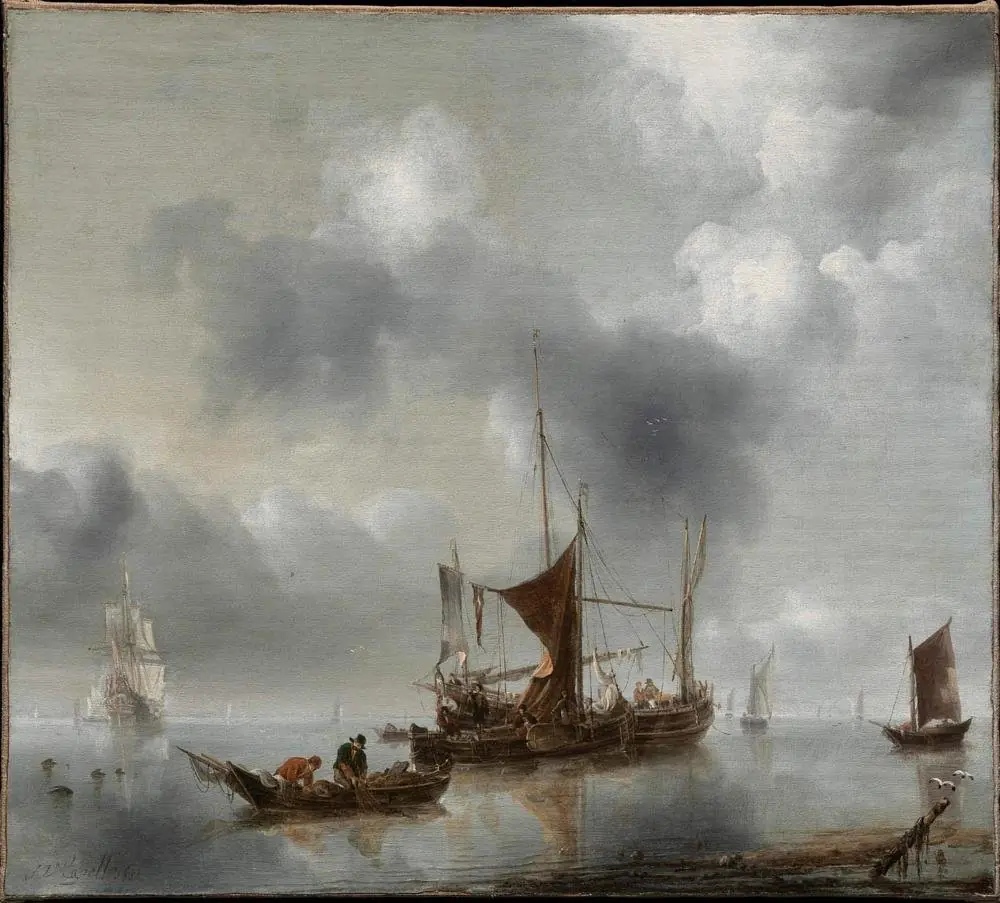
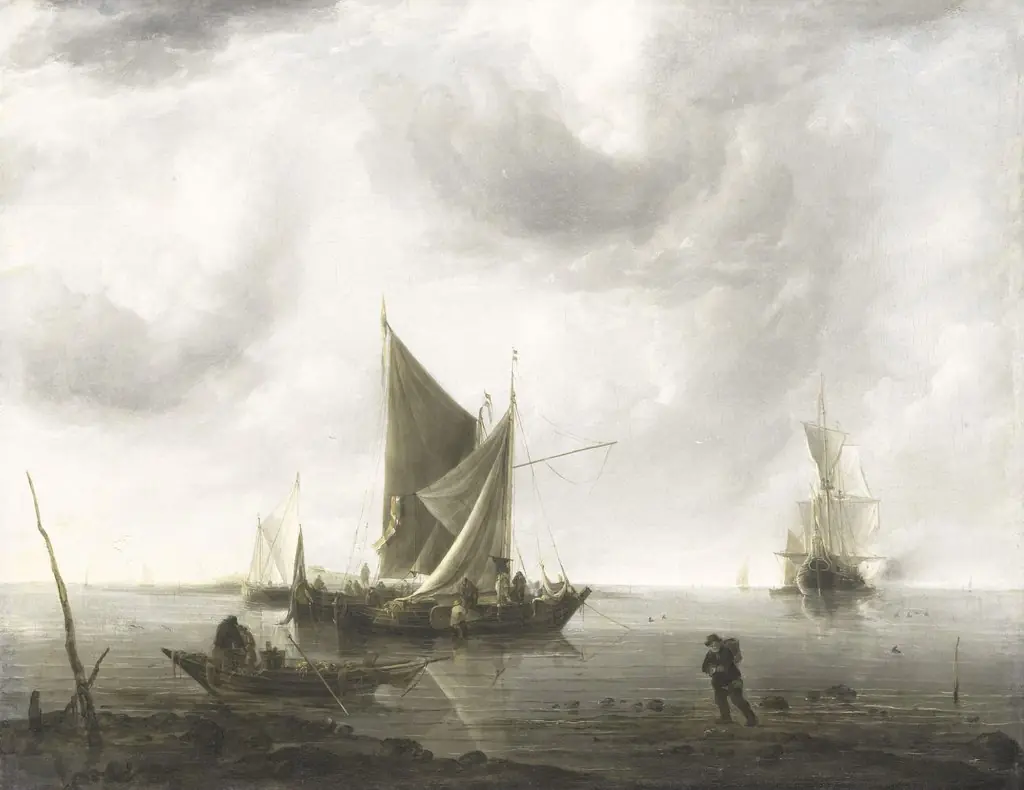
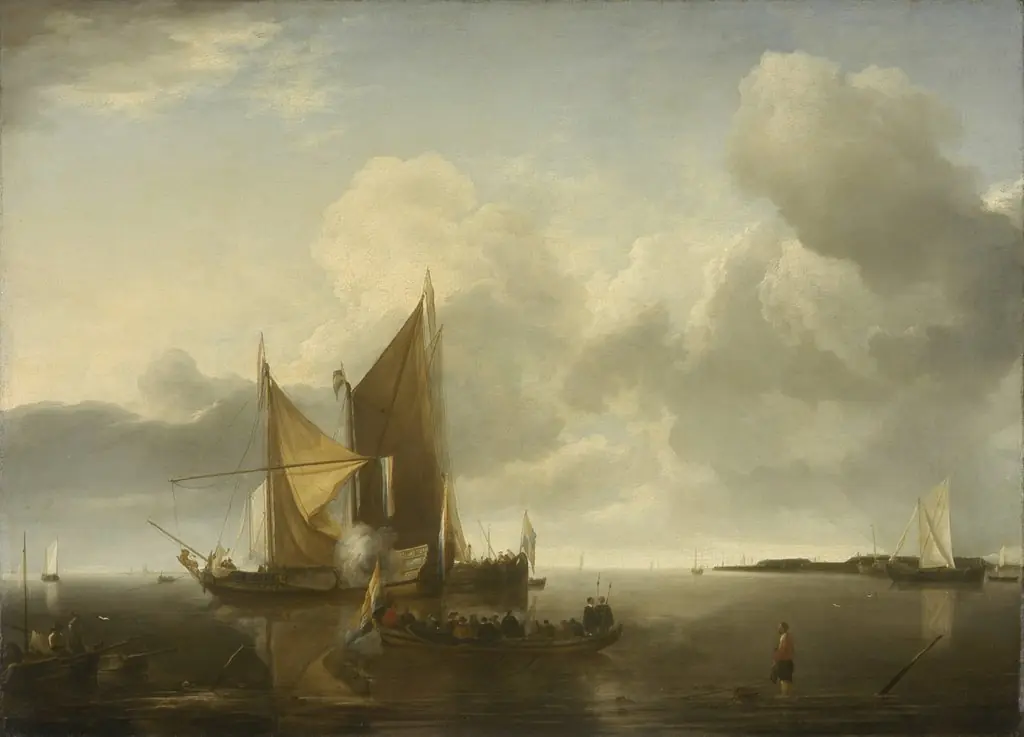
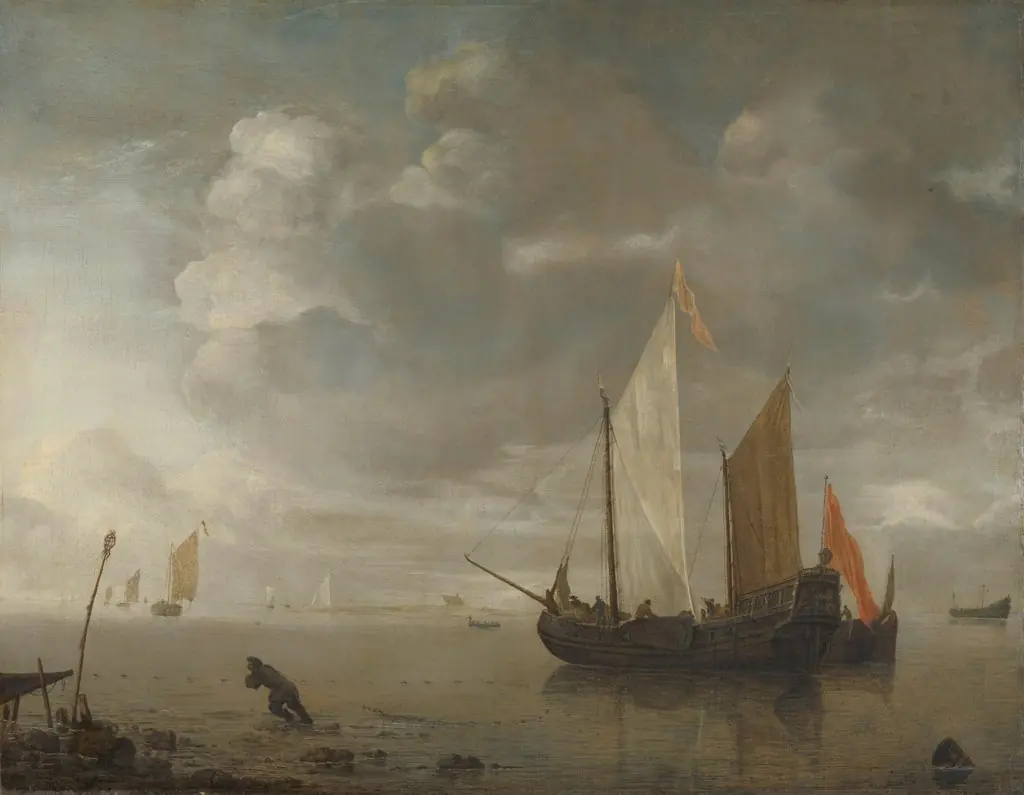
Ships off the Coast is an oil painting by the Dutch Golden Age artist Jan van de Cappelle. It dates from 1651 and is held in the collection of the Mauritshuis.
About this work
Overview
His work captures the subtle interplay of light, water, and sky with restrained precision, avoiding dramatic spectacle in favor of atmospheric observation.
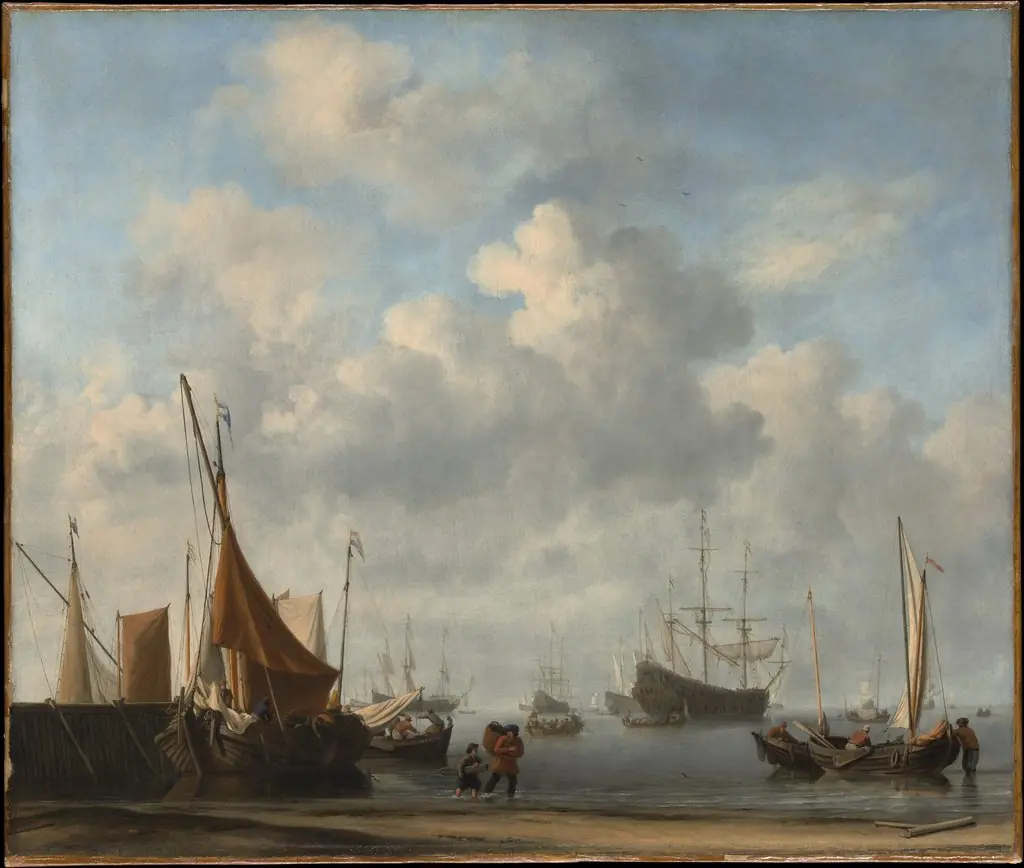
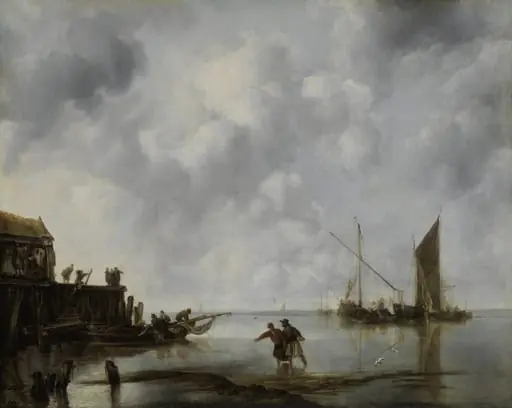
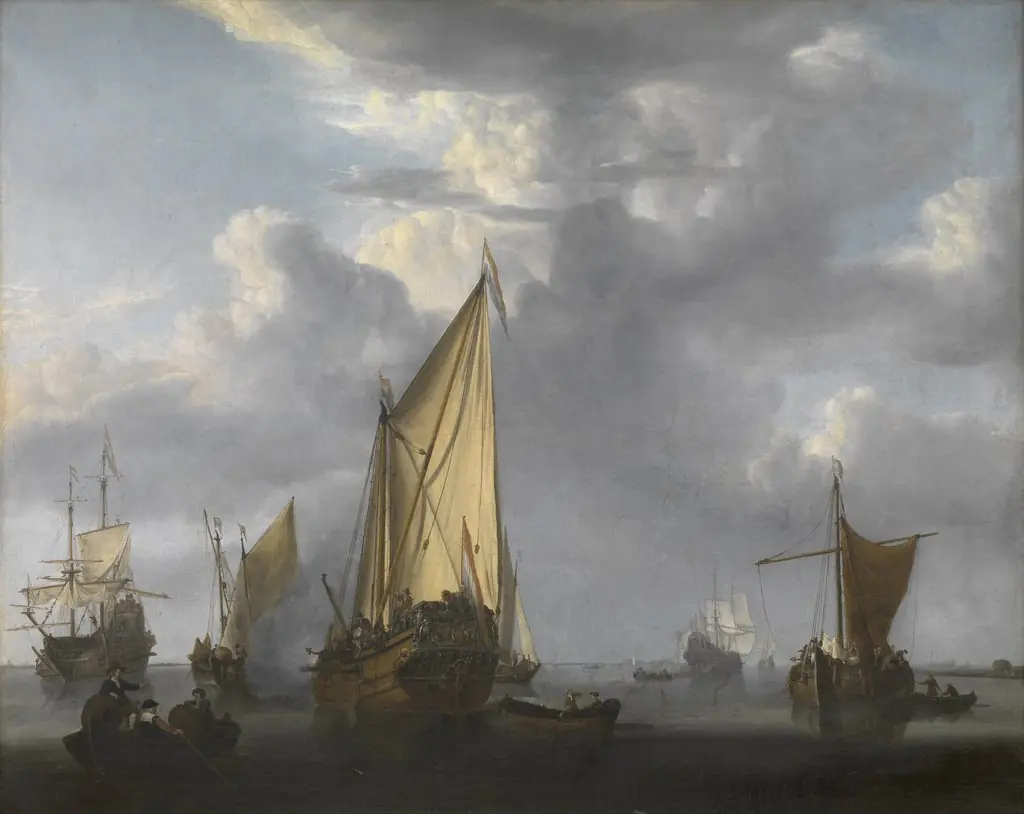
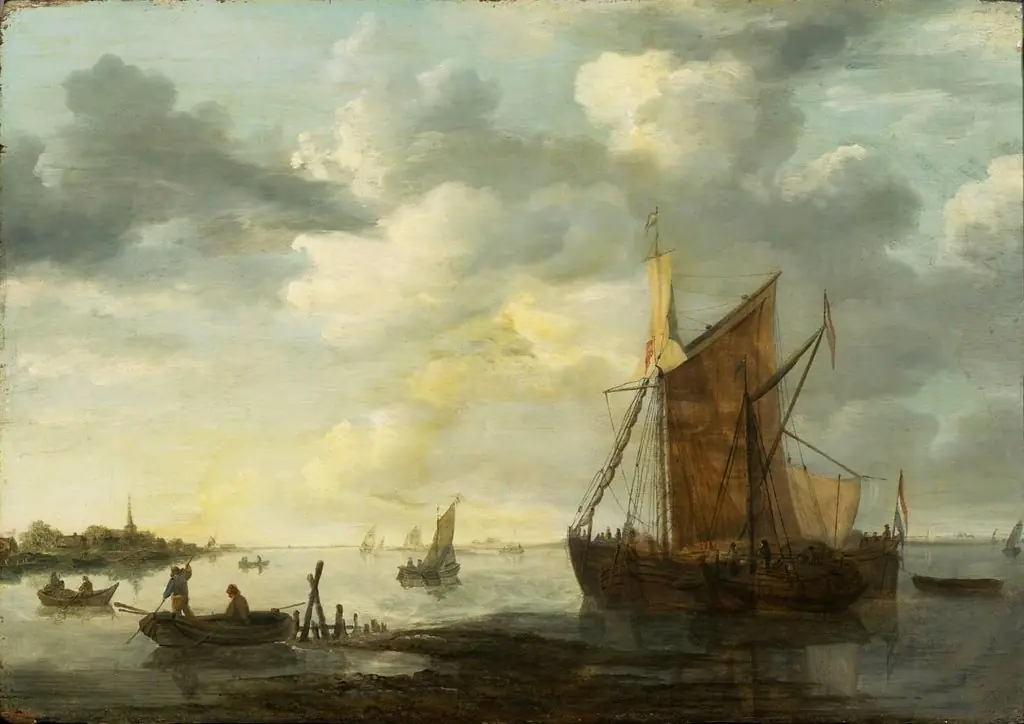
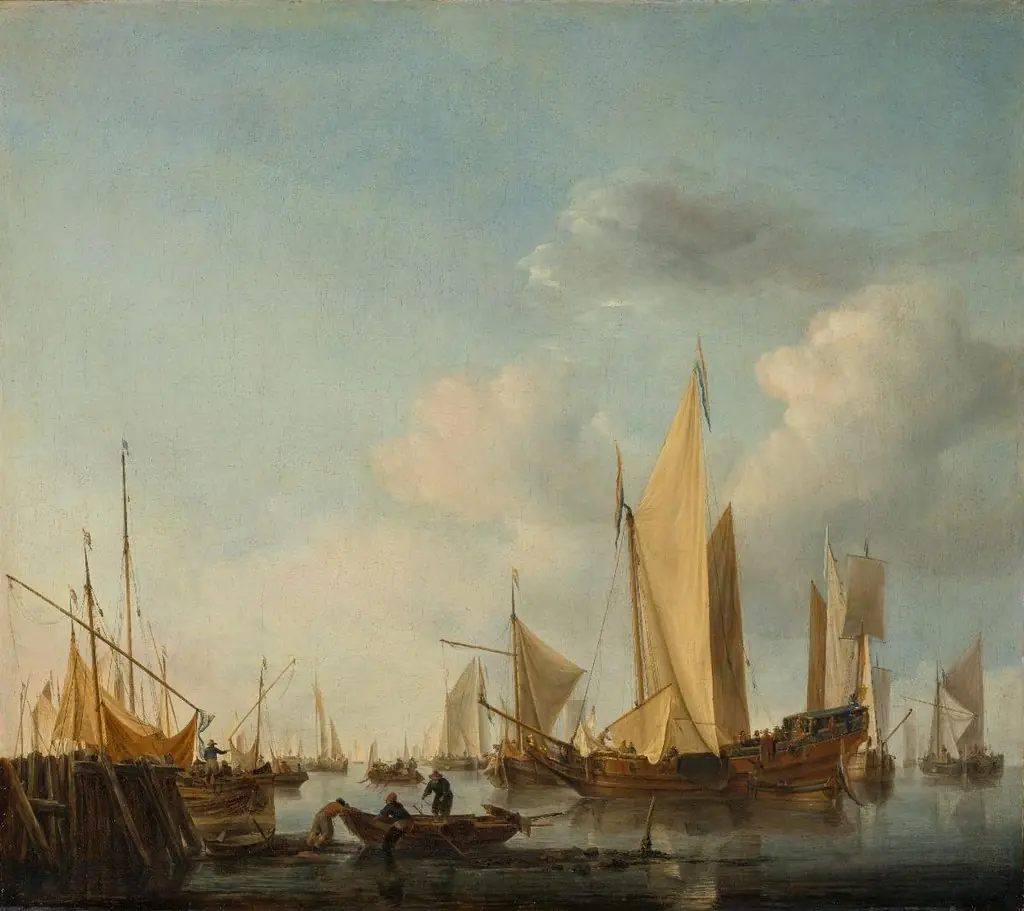
Painted in 1651 by Jan van de Cappelle, this oil on panel depicts a quiet coastal stretch with vessels at sea and figures on shore. Van de Cappelle, an Amsterdam-based artist and dyer, specialized in maritime scenes that reflected the Netherlands’ seafaring economy. His work captures the subtle interplay of light, water, and sky with restrained precision, avoiding dramatic spectacle in favor of atmospheric observation.
Subject & Meaning
The scene shows a group of shore dwellers observing ships moving across calm waters, their presence suggesting daily life tied to the sea. No narrative is imposed; instead, the painting conveys quiet routine—fishermen, merchants, or laborers watching the horizon. The stillness of the figures contrasts with the motion of clouds and waves, hinting at the sea’s quiet power and the human habit of waiting, watching, and enduring.
Technique & Style
Van de Cappelle employed broad, textured brushwork to render clouds and water, creating a sense of movement without theatricality. Subtle shifts in tone, achieved through layered glazes, define the sky’s weight and the sea’s surface. Chiaroscuro is used sparingly to model form, not to heighten drama. Details like the hulls of ships and folds of fabric on shore are rendered with quiet accuracy, reflecting the artist’s keen eye for natural observation over idealization.
History & Provenance
The painting was made during the height of the Dutch Golden Age, a time when maritime trade and coastal life were central to national identity. Van de Cappelle, who managed his family’s carmine dye business, likely painted in the intervals between commercial duties. The work remained in Dutch collections for centuries, its quiet realism appealing to collectors who valued authenticity over grandeur.
Context
In mid-17th century Holland, seascapes were more than decorative—they reflected economic reality. Shipbuilding, fishing, and global trade sustained the Republic’s wealth. Artists like van de Cappelle documented these scenes not as heroic tales but as lived environments. His work aligns with a broader trend: paintings that honored the ordinary rhythms of coastal life, free from myth or allegory.
Legacy
Van de Cappelle’s approach influenced later Dutch marine painters through his emphasis on atmospheric truth rather than spectacle. His ability to convey weather and water with minimal embellishment set a standard for observational painting. Though less celebrated than contemporaries like Rembrandt, his quiet, consistent output helped define the genre’s emotional restraint and technical discipline.
Own this work as a print
Artist & collection
Artist
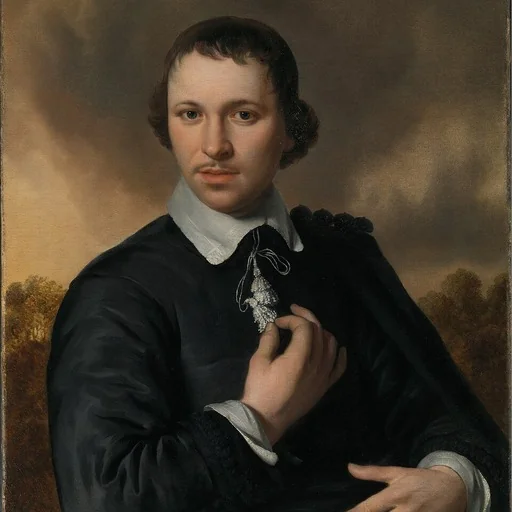
Jan van de Cappelle (or Joannes / van der / Capelle in various combinations; 25 January 1626 (baptized) – 22 December 1679 (buried)) was a Dutch Golden Age painter of seascapes and winter landscapes, also notable as an industrialist and…