Artwork
The Castle with Two Towers
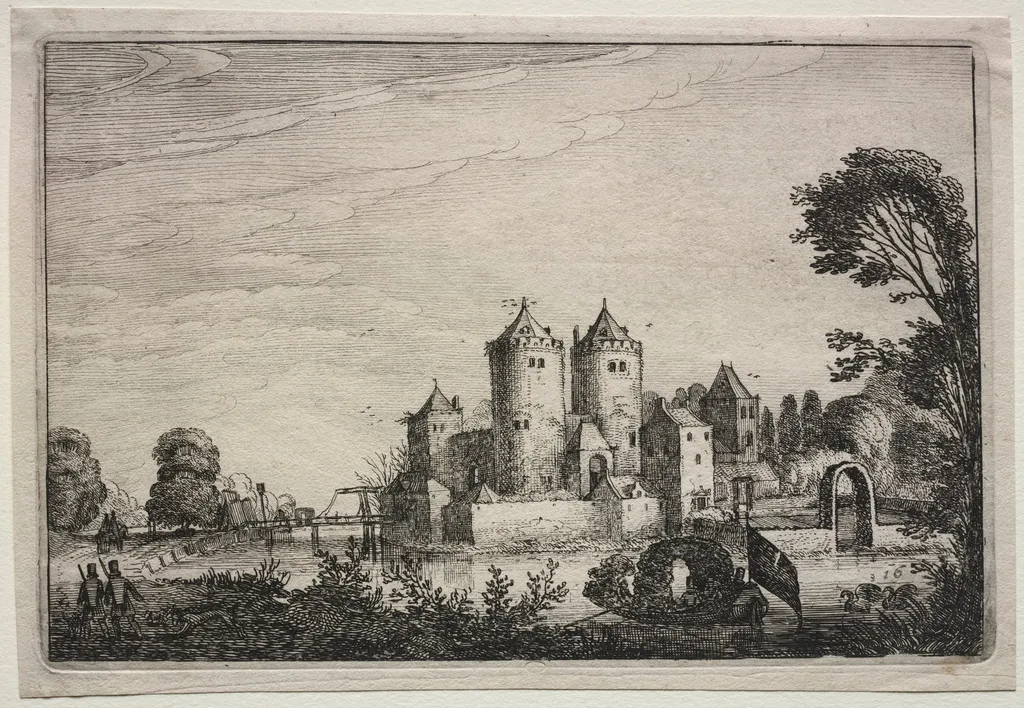
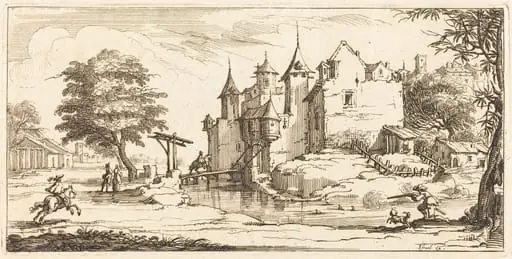
The Castle with Two Towers is a print by the Baroque artist Jan Jansz van de Velde. It dates from 1616 and is held in the collection of the Cleveland Museum of Art. Created in 1616 by Jan van de Velde, this ink drawing depicts a tranquil riverside castle with two prominent towers.
About this work
Overview
The composition centers on the structure, flanked by trees and a narrow bridge, with minimal sky detail suggesting quiet openness.
Created in 1616 by Jan van de Velde, this ink drawing depicts a tranquil riverside castle with two prominent towers. Executed with precise, delicate lines, the work captures a still, contemplative atmosphere. The composition centers on the structure, flanked by trees and a narrow bridge, with minimal sky detail suggesting quiet openness. It is part of the collection at The Cleveland Museum of Art.
Subject & Meaning
The scene presents a solitary castle beside a calm river, accessible via a small bridge. Figures near the walls hint at quiet human presence without disrupting the serenity. The absence of dramatic action or narrative elements emphasizes stillness over story. The castle may symbolize stability or retreat, rendered not as a fortress but as a peaceful landmark in harmony with its natural surroundings.
Technique & Style
Van de Velde employed fine, controlled pen strokes to define architectural details and foliage. The texture of tree bark and the lattice of castle windows emerge through subtle line variation. Washes of ink are sparingly used, preserving the clarity of the drawing. The sky is left largely blank, with only faint, wispy strokes implying clouds, enhancing the sense of calm and spatial openness.
History & Provenance
The drawing dates to 1616, during Van de Velde’s early career in the Dutch Republic. It was likely made as a standalone study or personal sketch rather than for commercial sale. The work entered The Cleveland Museum of Art’s collection through documented acquisitions, though its immediate provenance prior to the 20th century remains partially undocumented.
Context
Produced in the early 17th century, the drawing reflects the Dutch tradition of topographical and landscape studies, where artists observed and recorded local scenery with precision. While contemporaries like Rembrandt explored emotional intensity, Van de Velde favored quiet observation. This piece aligns with a broader interest in naturalism and the everyday, distinct from the theatricality of later Baroque trends.
Legacy
Though not widely reproduced, the drawing exemplifies Van de Velde’s skill in ink and his contribution to Dutch landscape drawing. It stands as a quiet counterpoint to more elaborate Baroque scenes, illustrating how restraint and attention to detail could convey depth and mood. Its preservation in a major museum underscores its value as a representative work of early Dutch draftsmanship.
Own this work as a print
Artist & collection
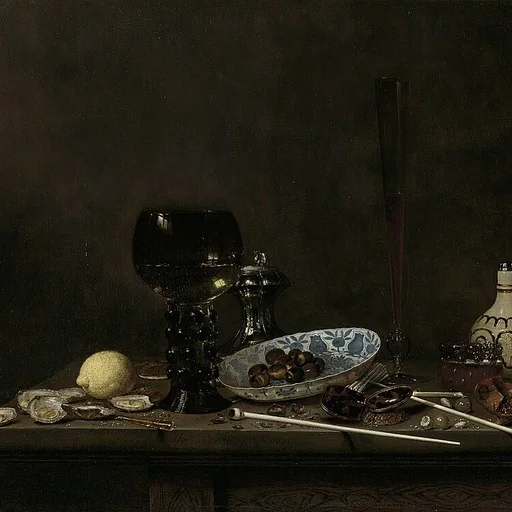
Artist
Jan Jansz van de Velde (1620–1662) was a Dutch artist, born in Haarlem.

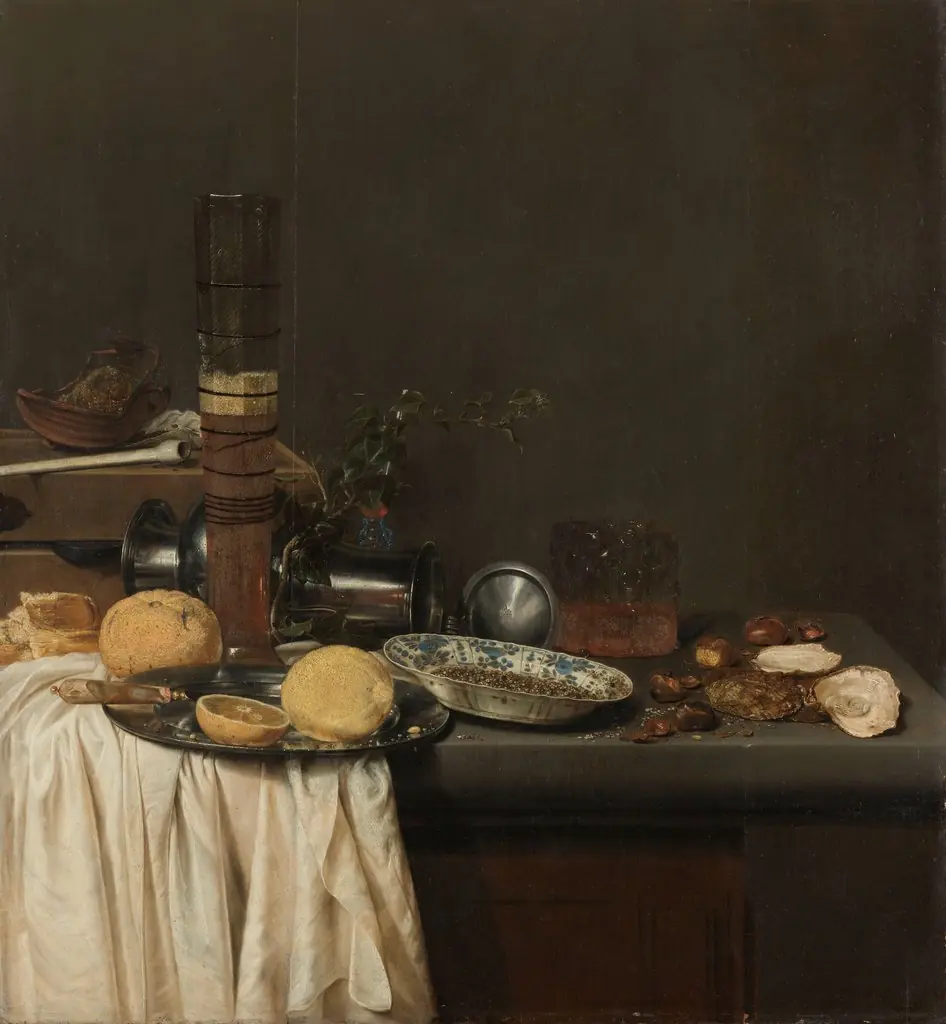 Still-life with a Tall Beer Glass
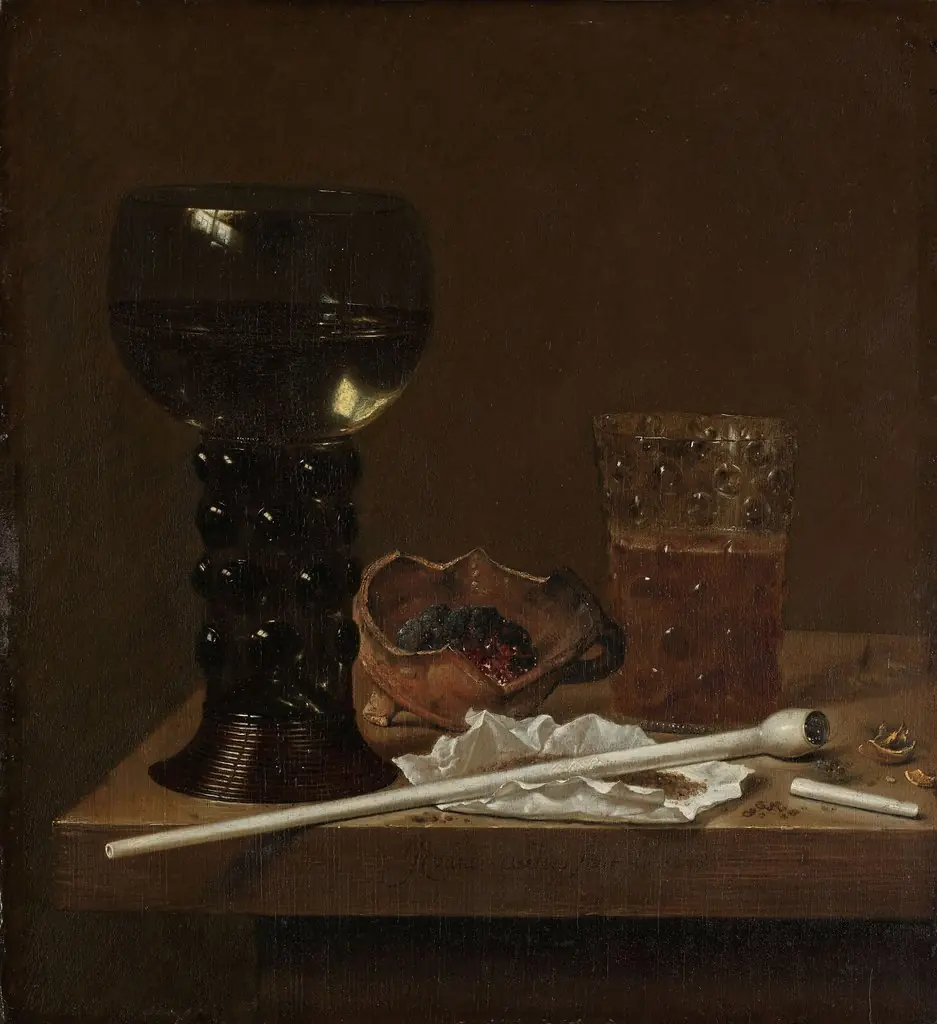 Still life with wineglass, beer glass and pipe
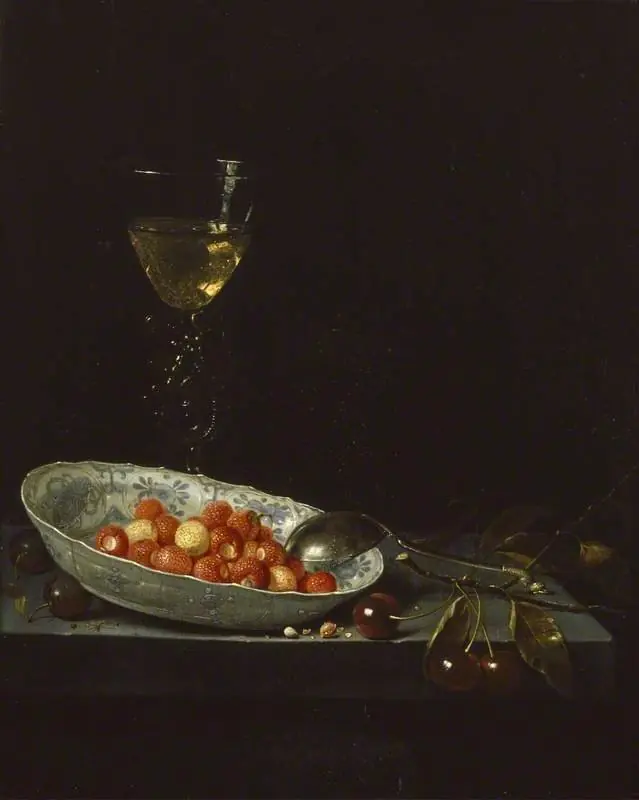 Still Life with Strawberries and Cherries
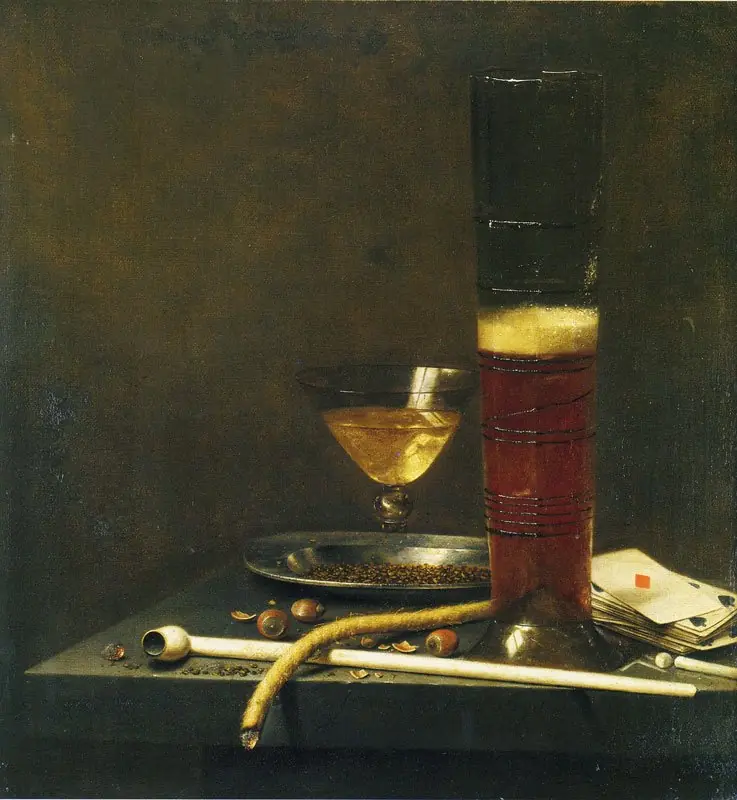 Glasses, Smoking Implements, and Cards
 Still Life with Roemer, Salt Cellar, Tobacco, Lemon, and Olives
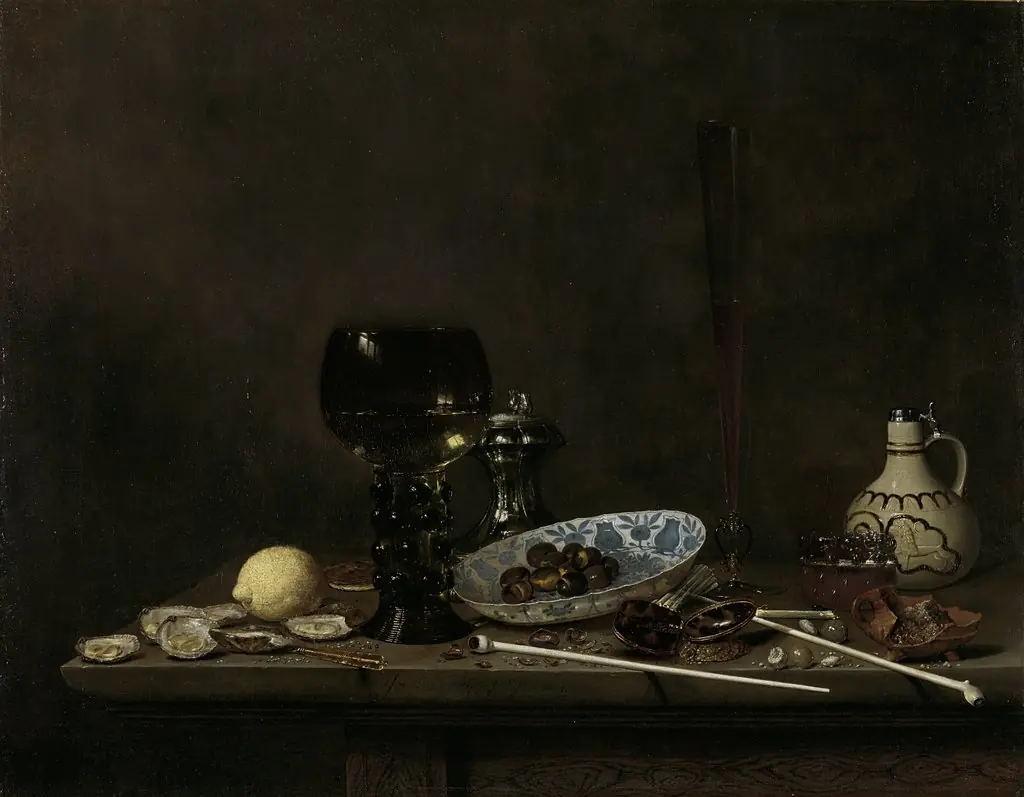 Still life with wineglass, flute, glass, earthenware jug and pipes
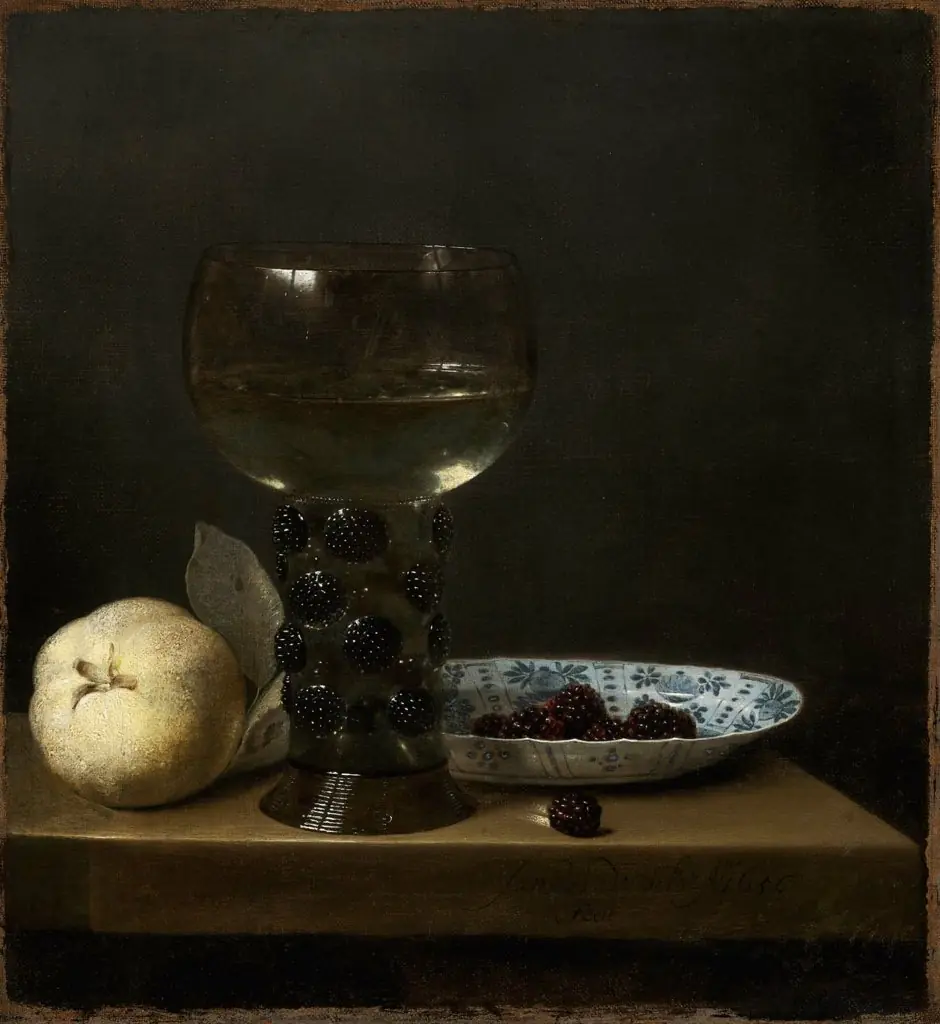 Still Life with Goblet and Fruit
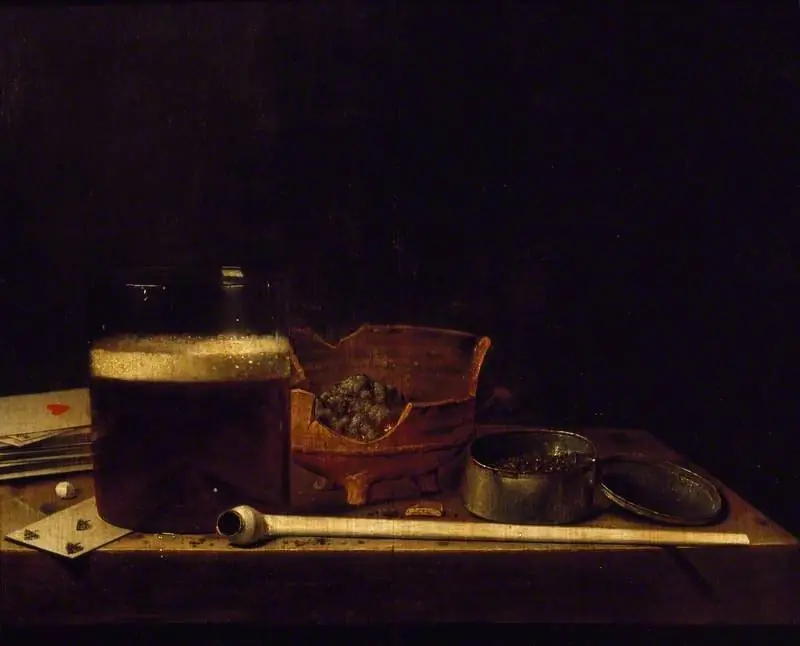 Still Life with a clay Pipe