Artwork
Madonna at the Fountain
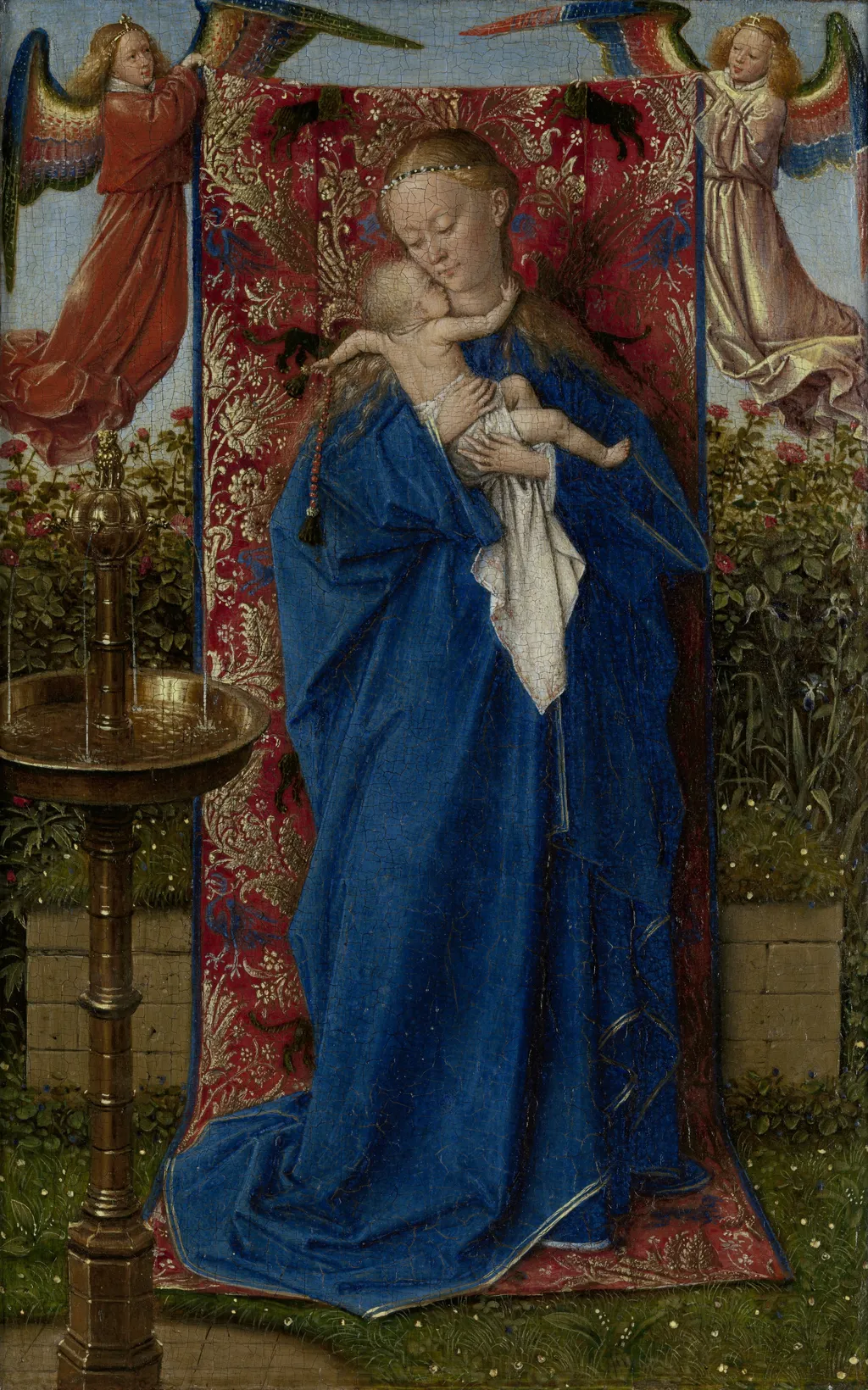
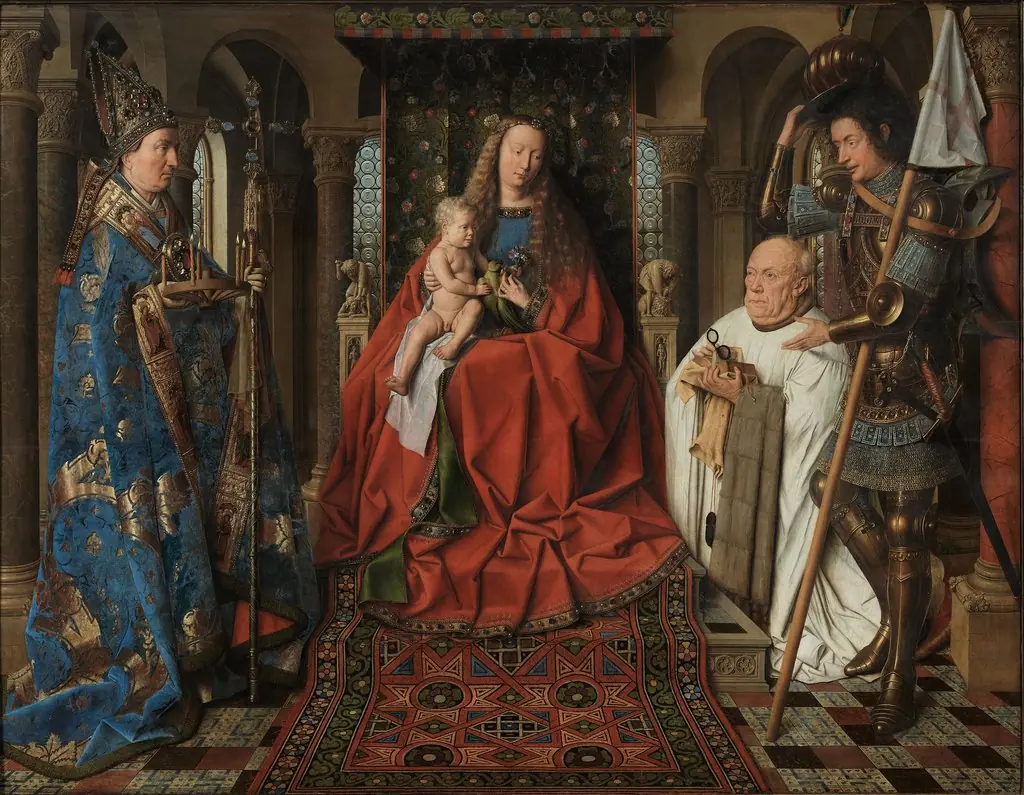
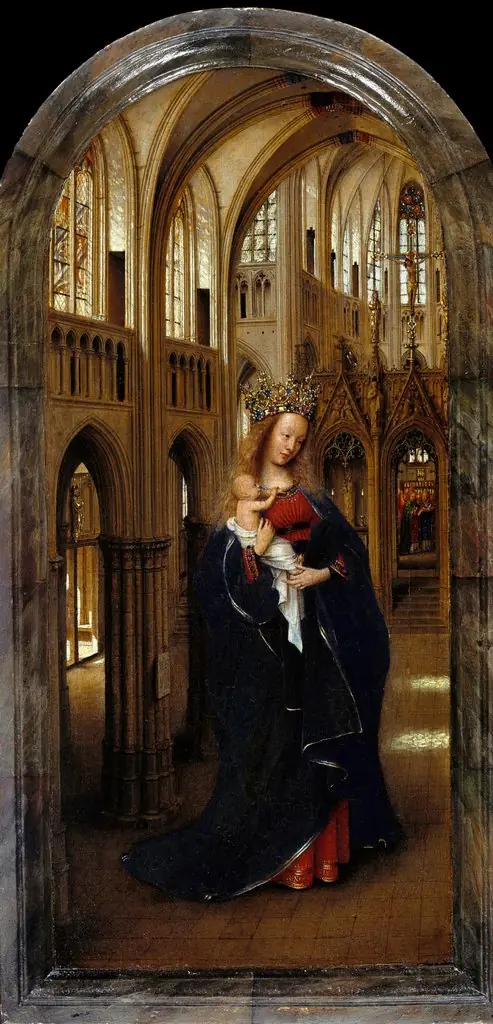
Madonna at the Fountain is an oil painting by the Northern Renaissance artist Jan van Eyck. It dates from 1439 and is held in the collection of the Royal Museum of Fine Arts Antwerp.
About this work
This is a quiet, focused painting of a mother and child by Jan van Eyck. Painted in oil around 1439, it’s one of his last signed works. The original frame has a short Latin inscription from the artist.
The phrase on the frame reads like a note to the future. It shows pride in the work and marks the year it was finished.
Look up Jan van Eyck next.
Overview
Madonna at the Fountain is an oil painting on panel executed in 1439 by the early Netherlandish painter Jan van Eyck. Measuring a modest size, the work portrays a mother and child in a restrained composition. It is notable for being the final painting that van Eyck both signed and dated, and it still retains its original wooden frame.
Subject & Meaning
The image presents the Virgin Mary with the infant Christ, set before a stylised fountain that may allude to themes of purification and divine source. The quiet intimacy of the figures emphasizes a devotional focus rather than narrative drama, inviting contemplation of the maternal bond.
Technique & Style
Executed in oil on panel, the painting demonstrates van Eyck’s characteristic attention to surface detail and subtle modelling of light. Fine brushwork renders the textures of fabric and skin, while the limited palette and delicate chiaroscuro create a sense of depth within the confined space.
History & Provenance
Signed and dated by the artist, the work bears an original frame inscribed with a brief Latin statement: “ALS IXH CAN / JOHES DE EYCK ME FECIT + [COM]PLEVIT ANNO 1439.” The frame’s preservation confirms the painting’s continuity from its 15th‑century origin to the present, though its later ownership record remains sparse.
Context
Created toward the end of van Eyck’s career, the painting reflects the mature phase of his oeuvre, when his mastery of oil painting had been fully developed. It aligns with contemporary devotional images that emphasized personal piety, and it shares compositional affinities with other late works by the artist.
Own this work as a print
Artist & collection
Artist
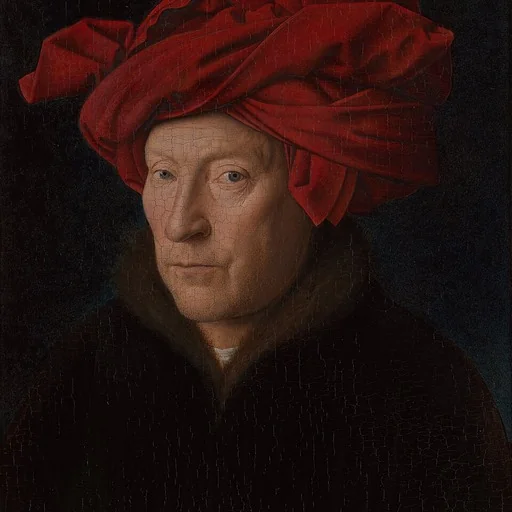
Jan van Eyck was a sharp-eyed observer who spent his life in the Low Countries, painting what he saw with almost eerie precision.