Artwork
The Madonna in the Church
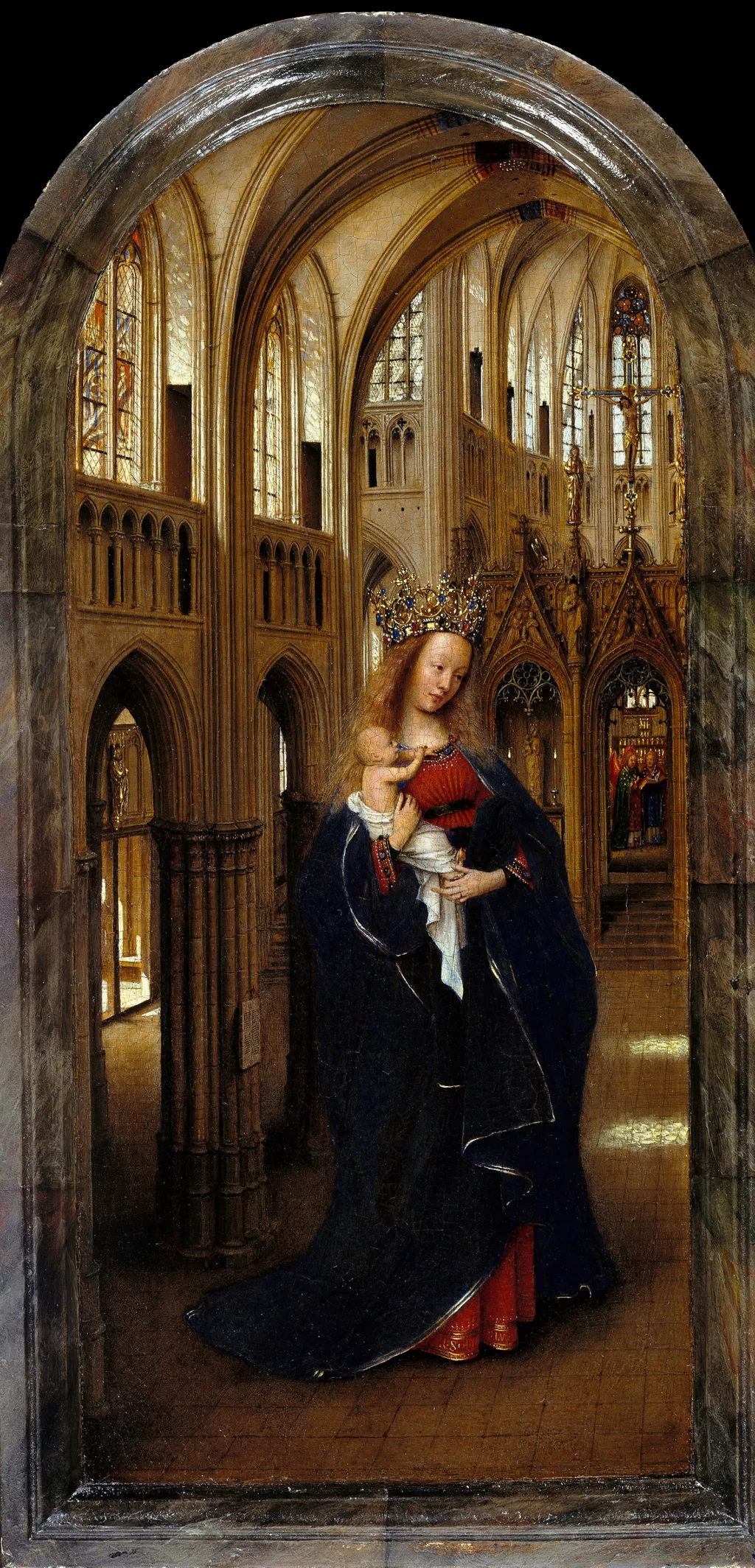
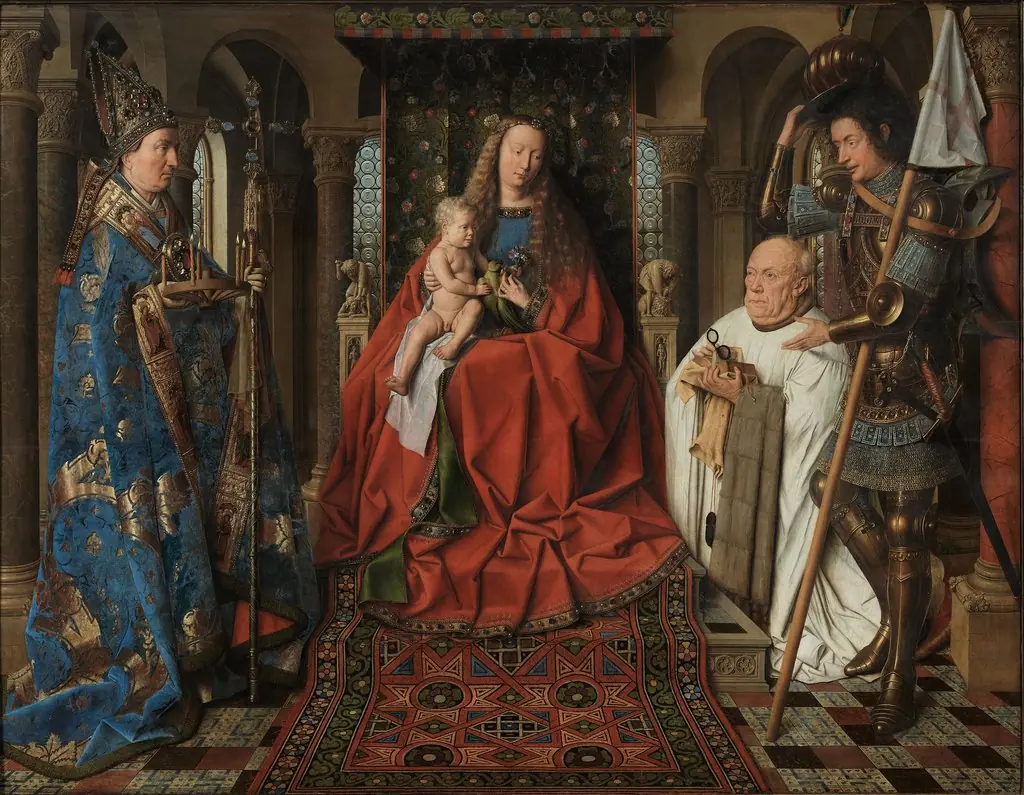
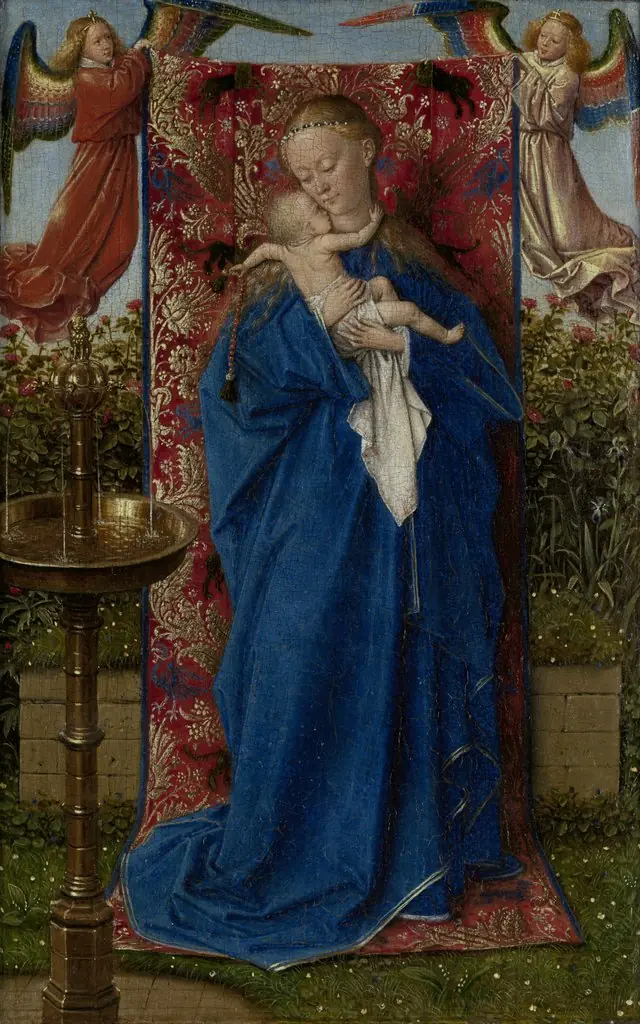
The Madonna in the Church is an oil painting by the Northern Renaissance artist Jan van Eyck. It dates from 1430 and is held in the collection of the Gemäldegalerie Berlin.
About this work
Overview
Jan van Eyck’s small panel, executed circa 1438–1440, presents the Virgin Mary seated within a Gothic cathedral, cradling the infant Christ. The composition foregrounds the figures against an interior illuminated by daylight streaming through stained‑glass windows, while architectural details such as tracery and a sculptural niche frame the scene.
Subject & Meaning
Mary is portrayed as the celestial queen, crowned with jeweled regalia and dressed in a vivid red mantle. The child’s playful grip on her neckline echoes the Byzantine Eleusa type, emphasizing tenderness and divine intimacy. Light that floods the nave is rendered symbolically, alluding to Mary’s purity and the presence of the divine.
Technique & Style
Fine brushwork captures the gleam of the crown, the sheen of the fabric, and the reflective pools on the floor.
Rendered in oil on panel, the work displays van Eyck’s meticulous observation of light and texture. Fine brushwork captures the gleam of the crown, the sheen of the fabric, and the reflective pools on the floor. Architectural elements are rendered with precise linear perspective, while the figures possess a monumental scale that exceeds the surrounding space, a convention inherited from earlier Byzantine models.
History & Provenance
Attributed to the early Netherlandish master Jan van Eyck, the painting is dated to the late 1430s based on stylistic comparison with his other works. It has remained in private collections before entering a museum setting, where it is displayed as an example of van Eyck’s devotional panel painting and his synthesis of Northern realism with Gothic iconography.
Artist & collection

Artist
Jan van Eyck was a sharp-eyed observer who spent his life in the Low Countries, painting what he saw with almost eerie precision.