Artwork
Madonna Standing
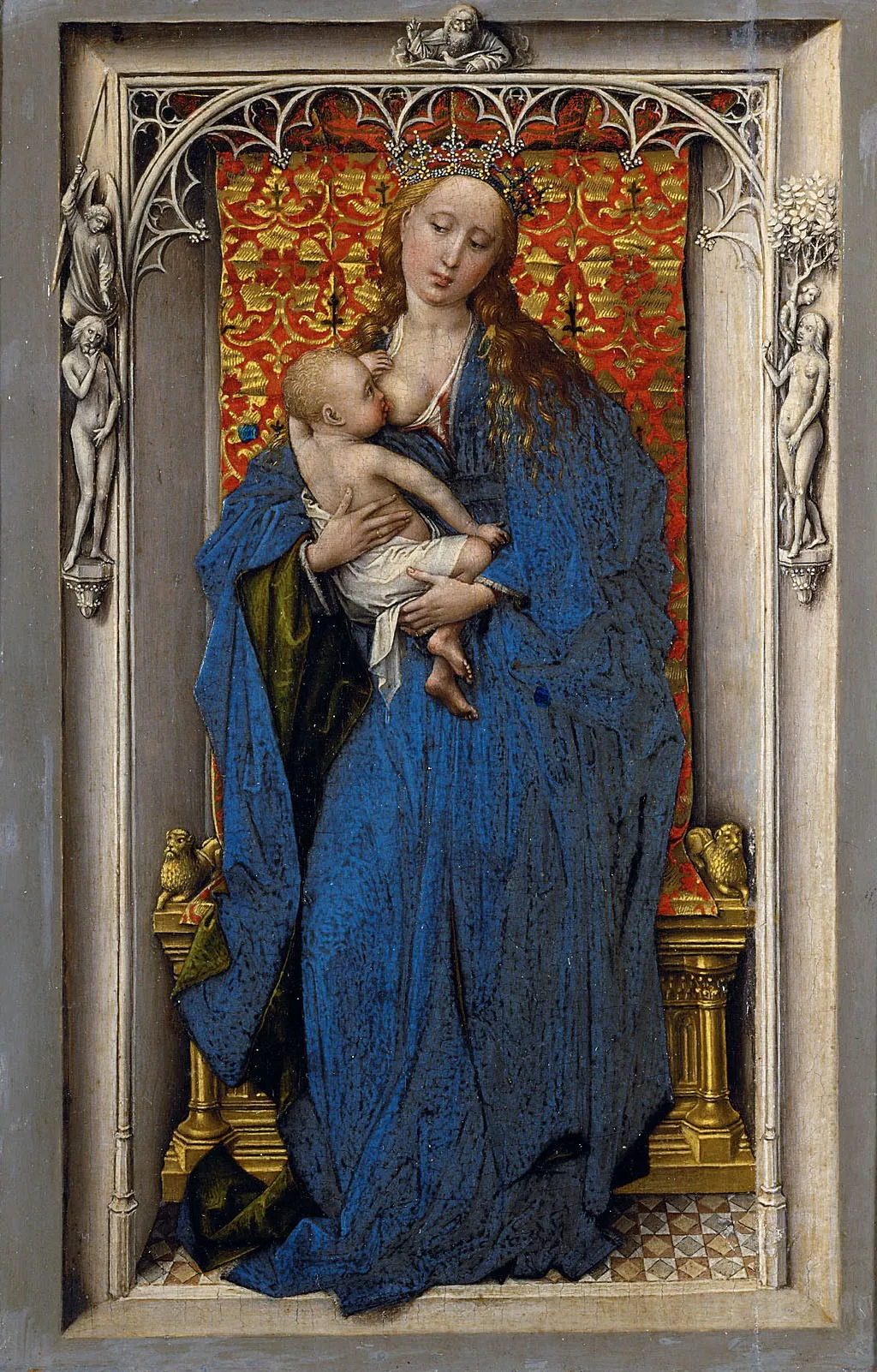
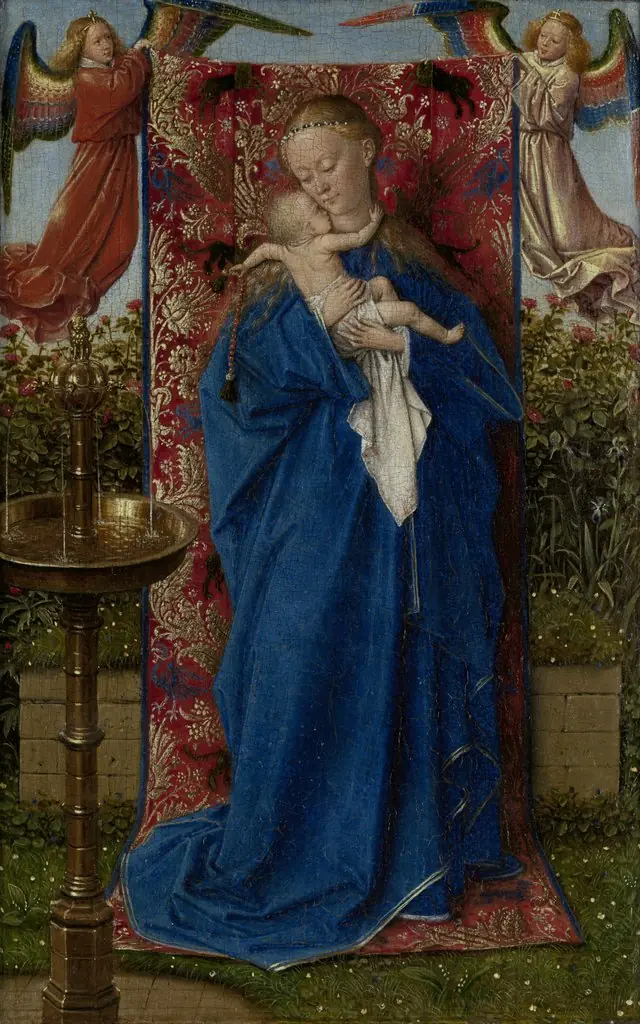
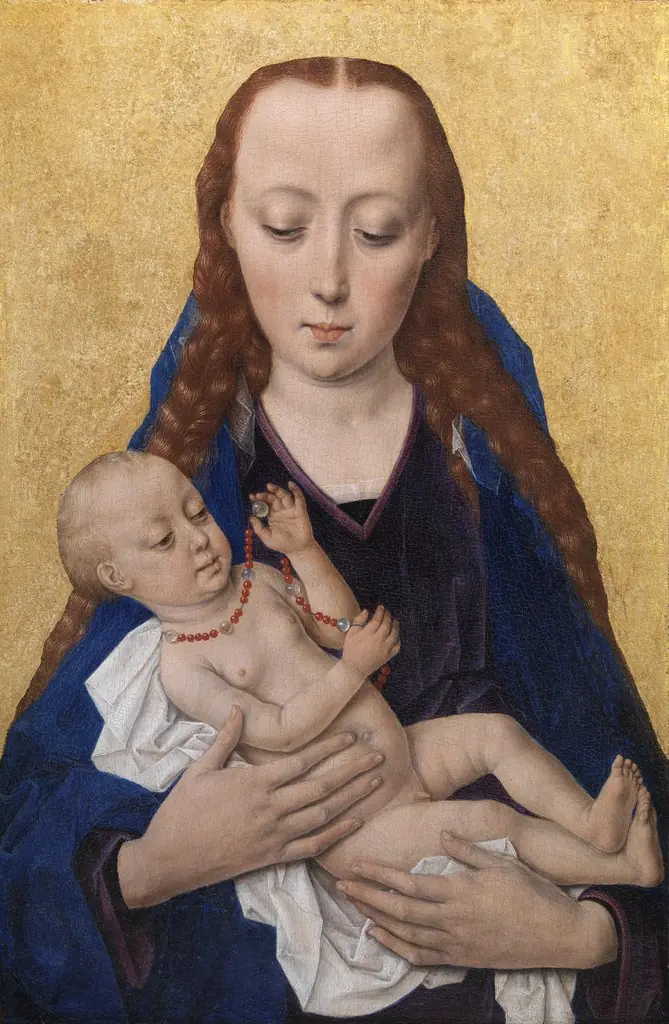
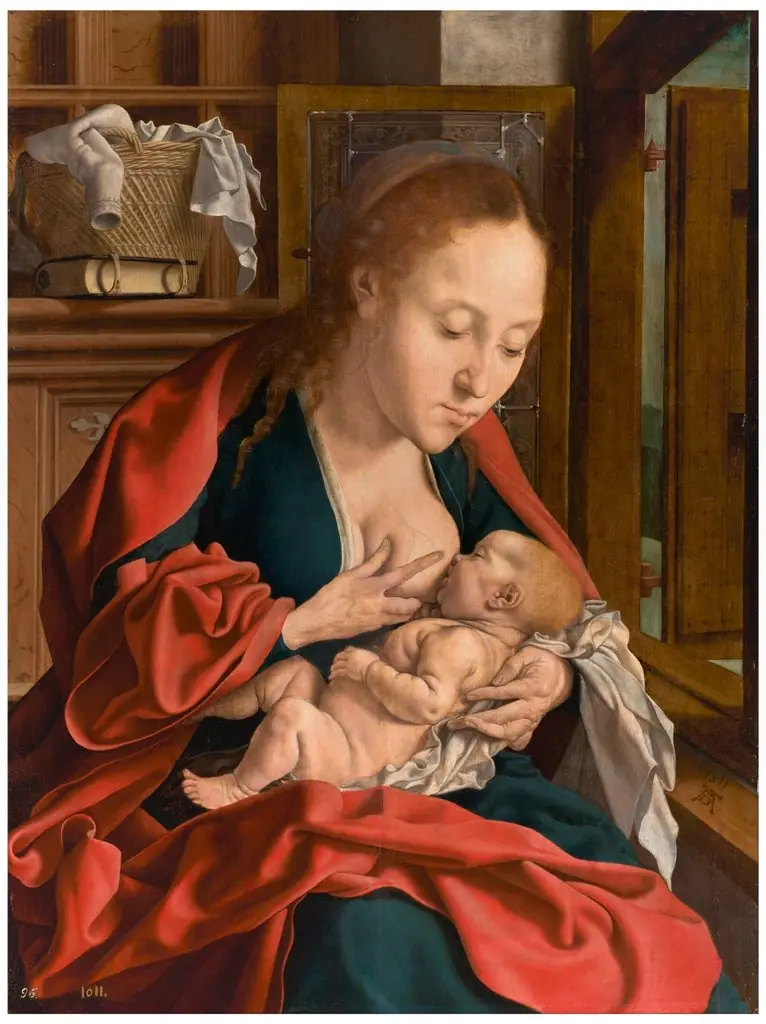
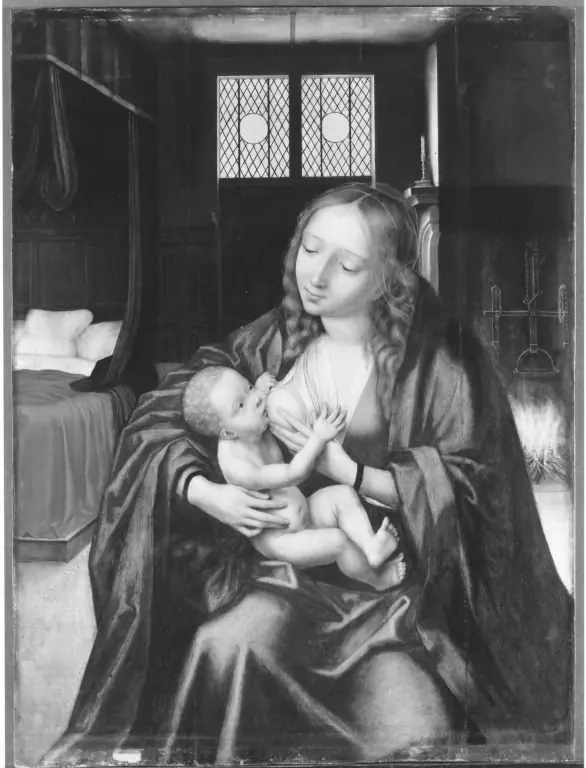
Madonna Standing is an oil painting by the Northern Renaissance artist Rogier van der Weyden. It dates from 1430 and is held in the collection of the Kunsthistorisches Museum. Created circa 1430–1432, this modestly sized oil painting depicts the Virgin Mary cradling the infant Christ.
About this work
Experts think that panel was made by someone in van der Weyden’s workshop, not the artist himself.
This small oil painting shows the Virgin Mary holding the Christ Child. It was made by Rogier van der Weyden around 1430–1432. The work is the left panel of a two-part painting, called a diptych.
The matching right panel shows Saint Catherine. Experts think that panel was made by someone in van der Weyden’s workshop, not the artist himself.
Look up the Kunsthistorisches Museum to see more works from this time.
Overview
Created circa 1430–1432, this modestly sized oil painting depicts the Virgin Mary cradling the infant Christ. It forms the left half of a diptych, the companion piece portraying Saint Catherine. The work resides in Vienna’s Kunsthistorisches Museum, where it has been on display since the late eighteenth century.
Subject & Meaning
The central figure of Mary holding the Child conveys a traditional devotional image, emphasizing maternal tenderness and the divine nature of the infant. The intimate pose invites contemplation of the incarnation, a common theme in early Netherlandish religious art.
Technique & Style
Executed in oil on panel, the painting shows van der Weyden’s characteristic attention to detail and subtle modeling of flesh tones. The delicate handling of light and the refined rendering of fabrics reflect the artist’s early mastery of the medium, anticipating his later, more complex compositions.
History & Provenance
Acquired by the Kunsthistorisches Museum in 1772, the diptych has remained part of the Viennese collection for over two centuries. While the left panel is securely attributed to Rogier van der Weyden, the right panel of Saint Catherine is generally considered the work of a workshop assistant, based on comparative quality assessments.
Context
The piece belongs to the early phase of van der Weyden’s career, when he was developing a personal style within the flourishing Flemish tradition. Small devotional diptychs such as this were intended for private contemplation, often commissioned for personal chapels or domestic settings.
Artist & collection
Artist
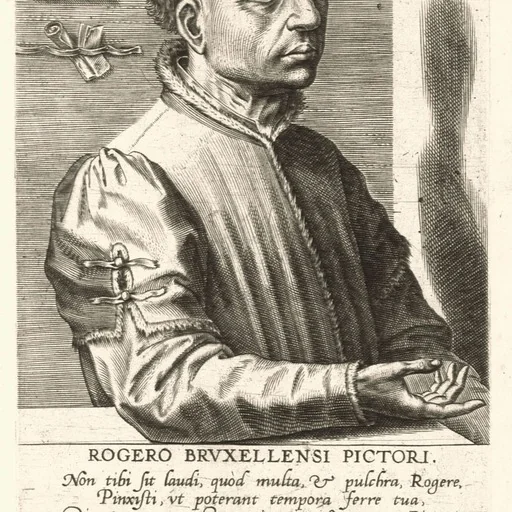
Rogier van der Weyden (Dutch: ; 1399 or 1400 – 18 June 1464), initially known as Roger de la Pasture (French: ), was an early Netherlandish painter whose surviving works consist mainly of religious triptychs,…