Artwork
Portrait of a Man with Carnation
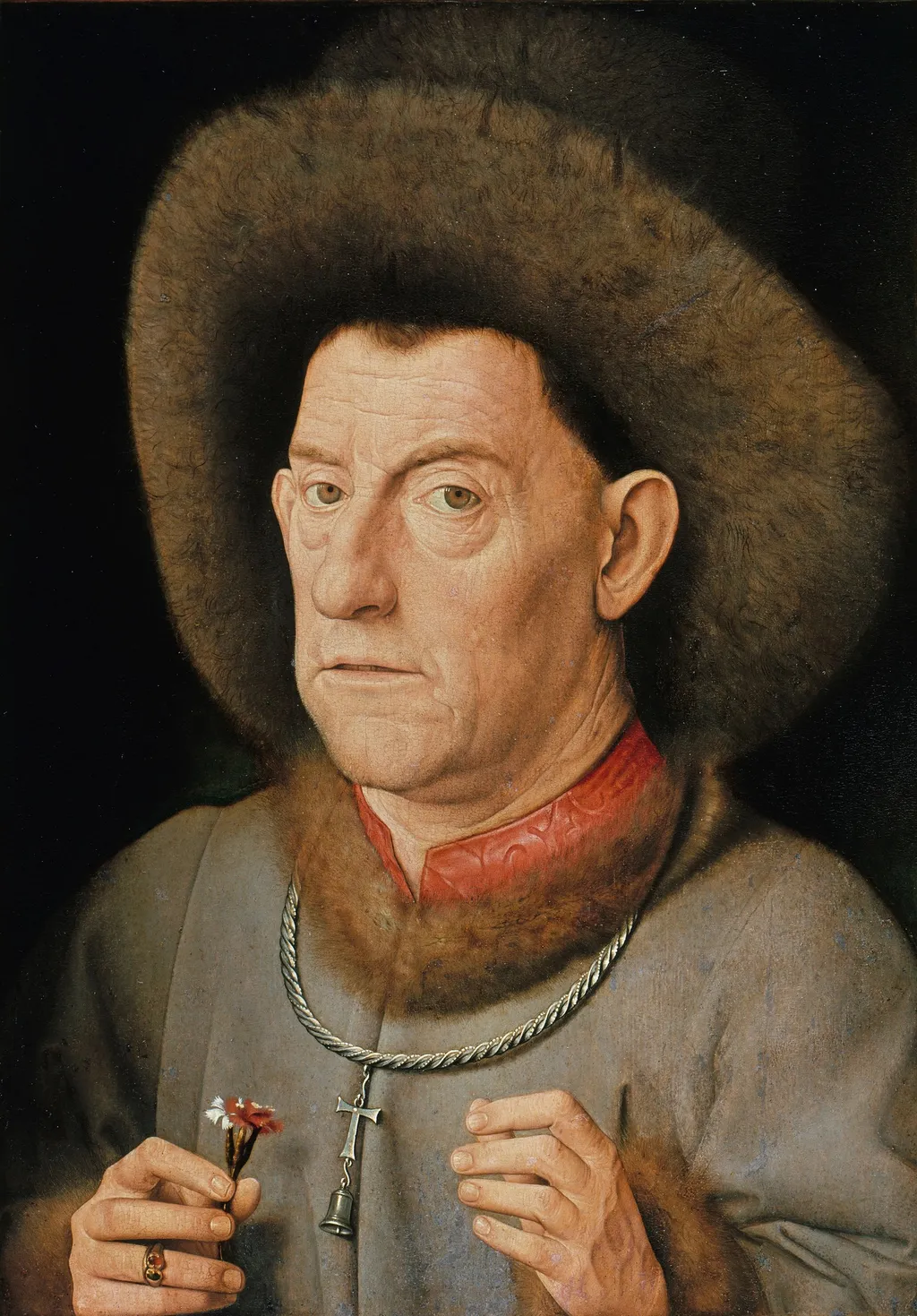
Portrait of a Man with Carnation is an oil painting by the Northern Renaissance artist Jan van Eyck. It dates from 1436 and is held in the collection of the Gemäldegalerie Berlin.
About this work
The man in the painting wears grey clothes, a hat with fur trim, and holds a small bouquet of carnations.
Jan van Eyck painted this small portrait on oakwood around 1436. The man in the painting wears grey clothes, a hat with fur trim, and holds a small bouquet of carnations. Experts think it was made late in van Eyck’s career.
The carnations likely symbolize love and marriage. The man also wears a medal from the Order of Saint Anthony, a group started by a Bavarian duke.
Check out the Gemäldegalerie Berlin to see more of van Eyck’s work.
Overview
Portrait of a Man with Carnation is a small oil painting on oakwood, attributed to Jan van Eyck or his workshop, created circa 1436, now housed in the Gemäldegalerie, Berlin.
Subject & Meaning
The unidentified sitter, likely in his early 50s, wears grey attire and a fur-trimmed hat, holding carnations symbolizing love and marriage, alongside the medal of the Order of Saint Anthony, indicating affiliation with the Bavarian-founded chivalric group.
Technique & Style
Executed in oil paint on oakwood, the work exemplifies the meticulous detail characteristic of Early Netherlandish painting, though specific stylistic innovations or deviations from van Eyck's known oeuvre are not highlighted in available analyses.
History & Provenance
Dendrochronological dating suggests completion around 1436, late in van Eyck's career, with current ownership at the Gemäldegalerie, Berlin; earlier ownership history is not specified.
Context
The inclusion of the Order of Saint Anthony medal links the sitter to Albert I, Duke of Bavaria, suggesting potential ties between the subject and Bavarian nobility or chivalric circles of the time.
Own this work as a print
Artist & collection
Artist
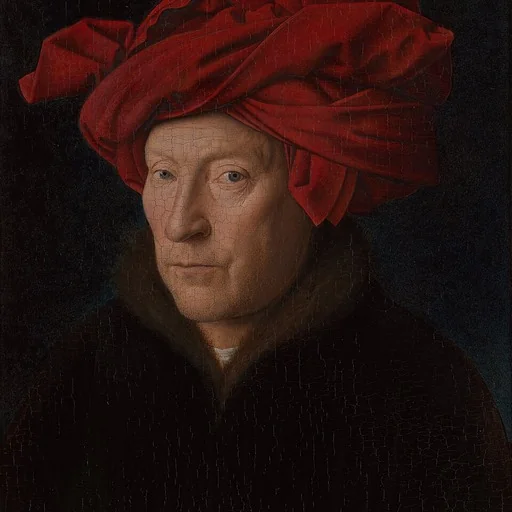
Jan van Eyck was a sharp-eyed observer who spent his life in the Low Countries, painting what he saw with almost eerie precision.

 Portrait of Sigismund of Tyrol
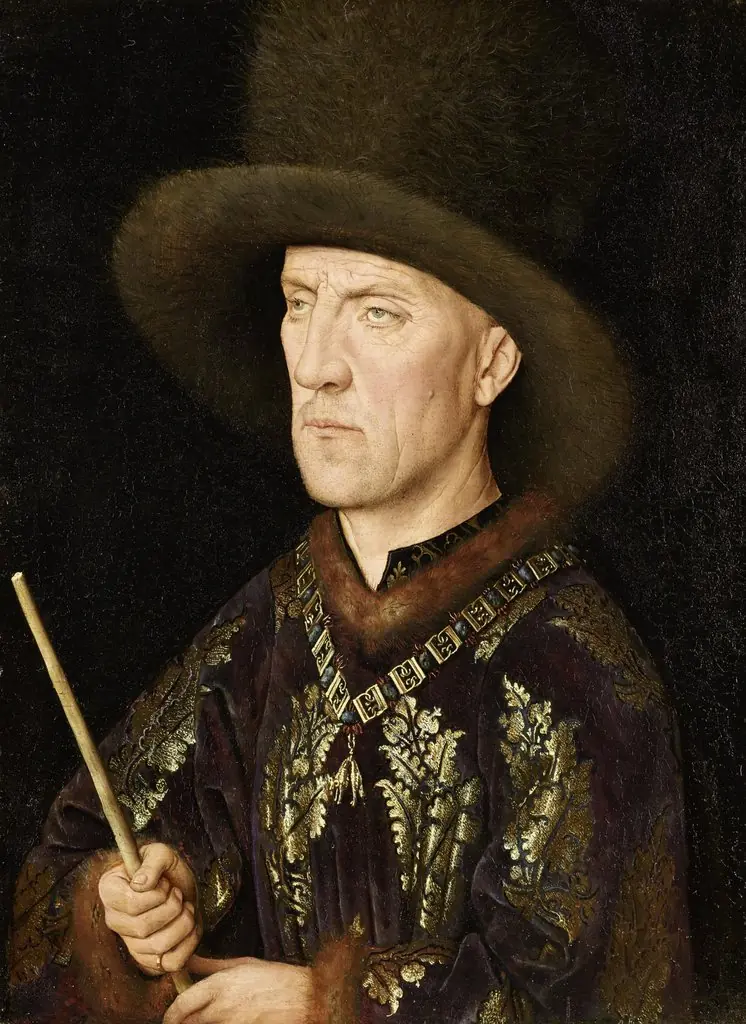 Portrait of Baudouin de Lannoy
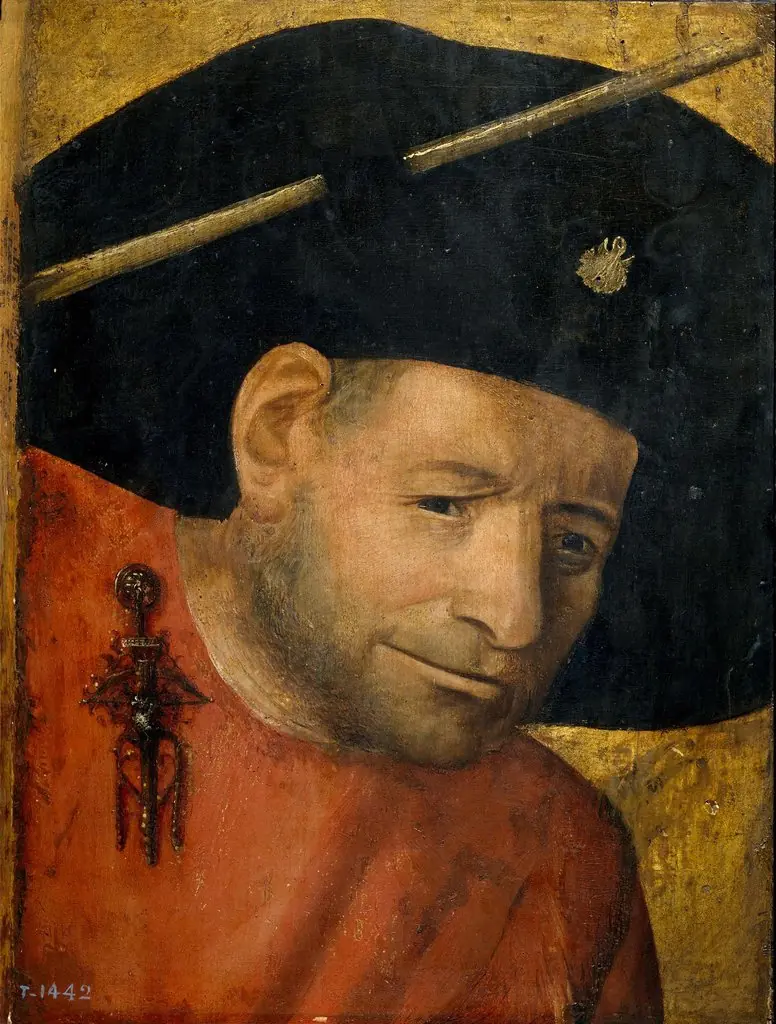 Head of a Halberdier
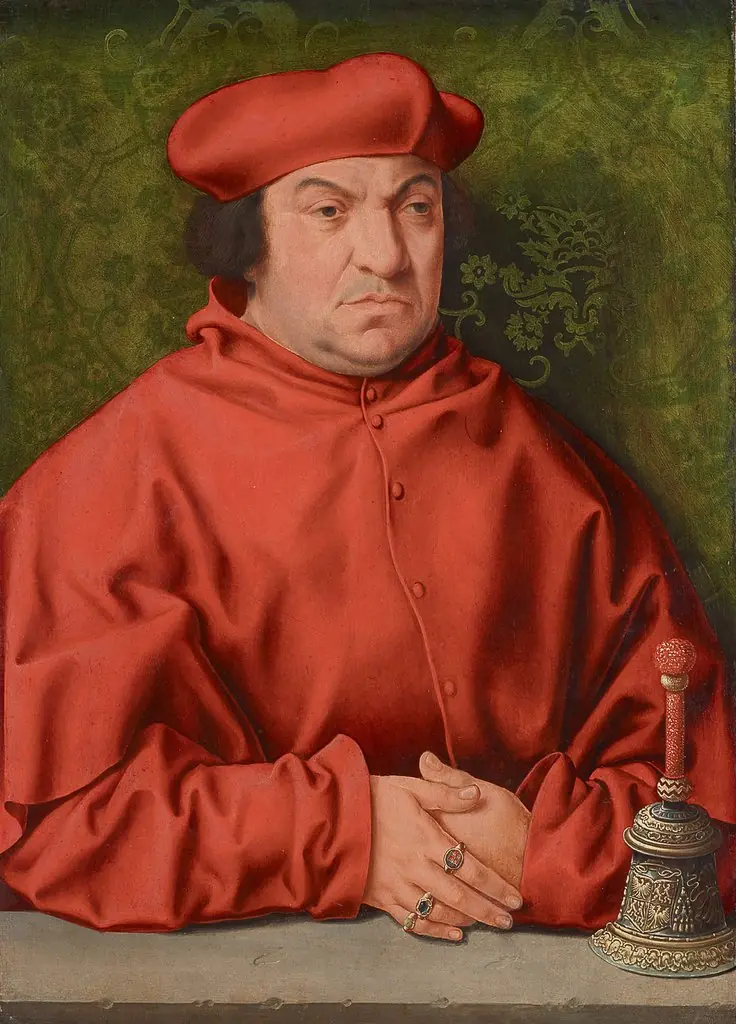 Cardinal Bernhardus Clesius
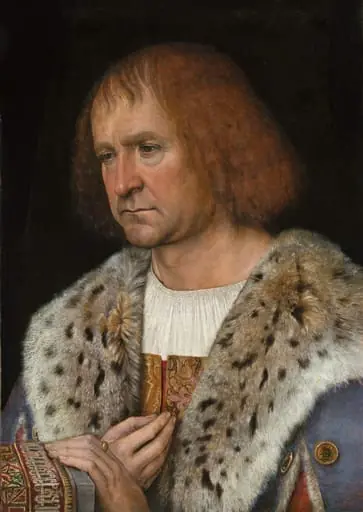 Portrait of Diego de Guevara (?)
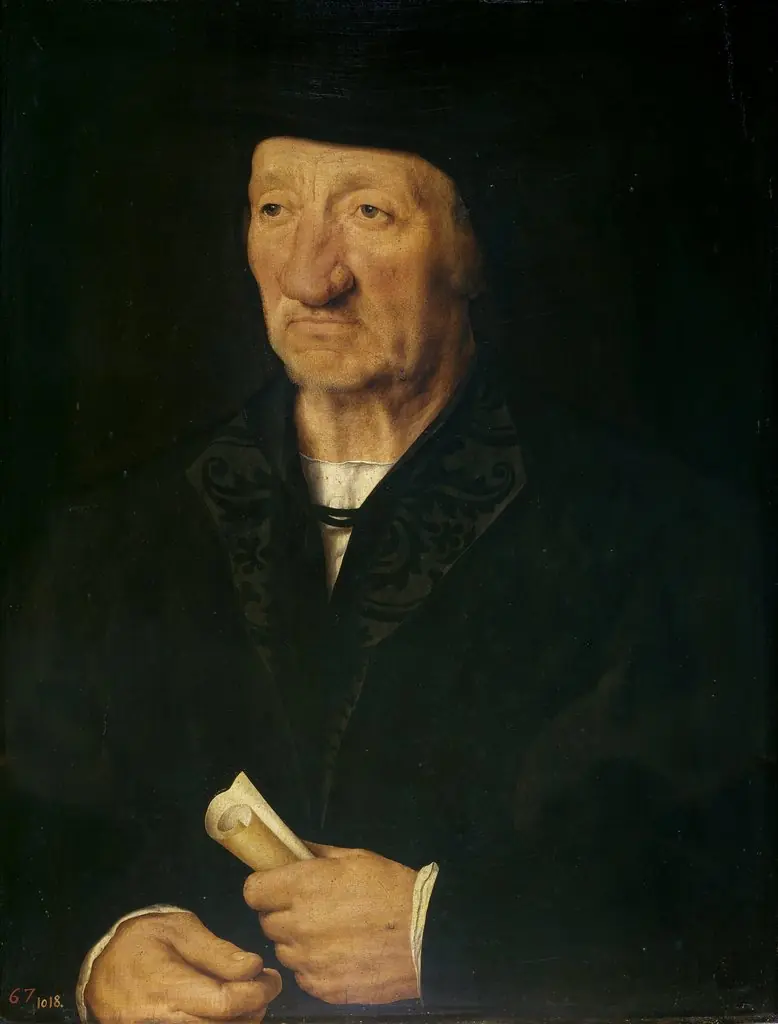 Portrait of an Old Man
 Wolfgang I. Graf von Oettingen
 Pilgrim
 Portrait of a Man
 Portrait of a man in a fur beret
 Portrait of a Man
 Portrait of Louis I, Count of Löwenstein