Artwork
River Landscape with the Hooglandsekerk of Leiden
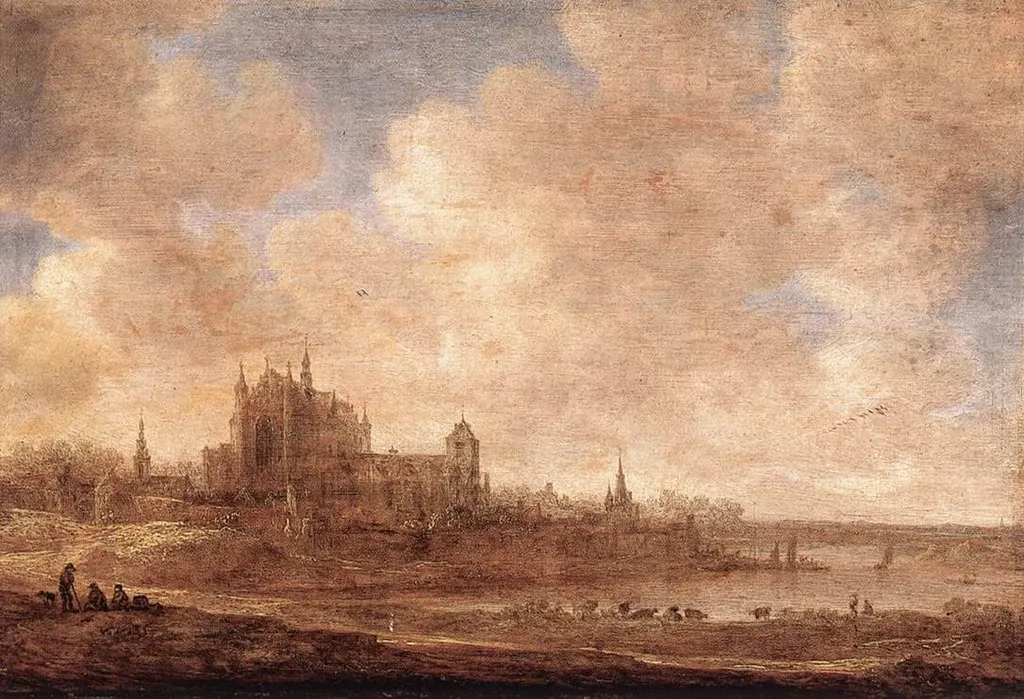
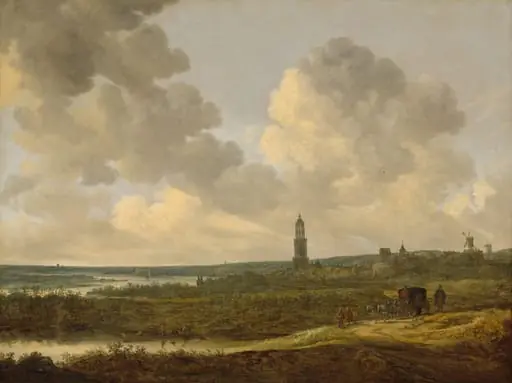
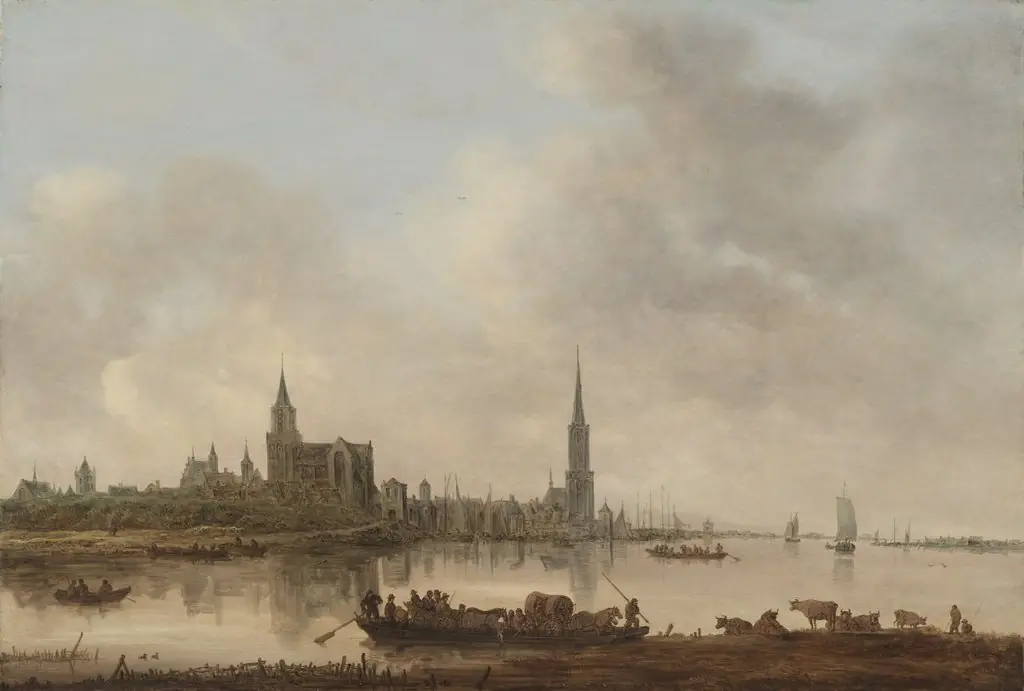
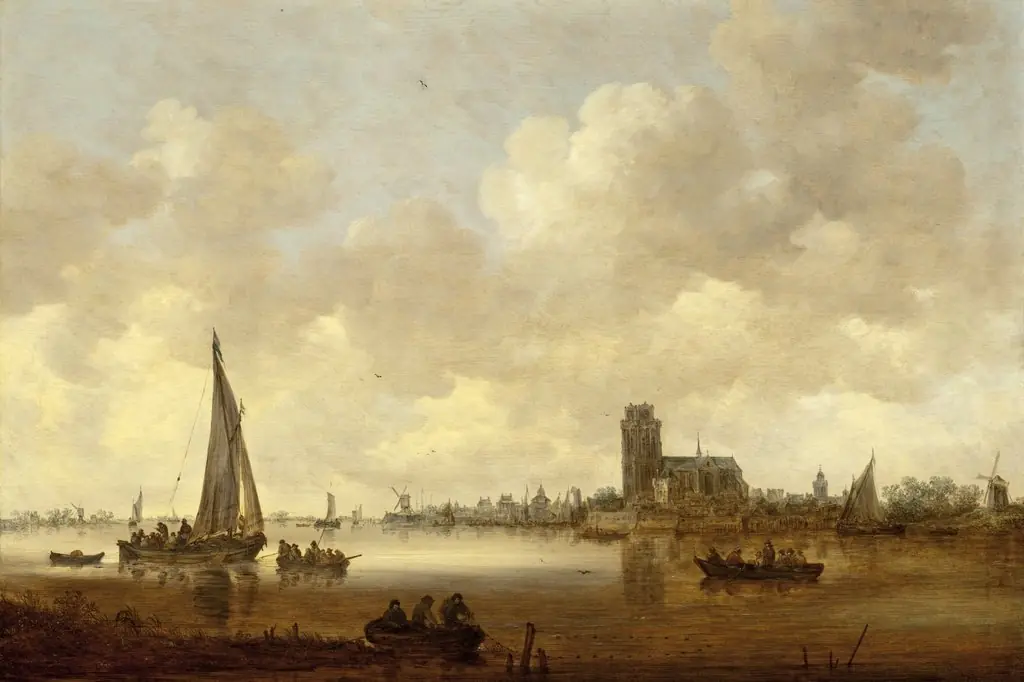
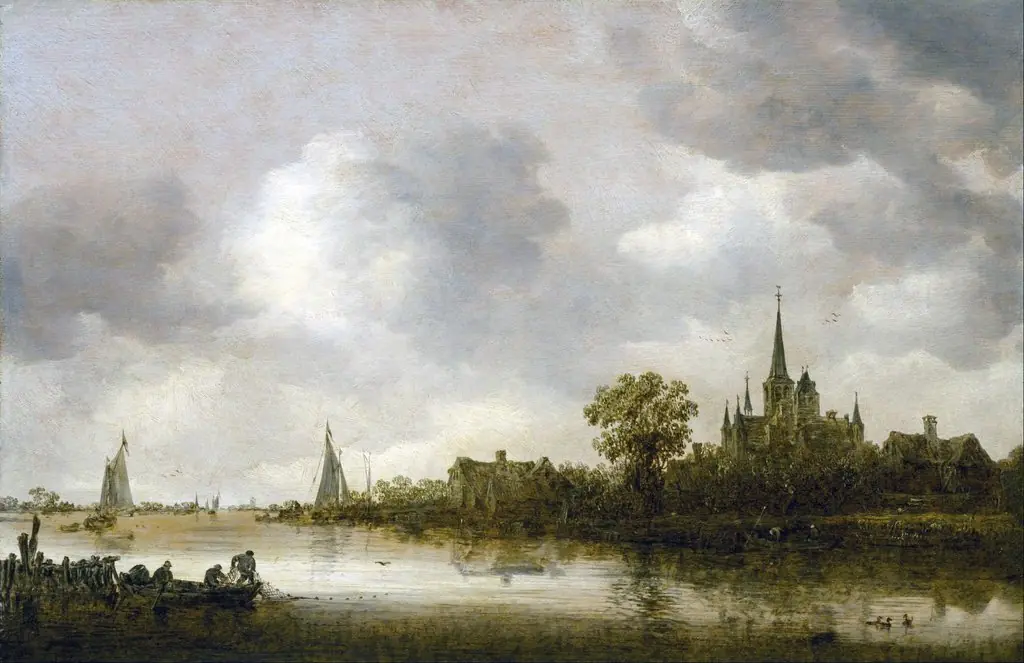
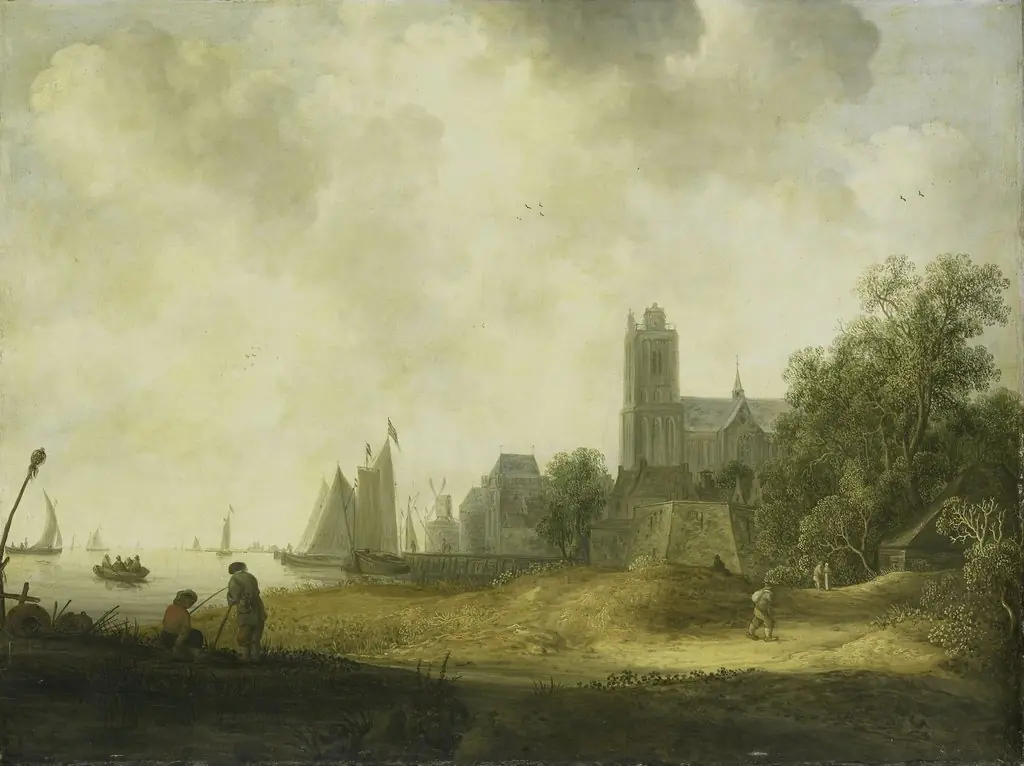
River Landscape with the Hooglandsekerk of Leiden is an oil painting by the Dutch Golden Age artist Jan van Goyen. It dates from 1643 and is held in the collection of the Bavarian State Painting Collections. Painted in 1643, this wood panel depicts a tranquil riverside scene near Leiden, centered on the Hooglandse Kerk.
About this work
Overview
Painted in 1643, this wood panel depicts a tranquil riverside scene near Leiden, centered on the Hooglandse Kerk. Jan van Goyen, a leading Dutch landscape artist of the mid-seventeenth century, rendered the view with restrained tonality and careful spatial arrangement. The work exemplifies his prolific output and his focus on everyday Dutch scenery rather than idealized or dramatic subjects.
Subject & Meaning
The church’s imposing form is not glorified but integrated into the landscape, reflecting a Dutch preference for the ordinary and the local.
The Hooglandse Kerk, a prominent Gothic church in Leiden, anchors the composition atop a gentle rise. Surrounding figures and grazing sheep suggest quiet rural life, while the river reflects the muted sky. The church’s imposing form is not glorified but integrated into the landscape, reflecting a Dutch preference for the ordinary and the local. The scene conveys stillness, not narrative, emphasizing harmony between human presence and nature.
Technique & Style
Van Goyen employed thin, translucent layers of paint to achieve subtle atmospheric effects. The sky and water are rendered with soft, blended brushwork, creating a hazy, diffused light. Earth tones dominate the foreground, contrasting with the pale, luminous sky. The wooden support allowed for fine detail in the church’s stonework, while the overall handling remains loose and observational, typical of his mature style.
History & Provenance
The painting entered the collection of the Alte Pinakothek in Munich, where it remains today. Its provenance traces back to early collectors of Dutch art in the eighteenth and nineteenth centuries, though specific ownership details prior to its acquisition by the museum are not fully documented. It was likely acquired during a period of renewed interest in Dutch Golden Age painting.
Context
In 1643, Leiden was a thriving university city with a growing middle class that favored landscapes as domestic decoration. Van Goyen’s focus on local views aligned with this demand, moving away from grand historical or religious themes. His approach influenced contemporaries by emphasizing tonal harmony and the poetic potential of ordinary Dutch topography.
Legacy
Van Goyen’s landscapes, including this work, helped define the Dutch tonal landscape tradition. His use of subdued palettes and atmospheric perspective became a model for later artists. Though less celebrated than some peers, his systematic exploration of light and place contributed significantly to the evolution of landscape painting in Northern Europe.
Artist & collection
Artist
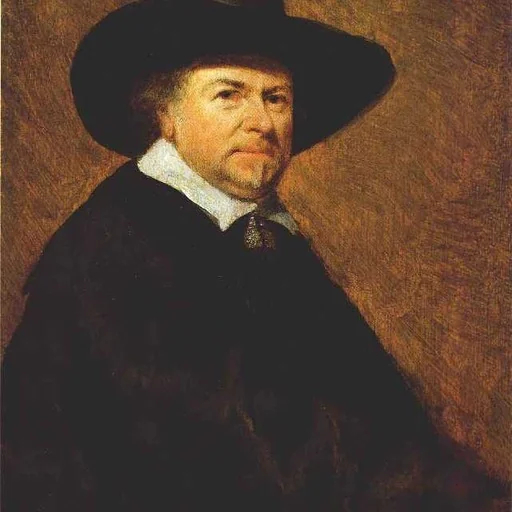
Jan Josephszoon van Goyen (Dutch pronunciation: ; 13 January 1596 – 27 April 1656) was a Dutch landscape painter.