Artwork
Landscape with Jacob and his family on the way to Canaan (Genesis 31:17-18)
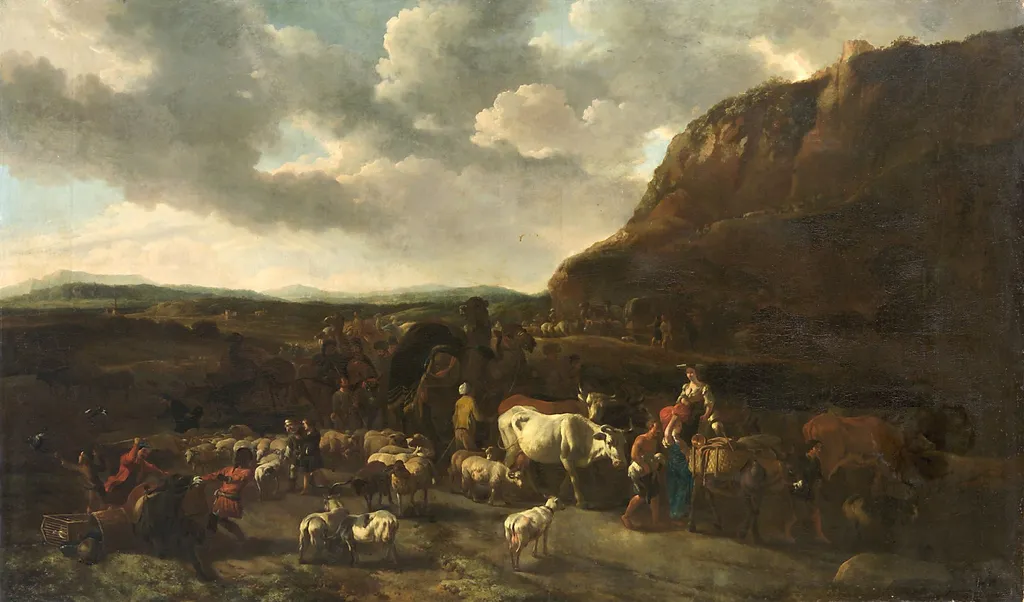
Landscape with Jacob and his family on the way to Canaan (Genesis 31:17-18) is an oil painting by the Dutch Golden Age artist Jan van Ossenbeeck. It dates from 1659 and is held in the collection of the Kunsthistorisches Museum.
About this work
Overview
The painting resides in the Kunsthistorisches Museum in Vienna, where it is noted for its atmospheric rendering of a moment of transition.
Painted in 1659 by Jan van Ossenbeeck, this oil-on-canvas work depicts a biblical journey as described in Genesis. The scene captures Jacob and his household traveling toward Canaan, accompanied by their livestock. The composition emphasizes movement across a rugged terrain, with figures and animals arranged along a winding path. The painting resides in the Kunsthistorisches Museum in Vienna, where it is noted for its atmospheric rendering of a moment of transition.
Subject & Meaning
The painting illustrates Jacob’s departure from Laban’s household, as recounted in Genesis 31:17–18. His family, along with flocks and herds, is shown in motion, conveying both the physical labor and spiritual significance of their journey. The central figure in red may represent Rachel, emphasizing personal stakes within the larger narrative. The scene avoids overt drama, instead focusing on quiet resolve, aligning with the biblical tone of faithful migration.
Technique & Style
Van Ossenbeeck employs chiaroscuro to model forms and create spatial depth, with soft light filtering through heavy clouds to illuminate figures and animals in the foreground. The dusty path recedes into the distance, guided by subtle tonal shifts. Brushwork is precise yet unobtrusive, allowing naturalism to prevail over theatricality. The landscape is neither idealized nor barren, but grounded in observed terrain, with rocks and foliage rendered with quiet attention to texture.
History & Provenance
The painting entered the Kunsthistorisches Museum’s collection in the 19th century, likely through Habsburg acquisitions of Dutch and Flemish works. Its attribution to Jan van Ossenbeeck, a lesser-known artist from the Southern Netherlands, reflects the museum’s broader effort to document regional variations within 17th-century landscape painting. No significant alterations or restorations are documented, preserving its original tonal balance and composition.
Context
In mid-17th-century Dutch and Flemish art, biblical landscapes were popular among collectors seeking moral or spiritual narratives within serene natural settings. Van Ossenbeeck’s work aligns with this trend, though his style is more restrained than contemporaries like Rembrandt or Poussin. The emphasis on travel and domestic life reflects broader cultural interests in migration, faith, and the dignity of everyday endurance.
Legacy
While not widely reproduced or studied today, the painting contributes to the understanding of how biblical stories were visualized outside major artistic centers. Its quiet composition and careful use of light offer a counterpoint to more dramatic treatments of the same subject. It remains a modest but thoughtful example of how religious narrative was woven into the fabric of landscape painting during the Dutch Golden Age.
Artist & collection

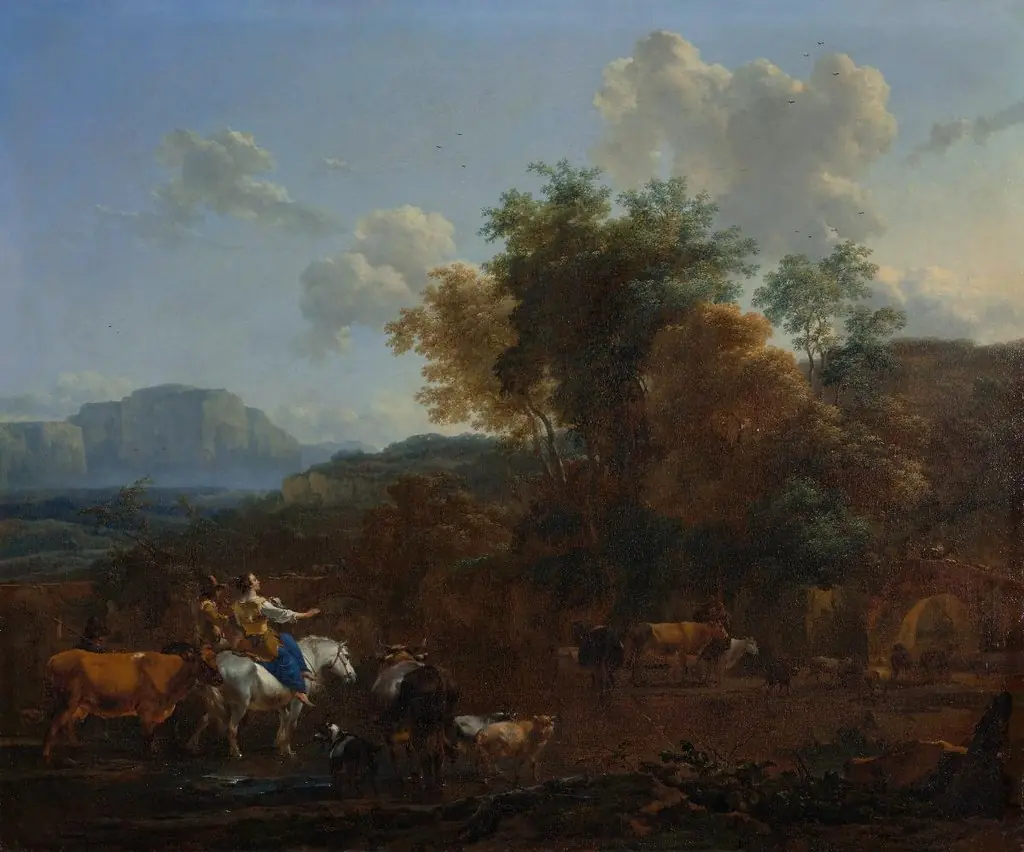 Italienische Landschaft mit musizierenden Hirten und ziehender Herde
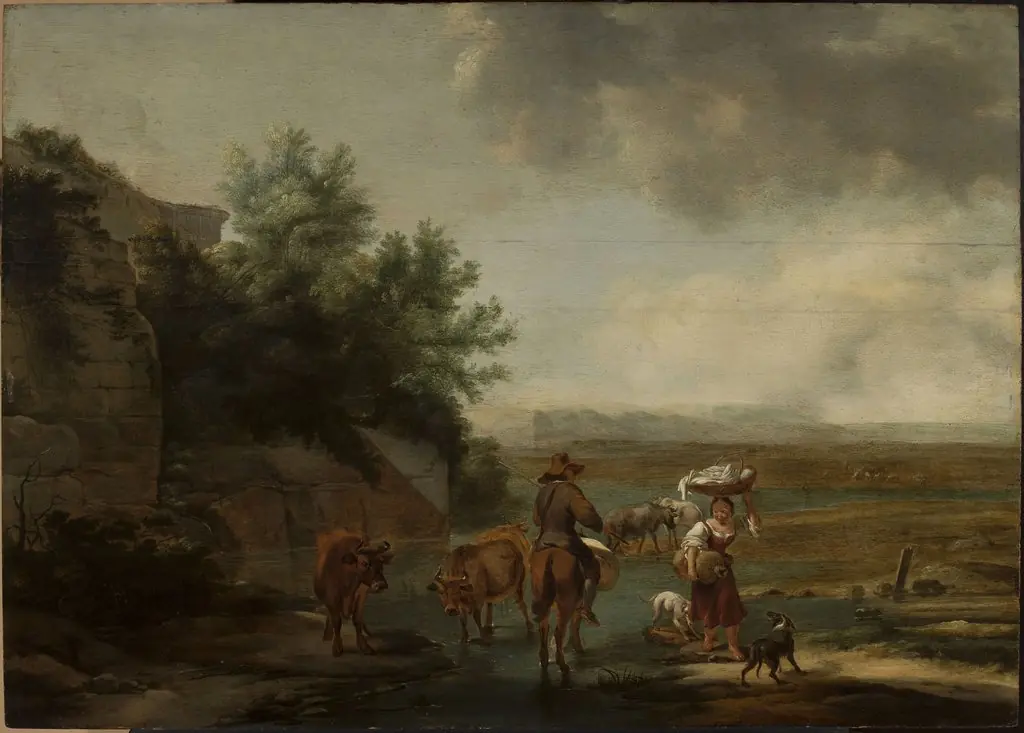 Pastoral landscape
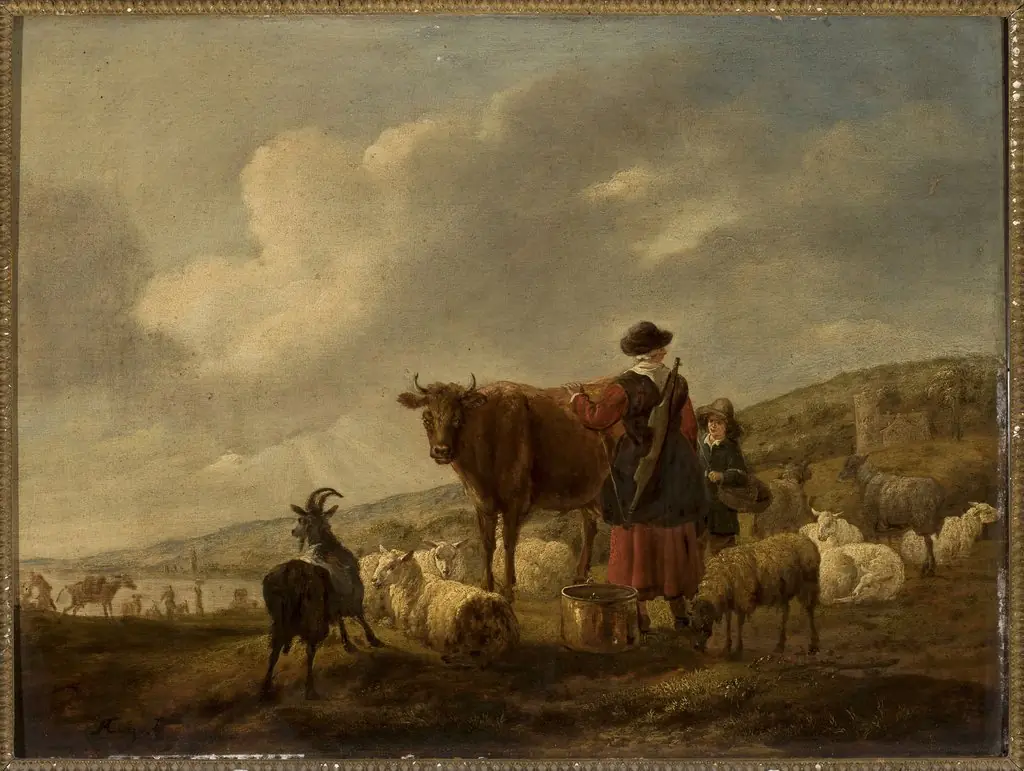 Pastoral scene
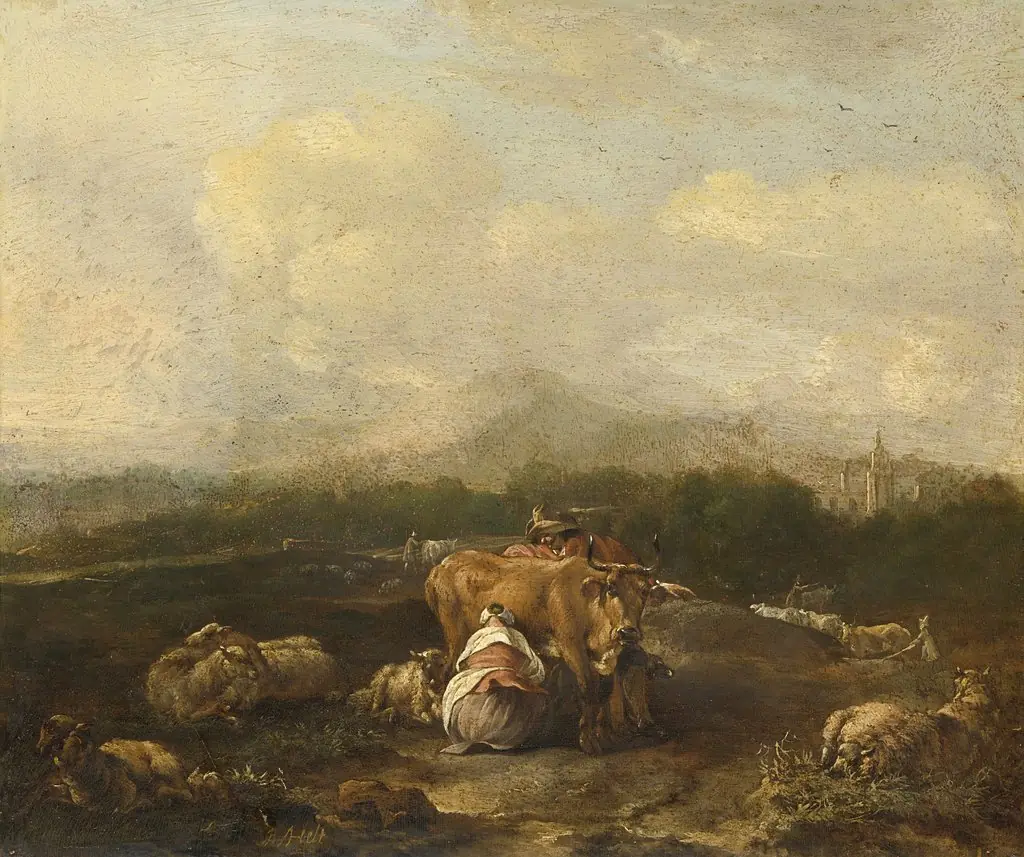 Italian landscape with cattle
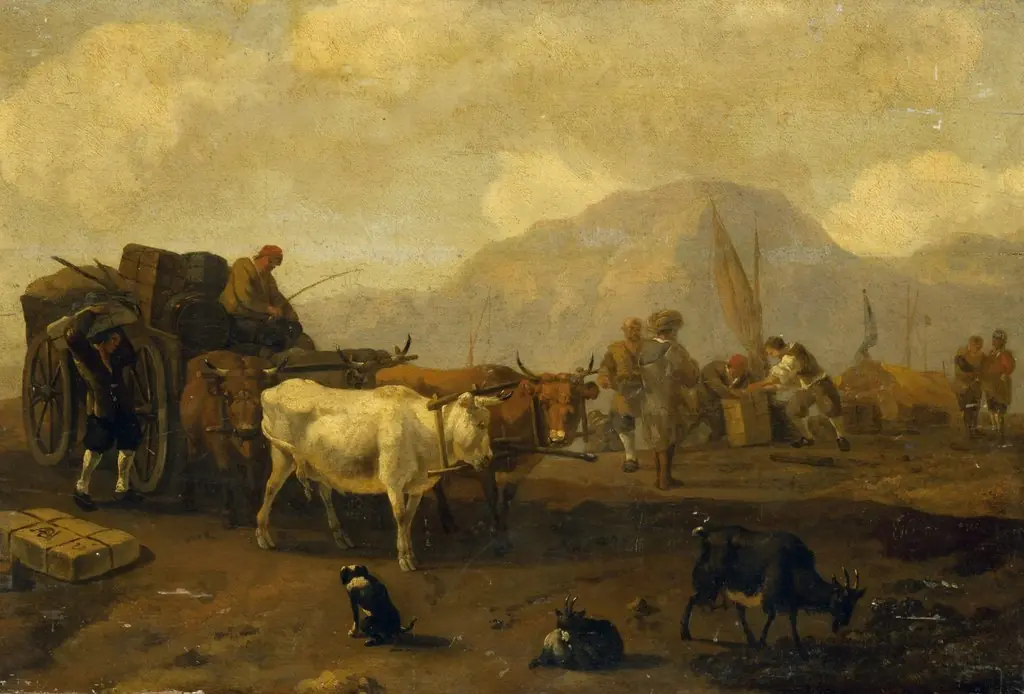 Landscape with a Cart Driven by Bullocks
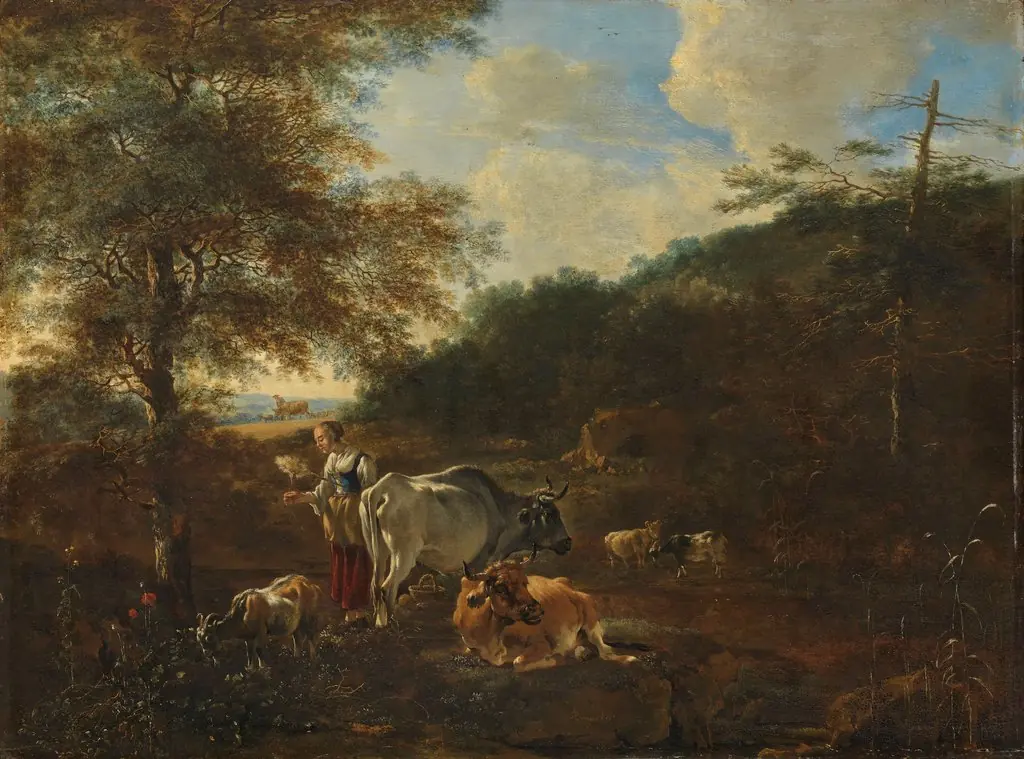 Landscape with cattle
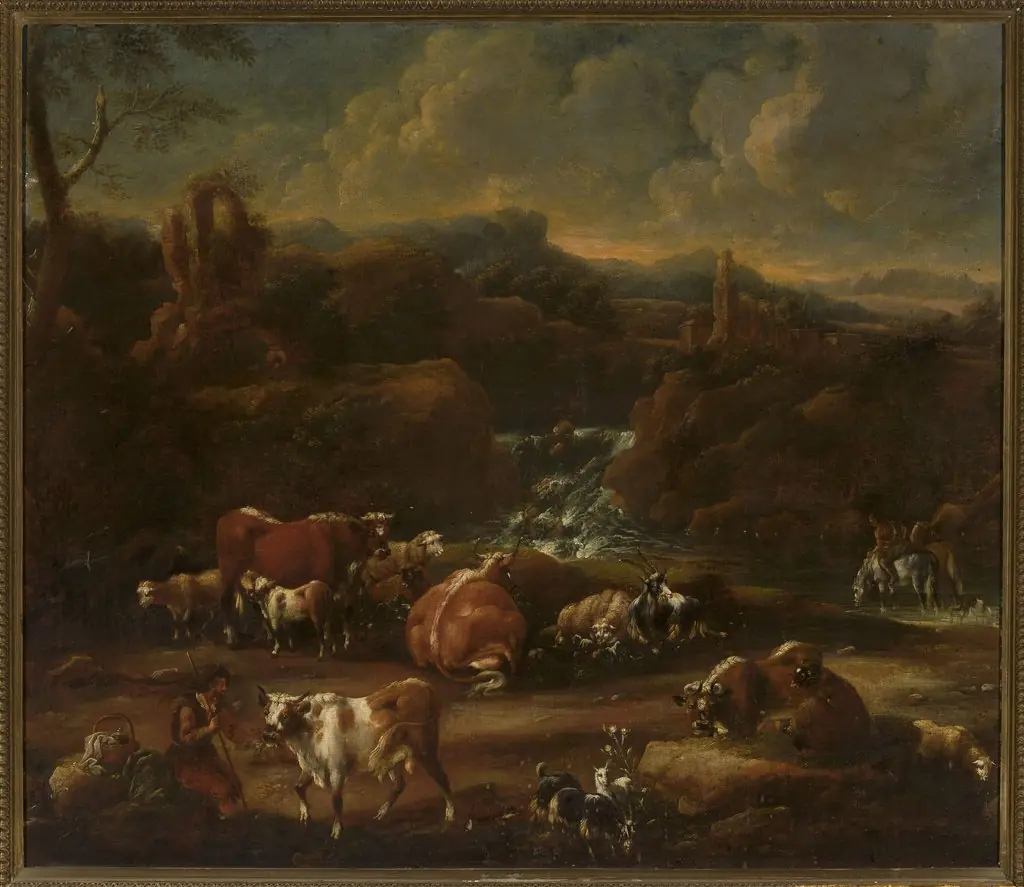 Herd in the mountains
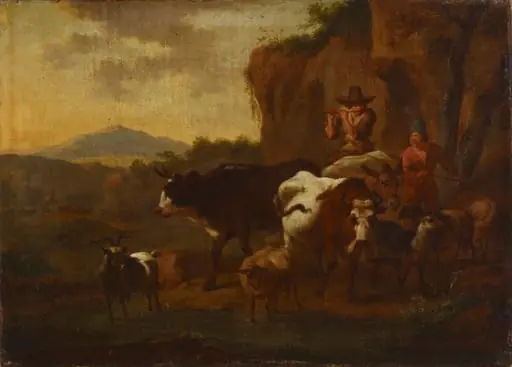 Huilua soittava paimen ja karjaa
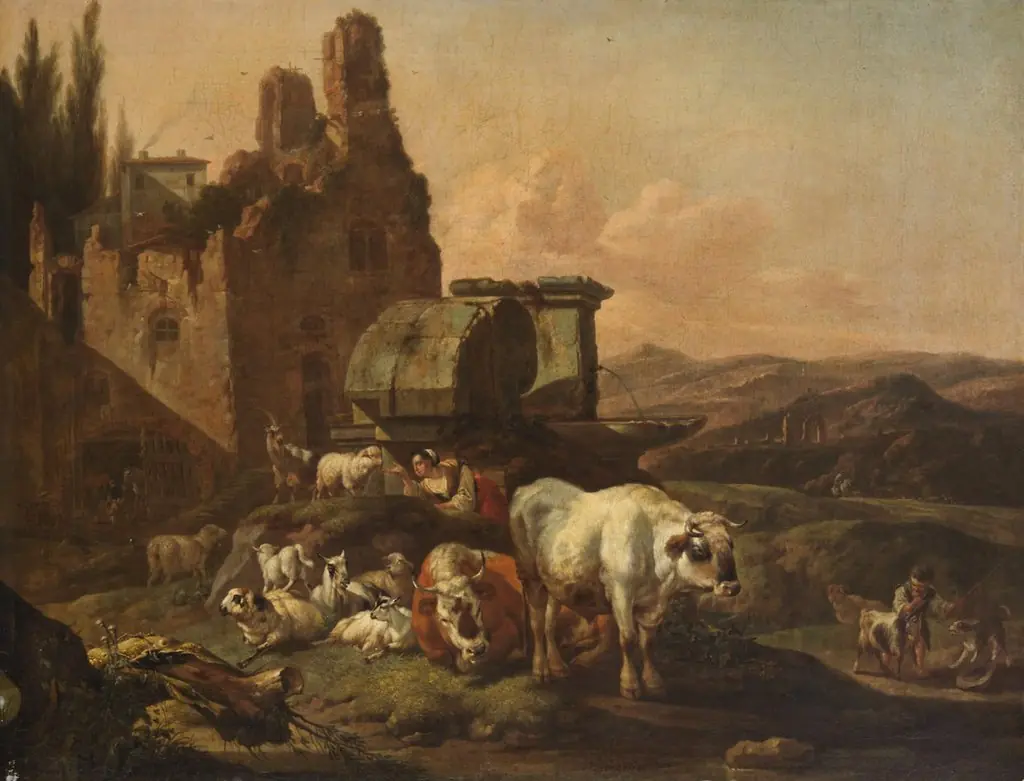 Landschaft mit Tieren an der Tränke
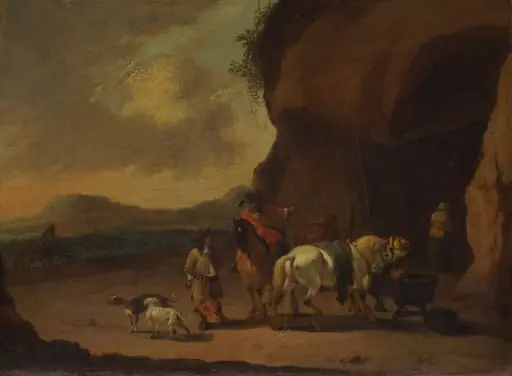 Horsemen Halted on a Mountain Pass
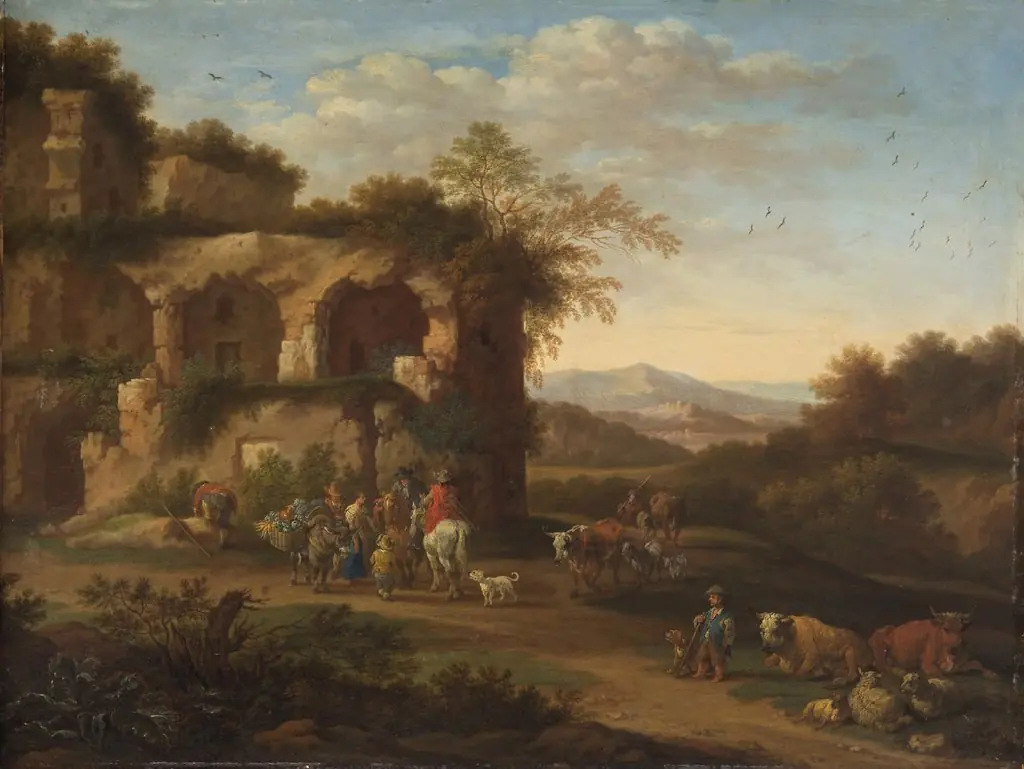 Italian landscape with antique ruins and herders
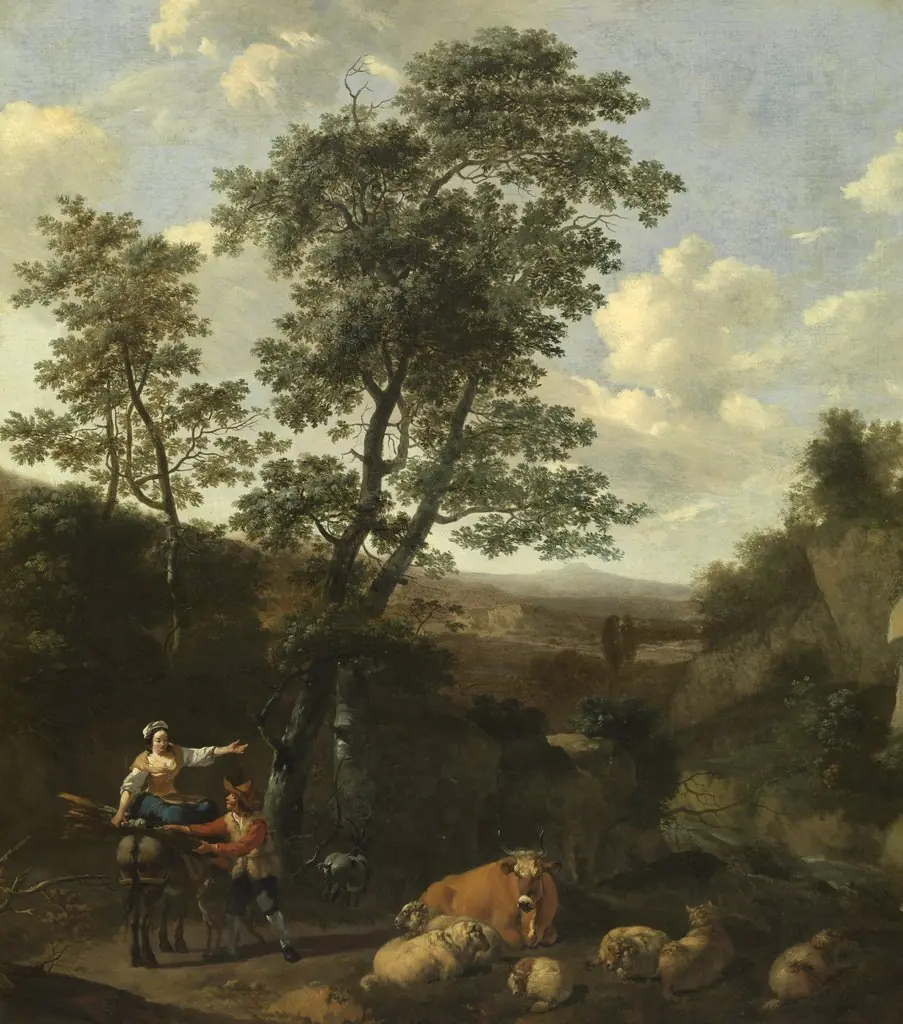 Italian Landscape