Artwork
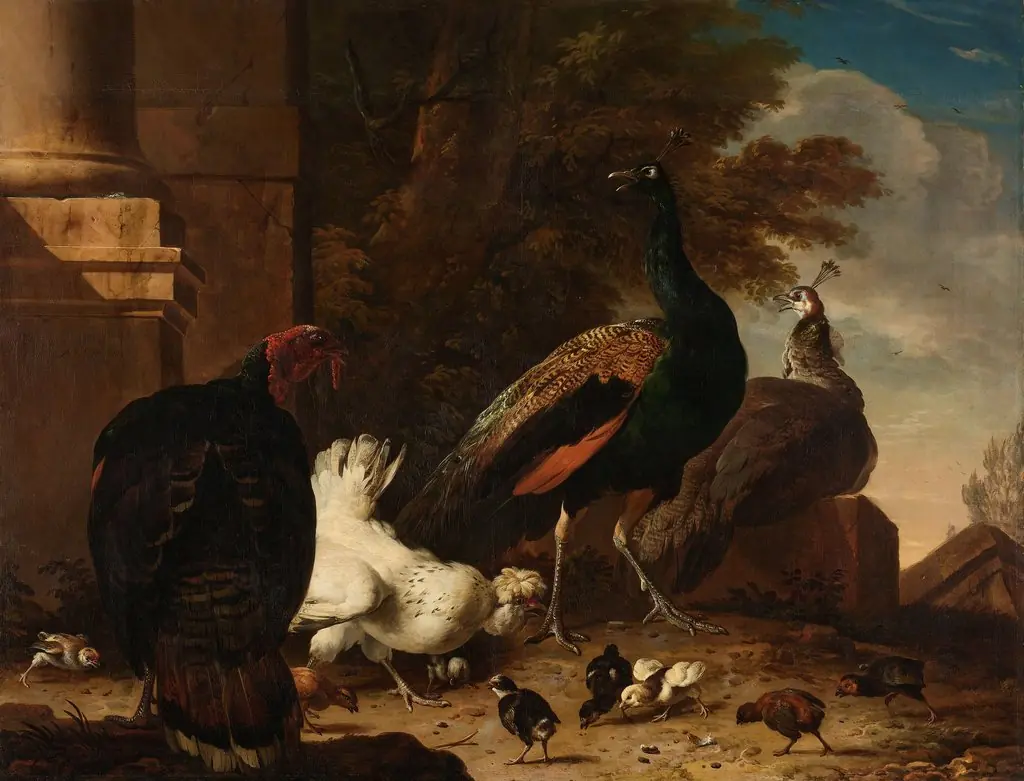
Peacock and peahen
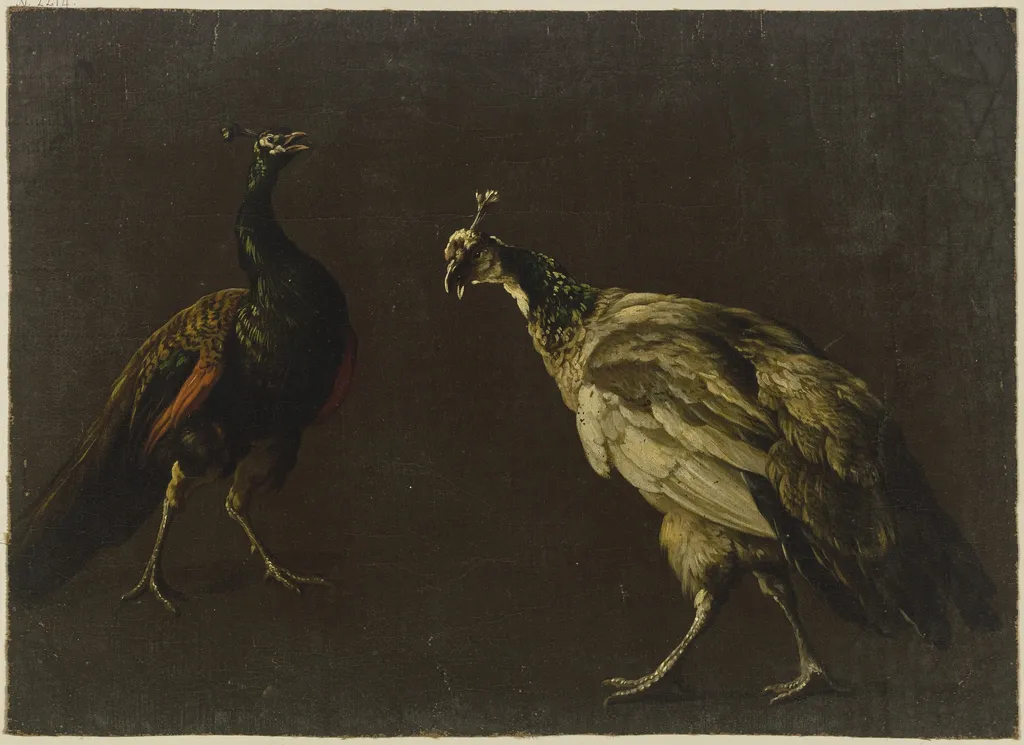
Peacock and peahen is an unspecified painting by the Rococo painting artist Jan Weenix. It dates from 1700 and is held in the collection of the Städel Museum.
About this work
Overview
Though static in composition, the birds’ postures suggest movement and interaction, distinguishing it from conventional taxidermy-style still lifes.
Painted in 1700 by Jan Weenix, this work presents two peafowl in a tightly composed still life. Weenix, trained in a family of Dutch animal painters, focused on lifelike renderings of birds and game. The painting’s dark backdrop isolates the subjects, emphasizing their form and texture. Though static in composition, the birds’ postures suggest movement and interaction, distinguishing it from conventional taxidermy-style still lifes.
Subject & Meaning
The two peafowl—male and female—are depicted with attention to species-specific plumage and behavior. The male, with its elongated neck and open beak, appears vocalizing, while the female turns toward it, suggesting a moment of communication. Their placement implies a naturalistic encounter rather than a staged display. The choice of peafowl, exotic yet familiar in European collections, reflects a fascination with ornamental wildlife during the early 18th century.
Technique & Style
Weenix employed chiaroscuro to model the birds’ feathers, using subtle gradations of light to define scale, texture, and volume. The dark background enhances the luminosity of the peacock’s iridescent head and the peahen’s mottled brown plumage. Brushwork is precise yet fluid, capturing the sheen of feathers without artificial gloss. The composition avoids clutter, focusing attention on the birds’ anatomical detail and spatial relationship.
History & Provenance
The painting entered the Städel Museum’s collection in the 19th century, likely through acquisitions of Dutch Golden Age and early 18th-century works. Weenix’s reputation as a specialist in animal still lifes ensured his works were sought after by collectors. Its preservation in a major German institution reflects its recognition as a representative example of Northern European naturalist painting from the period.
Context
Created during the transition from Baroque to Rococo, the painting retains the Baroque emphasis on realism and dramatic lighting but avoids ornamental excess. Peafowl were symbols of luxury and exoticism in European aristocratic circles, often kept in private menageries. Weenix’s depiction aligns with a broader trend of natural history observation, where art served both aesthetic and documentary purposes.
Legacy
Weenix’s approach influenced later still-life painters who prioritized anatomical accuracy over symbolic allegory. *Peacock and peahen* exemplifies a quiet shift in Dutch painting toward observational fidelity, distancing itself from mythological or allegorical themes. Its continued display in the Städel Museum underscores its value as a precise record of avian form and 18th-century artistic practice.
Own this work as a print
Artist & collection
Artist
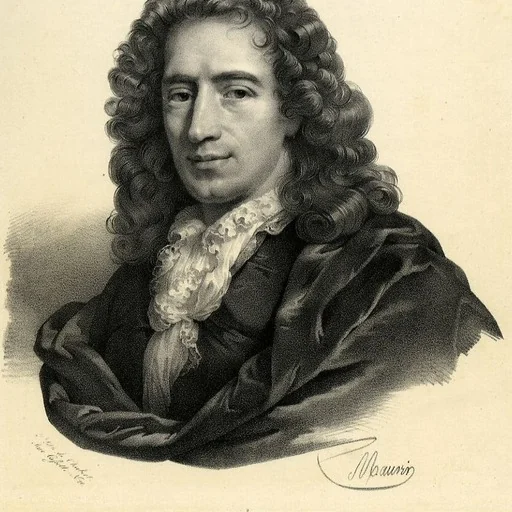
Jan Weenix or Joannis Wenix (between 1641/1649 – 19 September 1719 (buried)) was a Dutch painter.

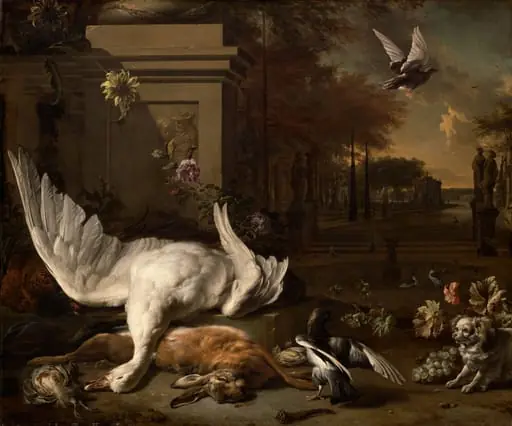 Still Life with Goose and Game before a Country Estate
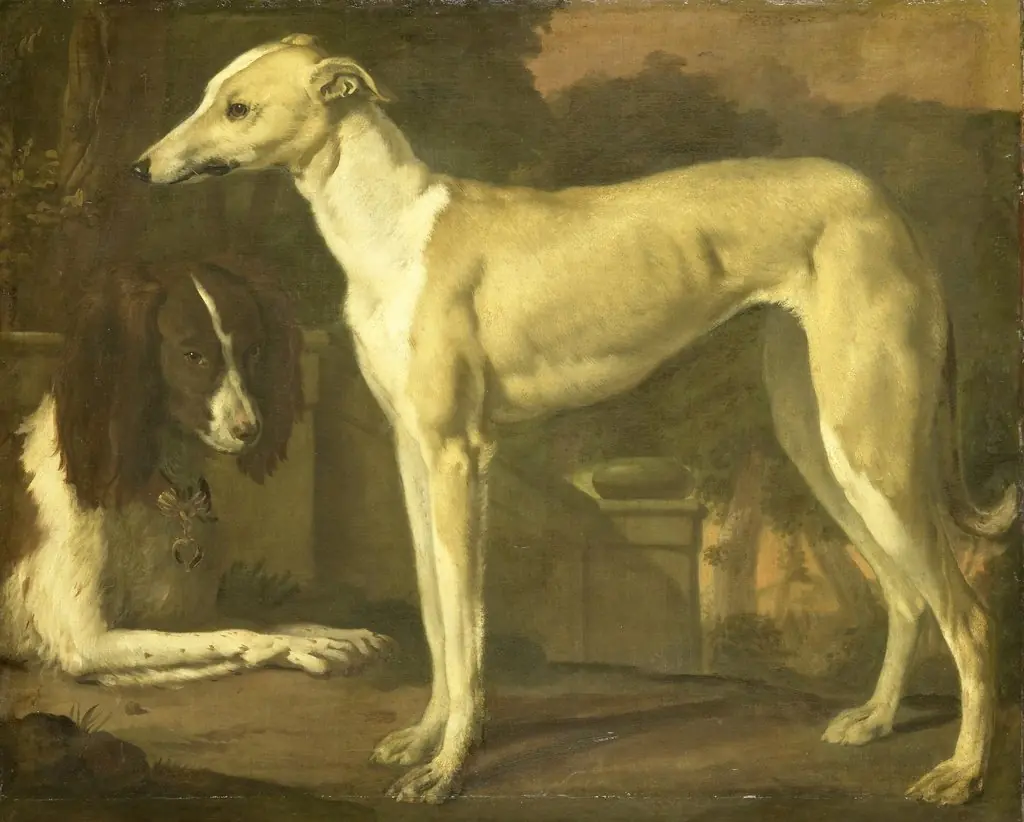 Portrait of a greyhound and a spaniel
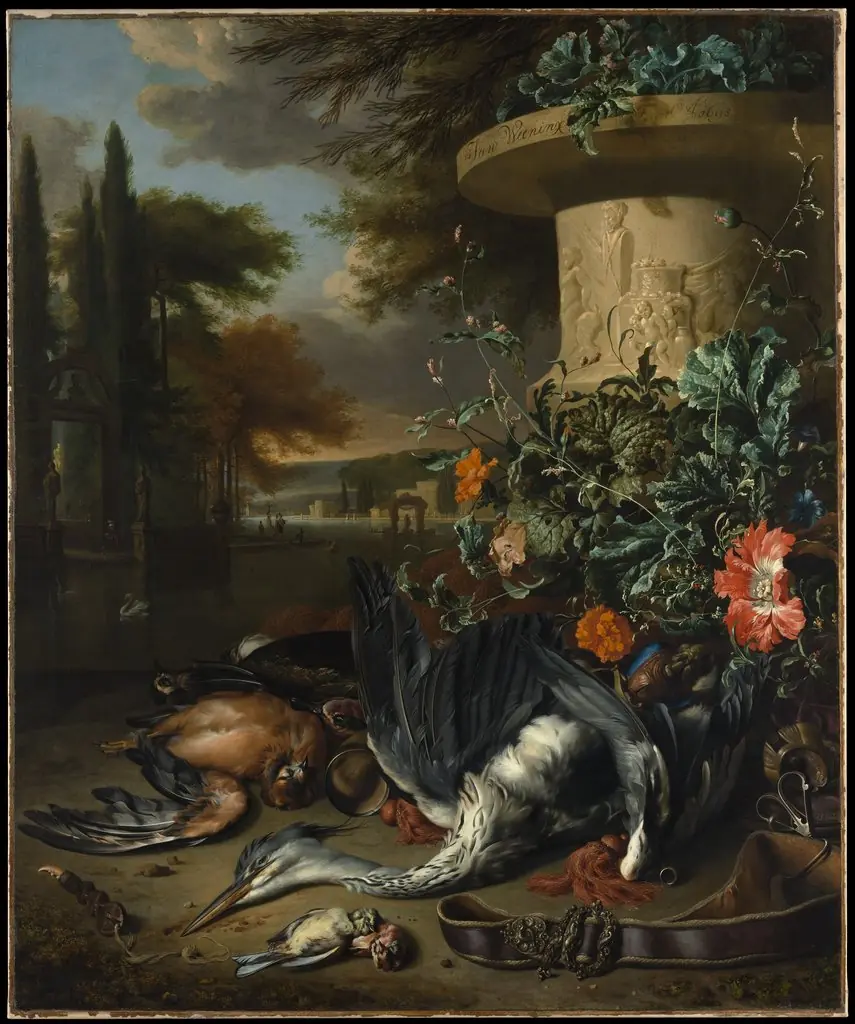 Gamepiece with a Dead Heron ("Falconer's Bag")
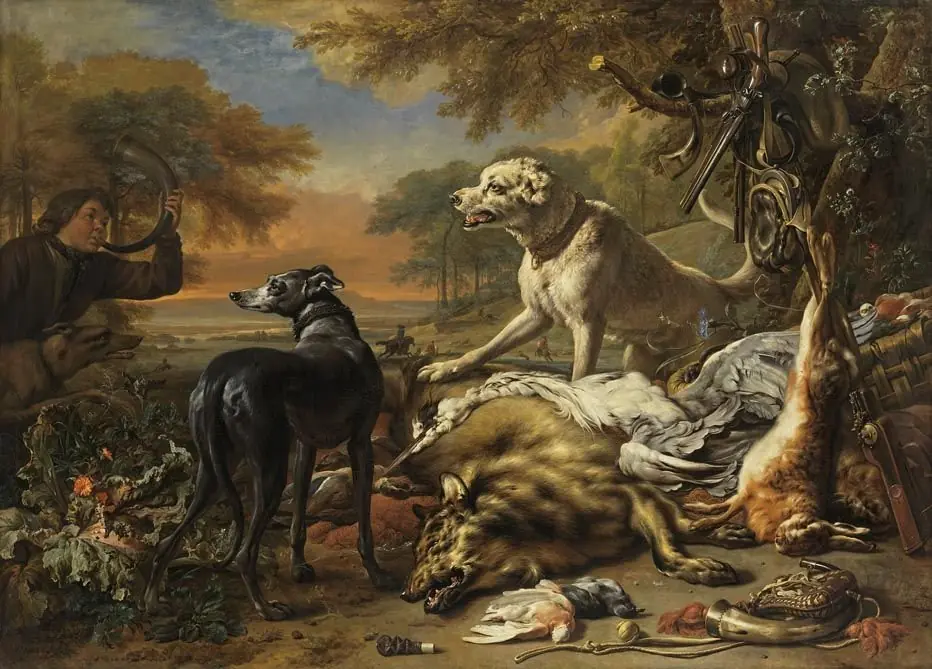 Hunting still life with wolf
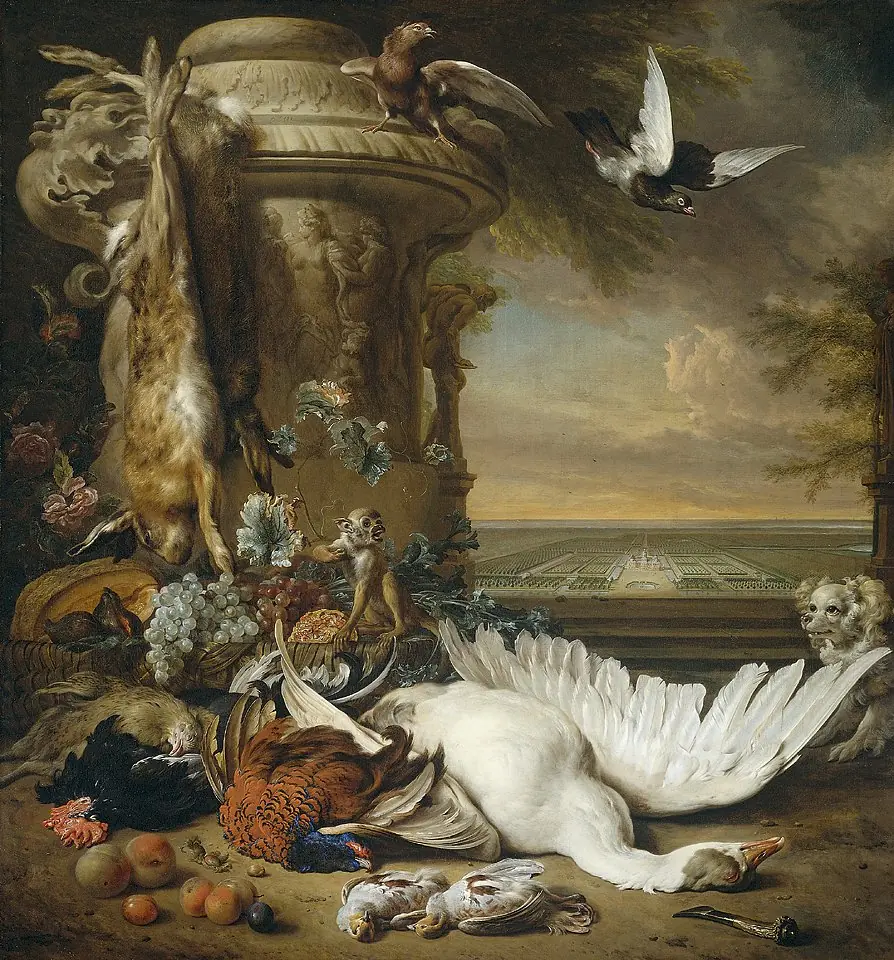 Still Life with Dead Game and Fruit beside a Garden Vase, with a Monkey, a Dog and Two Pigeons; in the Background Rijksdorp near Wassenaar, the Estate of Jonkheer Jacob Emmery, Baron of Wassenaar
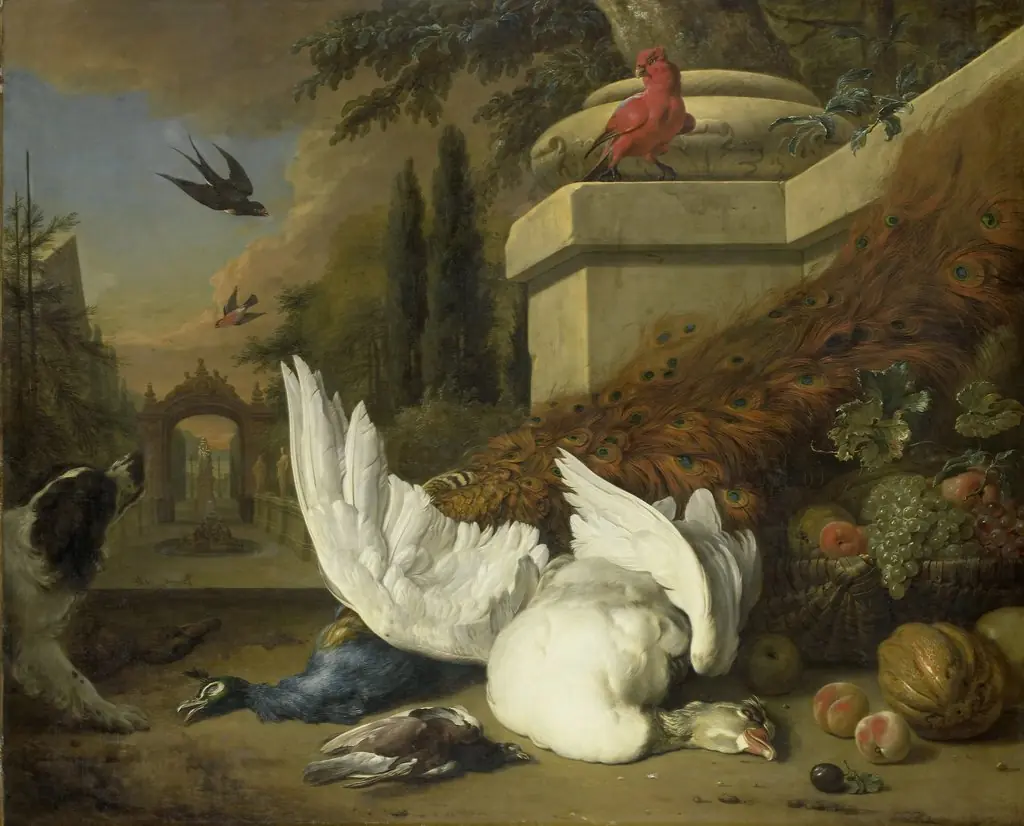 A monkey and a dog beside dead game and fruits, with the estate of Rijxdorp near Wassenaar in the background
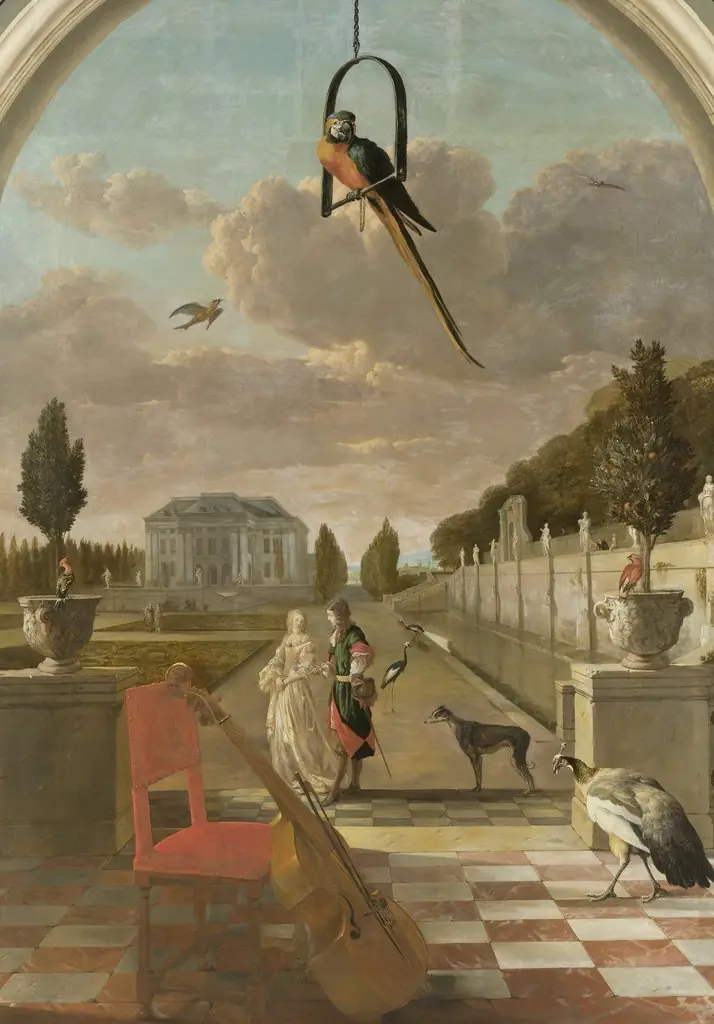 Park with country home
 Portrait of Maria Cornelisz, Wife of Silvester van Tongeren