Artwork
Perlhühner und Nasenbär
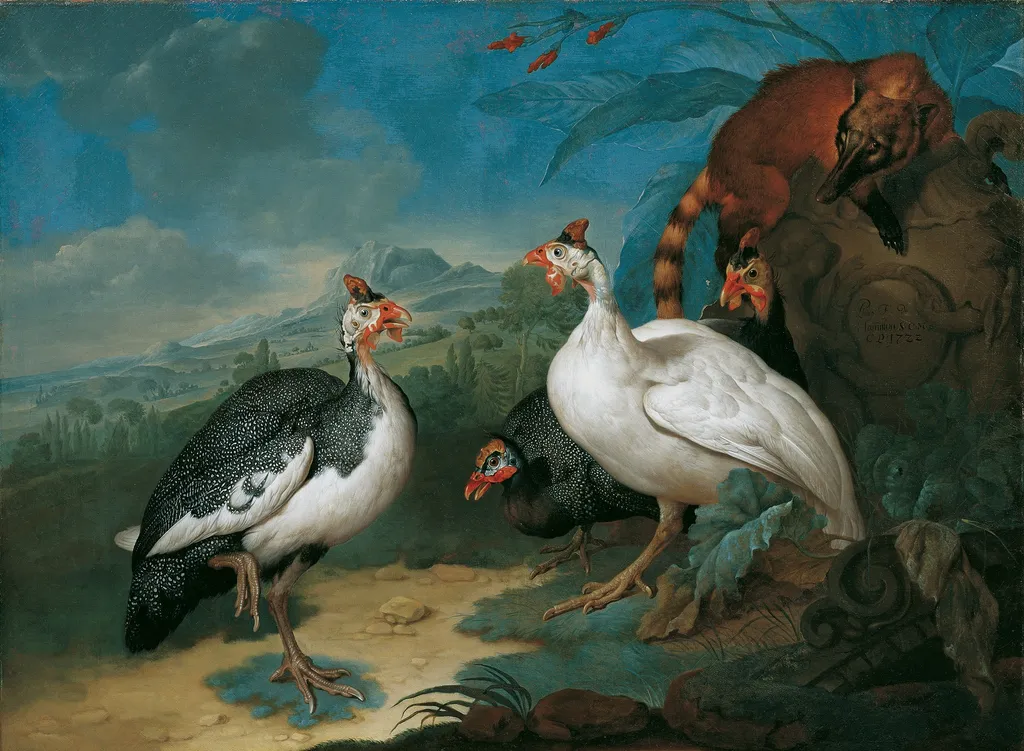
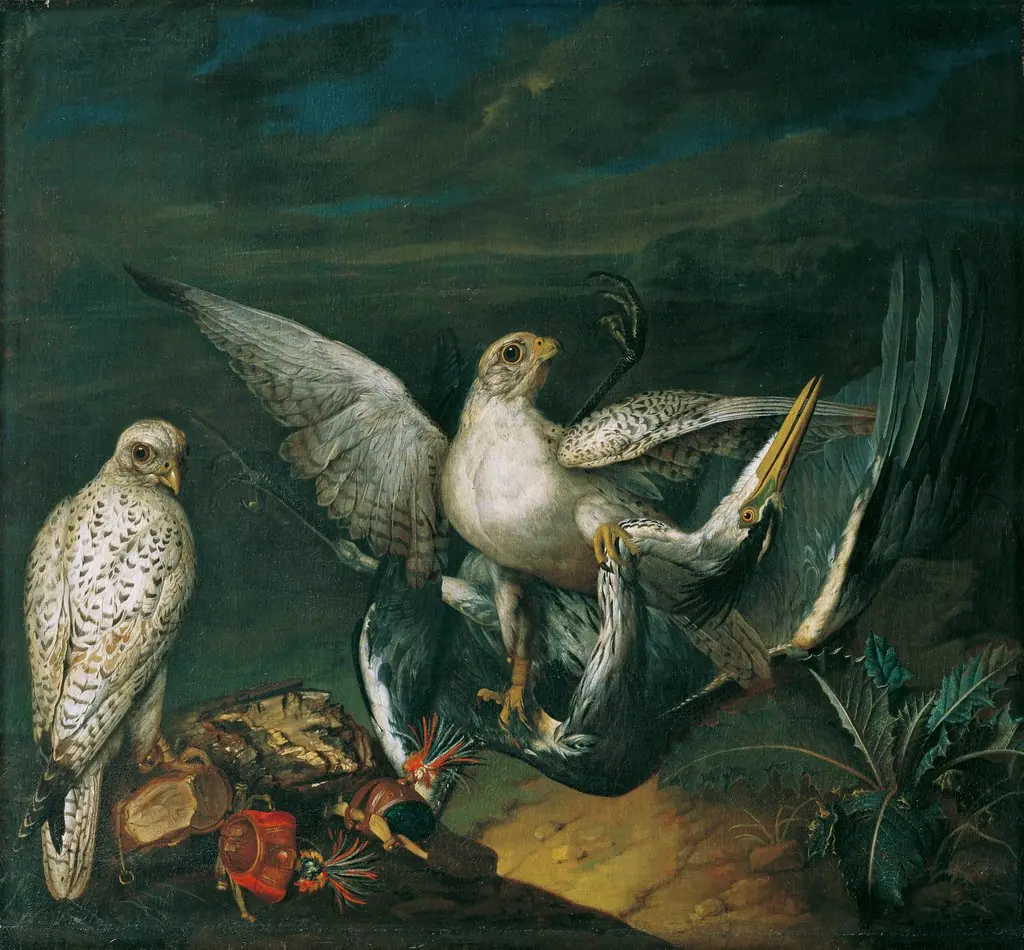
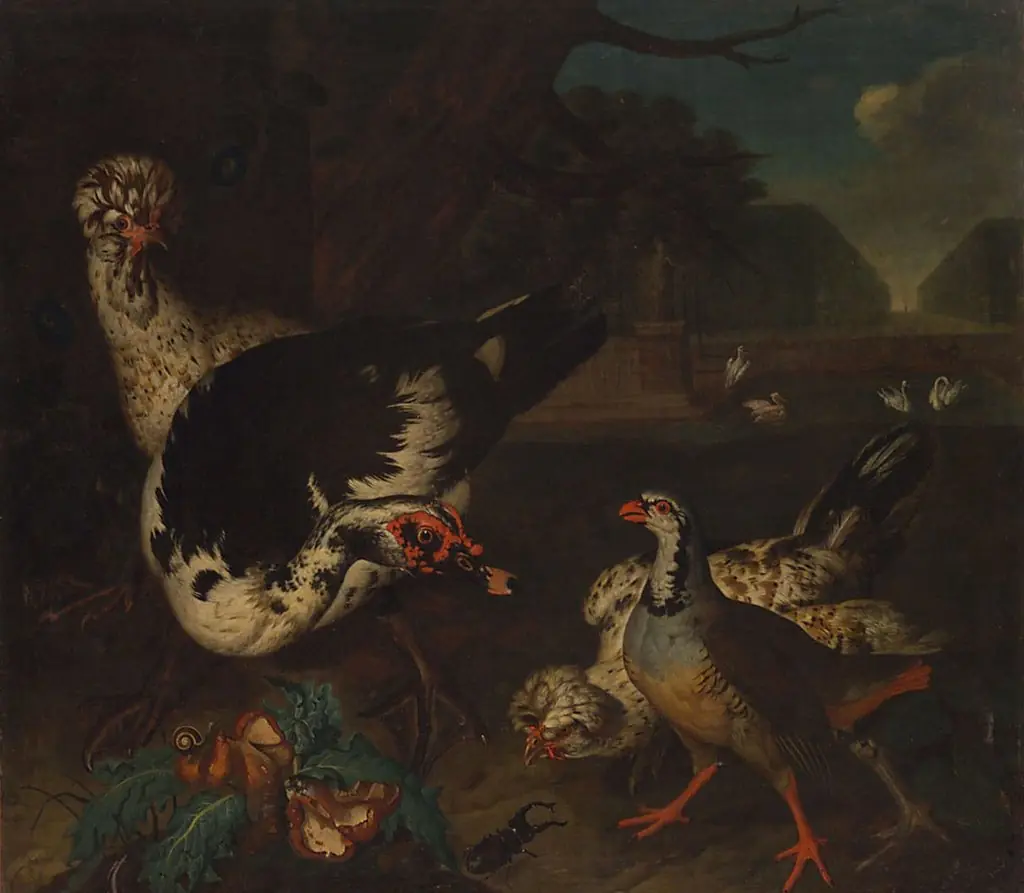
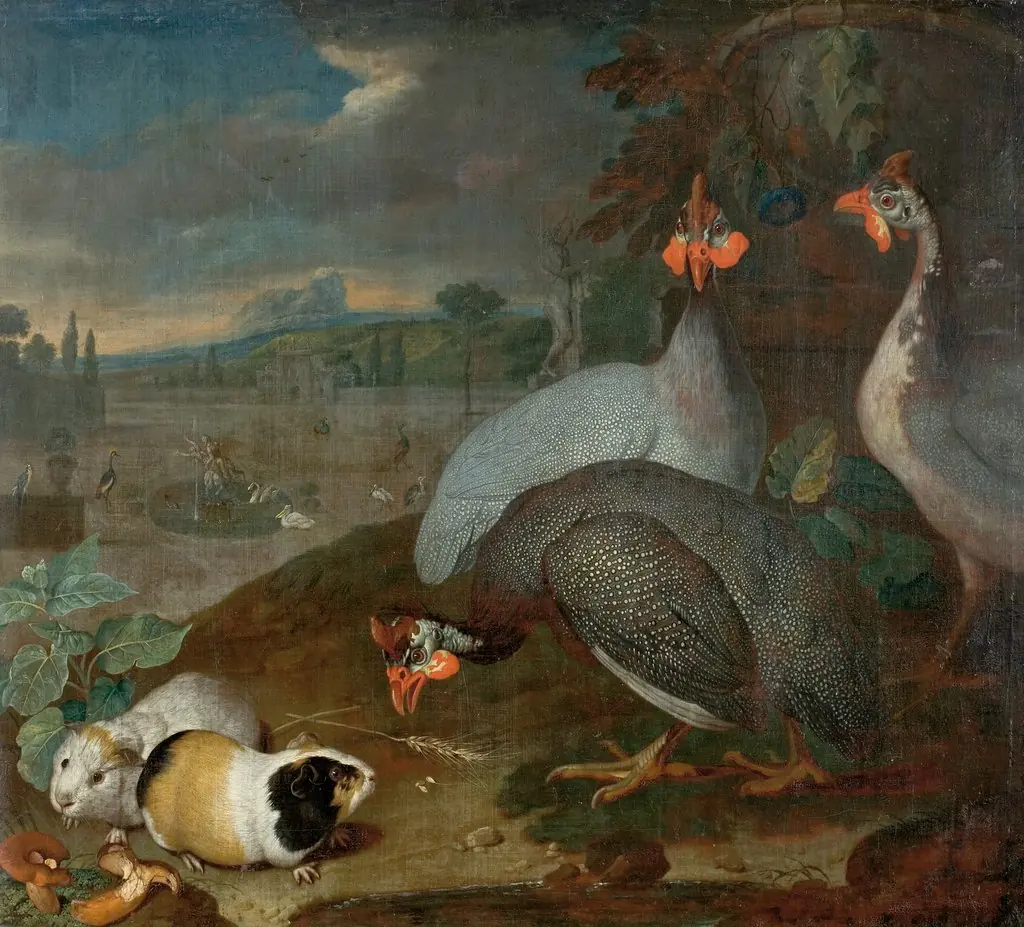
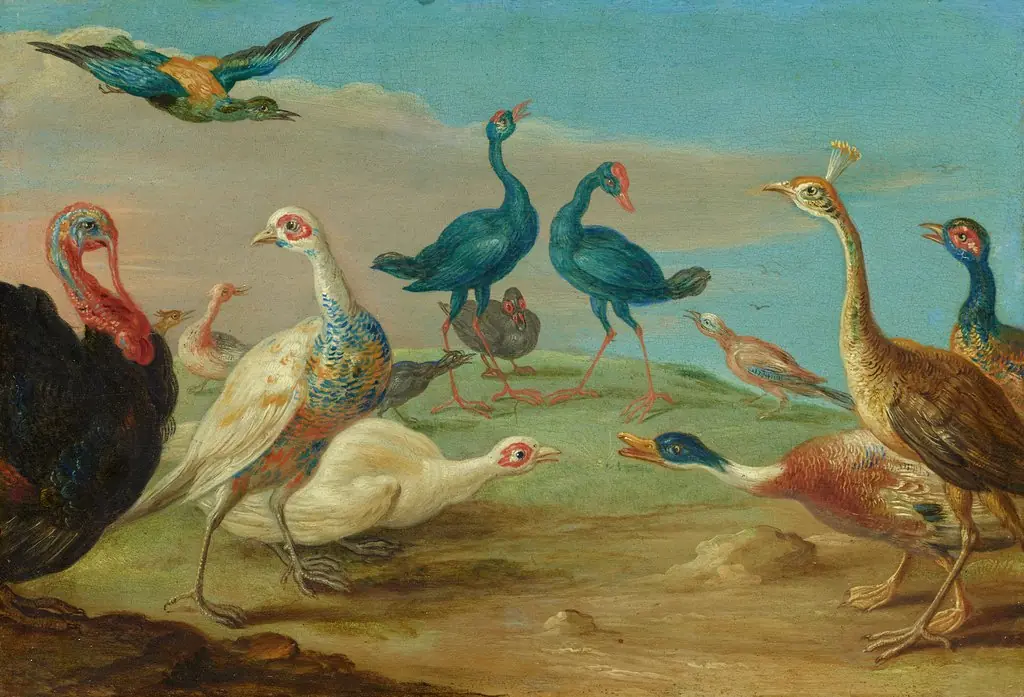
Perlhühner und Nasenbär is an oil painting by the Rococo painting artist Philipp Ferdinand de Hamilton. It dates from 1722 and is held in the collection of the Kunsthistorisches Museum.
About this work
Overview
The painting resides in the Kunsthistorisches Museum, Vienna, as part of its broader collection of 18th-century animal studies.
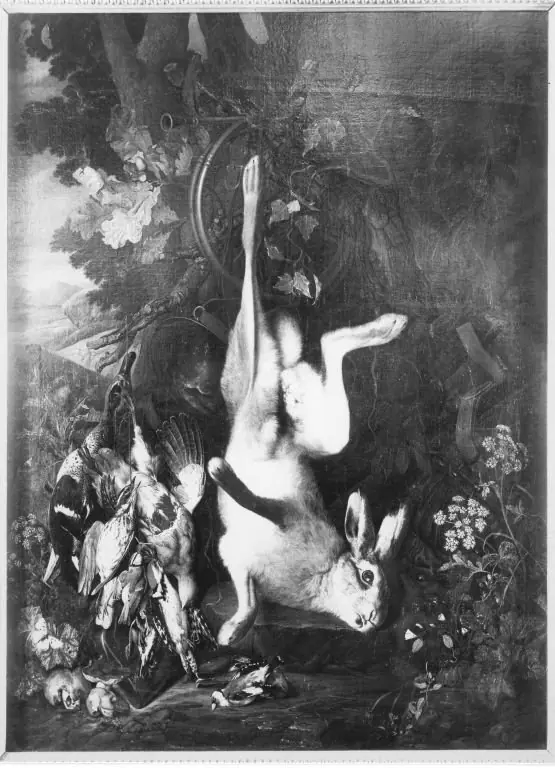
Painted in 1722 by Philipp Ferdinand de Hamilton, this oil-on-canvas work presents a naturalistic grouping of guinea fowl and a coati within a pastoral landscape. Hamilton, active in the Habsburg court, combined observational precision with the decorative sensibility of the Rococo. The painting resides in the Kunsthistorisches Museum, Vienna, as part of its broader collection of 18th-century animal studies.
Subject & Meaning
The composition features guinea fowl with distinctive white-and-black plumage and crimson heads, positioned on a rocky ledge, alongside a coati climbing behind them. These animals, exotic to Central Europe at the time, reflect aristocratic interest in global fauna collected in imperial menageries. The scene evokes curiosity rather than symbolism, emphasizing the novelty of non-native species in European collections.
Technique & Style
Hamilton rendered the animals with meticulous attention to texture—individual feathers and the coati’s dense fur are carefully delineated. The brushwork remains controlled yet fluid, characteristic of Rococo naturalism. The background, with soft blue skies and distant mountains, provides depth without distraction, allowing the animals to dominate the visual field through detailed realism and balanced composition.
History & Provenance
Commissioned during Hamilton’s tenure at the Viennese court, the painting likely originated as part of a decorative program for imperial residences. It entered the Kunsthistorisches Museum’s collection in the 19th century, following the consolidation of Habsburg holdings. Its survival intact suggests it was valued as a specimen of natural history art rather than a mere ornamental piece.
Context
In early 18th-century Austria, exotic animals were symbols of imperial reach and scientific interest. Hamilton’s work aligns with a broader trend among court painters to document newly encountered species, often sourced from colonial territories. This painting reflects the intersection of natural science, imperial prestige, and artistic practice in the Habsburg realm.
Legacy
Though not widely known outside specialist circles, the painting remains a representative example of Rococo animal painting in Central Europe. It contributes to the historical record of how European artists interpreted and presented non-native wildlife, preserving visual evidence of early modern zoological curiosity and the role of art in natural history documentation.
Own this work as a print
Artist & collection
Artist
Philipp Ferdinand de Hamilton (c. 1664 – 1750), was an 18th-century painter from the Southern Netherlands active in Austria.