Artwork
Landscape with a waterfall
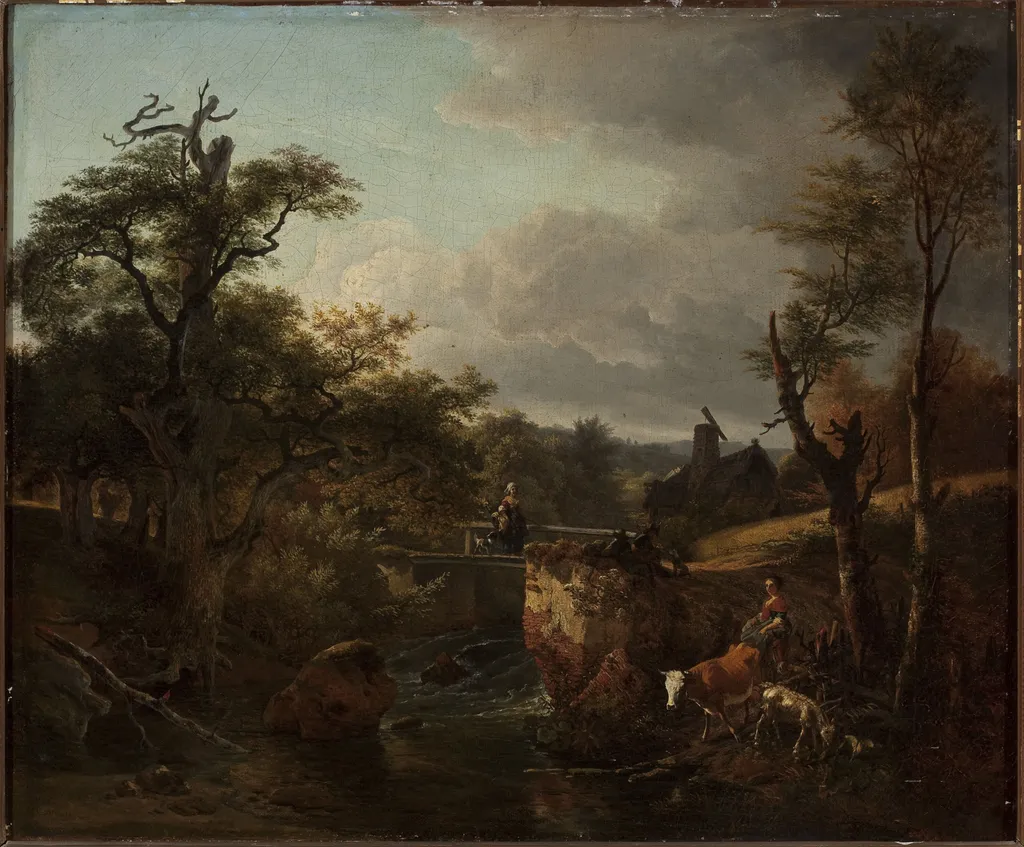
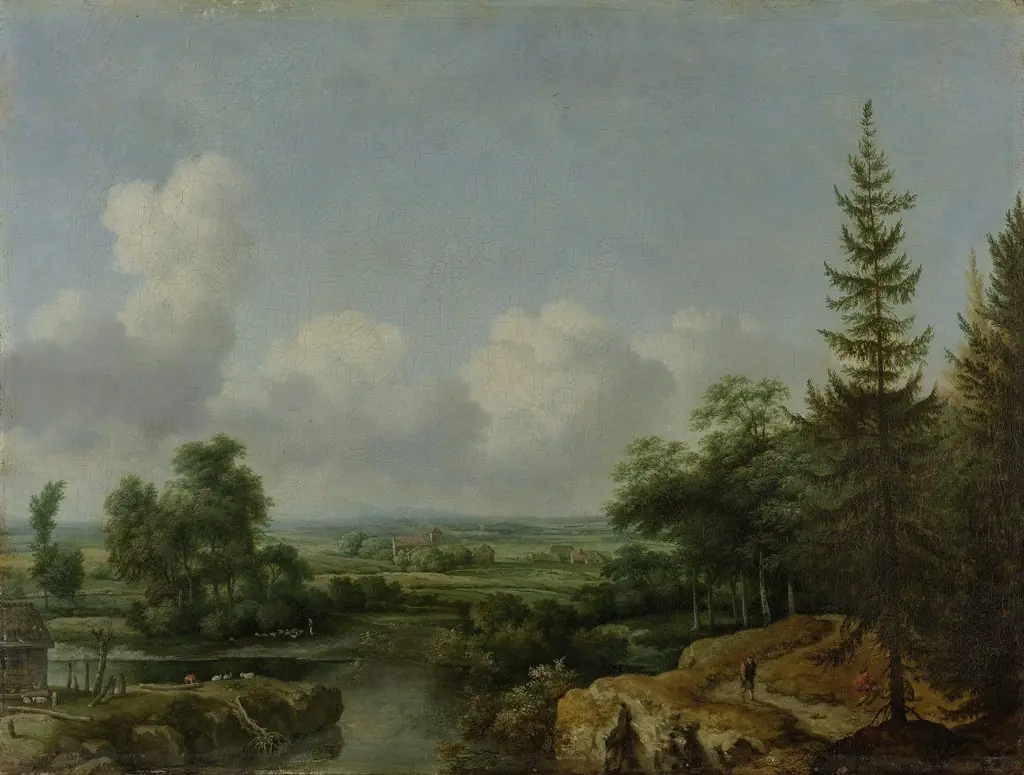
Landscape with a waterfall is an oil painting by the Barbizon school artist Jean-Louis de Marne. It dates from 1815 and is held in the collection of the National Museum in Warsaw.
About this work
Overview
Painted in 1815 by Jean-Louis de Marne, this oil-on-canvas work presents a quiet rural scene centered on a cascading waterfall. It resides in the National Museum in Warsaw, where it is cataloged as a representative example of early 19th-century French landscape painting. The composition balances natural elements with subtle human presence, avoiding dramatic tension in favor of calm observation.
Subject & Meaning
The waterfall, though central, is rendered with restraint—its motion implied rather than emphasized—reinforcing the painting’s quietude and introspective tone.
The scene features a solitary figure seated on a bridge, framed by a gnarled tree on the left and rolling hills receding into a soft, overcast sky. The figure’s stillness and the unobtrusive placement suggest contemplation rather than narrative. The waterfall, though central, is rendered with restraint—its motion implied rather than emphasized—reinforcing the painting’s quietude and introspective tone.
Technique & Style
De Marne employs fine brushwork to capture the texture of tree bark and the subtle ripples of water, using layered glazes to achieve depth in the foliage and atmospheric haze. The sky is built with thin, translucent washes, allowing underlying tones to subtly influence the cloud forms. The palette is muted, favoring earthy greens, soft grays, and pale blues to sustain the scene’s serene atmosphere.
History & Provenance
The painting entered the National Museum in Warsaw’s collection in the 19th century, likely through European art acquisitions following political realignments in the region. Its origin as a French work in a Polish institution reflects the movement of artworks across borders during the Napoleonic era. No significant alterations or restorations are documented, preserving its original condition.
Context
Created during the post-Napoleonic period, the painting aligns with a broader European trend favoring tranquil, idealized nature over heroic or dramatic themes. While Romanticism was gaining ground, de Marne’s approach remains rooted in the earlier tradition of topographical landscape, emphasizing harmony and observation rather than emotional intensity or sublime awe.
Legacy
Though not widely exhibited beyond Poland, the work is studied for its restrained technique and quiet composition within academic circles focused on early 19th-century landscape painting. It serves as a modest but clear example of how French artists of the period interpreted natural serenity, influencing later regional painters who valued subtlety over spectacle.
Artist & collection
Artist
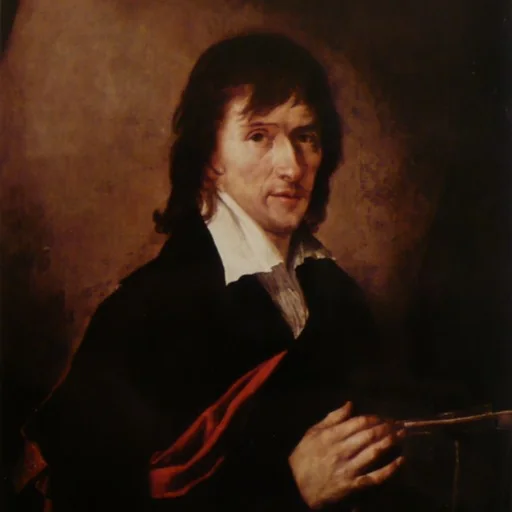
Jean-Louis de Marne (1752–1829) was an artist, born in Brussels metropolitan area.

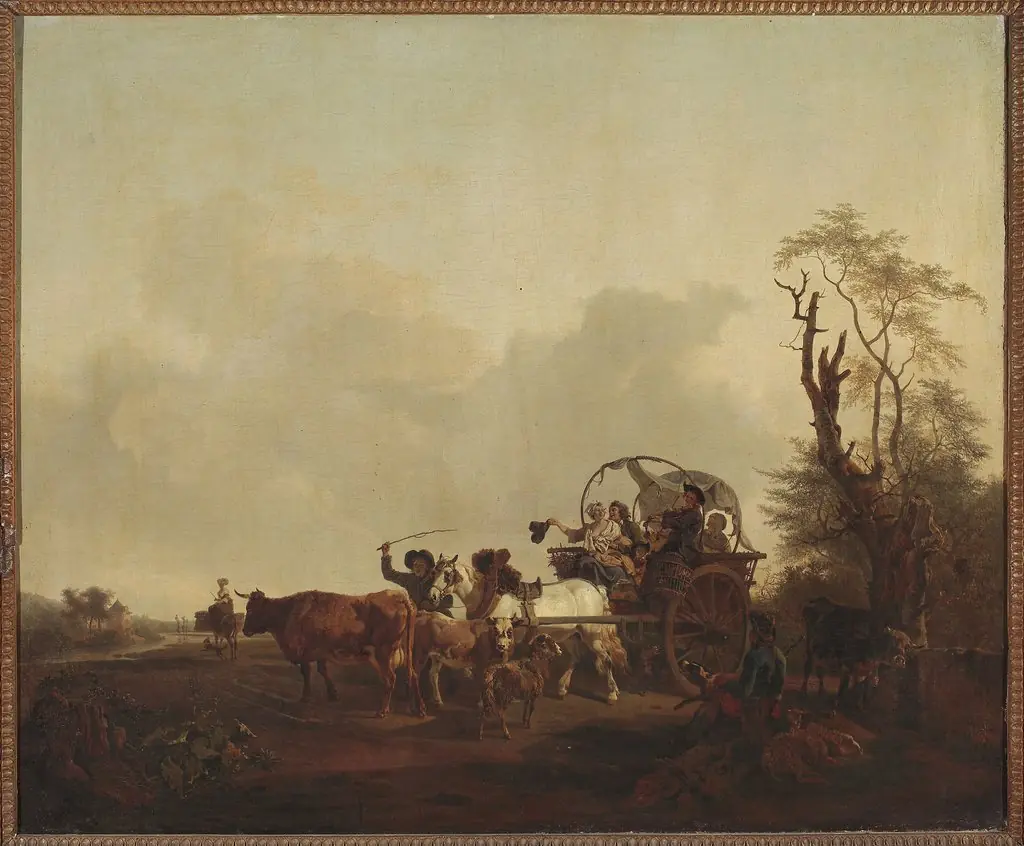
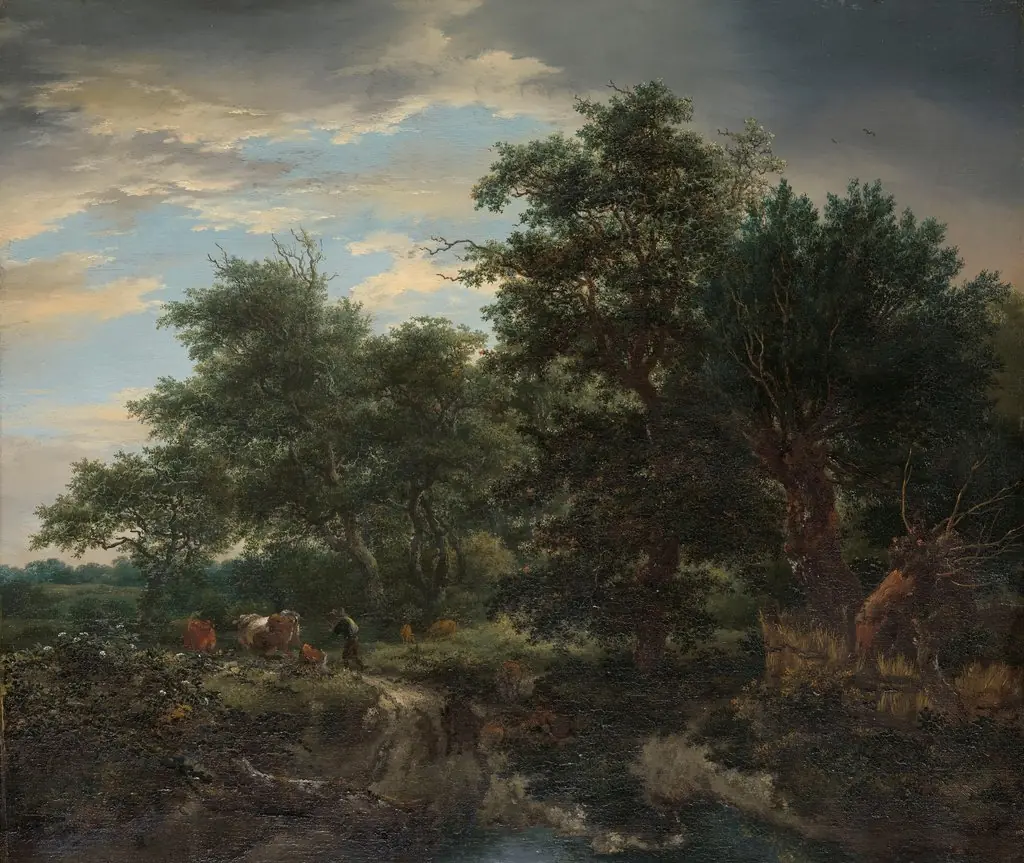 Forest scene
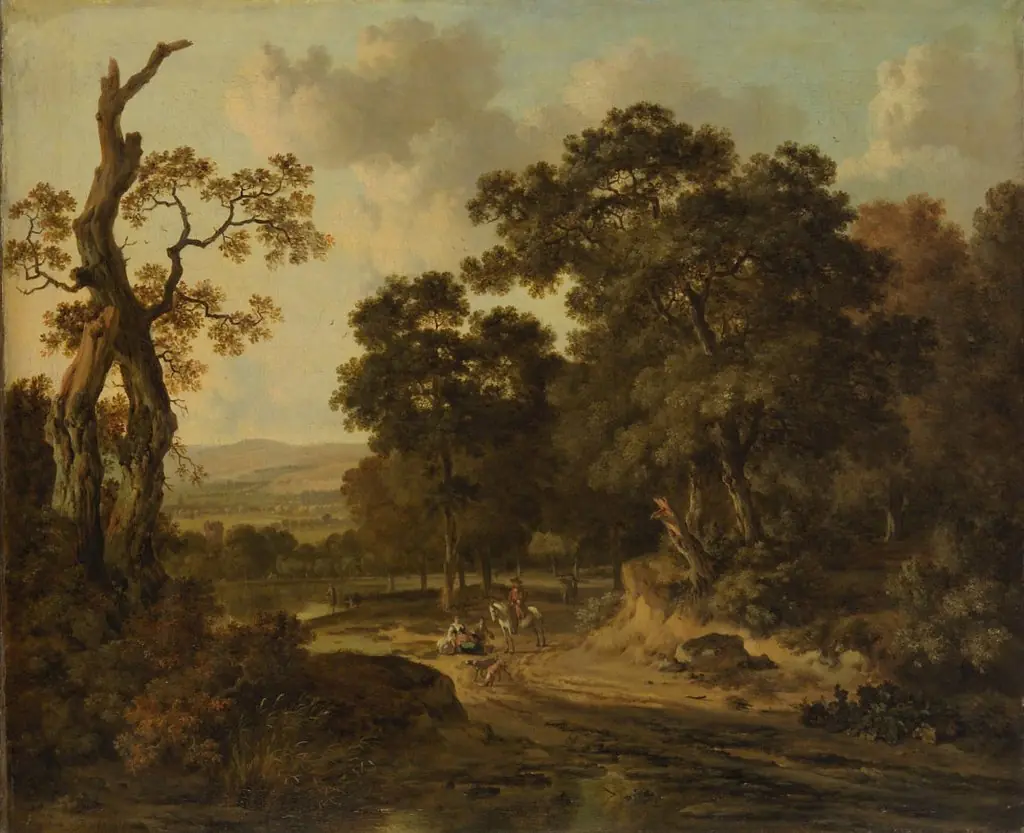 Waldeingang
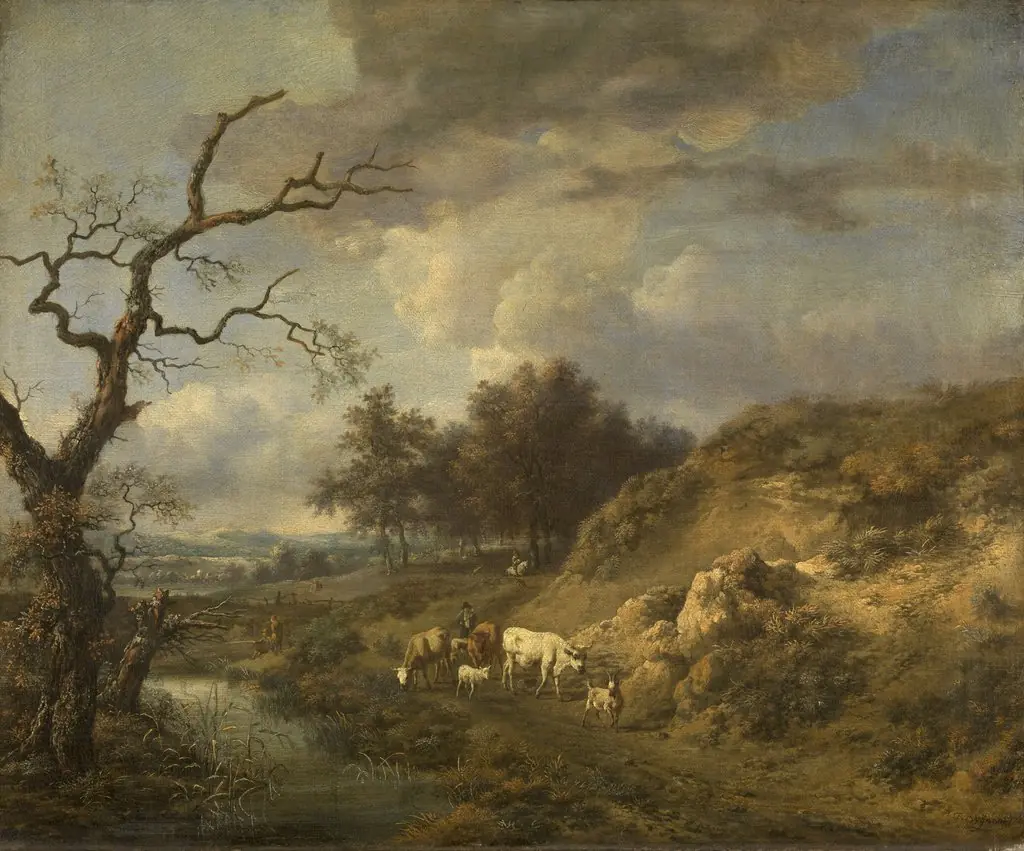 Landschap met vee
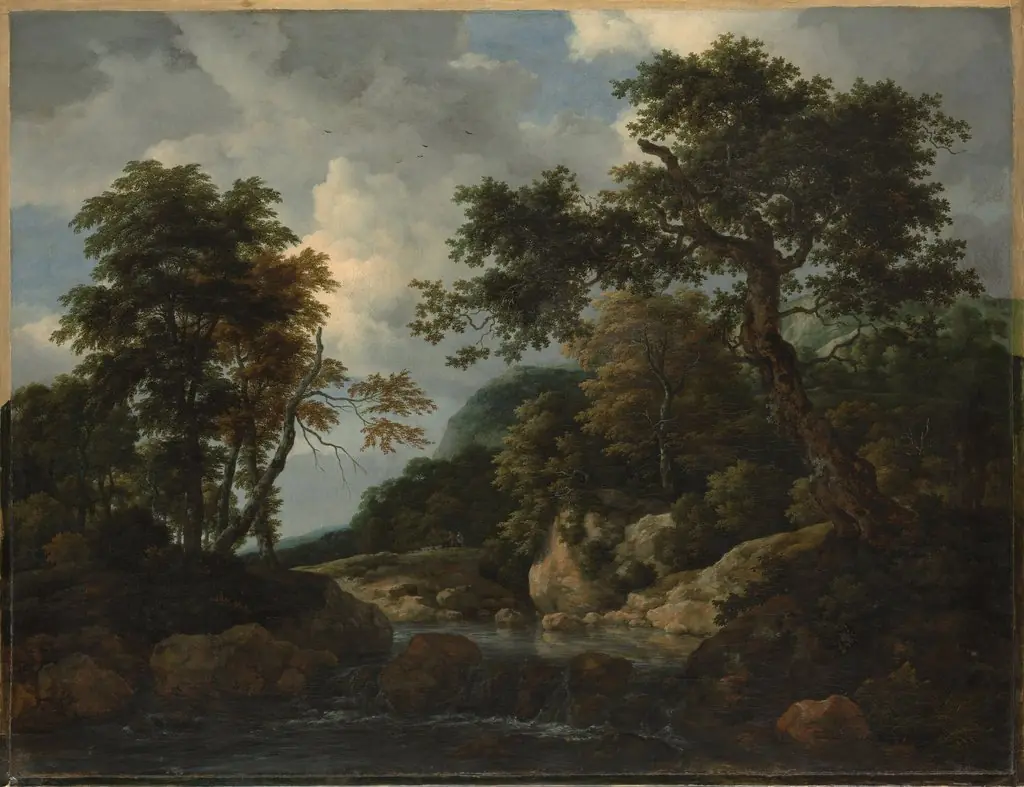 The Forest Stream
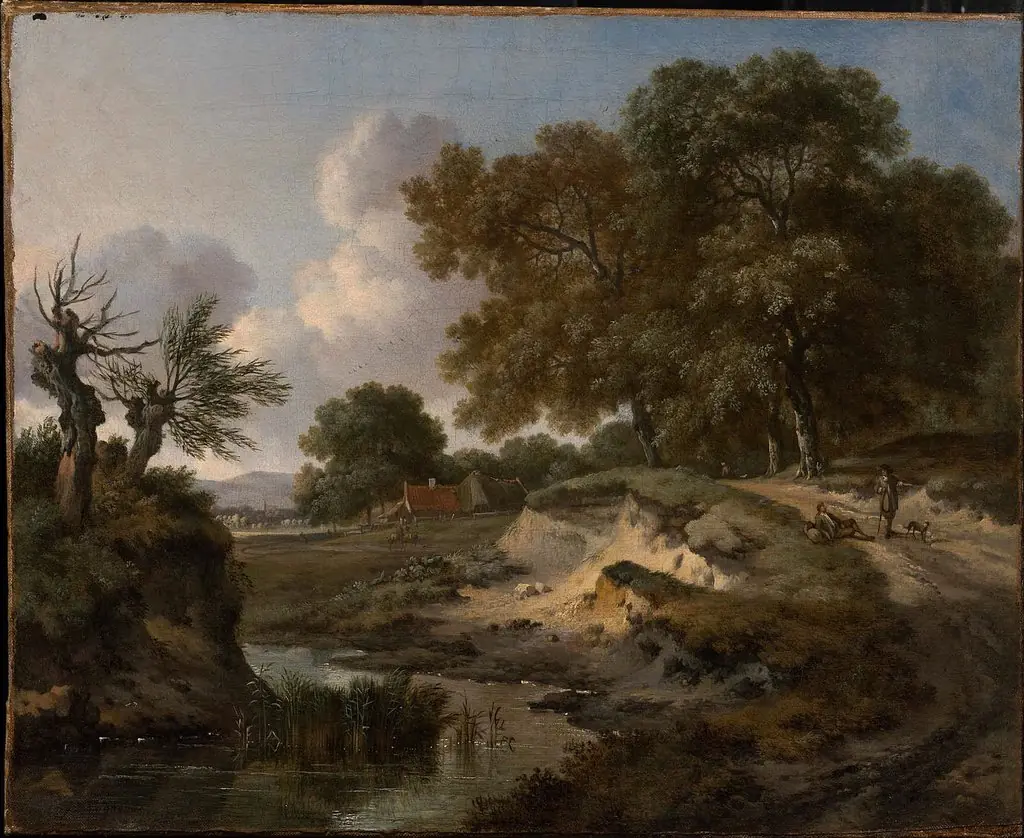 A Wooded Landscape with Travelers and a Dog on a Path
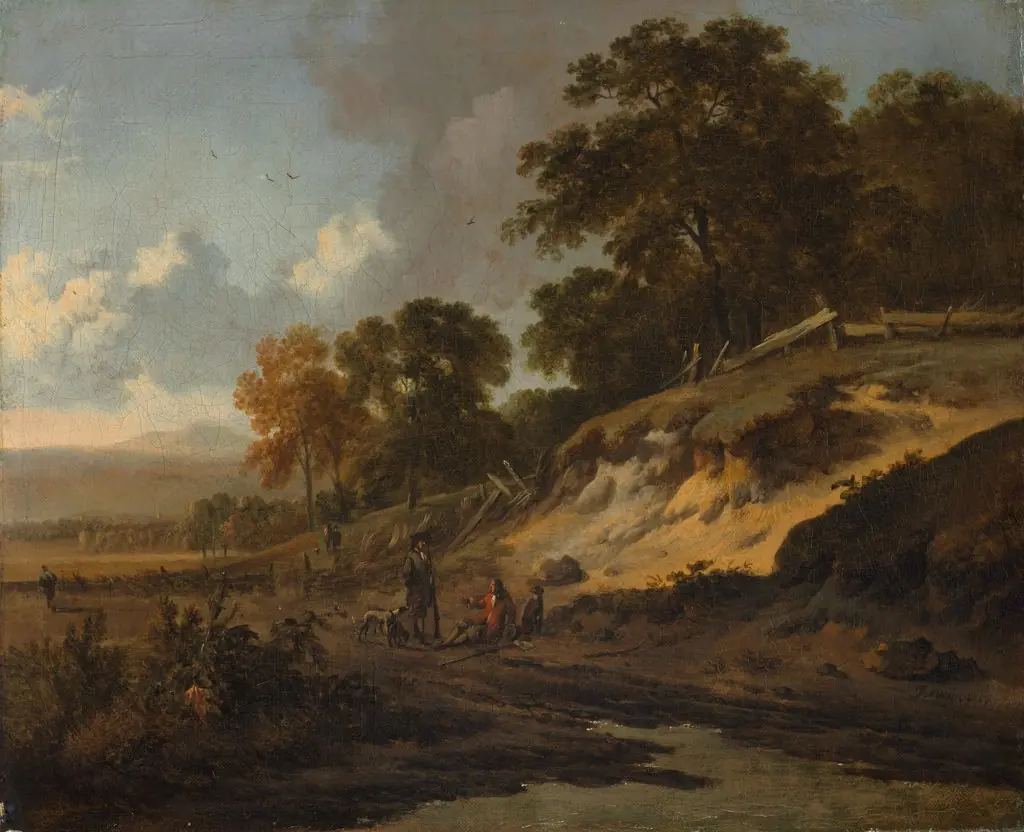 Landscape with Hunters
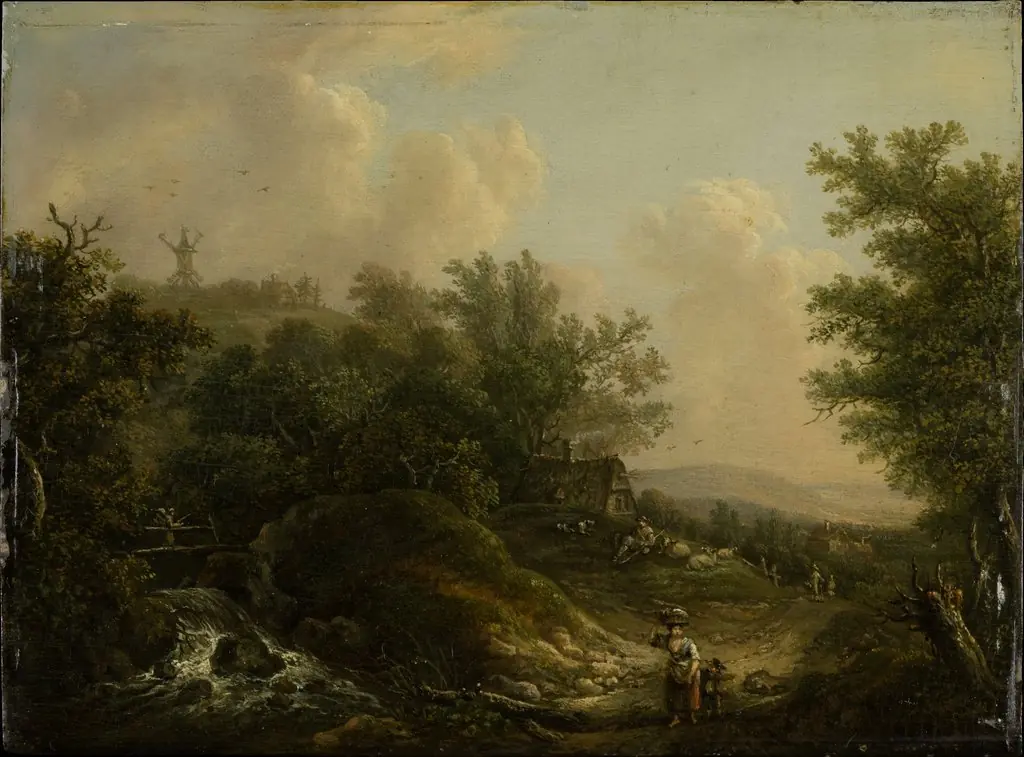 Landscape with a Brook and Hikers
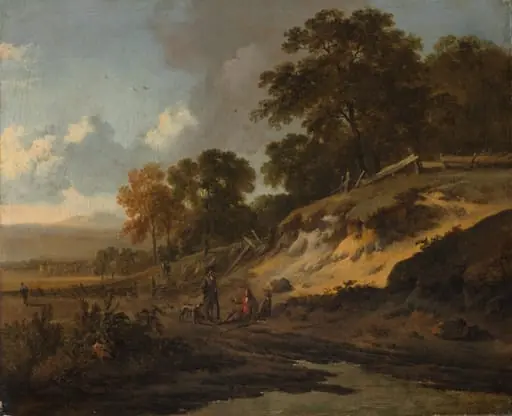 Landscape with Hunters
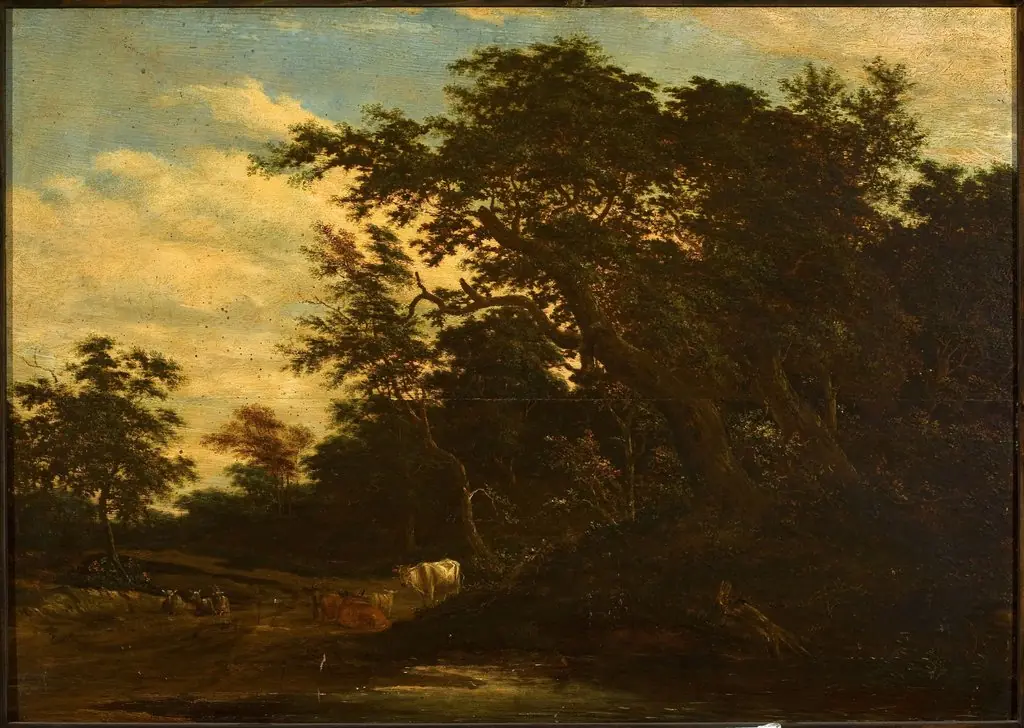 Landscape with a creek and cattle
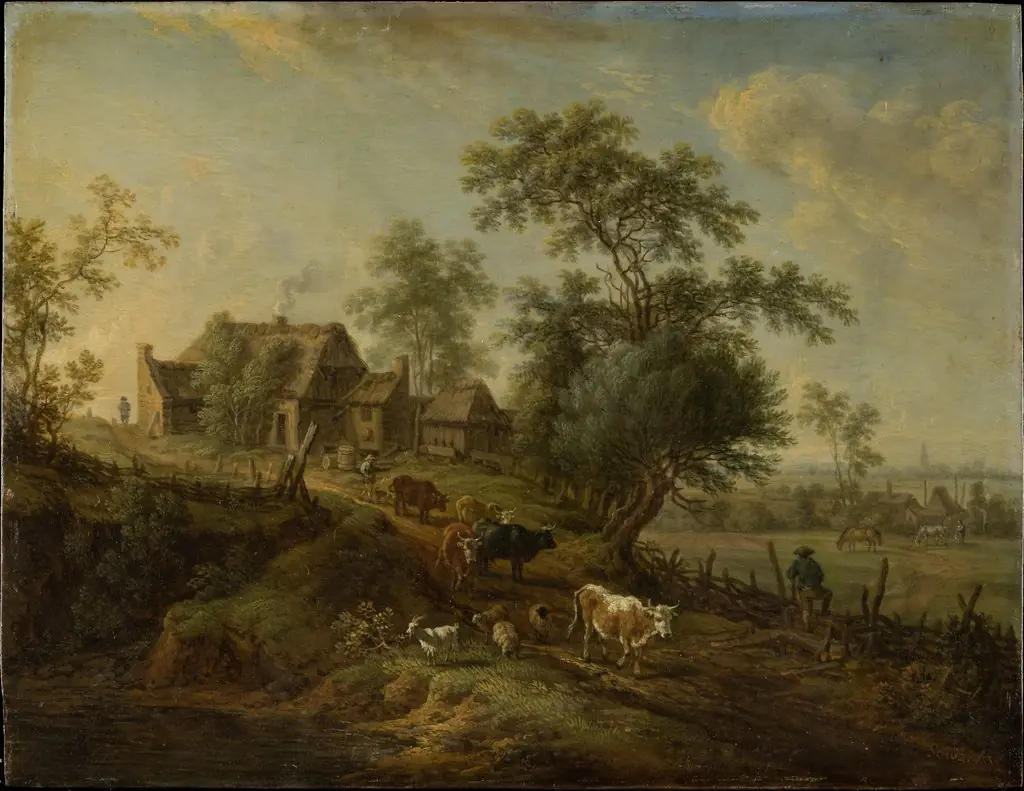 Landscape with Farm Animals on a Road
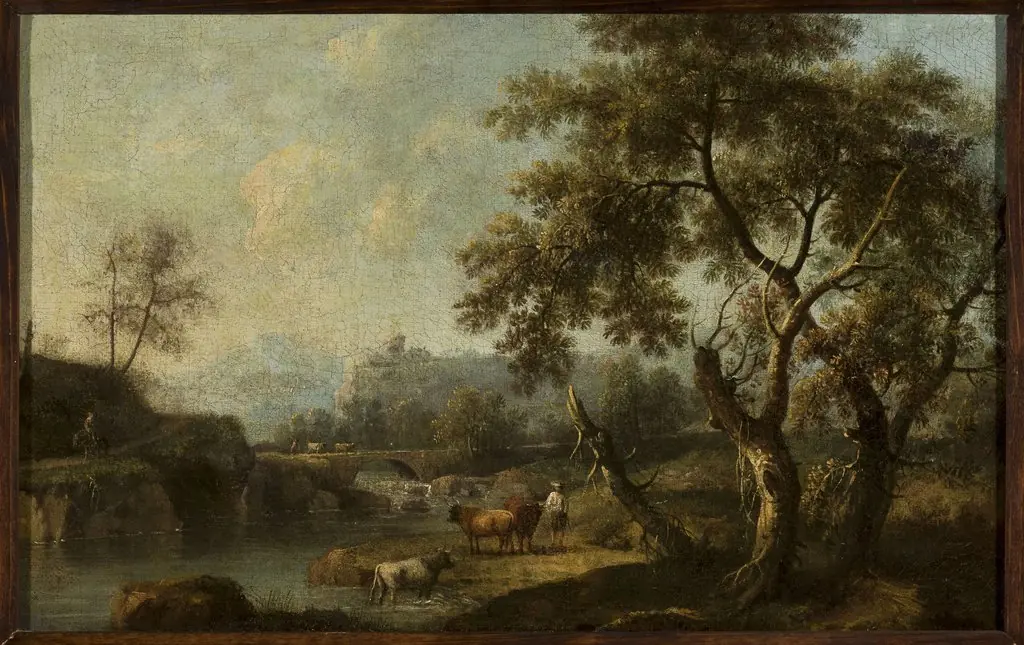 Mountain landscape with cattle at the waterhole
 Swedish landscape