Artwork
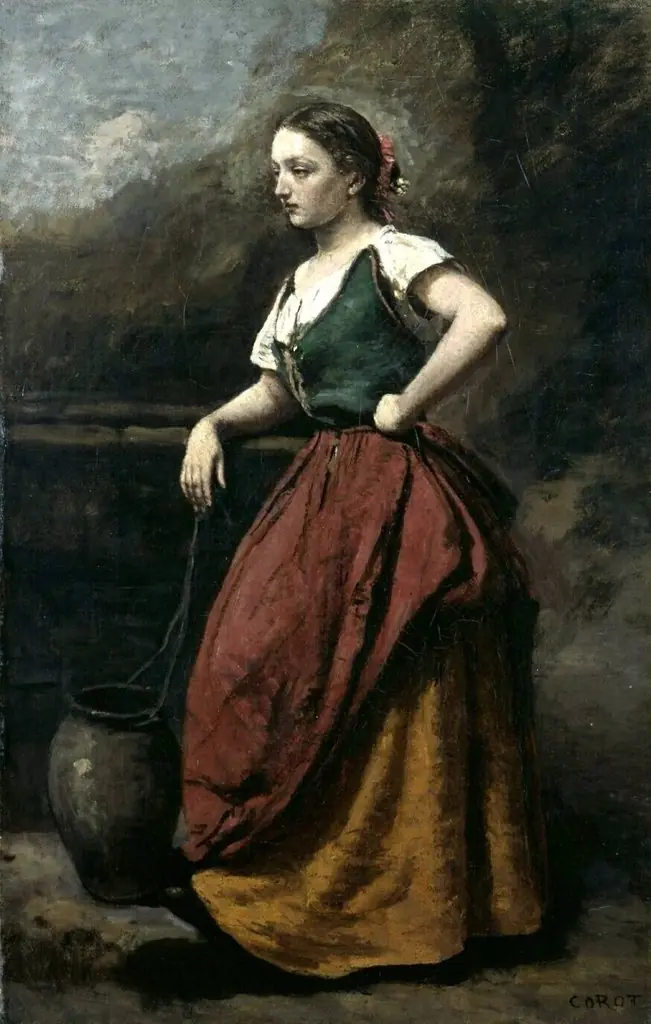
Dreaming woman at the well
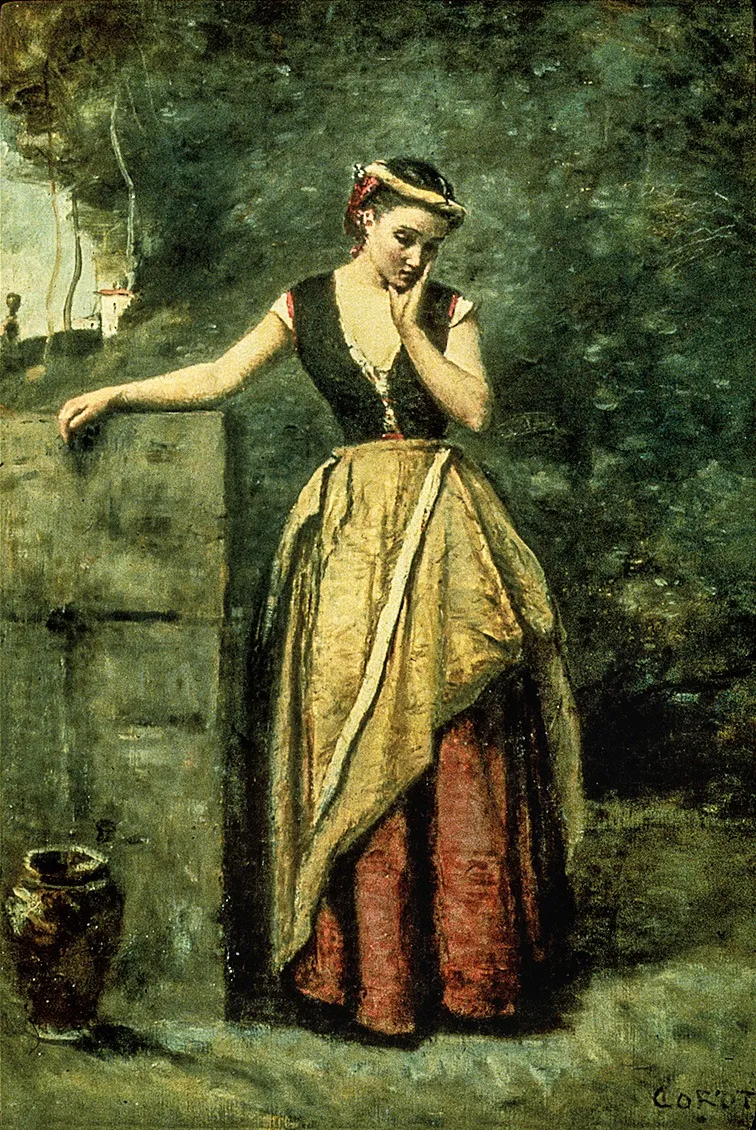
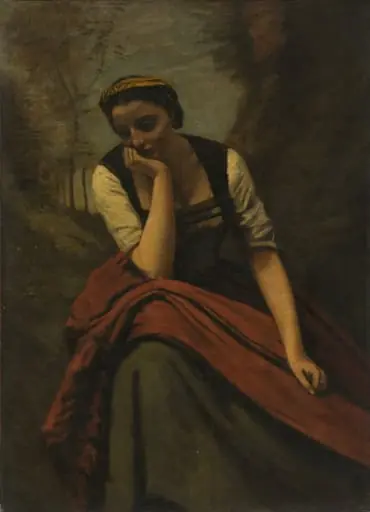
Dreaming woman at the well is an oil painting by the Realist artist Jean Baptiste Camille Corot. It dates from 1860 and is held in the collection of the Montreal Museum of Fine Arts.
About this work
Overview
Dreaming Woman at the Well, an 1860 oil painting by Jean-Baptiste-Camille Corot, exemplifies the transitional style of its creator, blending Neo-Classical elements with early plein-air techniques that would later influence Impressionism.
Subject & Meaning
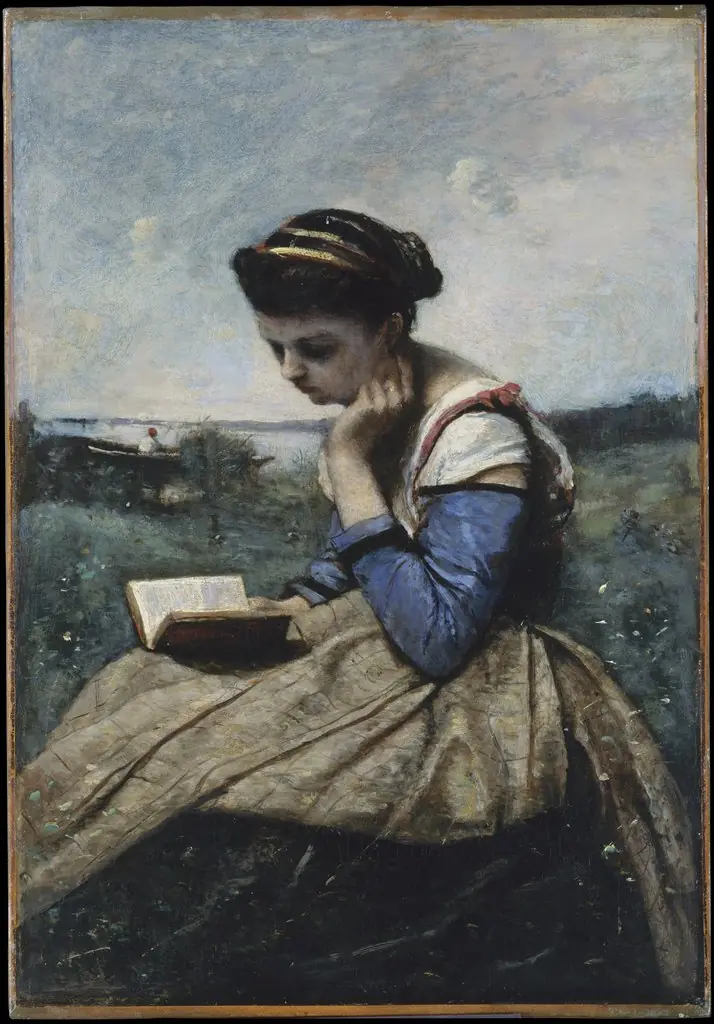
The painting portrays a solitary woman in contemplative repose beside a well, her downward gaze and supportive hand conveying deep thought. This everyday, intimate scene reflects the Realist emphasis on ordinary life.
Technique & Style
Corot employs chiaroscuro, juxtaposing strong light and dark contrasts to imbue the woman’s form with three-dimensional depth. Her attire—a flowing skirt, dark top, and light shawl—and the well’s stone structure are rendered with nuanced, realistic detail.
History & Provenance
Created in 1860 during the Realism movement, the work is now part of the Montreal Museum of Fine Arts collection.
Context
While associated with the Realist movement, Corot’s incorporation of outdoor lighting and everyday subjects presages the Impressionist movement, situating the painting at a pivotal moment in 19th-century French art.
Legacy
Dreaming Woman at the Well contributes to Corot’s reputation as a bridge between artistic movements, illustrating his influence on the development of both Realist and Impressionist practices.
Artist & collection
Artist
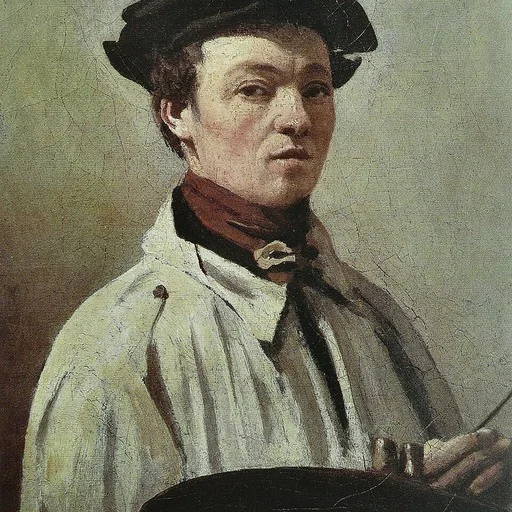
Jean-Baptiste-Camille Corot (UK: KORR-oh, US: kə-ROH, kor-OH; French: ; 16 July 1796 – 22 February 1875), or simply Camille Corot, was a French landscape and portrait painter as well as a printmaker in etching.