Artwork
Landscape with a Distant Village Spire
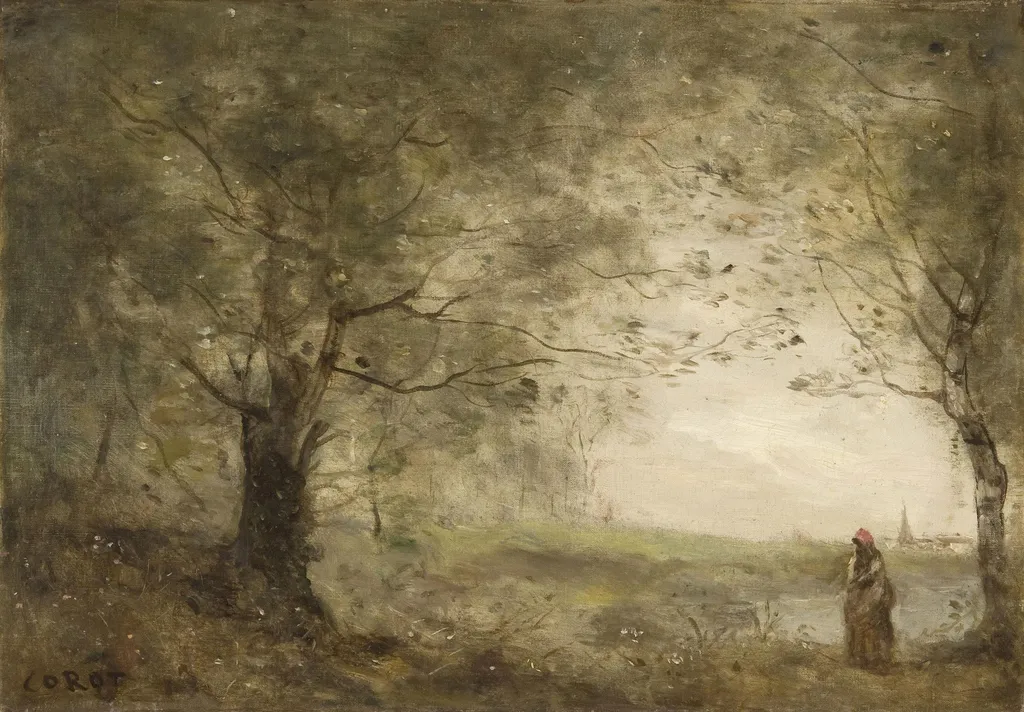
Landscape with a Distant Village Spire is an oil painting by the Barbizon school artist Jean Baptiste Camille Corot. It dates from 1845 and is held in the collection of the Philadelphia Museum of Art.
About this work
Overview
Though not formally part of the Barbizon School, Corot shared its commitment to rural subjects and subtle tonal harmonies.
Painted around 1845, *Landscape with a Distant Village Spire* is an oil work by Jean-Baptiste-Camille Corot that reflects his transition from academic traditions toward more direct observations of nature. Though not formally part of the Barbizon School, Corot shared its commitment to rural subjects and subtle tonal harmonies. The painting captures a quiet moment in the French countryside, emphasizing atmosphere over narrative detail.
Subject & Meaning
The scene presents a modest rural setting: a cluster of buildings, marked by a slender church spire, recedes into the distance behind a screen of trees and undergrowth. There is no human activity visible, reinforcing a sense of solitude and timelessness. The spire, faint but deliberate, suggests the quiet presence of community amid nature, evoking contemplation rather than celebration.
Technique & Style
Corot employed soft, blended brushwork to create a hazy, diffused light that unifies the composition. Muted greens, browns, and grays dominate, with subtle variations in tone suggesting depth and air. Textures are gently rendered—leaves and earth are suggested rather than sharply defined—enhancing the painting’s meditative quality and aligning with early plein-air practices.
History & Provenance
The painting entered the Philadelphia Museum of Art’s collection in the 20th century, following a trajectory common to many 19th-century French works acquired by American institutions. Its provenance prior to that is not widely documented, but its style and date place it within Corot’s mature period, when he increasingly favored lyrical, atmospheric landscapes over formal compositions.
Context
In the 1840s, French landscape painting was shifting from idealized classical views toward more intimate, observed scenes. Corot’s work responded to this change, influenced by the Barbizon painters’ focus on direct observation and the emotional resonance of ordinary places. His approach, less dramatic than Romanticism and less fragmented than later Impressionism, carved a middle path that emphasized mood and light.
Legacy
Corot’s restrained use of light and his sensitivity to natural atmosphere influenced a generation of artists, including the Impressionists. While *Landscape with a Distant Village Spire* is not among his most famous works, it exemplifies his enduring contribution: a quiet, poetic vision of nature that prioritized emotional truth over spectacle, helping to redefine landscape as a vehicle for introspection.
Own this work as a print
Artist & collection
Artist
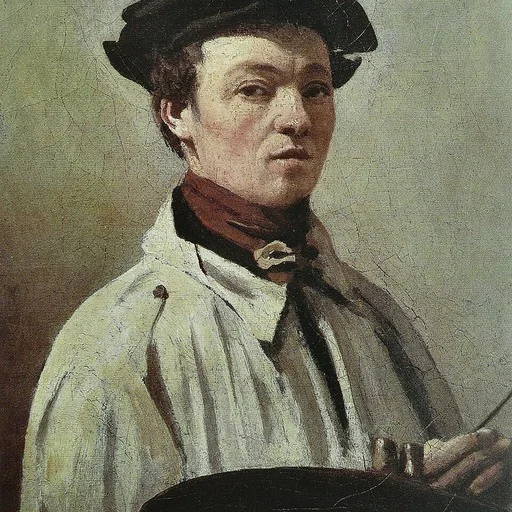
Jean-Baptiste-Camille Corot (UK: KORR-oh, US: kə-ROH, kor-OH; French: ; 16 July 1796 – 22 February 1875), or simply Camille Corot, was a French landscape and portrait painter as well as a printmaker in etching.

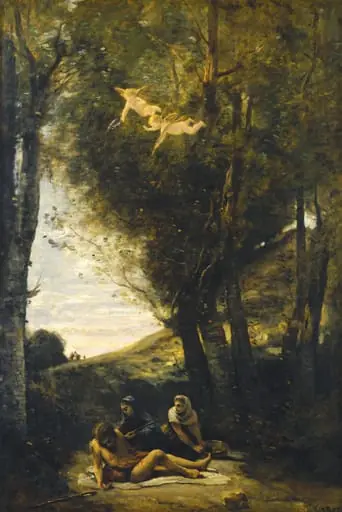
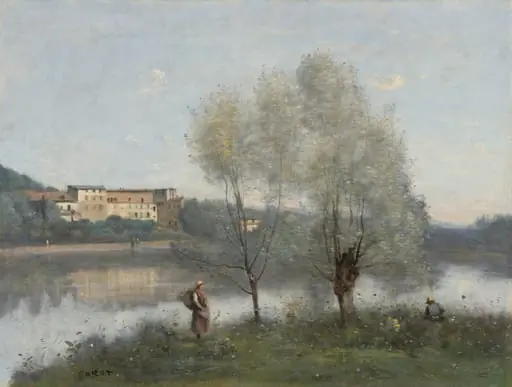
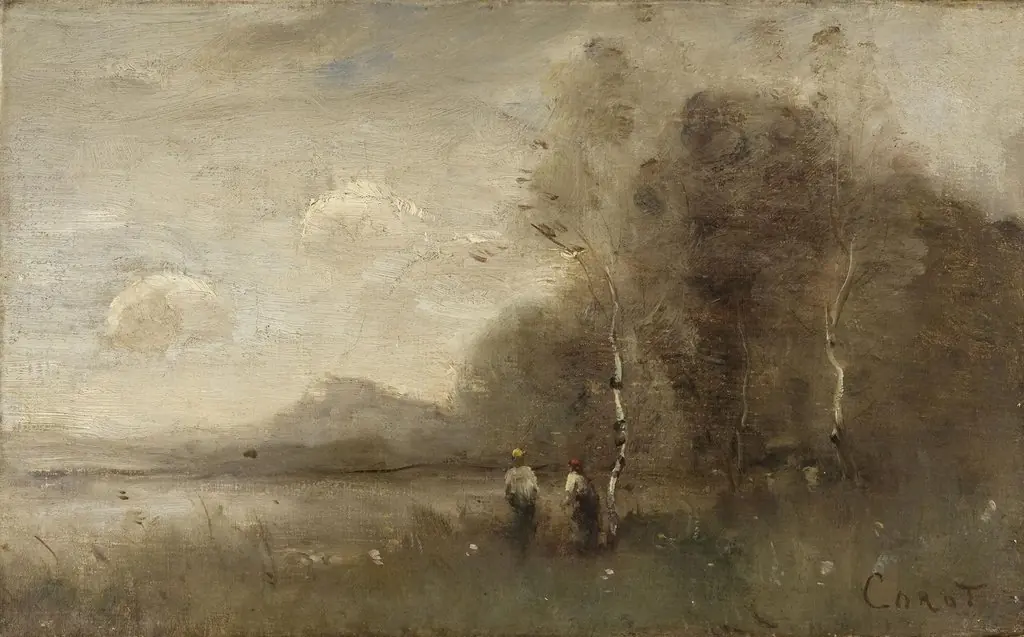 Landscape with Two Figures
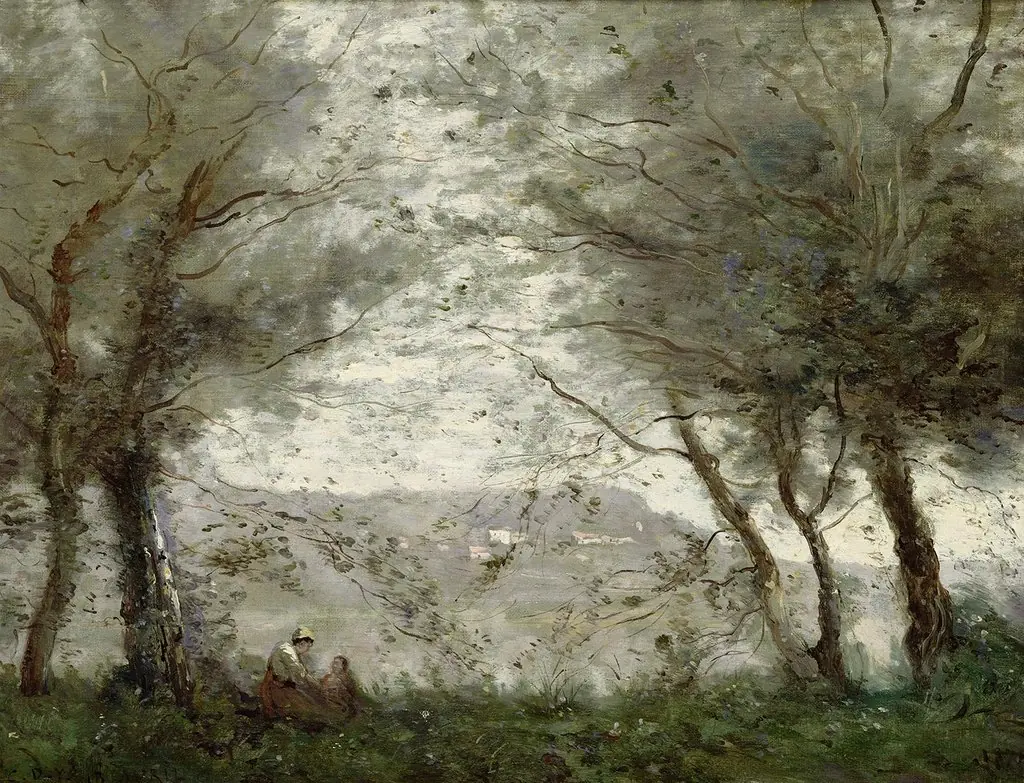 L'Étang de Ville-d'Avray vu à travers les feuillages
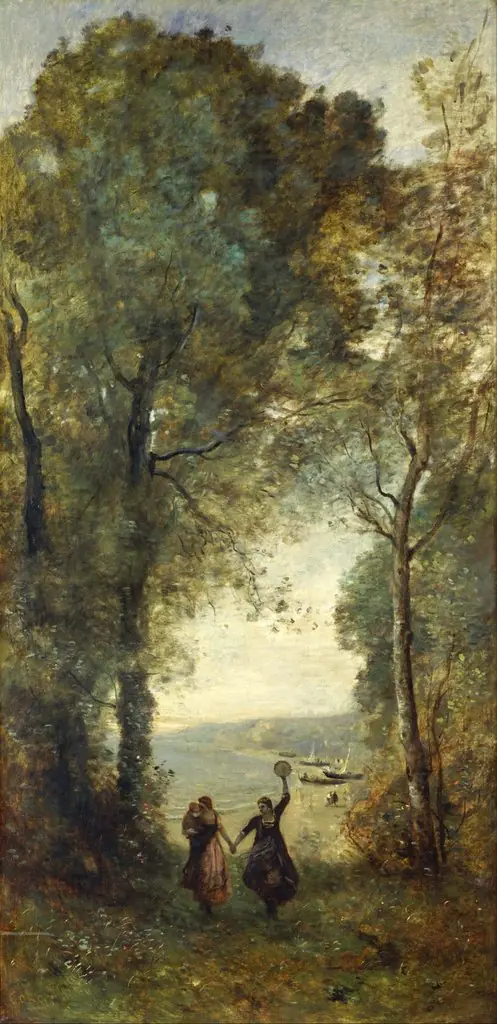 Reminiscence of the Beach of Naples
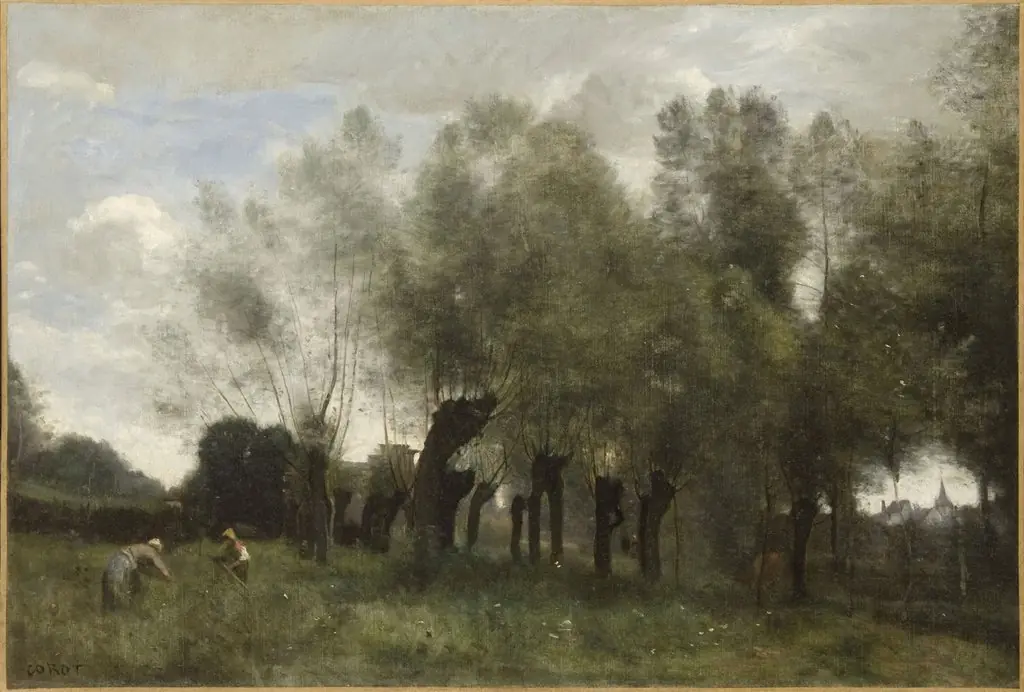 Pollard Willows
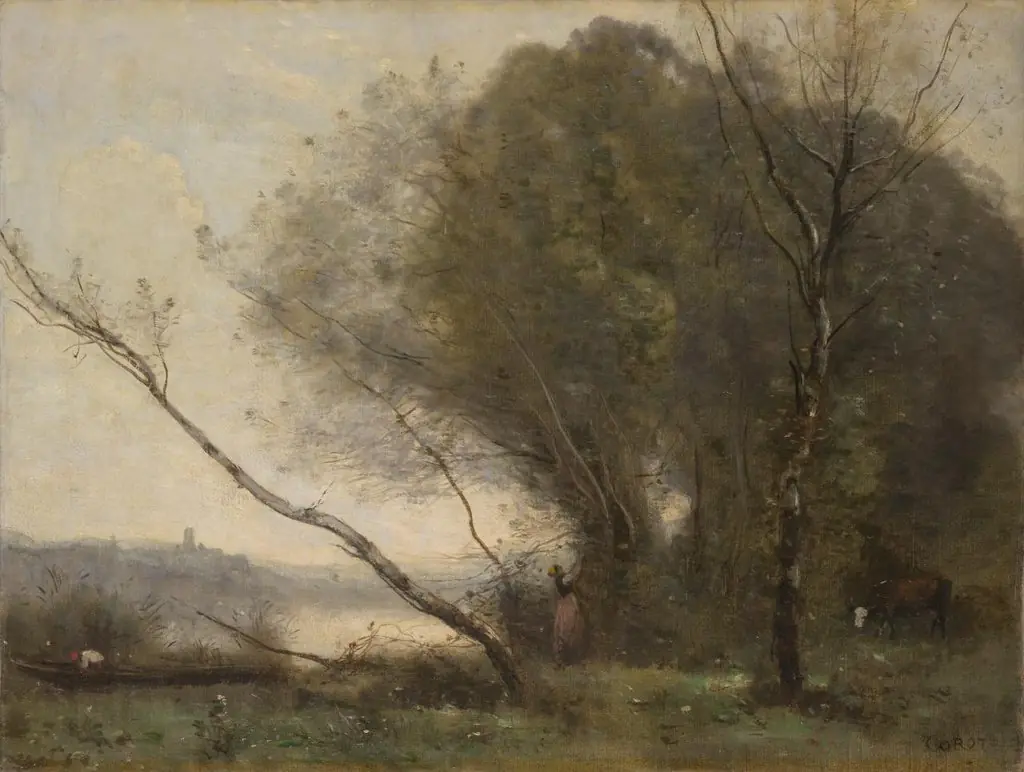 The bent tree
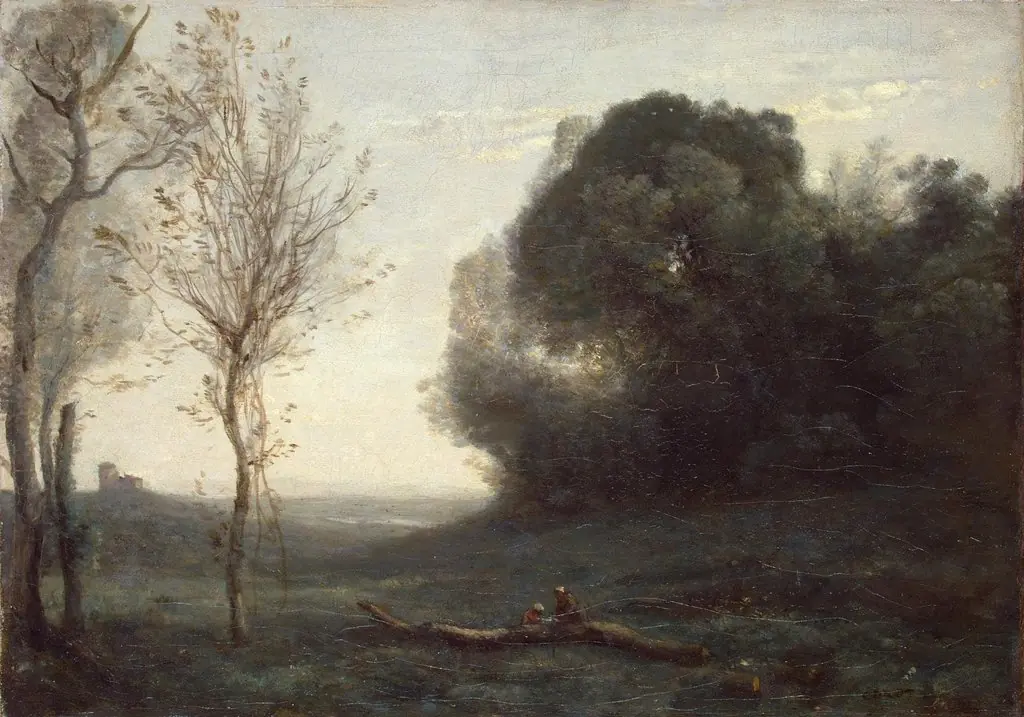 Morning
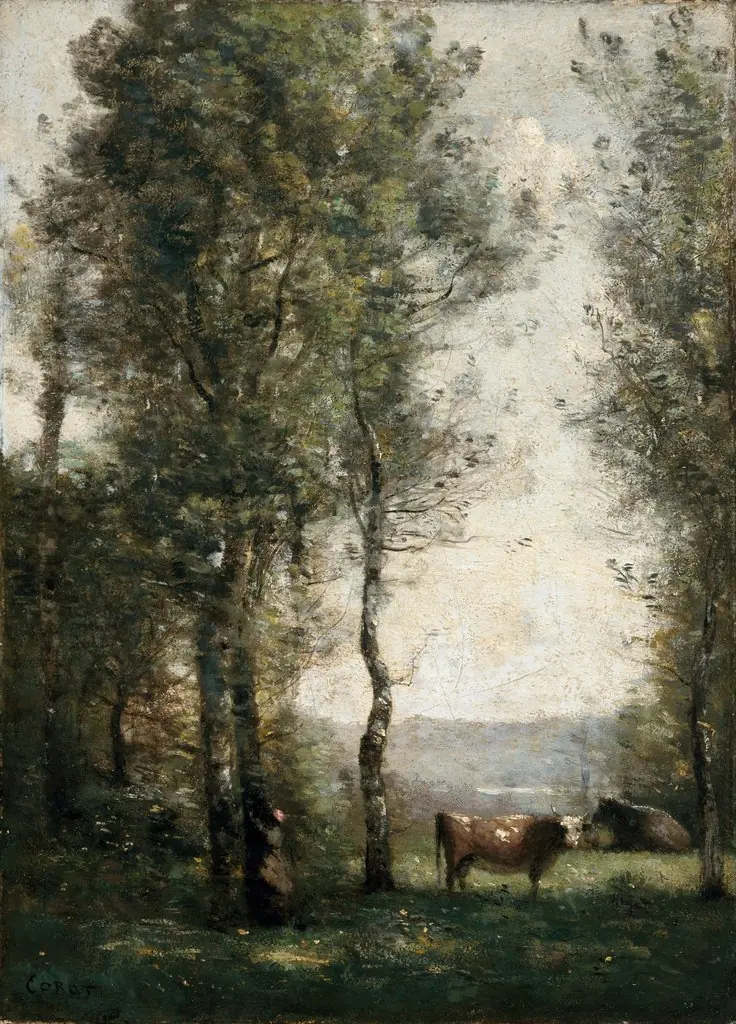 Wooded Landscape with Cows in a Clearing
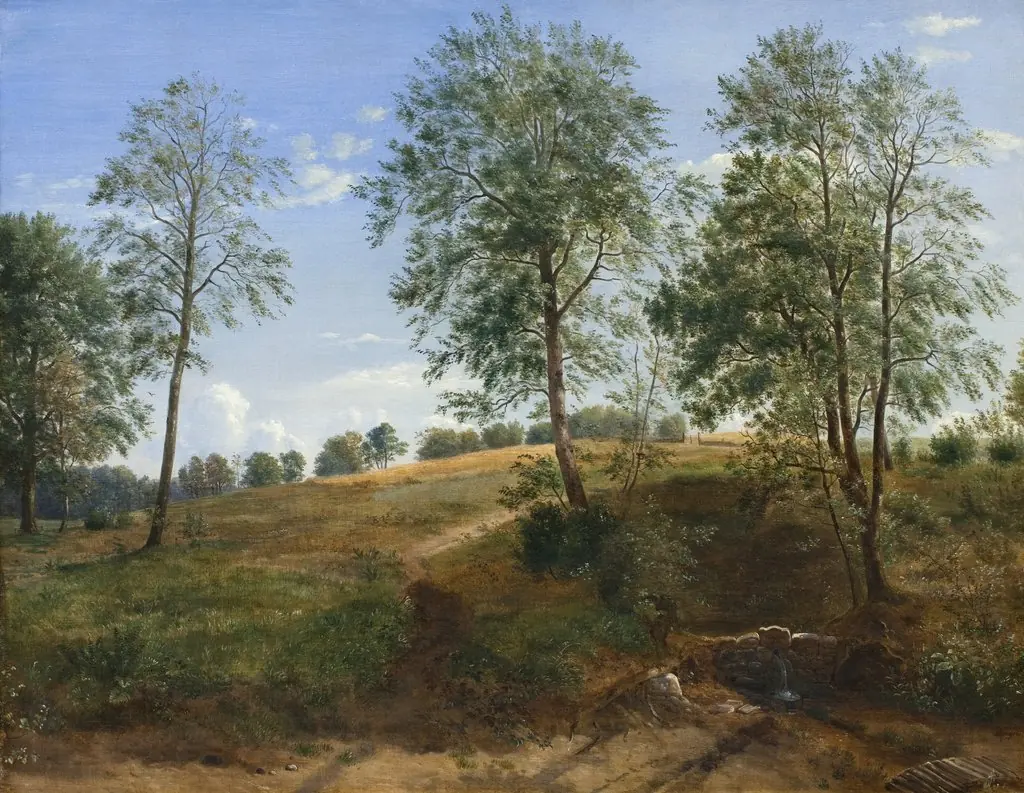 The Caroline Spring at Næsby on Funen
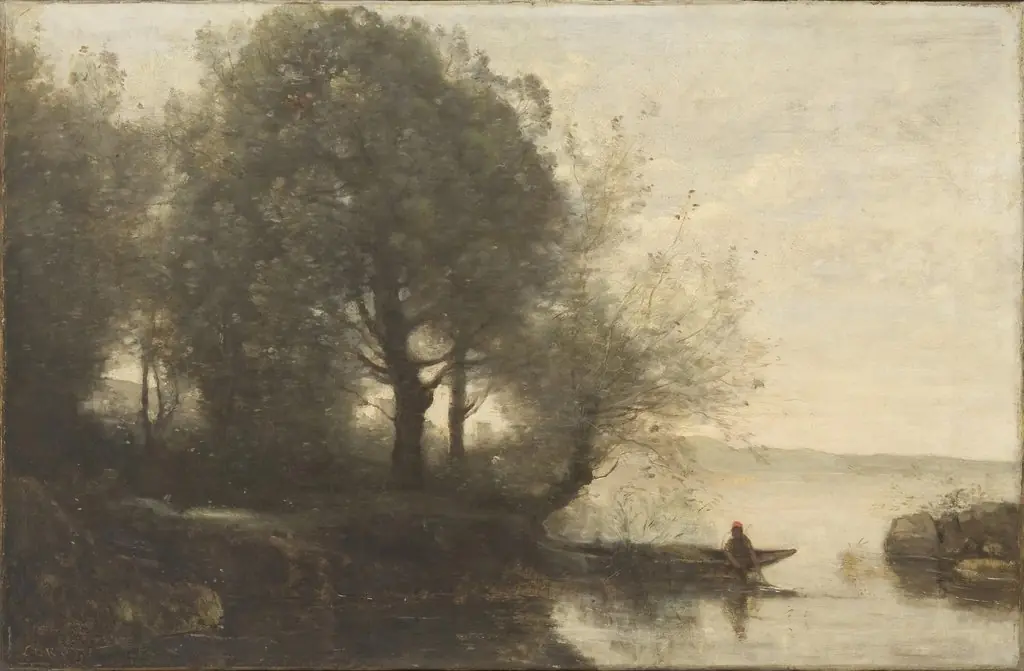 Fisherman
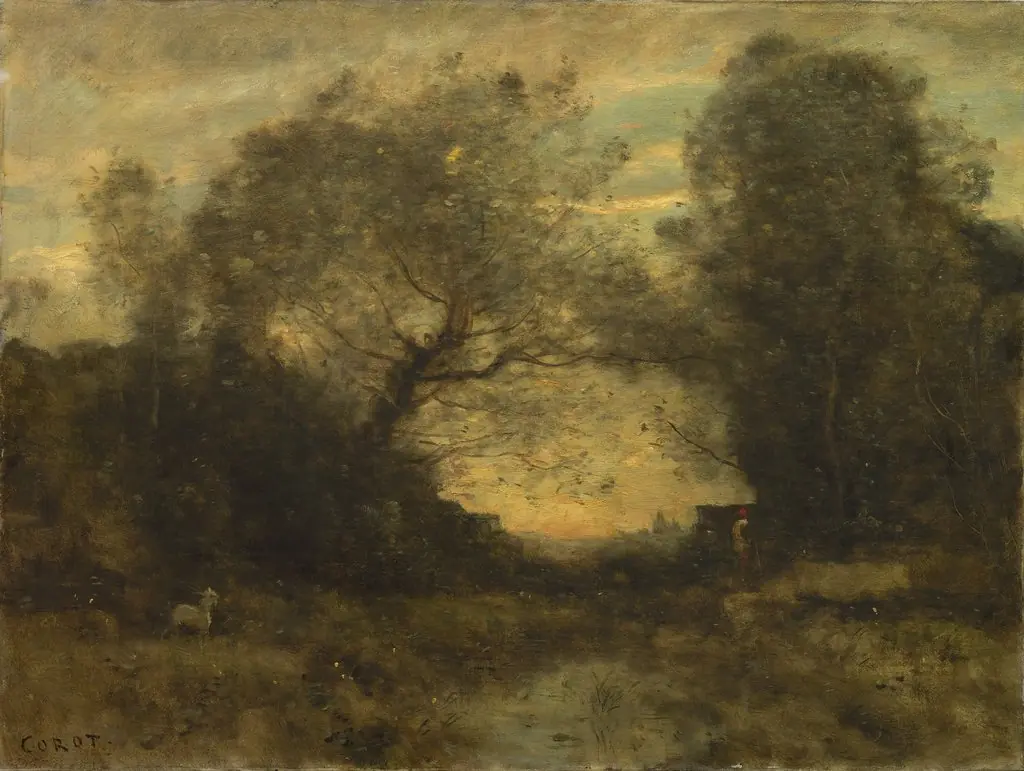 The Pond at the Entrance of the Woods
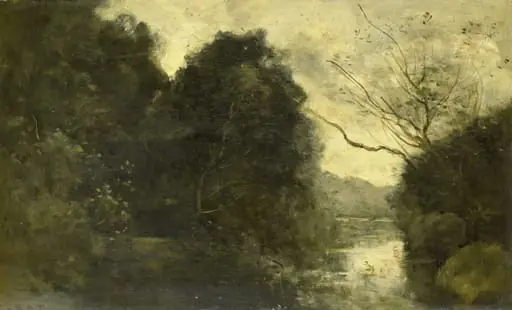 Pond in the Woods
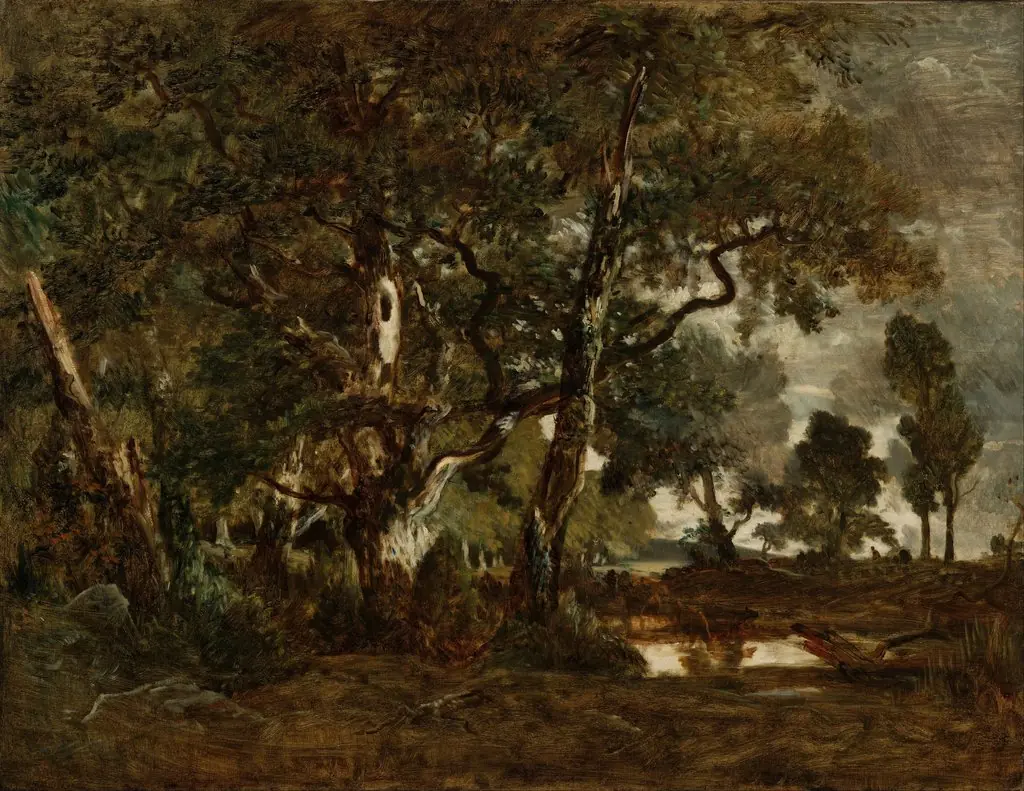 Forest of Fontainebleau, Cluster of Tall Trees Overlooking the Plain of Clair-Bois at the Edge of Bas-Bréau