Artwork
Night Landscape with a Lioness
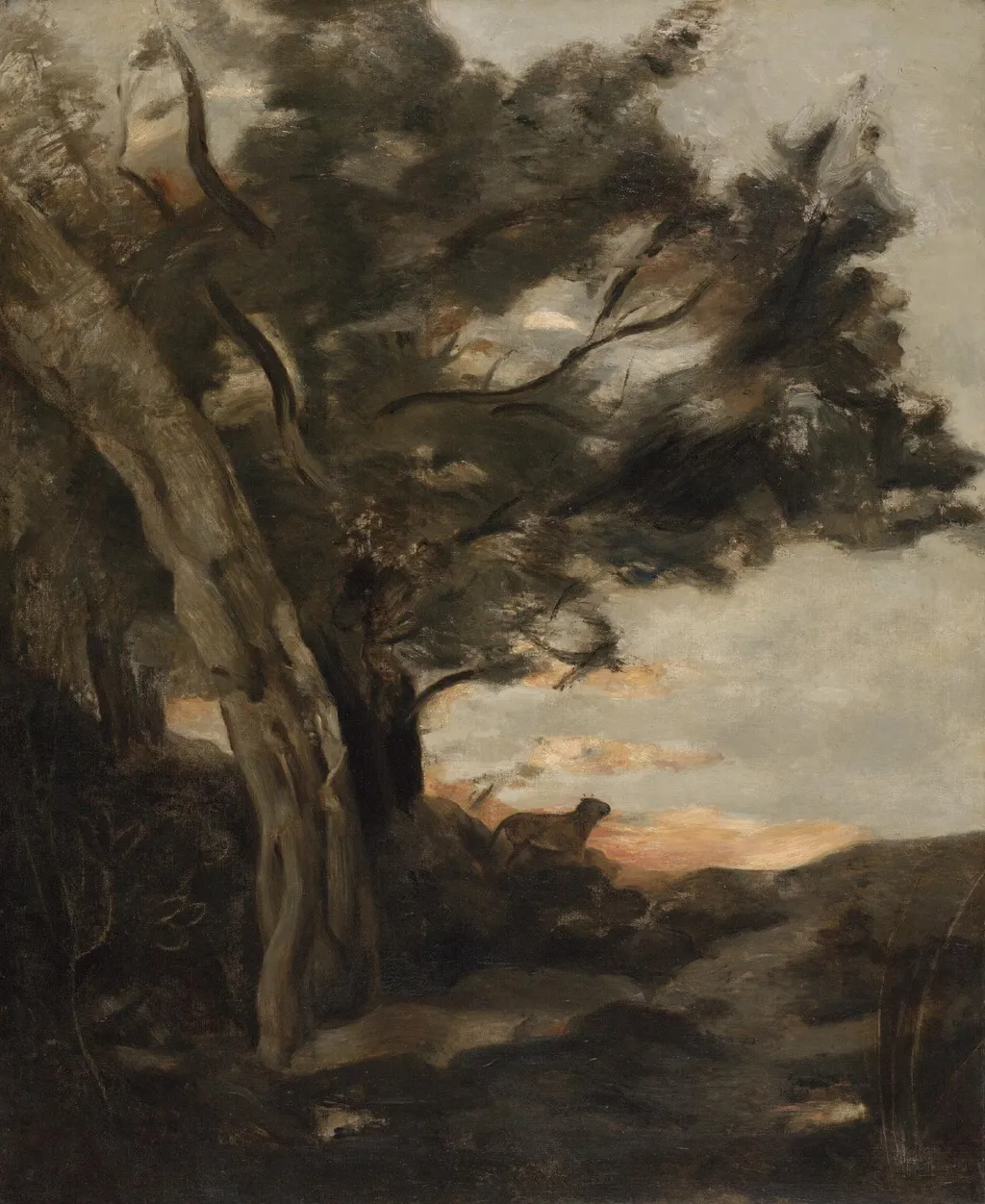
Night Landscape with a Lioness is an oil painting by the Barbizon school artist Jean Baptiste Camille Corot. It dates from 1865 and is held in the collection of the Philadelphia Museum of Art. Painted in 1865 by Jean-Baptiste-Camille Corot, this oil on canvas depicts a nocturnal scene infused with quiet stillness.
About this work
Overview
Painted in 1865 by Jean-Baptiste-Camille Corot, this oil on canvas depicts a nocturnal scene infused with quiet stillness.
Painted in 1865 by Jean-Baptiste-Camille Corot, this oil on canvas depicts a nocturnal scene infused with quiet stillness. Though Corot is best known for daylight landscapes, this work ventures into twilight, blending his academic training with the atmospheric concerns of the Barbizon School. The painting is part of the Philadelphia Museum of Art’s permanent collection, where it stands as an unusual example of his engagement with symbolic wildlife in nature.
Subject & Meaning
A lioness stands alone in the foreground, gazing toward the right edge of the composition, her form softened by dim light. The presence of a large, gnarled tree on the left anchors the scene, while the hazy, dusky sky suggests the transition between day and night. The lioness is not portrayed as a threat but as a solitary observer, evoking themes of solitude and the quiet dignity of wild life within an untamed landscape.
Technique & Style
Corot employed muted tones and delicate brushwork to dissolve edges and unify the scene. Dark greens, browns, and grays dominate, with subtle gradations creating depth without sharp contrast. The sky’s hazy glow, reminiscent of twilight rather than moonlight, is rendered with thin glazes, allowing underlying layers to suggest atmospheric haze. The lioness is modeled with soft contours, integrating her into the landscape rather than isolating her as a specimen.
History & Provenance
Created during Corot’s mature period, the painting reflects his experimentation beyond traditional pastoral subjects. It entered the Philadelphia Museum of Art’s collection in the early 20th century, likely through a private acquisition or bequest. Its unusual subject matter—wild animals in a landscape—makes it a rare piece in Corot’s oeuvre, and its provenance remains largely unaltered since its acquisition by the museum.
Context
While the Barbizon School typically focused on humble rural scenes, Corot occasionally introduced symbolic or exotic elements to evoke mood. In mid-19th-century France, interest in natural history and colonial encounters influenced artistic subjects, though few painters integrated large predators into tranquil landscapes. This work aligns with broader Romantic tendencies toward mystery and the sublime, filtered through Corot’s restrained aesthetic.
Legacy
Though not widely exhibited, the painting contributes to understanding Corot’s willingness to explore emotional and symbolic dimensions beyond topographical accuracy. It reveals his ability to merge observational realism with poetic suggestion, influencing later Symbolist and Impressionist approaches to atmosphere and mood. Its quiet intensity continues to invite contemplation, offering a quiet counterpoint to more dramatic animal depictions of the era.
Own this work as a print
Artist & collection
Artist
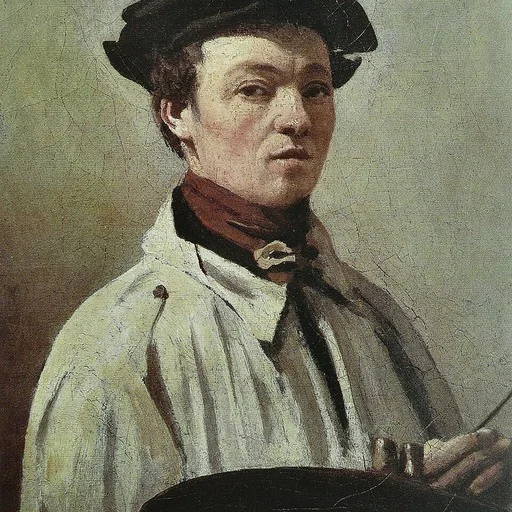
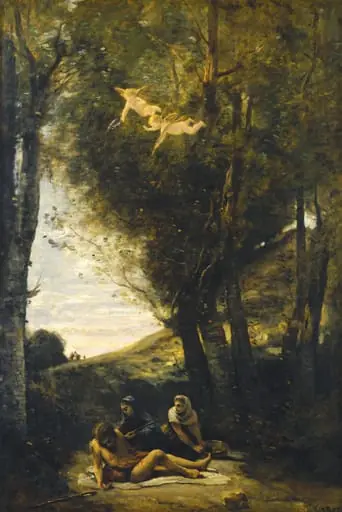
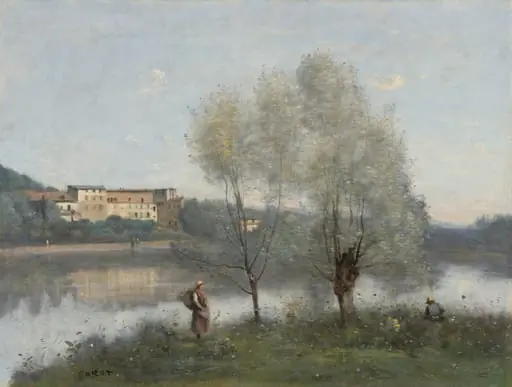
Jean-Baptiste-Camille Corot (UK: KORR-oh, US: kə-ROH, kor-OH; French: ; 16 July 1796 – 22 February 1875), or simply Camille Corot, was a French landscape and portrait painter as well as a printmaker in etching.

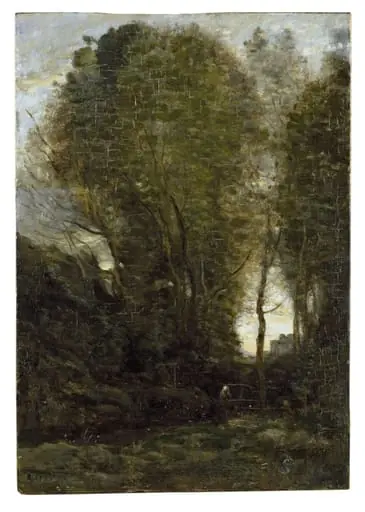 Twilight: Landscape with Tall Trees and a Female Figure
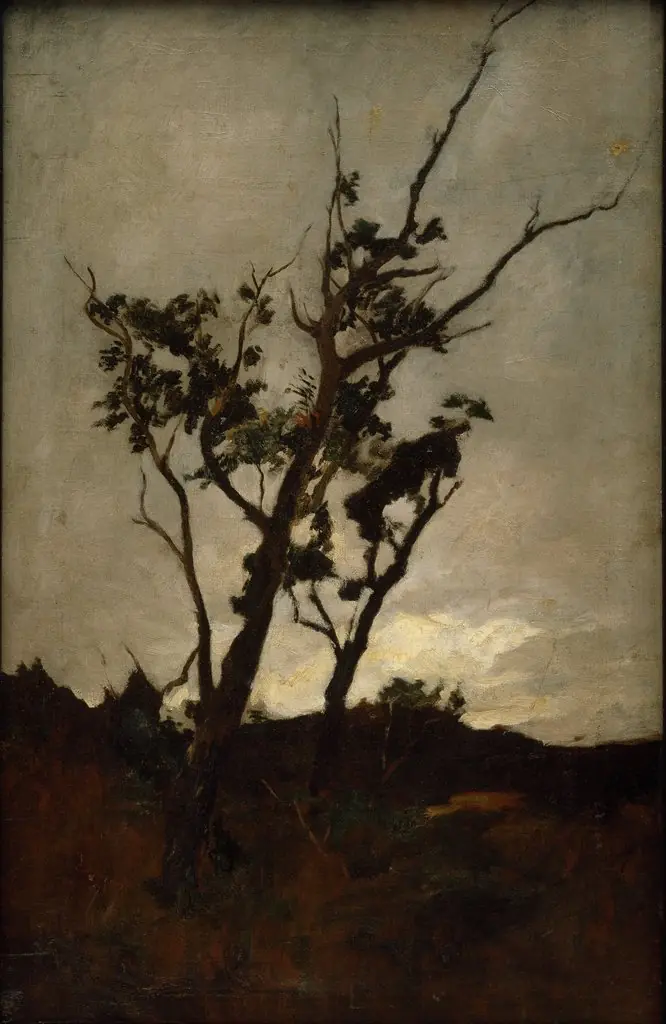 Tree study
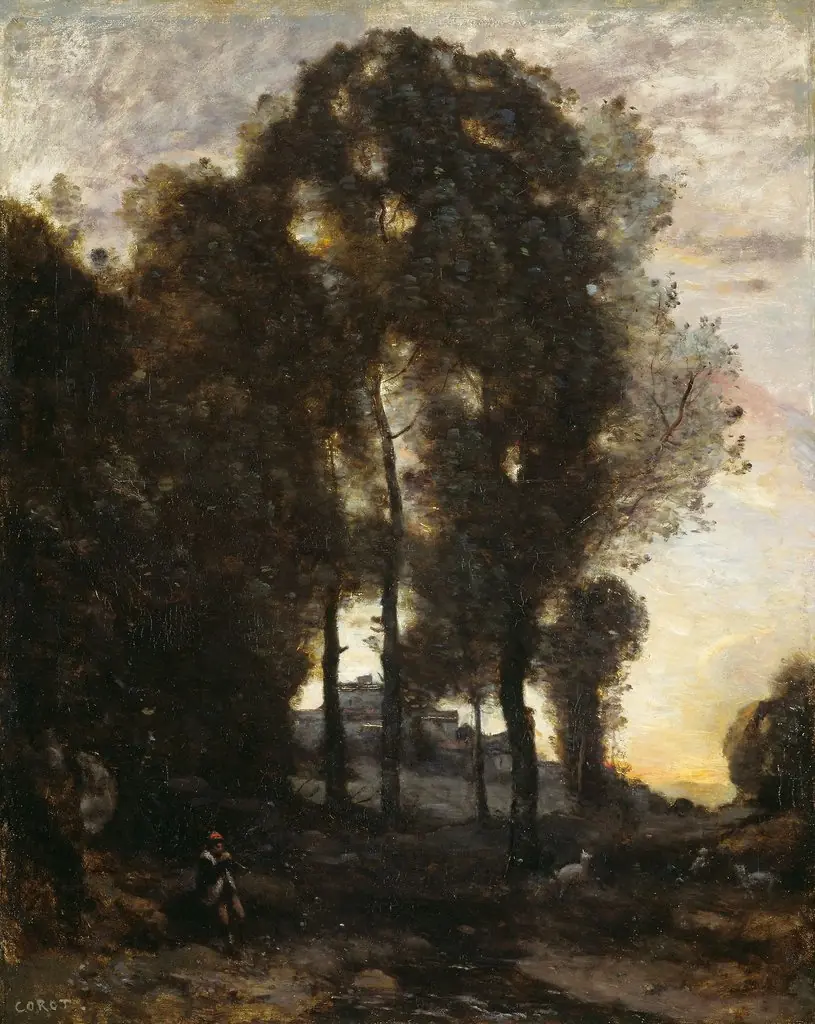 Souvenir of Italy
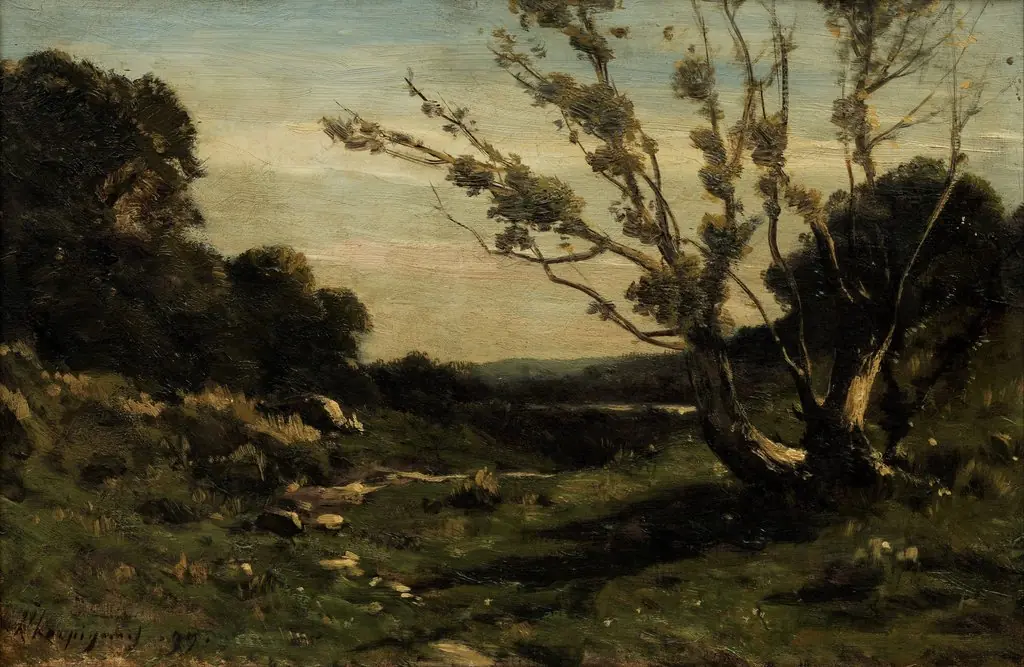 Morning in the Nievre
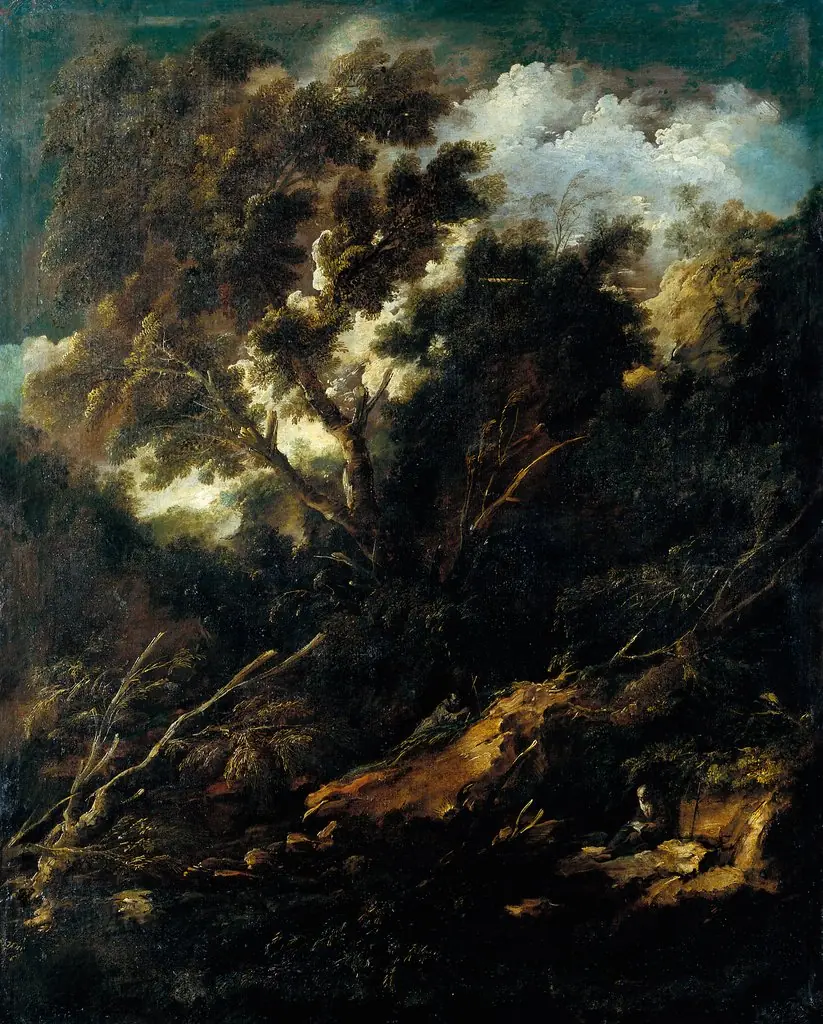 Landscape with a Reading and a Praying Franciscan
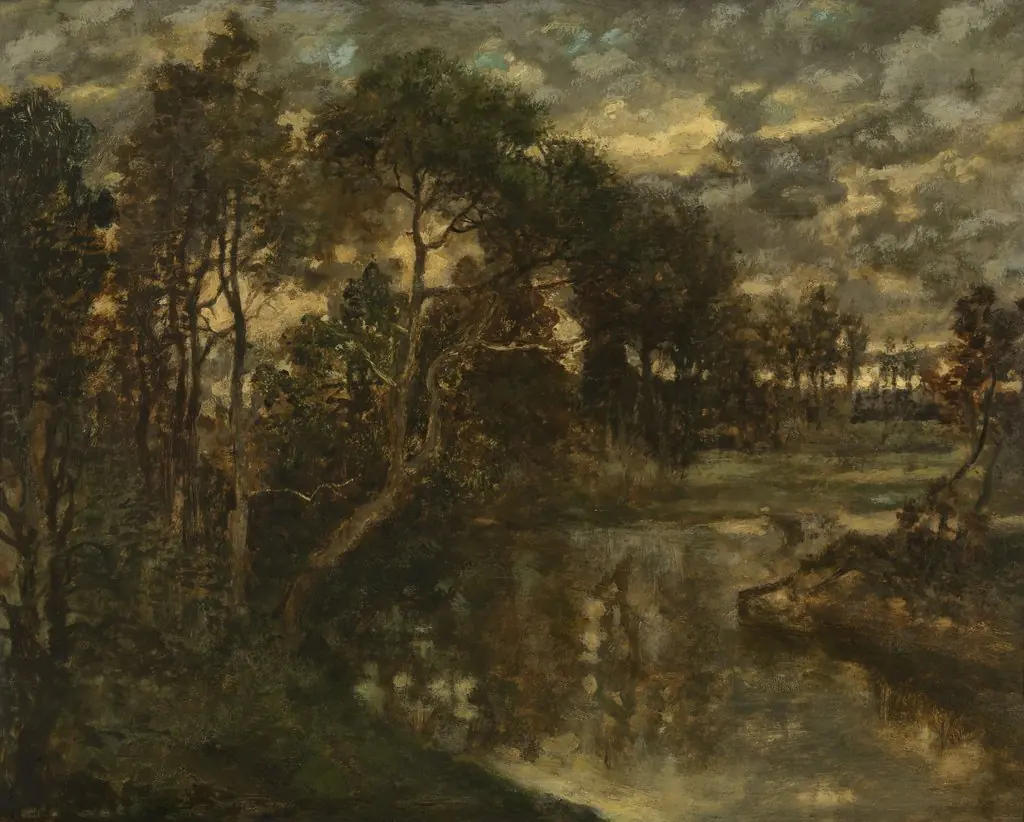 Landscape
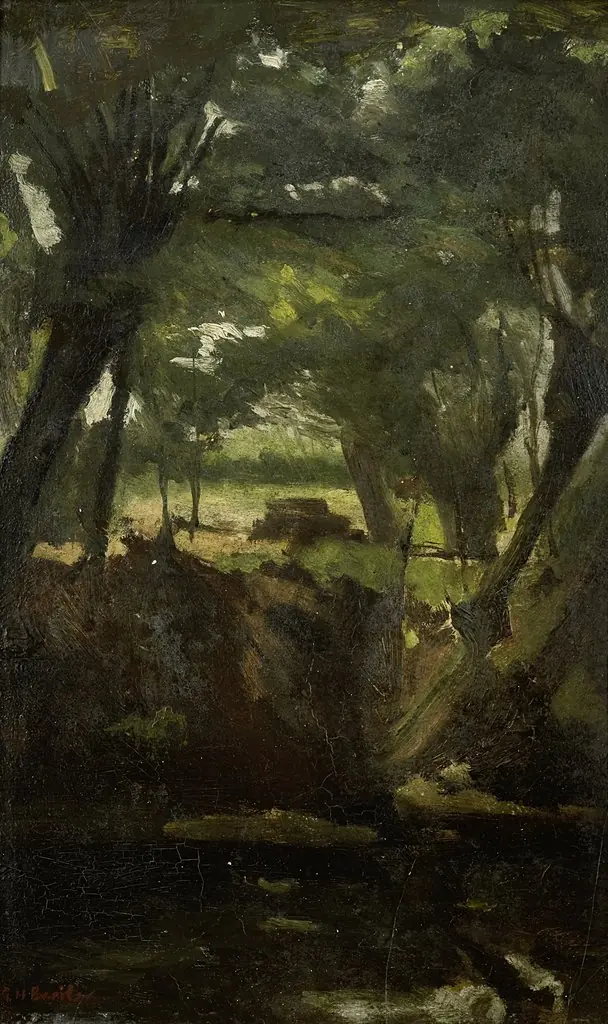 View in the Woods
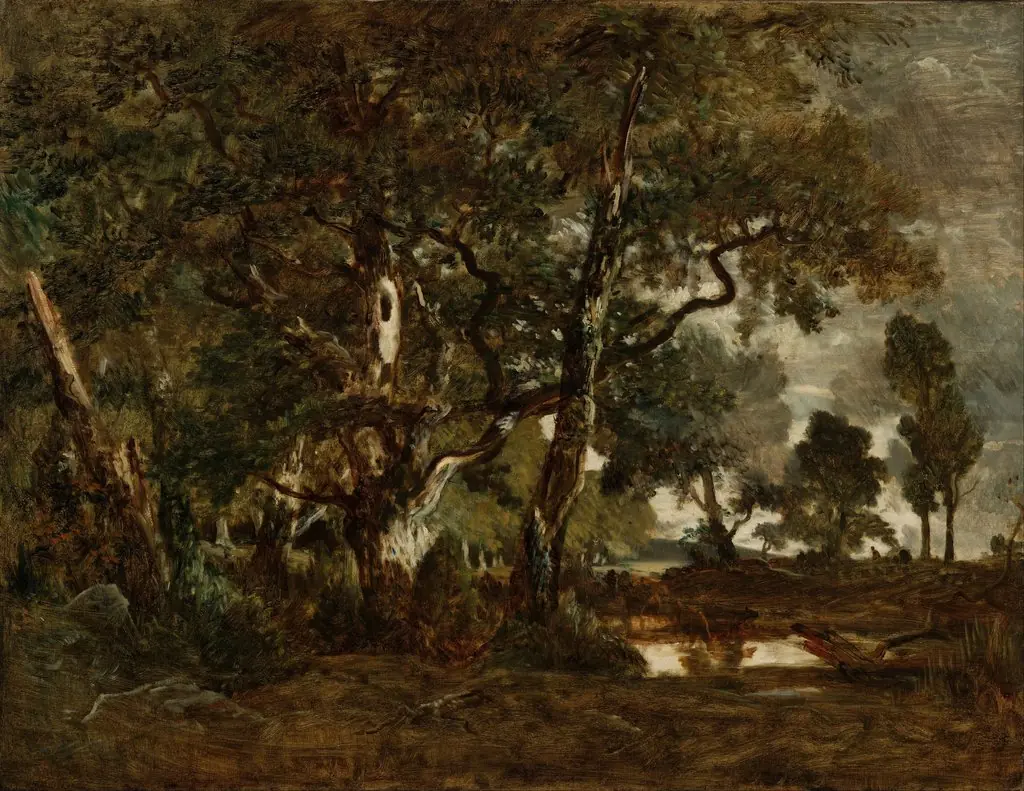 Forest of Fontainebleau, Cluster of Tall Trees Overlooking the Plain of Clair-Bois at the Edge of Bas-Bréau
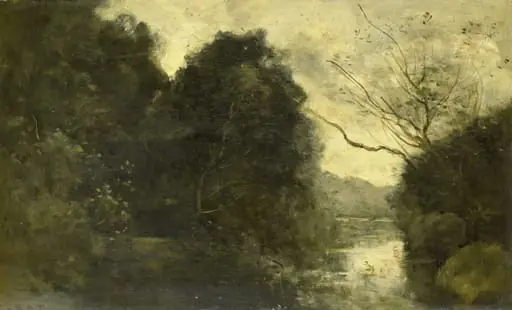 Pond in the Woods
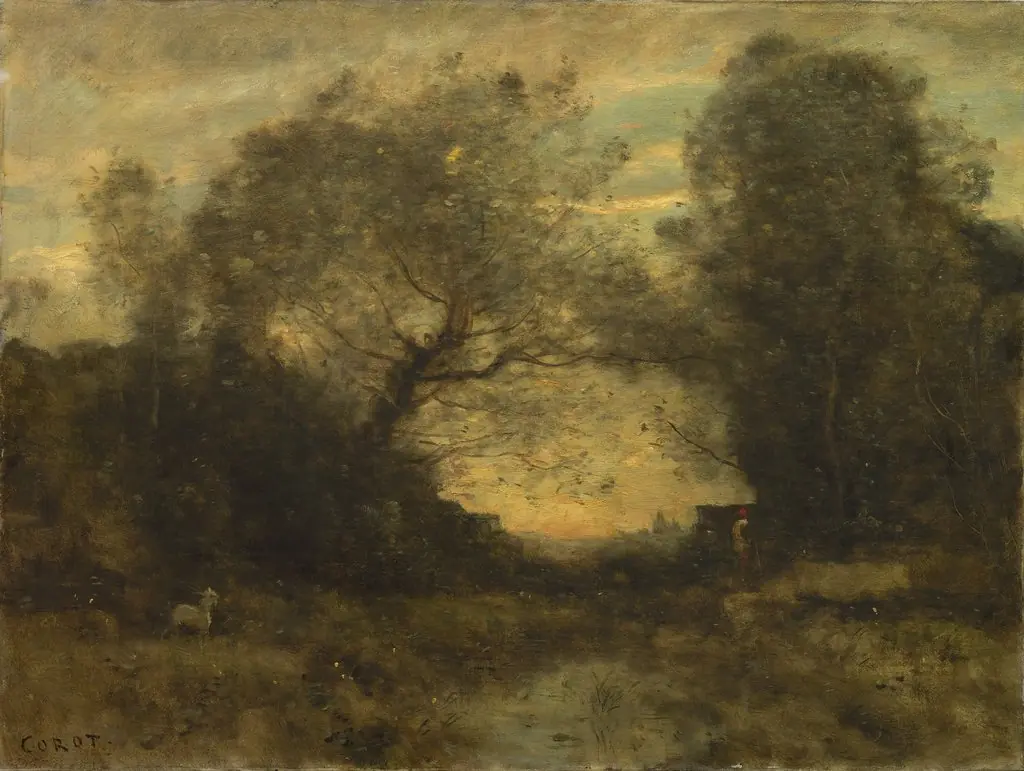 The Pond at the Entrance of the Woods
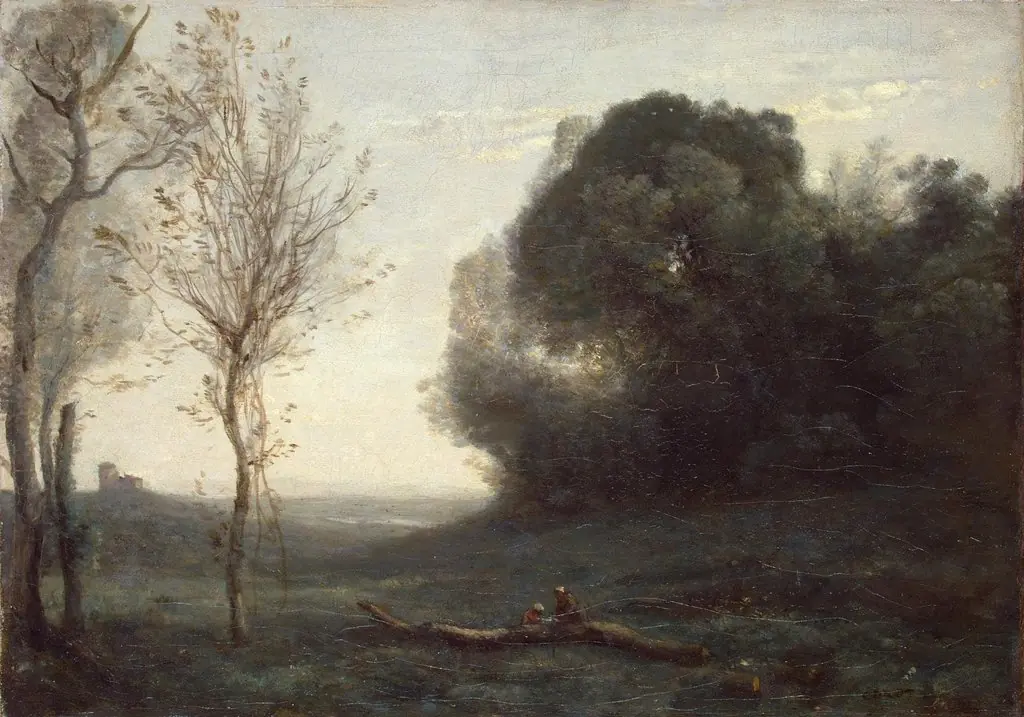 Morning
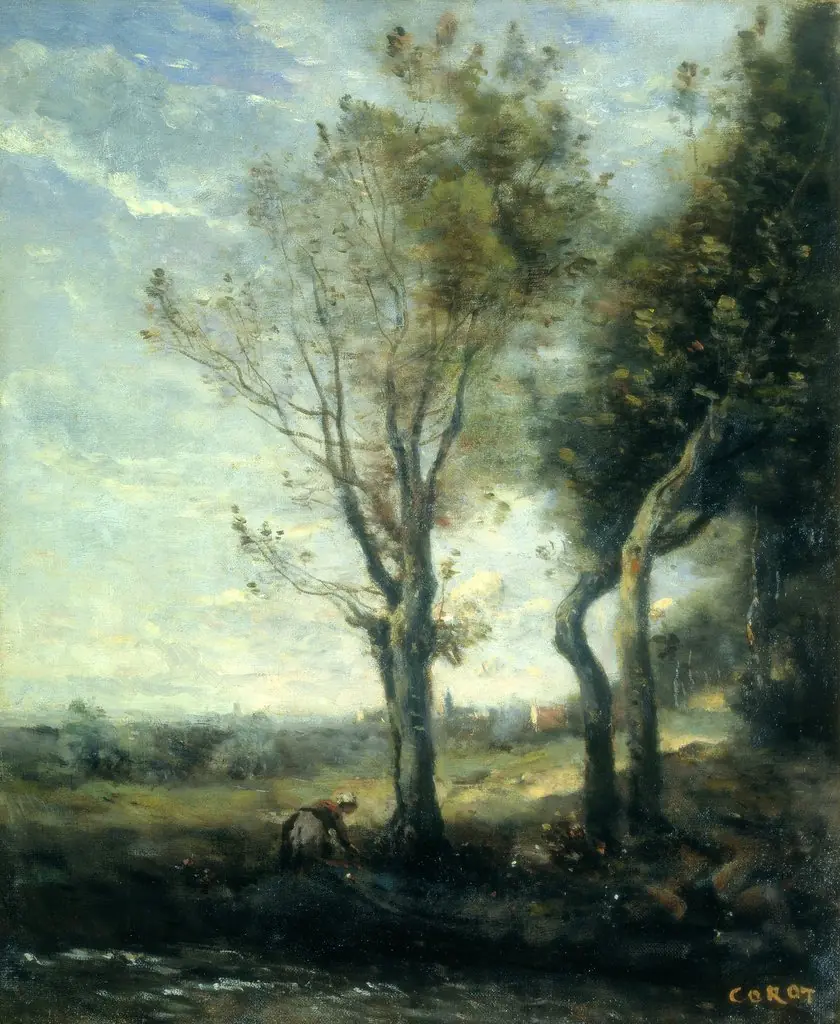 The Four Trees by the Plain