Artwork
The Four Trees by the Plain
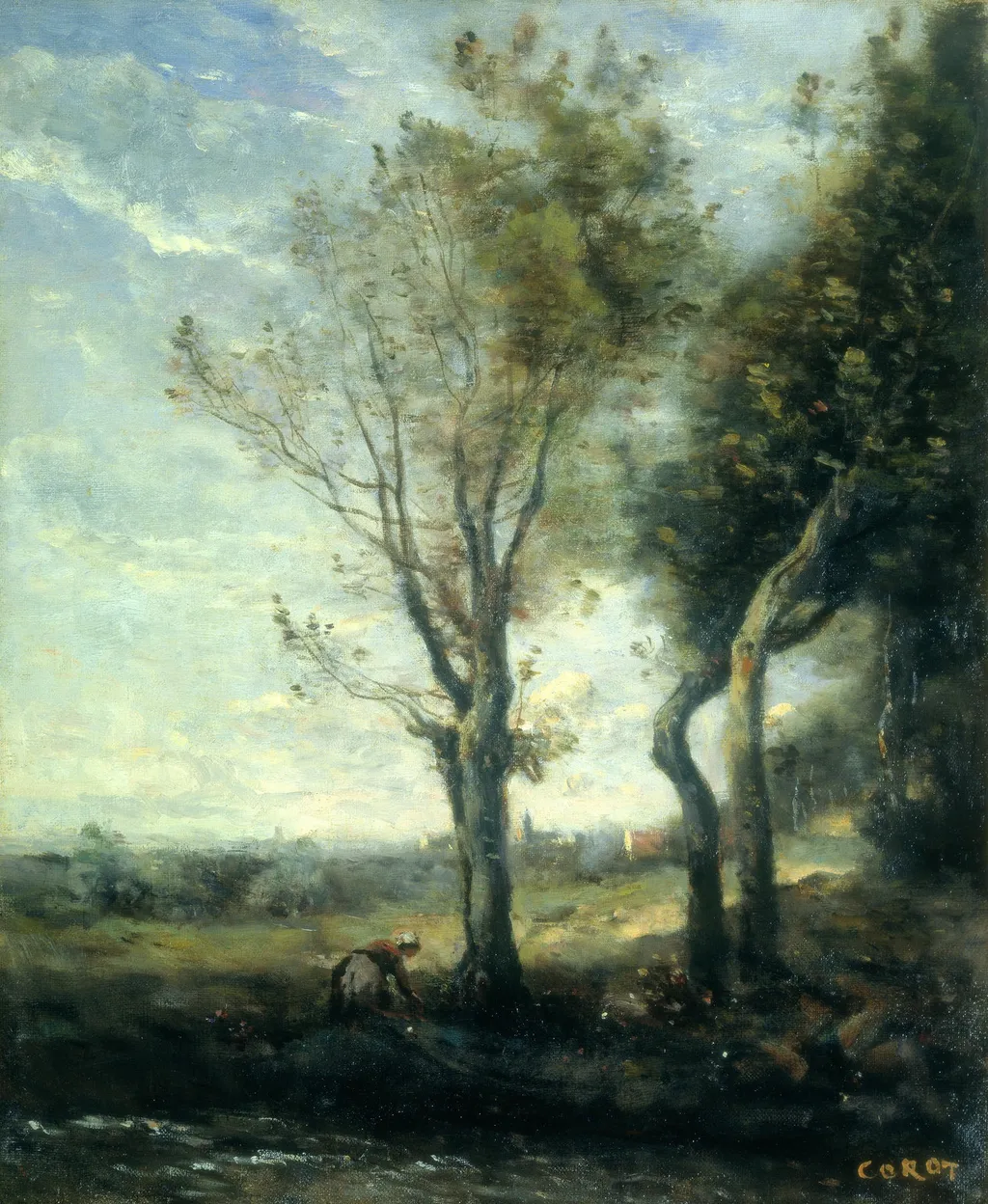
The Four Trees by the Plain is an oil painting by Jean Baptiste Camille Corot. It dates from 1869 and is held in the collection of the Foundation E.G. Bührle Collection.
About this work
Overview
It resides in the collection of Kunsthaus Zürich, representing a moment in 19th-century French art when landscape painting gained new expressive depth.
Painted in 1869, *The Four Trees by the Plain* is an oil landscape by Jean-Baptiste-Camille Corot, a French artist known for his quiet, atmospheric views of the natural world. The work reflects his evolving approach to outdoor painting, blending structured composition with subtle observations of light. It resides in the collection of Kunsthaus Zürich, representing a moment in 19th-century French art when landscape painting gained new expressive depth.
Subject & Meaning
Four slender trees stand in a linear arrangement across a broad, open plain, their trunks and canopies softly defined against a distant horizon. Scattered buildings on the far edge suggest human presence without intrusion. The composition invites contemplation rather than narrative, emphasizing stillness and the quiet rhythm of nature. The scene conveys no drama, only a sense of enduring calm, characteristic of Corot’s poetic realism.
Technique & Style
Corot employed layered glazes and delicate tonal transitions to render the play of light across the trees and earth. His brushwork is restrained yet nuanced, avoiding sharp outlines in favor of atmospheric blending. Colors are muted—soft greens, grays, and ochres—creating harmony between the trees and the expansive sky. This method reflects his move away from rigid academic conventions toward a more intuitive, observational style.
History & Provenance
Created in 1869, the painting emerged during Corot’s mature period, when he was increasingly recognized for his landscape studies. It entered the Kunsthaus Zürich collection in the 20th century, likely through acquisition or bequest. While its early ownership is undocumented, its presence in a major European museum underscores its significance within Corot’s oeuvre and the broader tradition of French landscape painting.
Context
In the late 1860s, Corot stood between the academic landscape tradition and the emerging plein-air practices of younger artists. Though not an Impressionist, his sensitivity to light and open-air observation influenced their development. *The Four Trees by the Plain* exemplifies this transitional moment—neither fully classical nor radical, it quietly anticipates the focus on atmosphere that would define modern landscape painting.
Legacy
The painting contributes to Corot’s reputation as a bridge between 18th-century ideals and 19th-century naturalism. Its restrained elegance and emphasis on mood over detail resonated with later generations of landscape painters. Though not widely exhibited, its presence in a major institution ensures its continued role as a reference point in the evolution of European landscape art.
Own this work as a print
Artist & collection
Artist
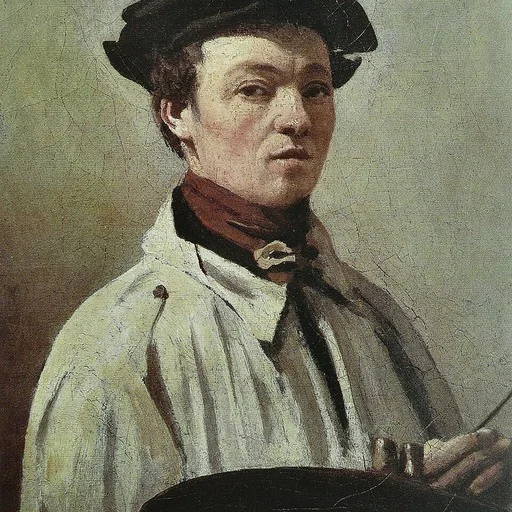
Jean-Baptiste-Camille Corot (UK: KORR-oh, US: kə-ROH, kor-OH; French: ; 16 July 1796 – 22 February 1875), or simply Camille Corot, was a French landscape and portrait painter as well as a printmaker in etching.

 Landscape with Poplars
 Souvenir of Italy
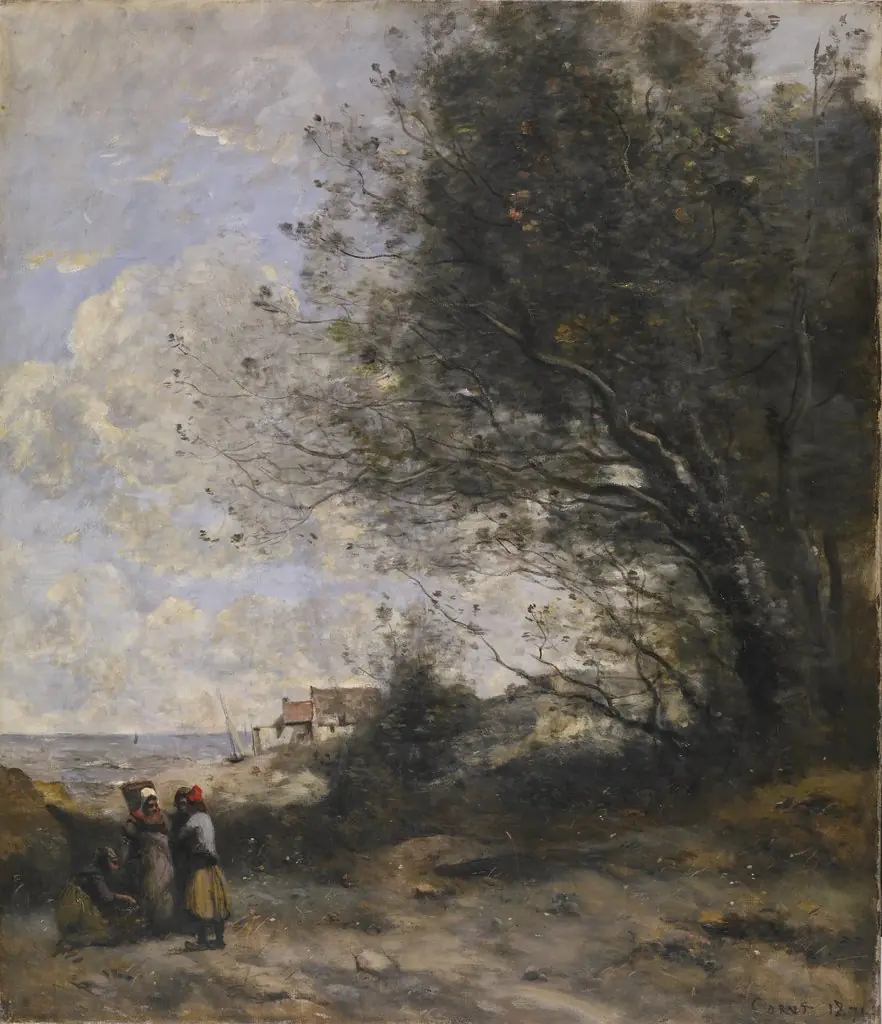 The Fisherman's Cottage
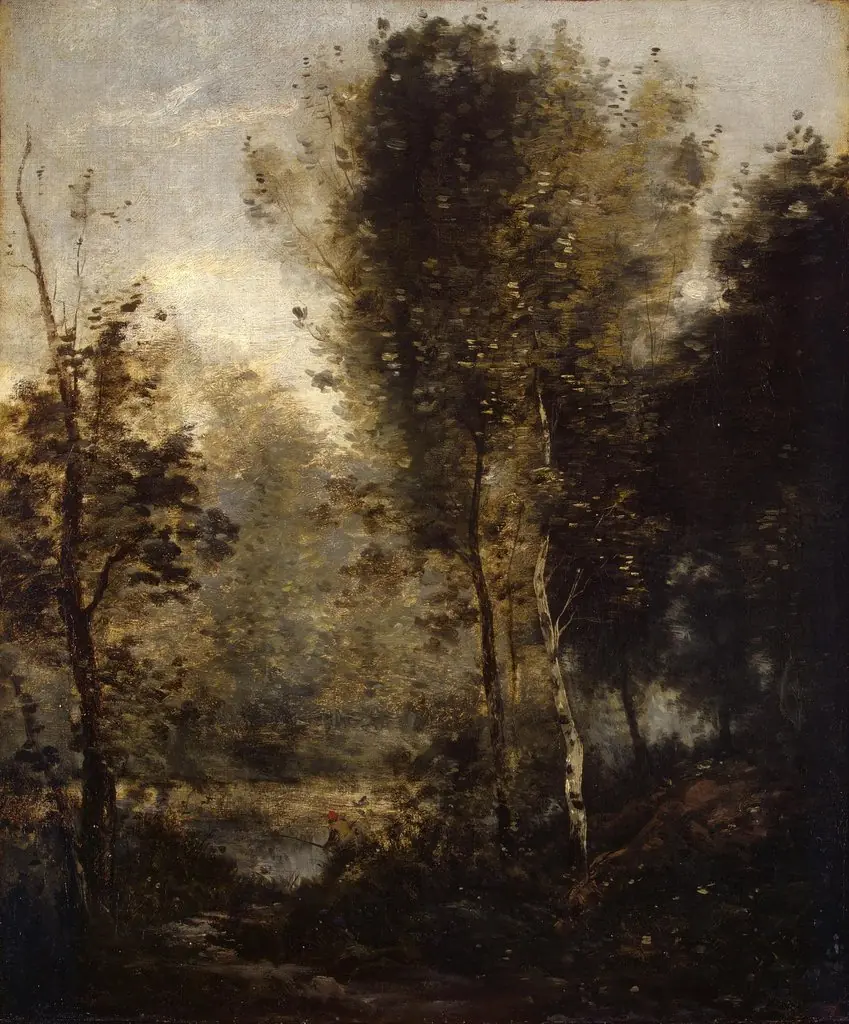 Pool in the Wood
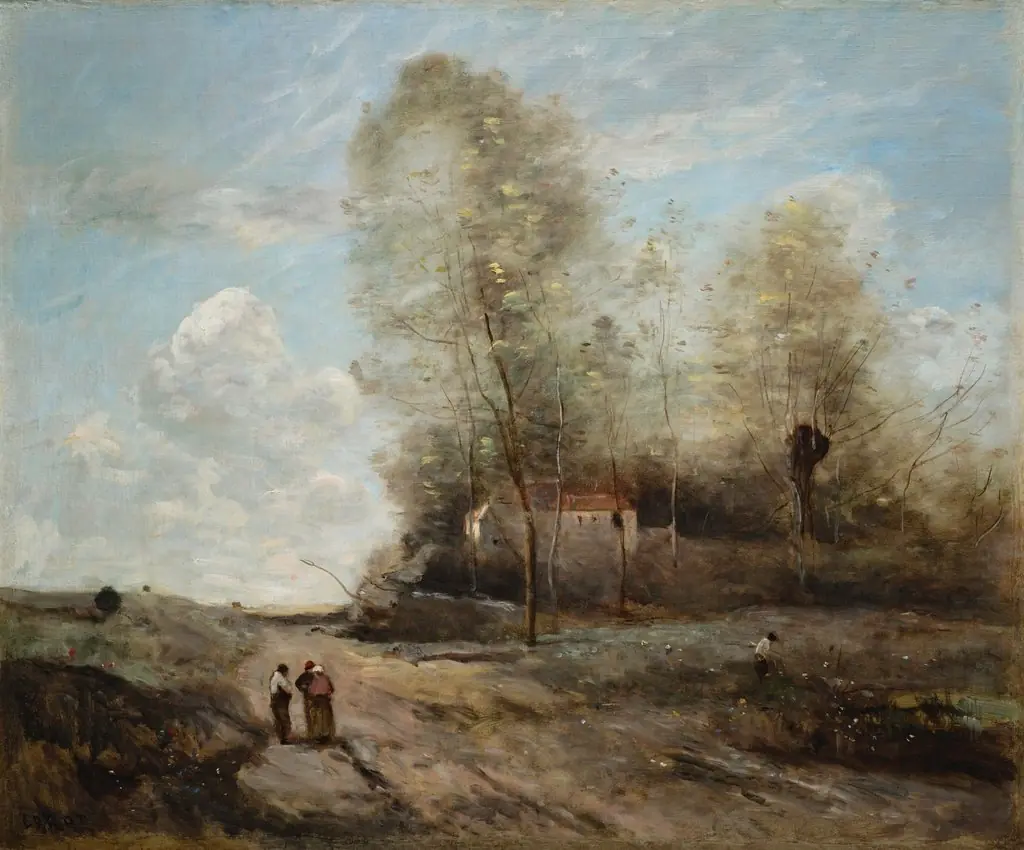 Pastoral Landscape
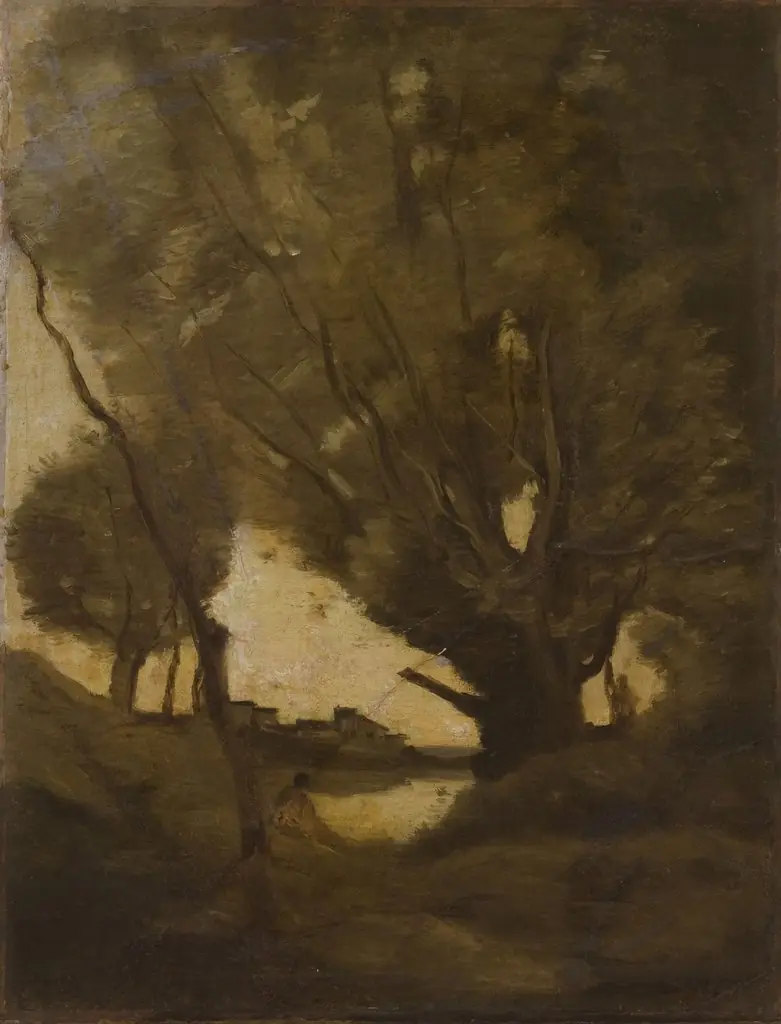 Italian Landscape
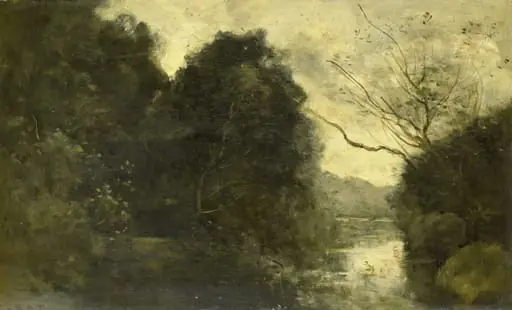 Pond in the Woods
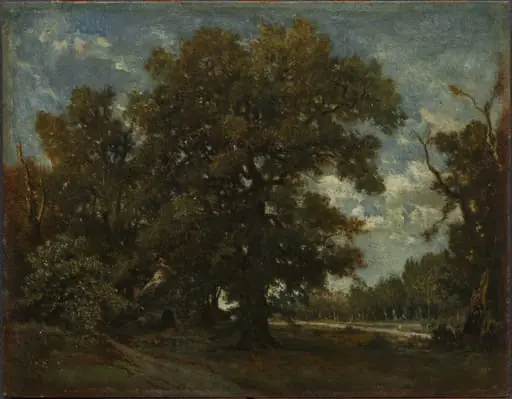 The Oak Tree
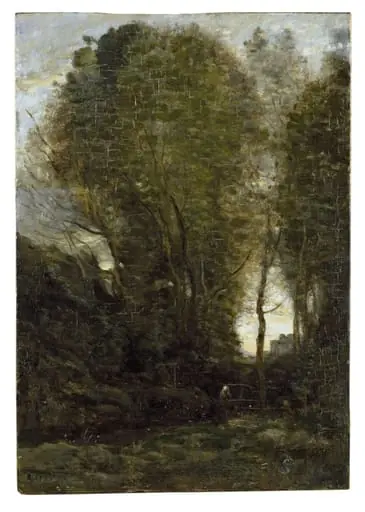 Twilight: Landscape with Tall Trees and a Female Figure
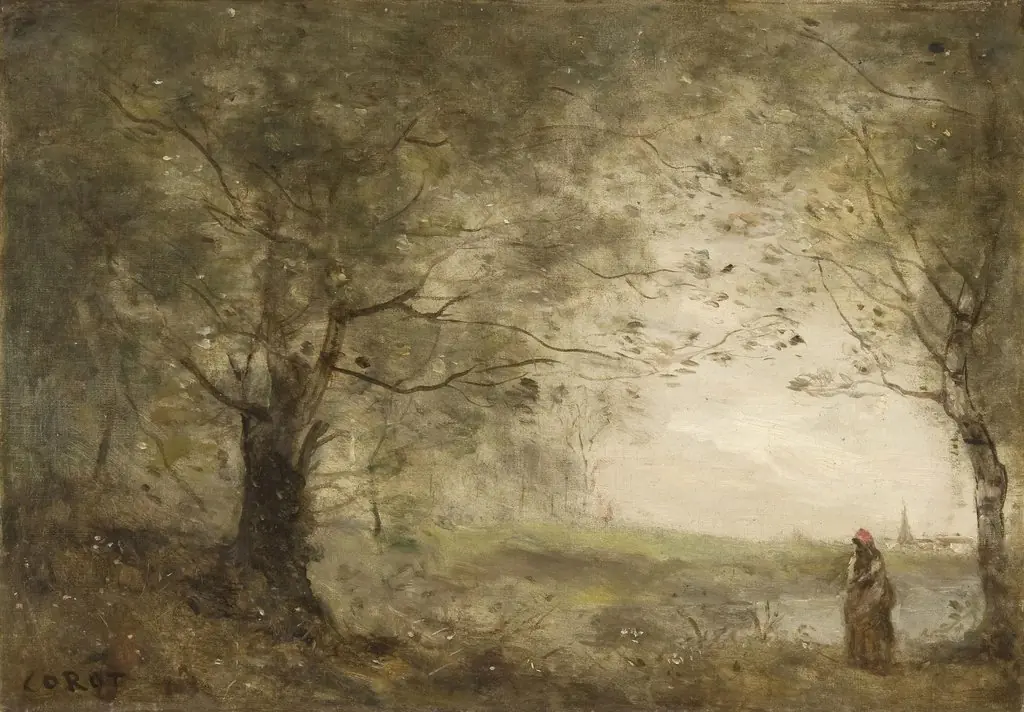 Landscape with a Distant Village Spire
 Pollard Willows
 Twilight: Landscape with Tall Trees and a Female Figure