Artwork
Sin Pres de Douai, Rue du Village, Le Martin
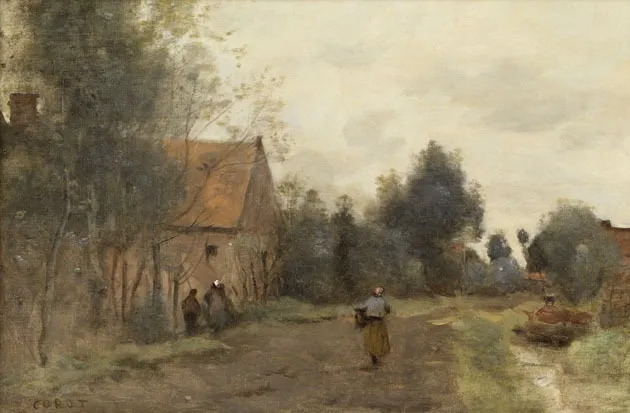
Sin Pres de Douai, Rue du Village, Le Martin is an oil painting by the Impressionist artist Jean Baptiste Camille Corot. It dates from 1872 and is held in the collection of the Kelvingrove Art Gallery and Museum.
About this work
Overview
Painted in 1872 by Jean-Baptiste-Camille Corot, this oil on canvas work captures a quiet stretch of rural road near Douai in northern France.
Painted in 1872 by Jean-Baptiste-Camille Corot, this oil on canvas work captures a quiet stretch of rural road near Douai in northern France. The scene, titled *Sin Pres de Douai, Rue du Village, Le Martin*, reflects Corot’s late style—calm, observational, and grounded in direct experience of the landscape. Though linked to early Impressionist concerns, it retains a measured tone characteristic of his broader artistic evolution.
Subject & Meaning
The painting portrays an uneventful moment in village life: a woman walks along a dirt path carrying a basket, while a man stands near a modest dwelling. The structure labeled Le Martin anchors the composition, suggesting local familiarity. No dramatic action occurs; instead, the focus lies in the stillness of daily routine and the quiet rhythm of rural existence, evoking a sense of time suspended in ordinary moments.
Technique & Style
Corot employed soft brushwork and muted earth tones to render the houses, trees, and road, blending tonal gradations rather than sharp outlines. The overcast sky diffuses natural light, creating a gentle chiaroscuro that unifies the scene without harsh contrasts. His handling of foliage and architecture suggests observation over idealization, with subtle variations in hue and texture conveying atmosphere rather than detail.
History & Provenance
The painting entered the collection of the Kelvingrove Art Gallery and Museum in Glasgow, where it remains today. Its journey from Corot’s studio to public display reflects broader 19th-century interest in French landscape painting among British collectors. While little is documented about its early ownership, its presence in Kelvingrove underscores its recognition as a representative work of Corot’s later period.
Context
Painted during the height of Impressionist experimentation, Corot’s work here diverges from their bright palettes and rapid brushwork. Instead, it aligns with his lifelong commitment to poetic realism—rooted in the Barbizon tradition yet anticipating Impressionism’s attention to light and place. The scene reflects a France still largely agrarian, where village life persisted with minimal industrial influence.
Legacy
Though not among Corot’s most widely reproduced works, this painting exemplifies his mature approach: quiet, introspective, and deeply attuned to the emotional weight of ordinary landscapes. It influenced later generations of landscape painters who valued atmosphere over narrative, contributing to a shift in how rural life was visually understood in modern art.
Artist & collection
Artist
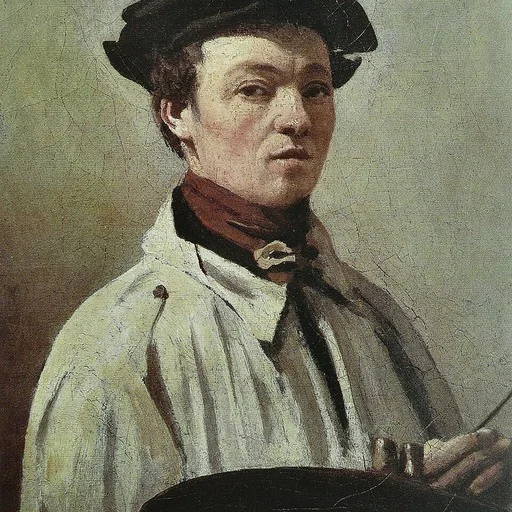
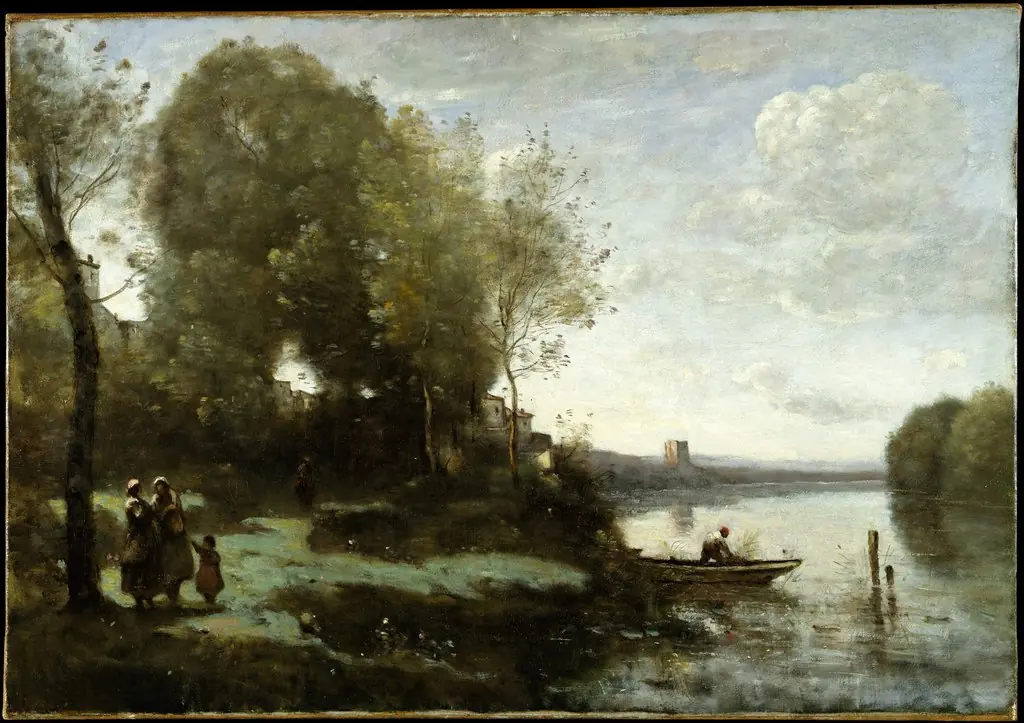
Jean-Baptiste-Camille Corot (UK: KORR-oh, US: kə-ROH, kor-OH; French: ; 16 July 1796 – 22 February 1875), or simply Camille Corot, was a French landscape and portrait painter as well as a printmaker in etching.

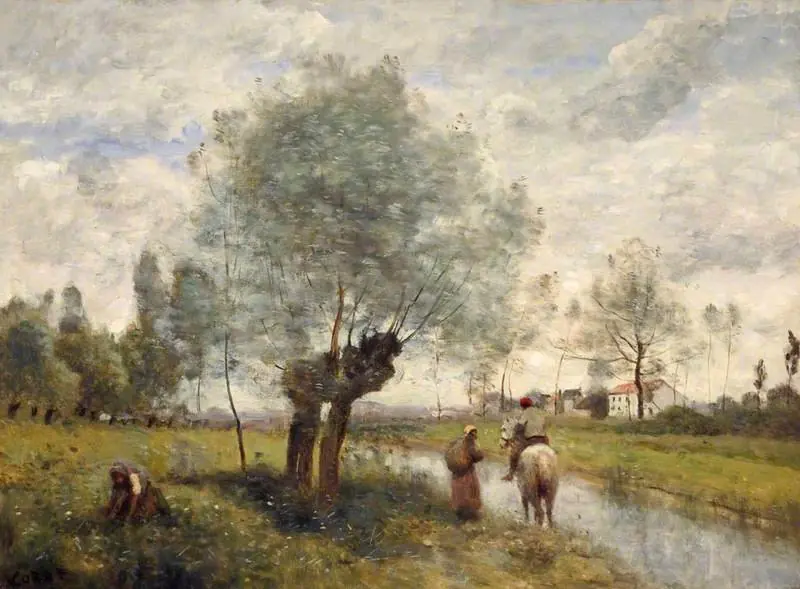 Landscape at Coubron
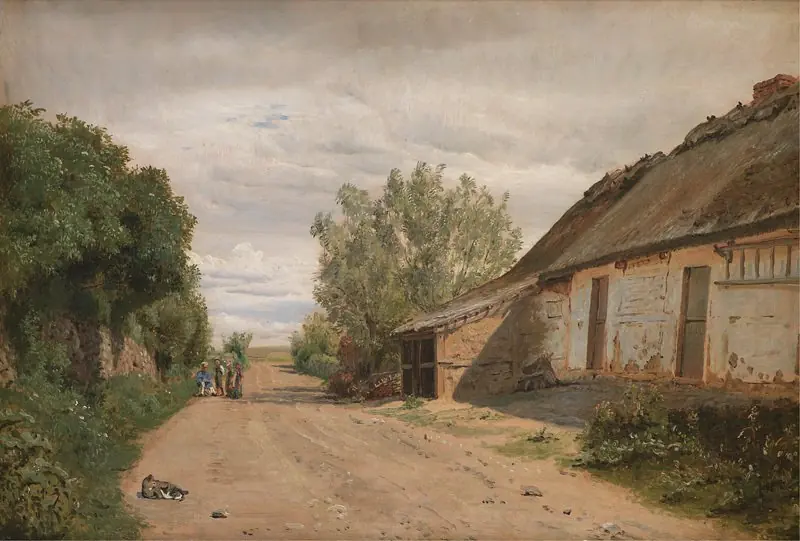 The Outskirts of the Village of Vejby. By the Roadside the Painter J.Th. Lundbye Sketching
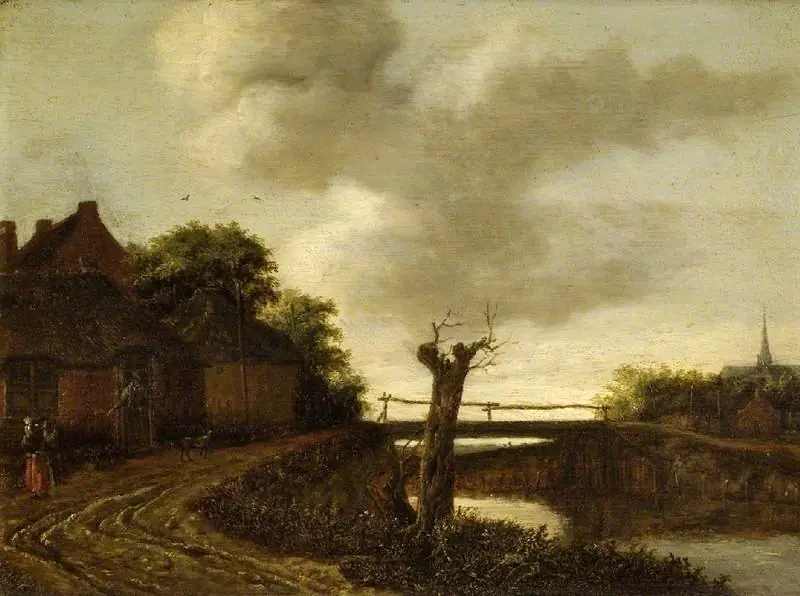 Landscape with a bridge
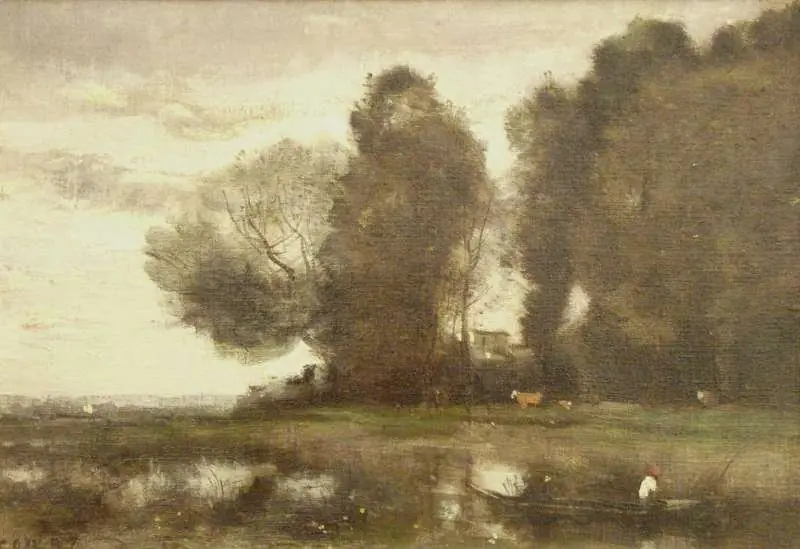 The Fishing River
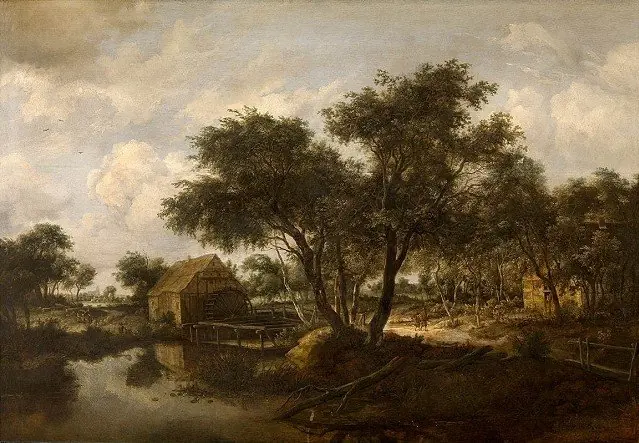 The Watermill
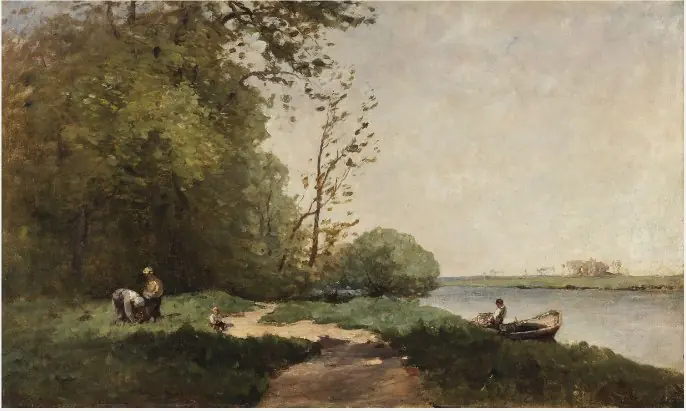 The Banks of the Seine
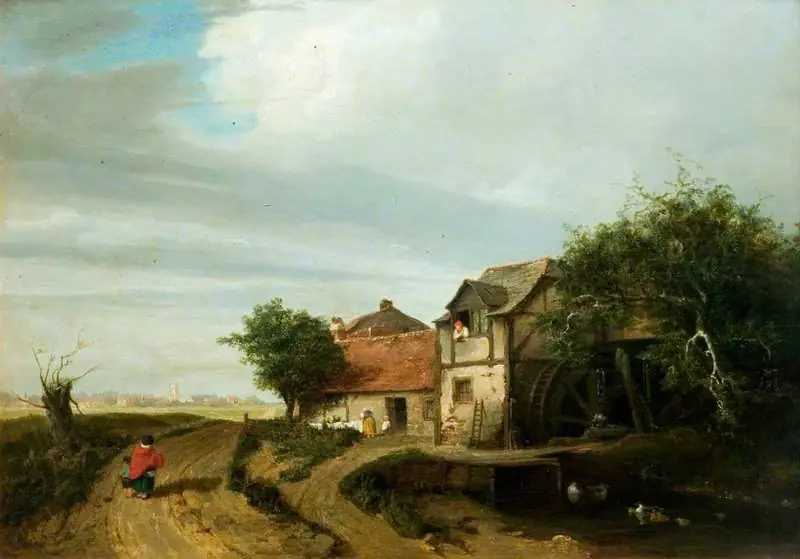 Landscape with a Cottage and a Water-Wheel
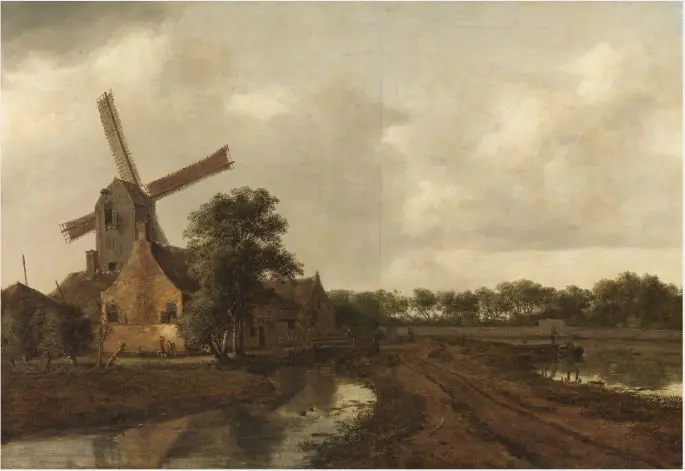 The Windmill
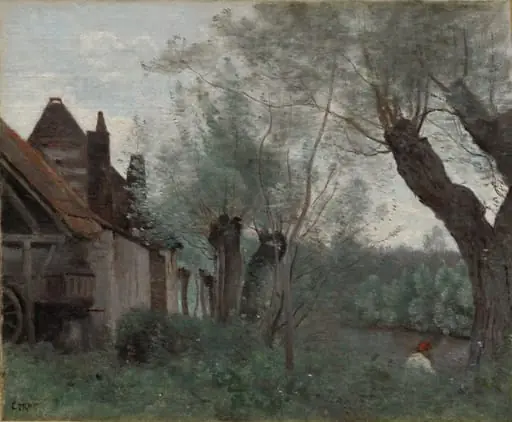 Willows and Farmhouse at Sainte-Catherine-lès-Arras
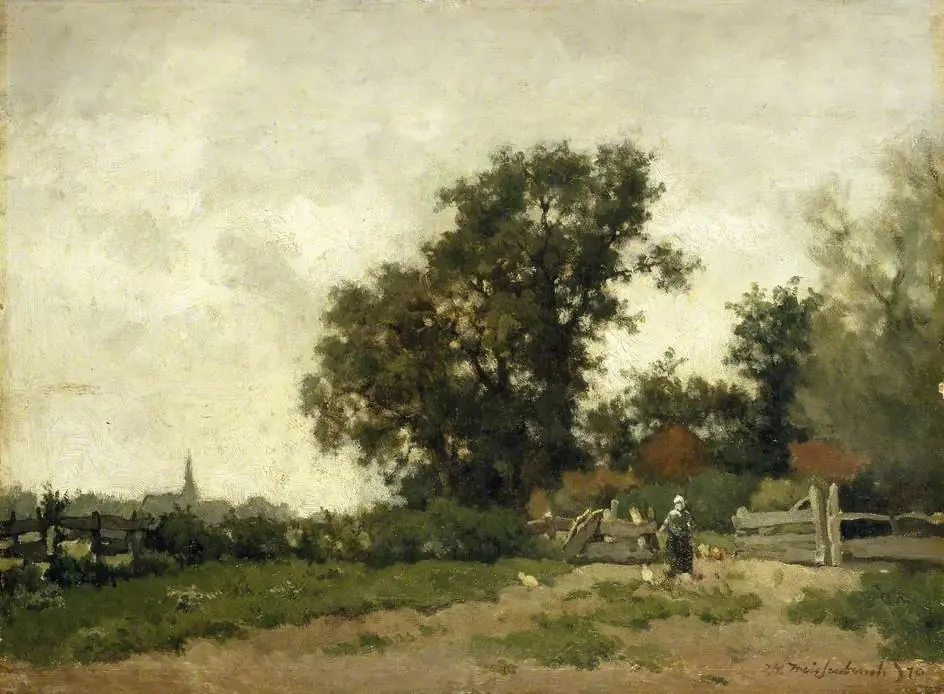 Landscape with a Peasant Girl feeding Chickens
 Le Chautay (Nièvre)
 A November Evening