Artwork
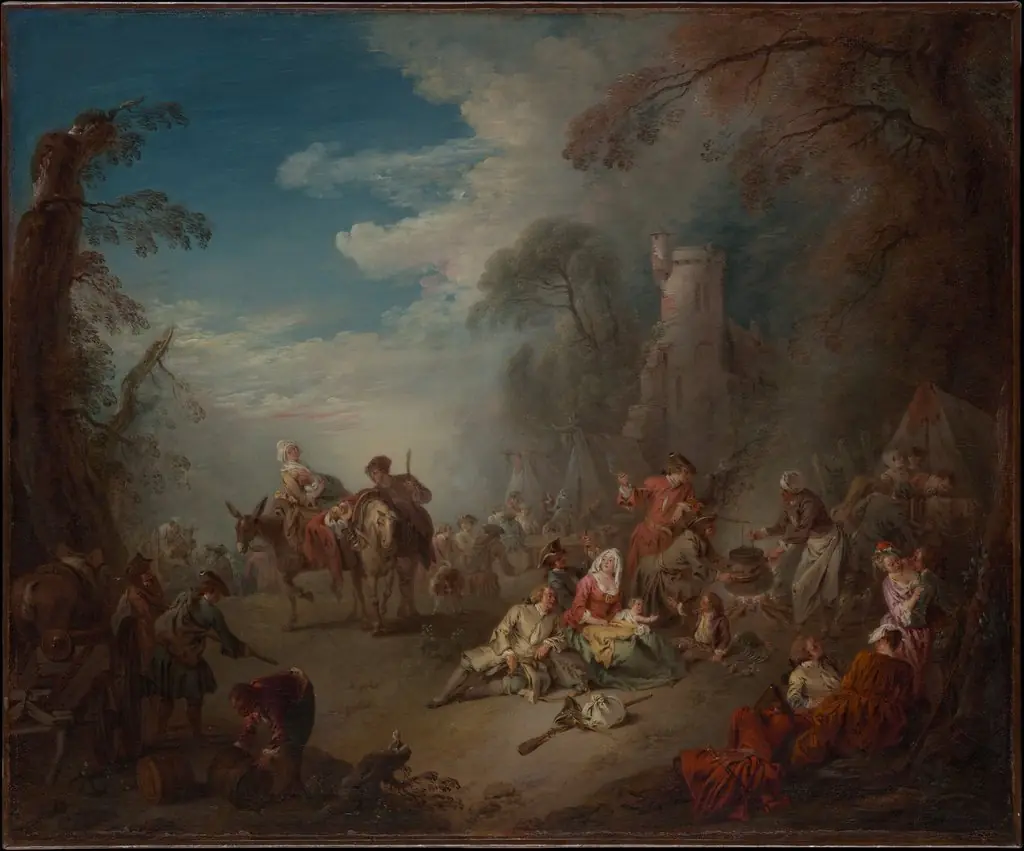
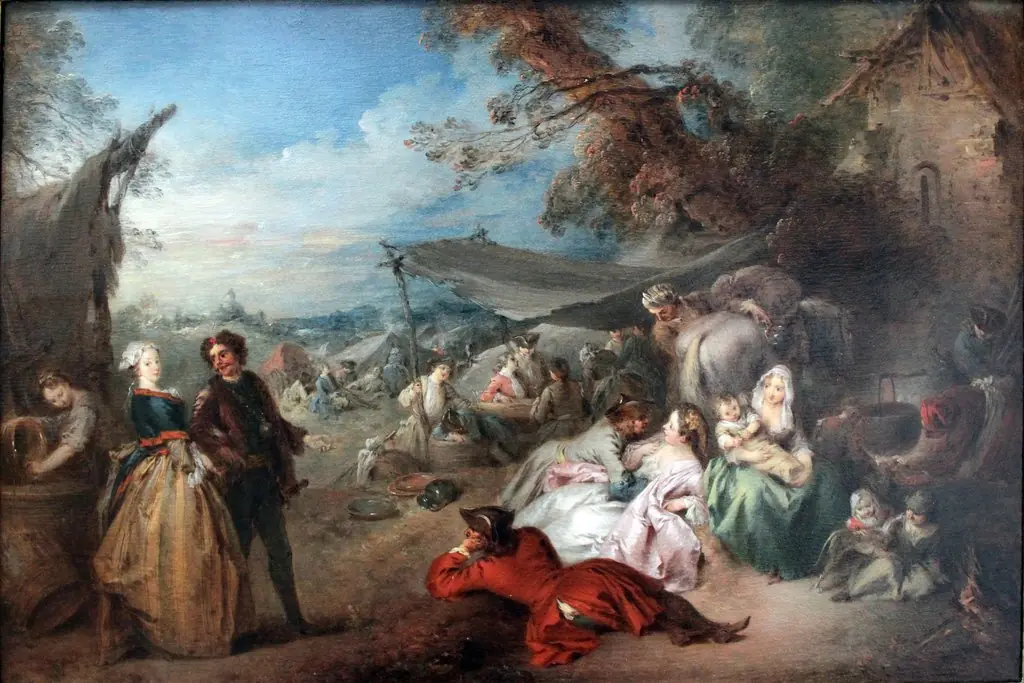
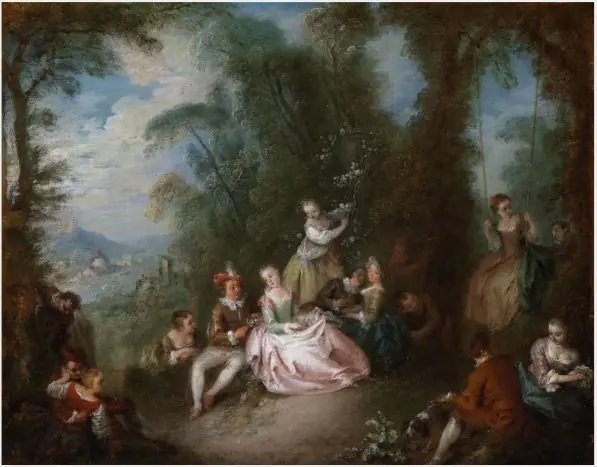
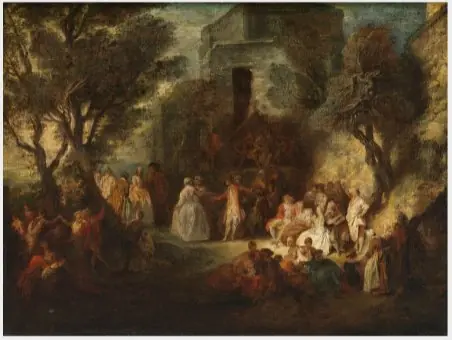
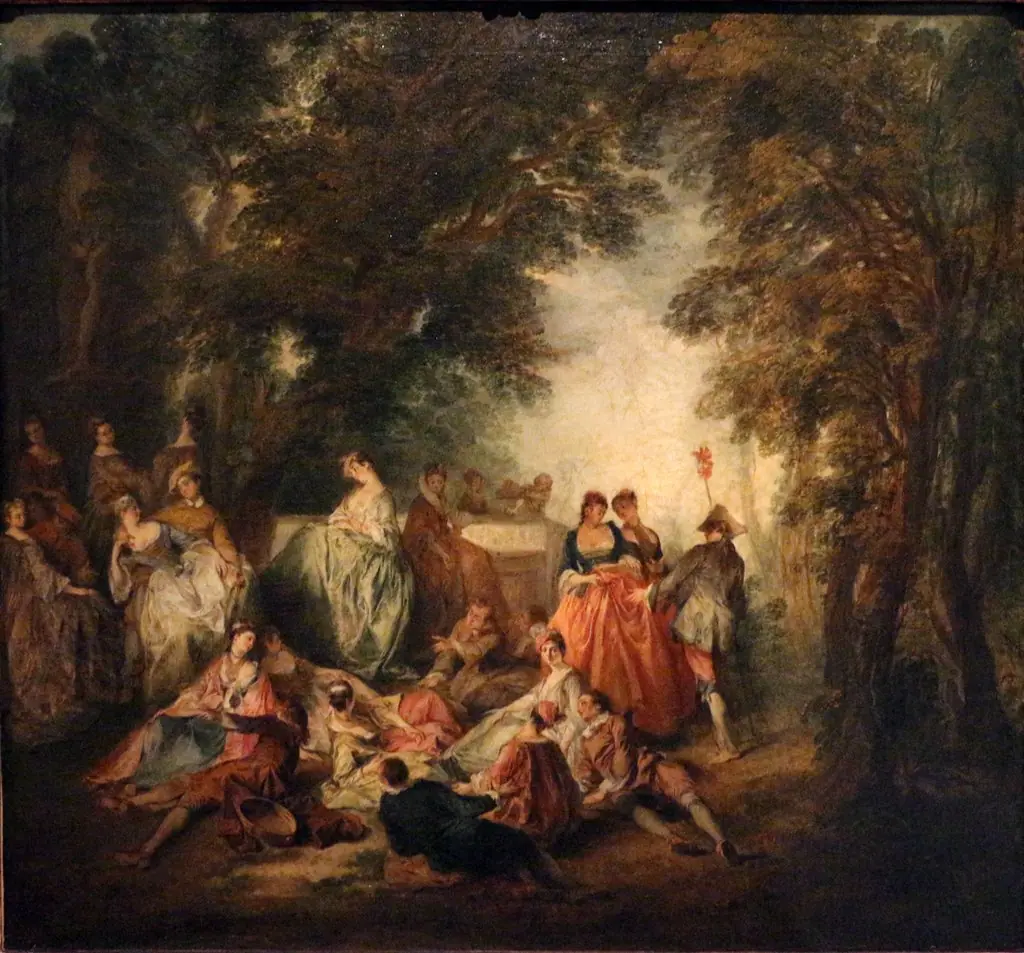
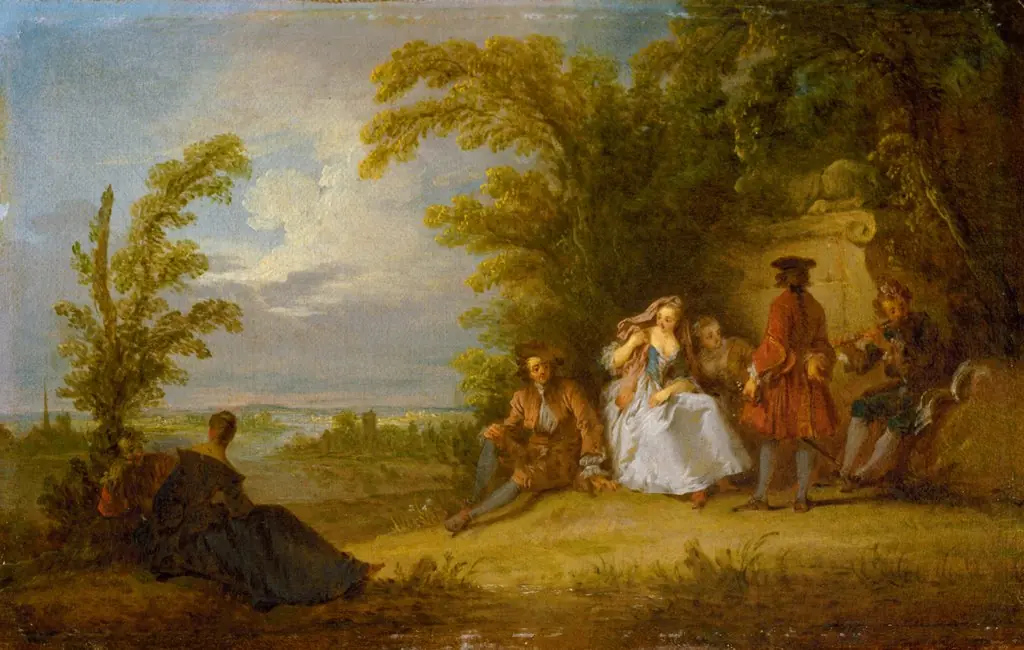
Figures Resting in a Military Encampment
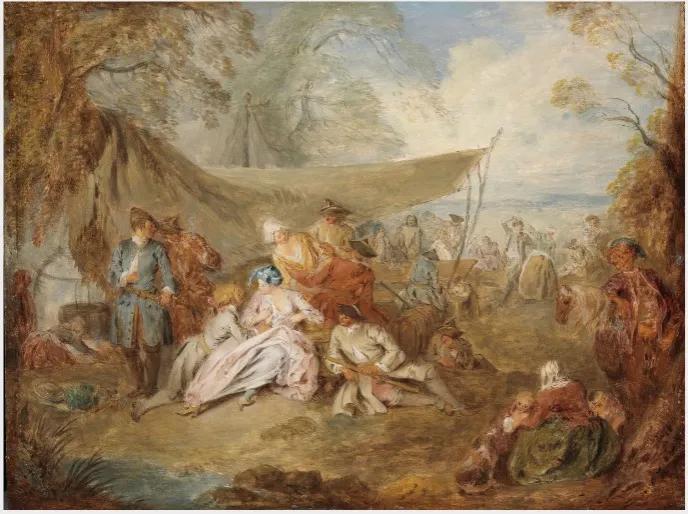
Figures Resting in a Military Encampment is an unspecified painting by the Rococo painting artist Jean-Baptiste Pater. It dates from 1727 and is held in the collection of the National Gallery of Ireland.
About this work
Overview
Jean-Baptiste Pater, born in Valenciennes in 1695, produced this 1727 oil painting as part of his exploration of leisurely civilian and military gatherings.
Jean-Baptiste Pater, born in Valenciennes in 1695, produced this 1727 oil painting as part of his exploration of leisurely civilian and military gatherings. Trained initially by his sculptor father and later by Jean-Baptiste Guide and Antoine Watteau, Pater developed a refined approach to genre scenes that emphasized quiet human interaction over grand narrative. This work exemplifies his transition from academic training to the intimate, atmospheric style favored in early Rococo France.
Subject & Meaning
The painting portrays soldiers and accompanying women in a moment of repose within a temporary encampment. Figures are arranged in loose groupings—some seated, others reclining or standing—suggesting a pause in military routine. The presence of women implies domestic continuity amid campaign life. Rather than depicting action or discipline, Pater focuses on the fragile peace of shared stillness, evoking a sense of communal calm rather than martial purpose.
Technique & Style
Pater employs soft brushwork and a muted palette of warm earth tones, creams, and pale blues to convey a gentle, sunlit atmosphere. The composition is asymmetrical yet balanced, with figures clustered around a central tent, guiding the eye naturally through the scene. Light filters diffusely through the trees, enhancing the sense of dappled shade and quietude. His handling of fabric and skin tone reflects Watteau’s influence, prioritizing texture and mood over sharp definition.
History & Provenance
Created in 1727, the painting entered the collection of the Louvre in the 19th century, where it remains today. It was likely acquired during a period of renewed interest in 18th-century French genre painting. While little is documented about its early ownership, its inclusion in major institutional holdings confirms its recognition as a representative work of Pater’s mature style and the Rococo genre tradition.
Context
In early 18th-century France, the Rococo movement favored intimate, decorative subjects over historical or religious themes. Pater’s encampment scenes responded to aristocratic tastes for idealized depictions of everyday life, blending military settings with pastoral ease. These works reflected a broader cultural shift toward private emotion and leisure, even within traditionally austere contexts like military life, offering viewers a comforting fantasy of order and harmony.
Legacy
Pater’s treatment of military rest scenes influenced later genre painters who sought to humanize institutional settings. Though less celebrated than Watteau, his nuanced observations of social interaction helped sustain the Rococo idiom into the mid-century. This painting endures as a quiet testament to the dignity of ordinary moments, preserving a vision of camaraderie that transcends its historical specificity.
Artist & collection
Artist
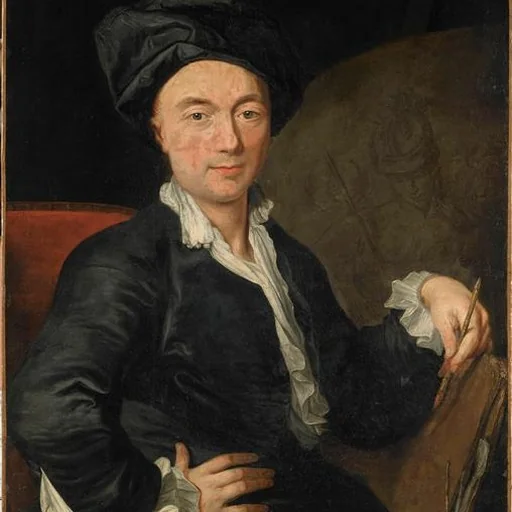
Jean-Baptiste Pater (December 29, 1695 – July 25, 1736) was a French rococo painter.