Artwork
The Guitarist
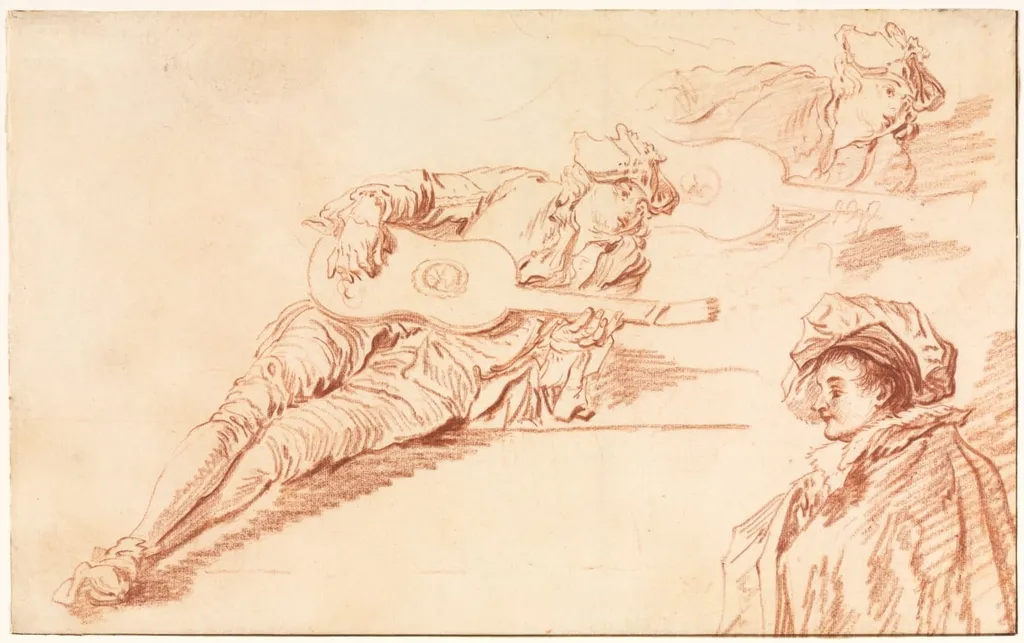
The Guitarist is a drawing by the Baroque artist Jean-Baptiste Pater. It dates from 1724 and is held in the collection of the Cleveland Museum of Art.
About this work
Overview
Jean‑Baptiste Pater’s drawing depicts a young gentleman in a pink coat strumming a guitar beneath a tree, while two silk‑clad women listen attentively. The scene is set in an idyllic, pastoral environment characteristic of the fêtes galantes genre, merging music and courtly flirtation in a light‑hearted composition.
Subject & Meaning
The work illustrates the social role of the guitar in early eighteenth‑century French aristocratic leisure. The musician’s relaxed posture and the women’s poised attention suggest a cultured exchange of art and affection, reflecting the period’s ideals of refined, yet informal, courtly interaction.
Technique & Style
Pater prepared his compositions with red‑chalk studies, a method inherited from his mentor, Antoine Watteau. The drawing’s delicate line work and subtle shading convey a sense of immediacy, while the pastel palette of the figures’ clothing reinforces the airy, elegant atmosphere typical of fêtes galantes.
Context
During the late seventeenth century, Italian and Spanish guitar virtuosos entered the court of Louis XIV, introducing the instrument to French high society. By Pater’s time, the guitar had become associated with the culture of gallantry, frequently appearing in artistic depictions of aristocratic recreation.
Legacy
Pater’s treatment of the guitar as a symbol of fashionable leisure contributed to the broader visual vocabulary of the fête galante. His works, echoing Watteau’s influence, helped cement the genre’s association with music, romance, and the cultivated pleasures of the French elite.
Artist & collection
Artist
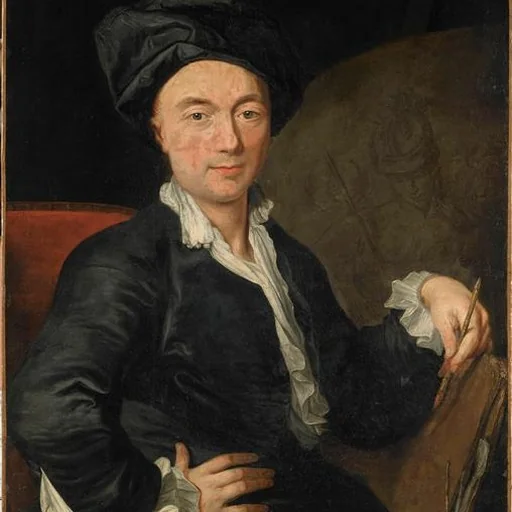
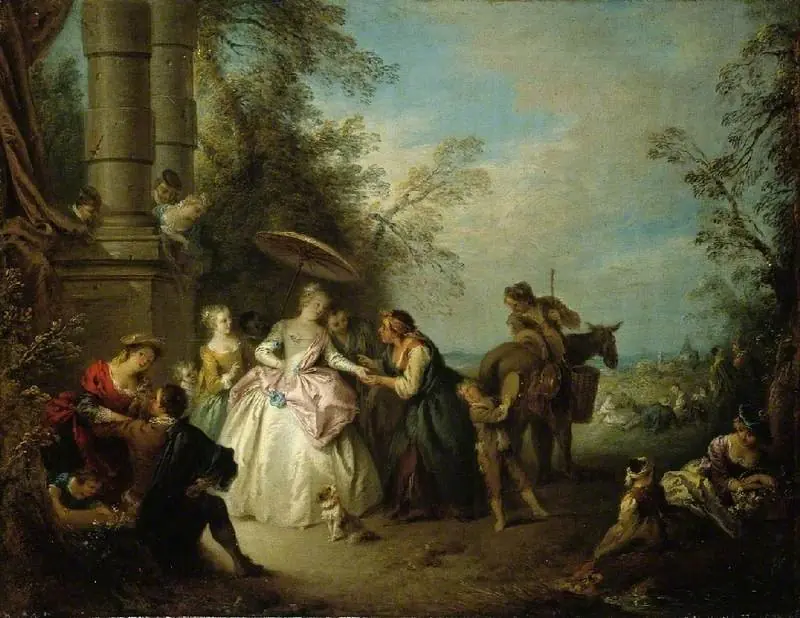
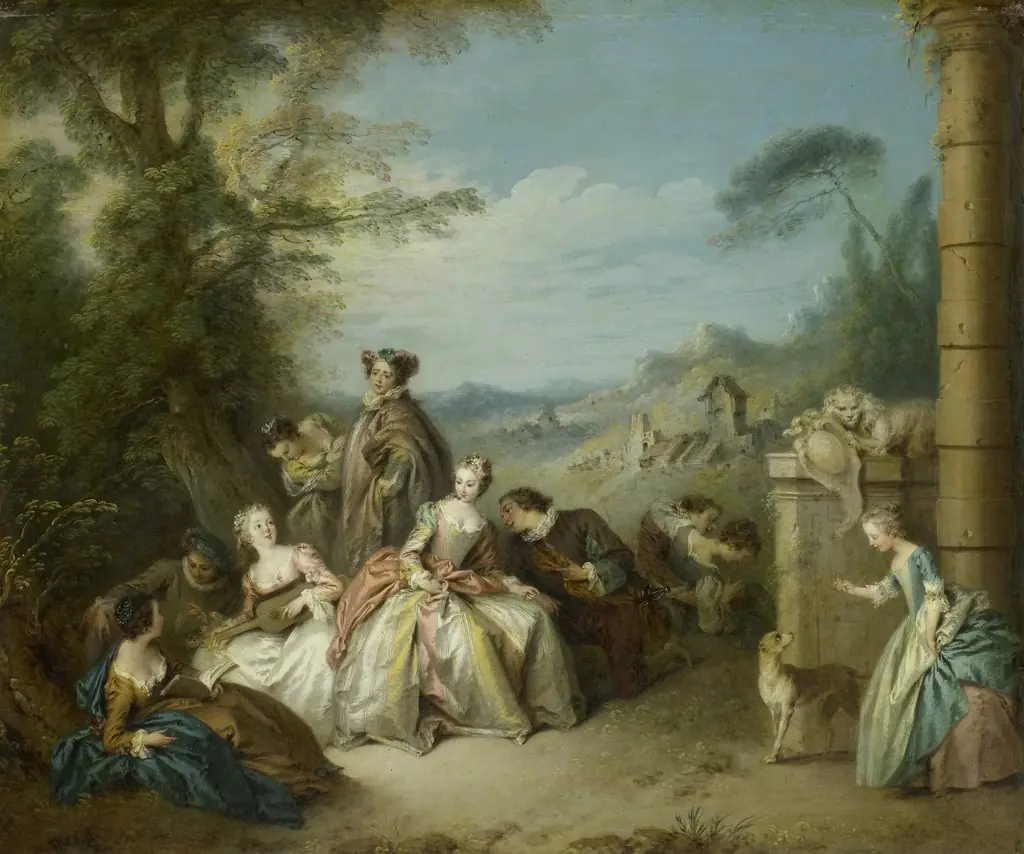
Jean-Baptiste Pater (December 29, 1695 – July 25, 1736) was a French rococo painter.

![Seated Guitarist [recto], by Jean Antoine Watteau](https://artifactworldgallery.com/img/jean-antoine-watteau--seated-guitarist-recto--1923603ffd027bd7-w320.webp) Seated Guitarist [recto]
Seated Guitarist [recto]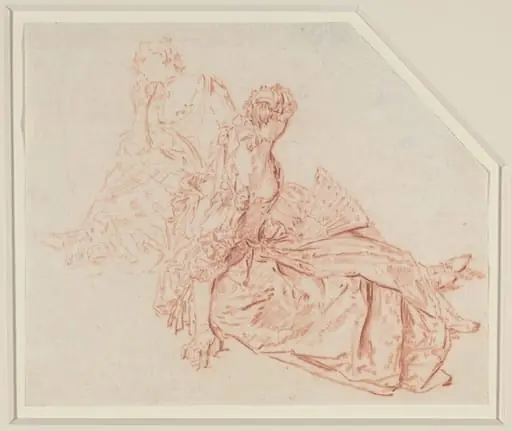 Two Seated Ladies
![Two Elegant Couples [verso], by Francesco Guardi](https://artifactworldgallery.com/img/francesco-guardi--two-elegant-couples-verso--0eab87c3f2698c75-w320.webp) Two Elegant Couples [verso]
Two Elegant Couples [verso]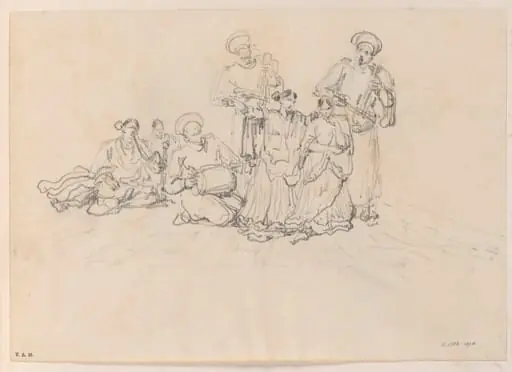 A group of Indian musicians and dancers
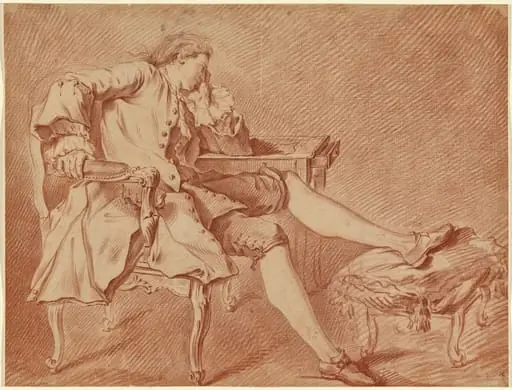 Gentleman Lounging in a Chair
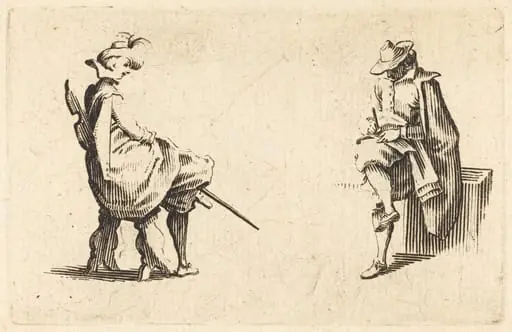 Two Seated Figures
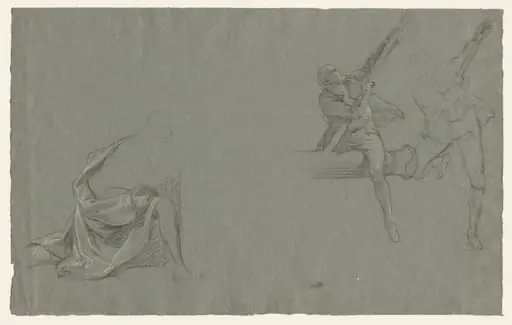 Drapery Study; Two Figures Pulling a Pole
 A Western woman seated at a table
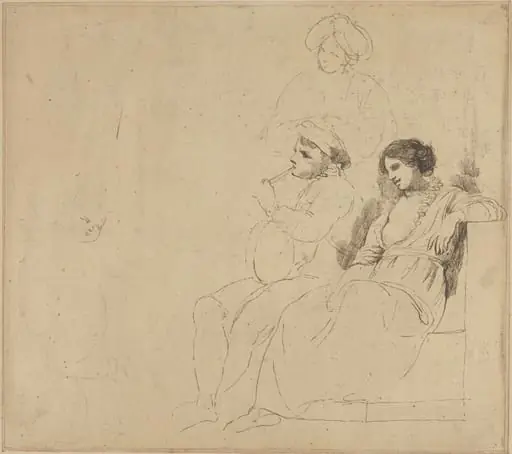 Study for "The Rustic Dancers"
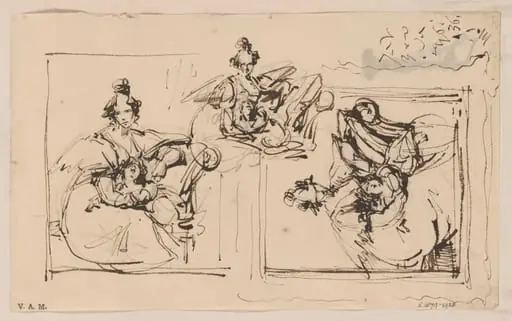 Three studies for a portrait of a Western woman and child
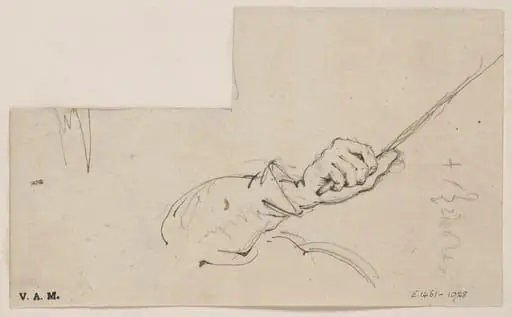 An arm and hand holding a stick
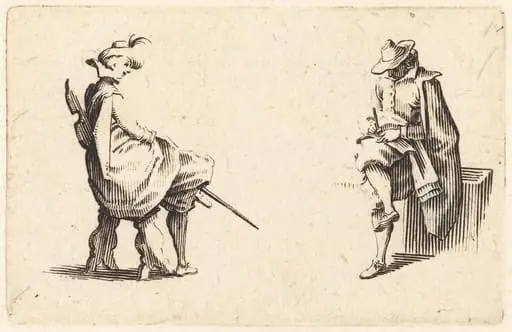 Two Seated Figures