Artwork
Der Zug des Bacchus
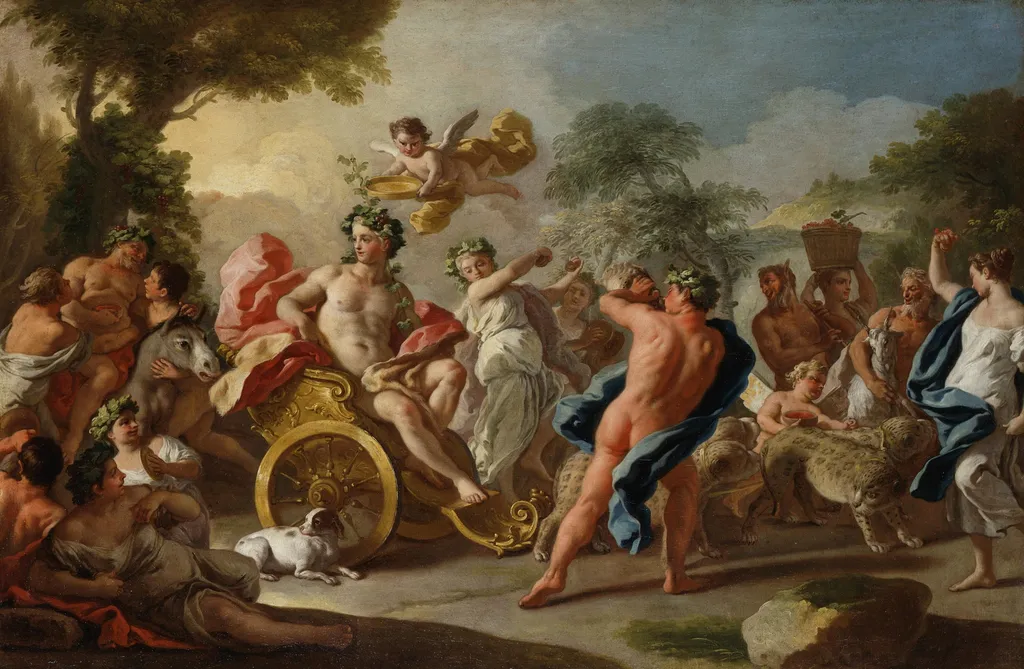
Der Zug des Bacchus is a paint painting by the Rococo painting artist Francesco de Mura. It dates from 1760 and is held in the collection of the Gemäldegalerie Berlin.
About this work
Overview
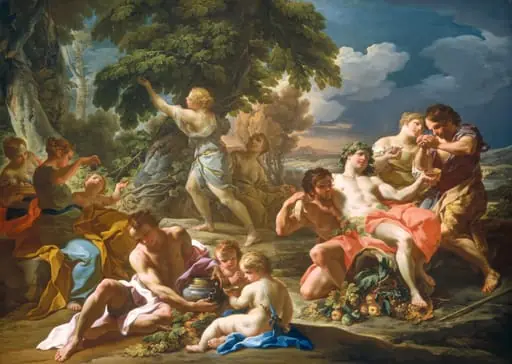
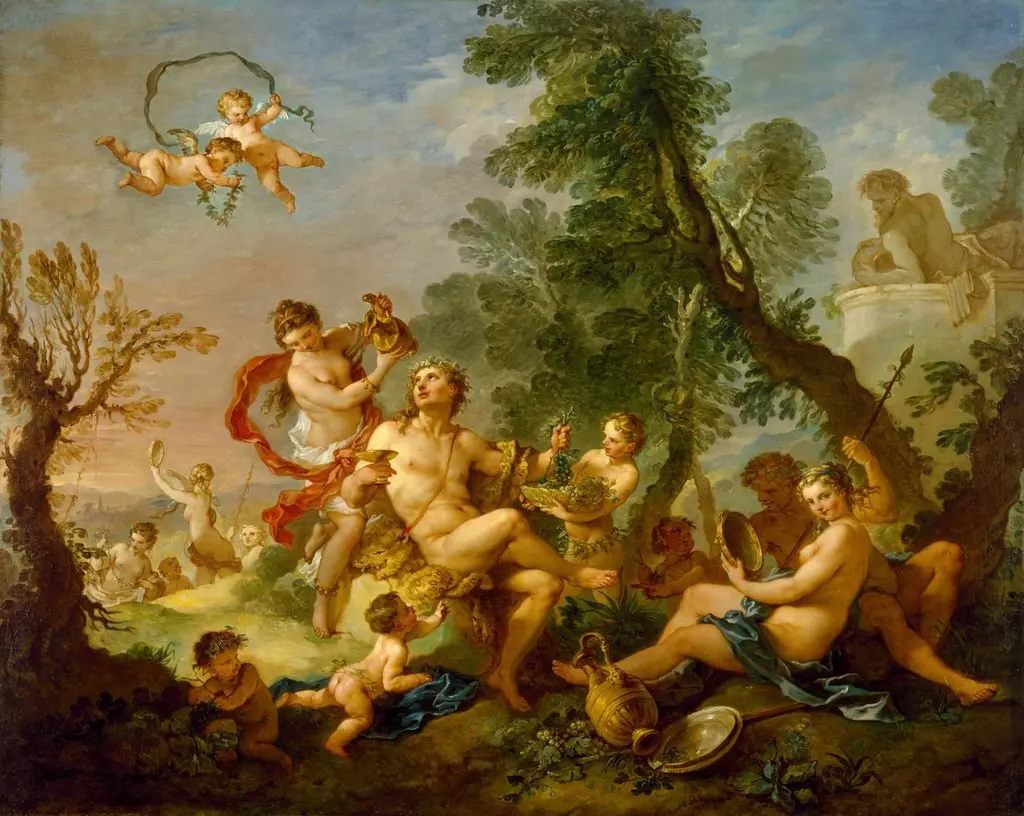
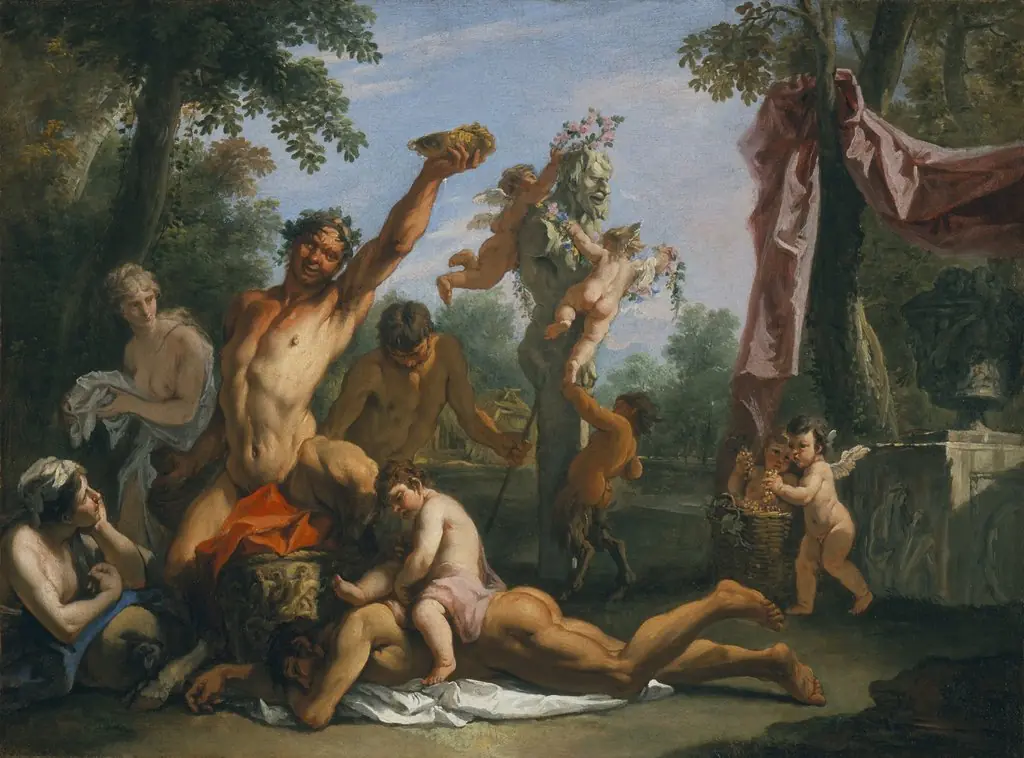
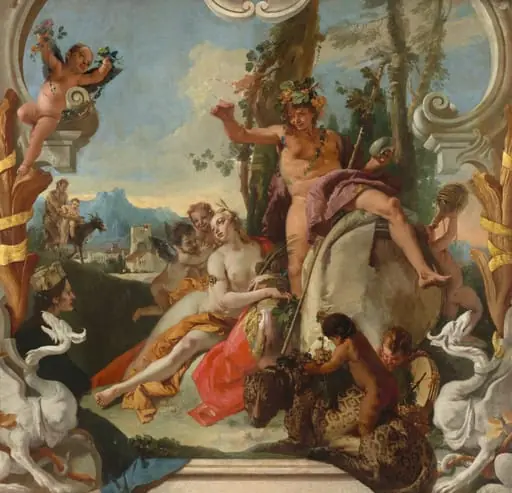
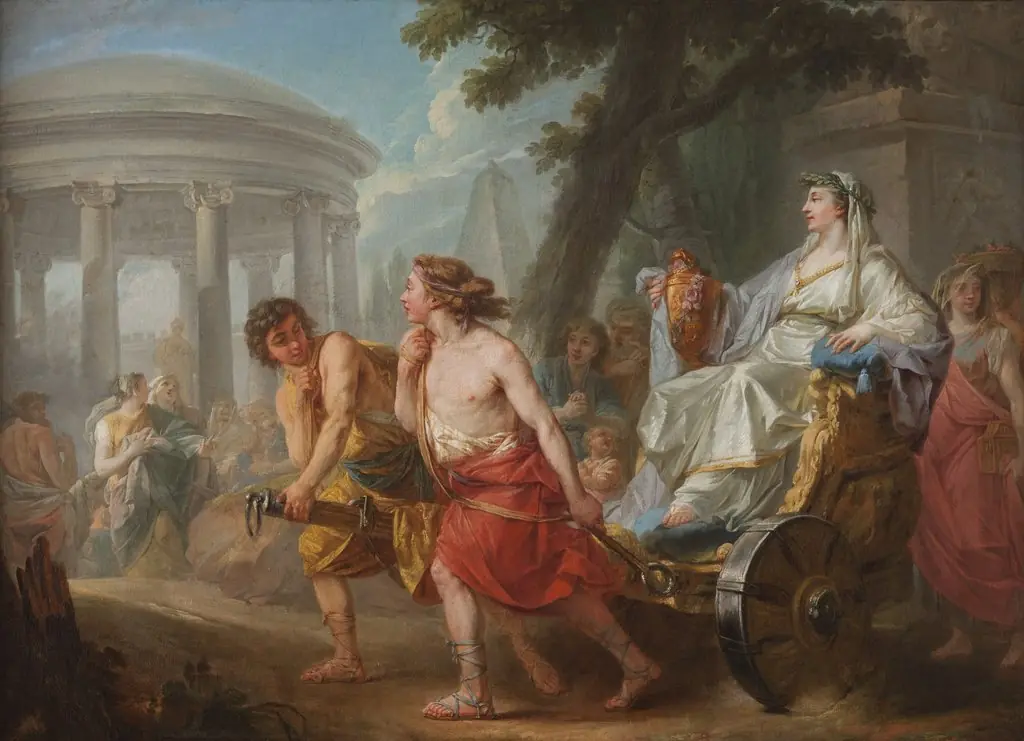
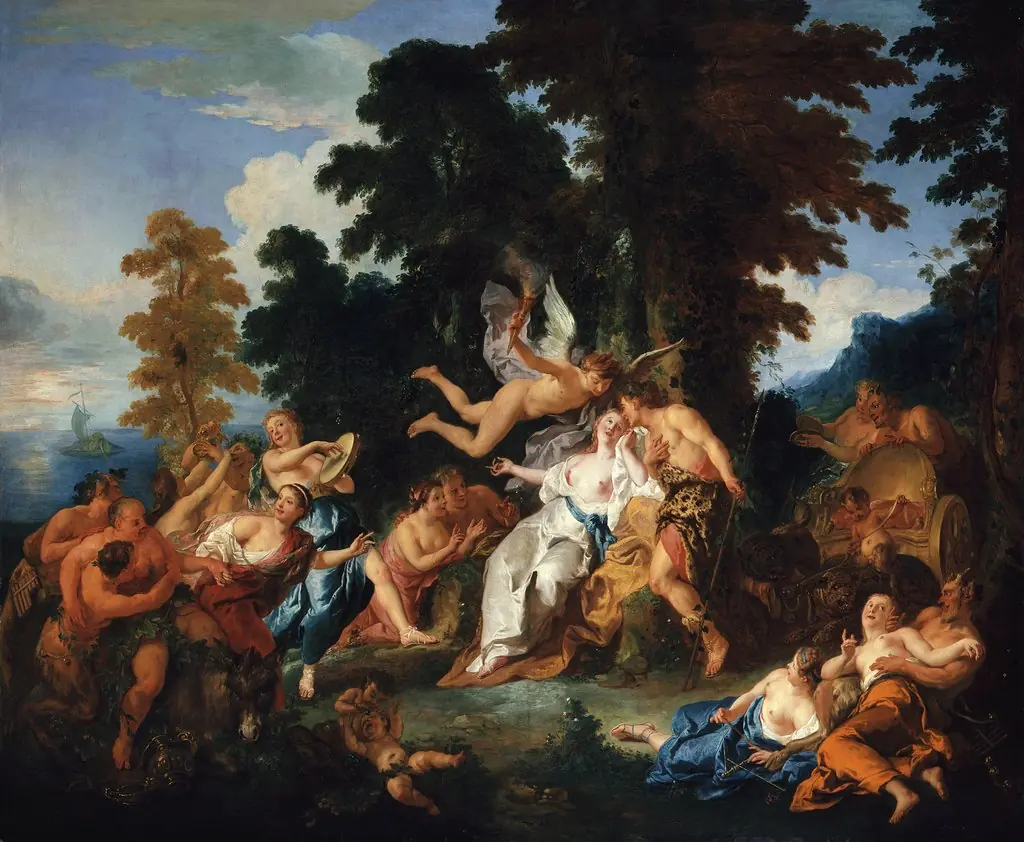
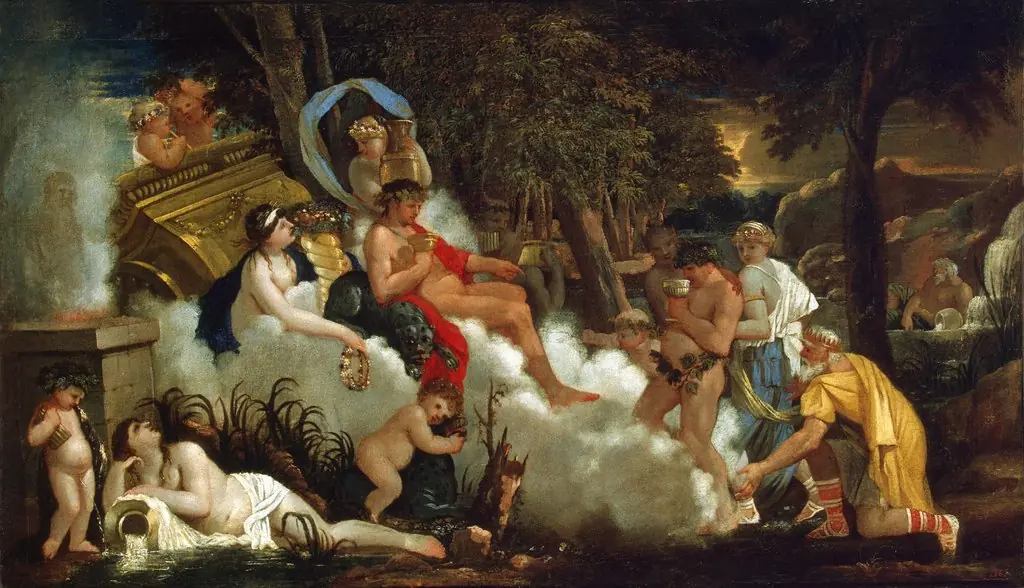
Francesco de Mura’s 1760 canvas titled *Der Zug des Bacchus* presents a festive procession set in an open landscape. At its center a golden chariot carries a seated figure identified as Bacchus, the Roman god of wine, surrounded by revelers, musicians, and animals. The composition conveys a lively atmosphere of celebration and movement, with figures poised to join the merriment.
Subject & Meaning
The painting centers on Bacchus, embodying themes of abundance, wine, and ecstatic joy. The surrounding participants—dancers, instrumentalists, and a lounging white dog—reinforce the mythological narrative of indulgence and communal festivity, reflecting the god’s association with liberation from restraint.
Technique & Style
Executed in oil on canvas, the work displays the Rococo’s characteristic lightness and decorative elegance, while retaining de Mura’s late‑Baroque vigor. Delicate brushwork renders the shimmering gold of the chariot and the soft textures of foliage, while the fluid poses of the figures emphasize grace and movement.
History & Provenance
Created during de Mura’s mature period while he was active in Naples and Turin, the painting exemplifies his transition from Baroque grandeur to Rococo refinement. Although specific ownership records are scarce, the work remains attributed to the artist and is catalogued among his late‑18th‑century productions.
Own this work as a print
Artist & collection
Artist
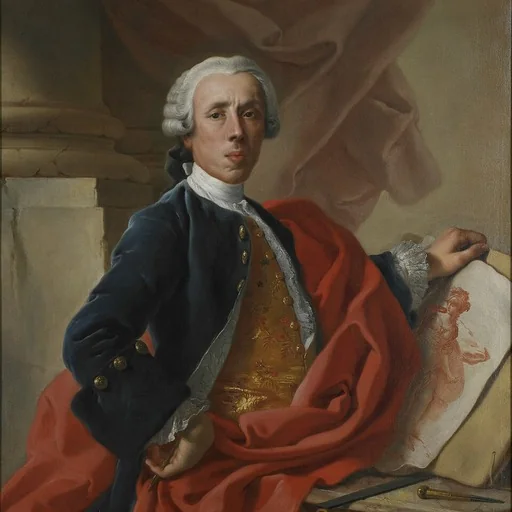
Francesco de Mura (21 April 1696 – 19 August 1782) was an Italian painter of the late-Baroque period, active mainly in Naples and Turin. His late work reflects the style of neoclassicism.