Artwork
Windmill on a Beach
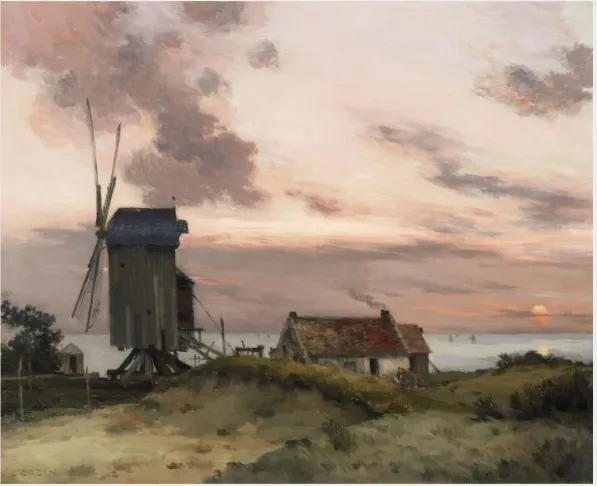
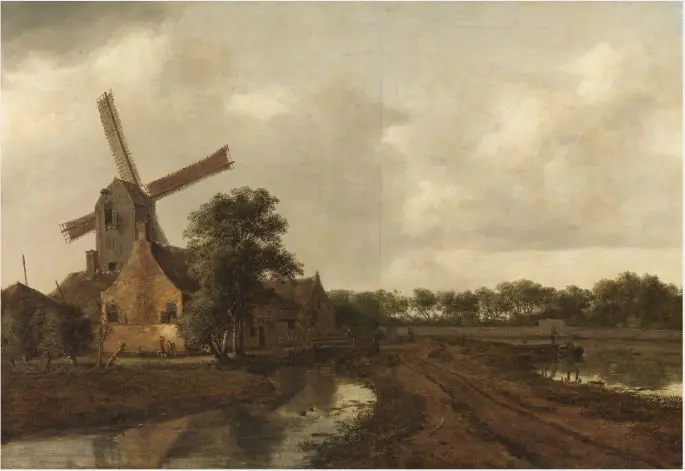
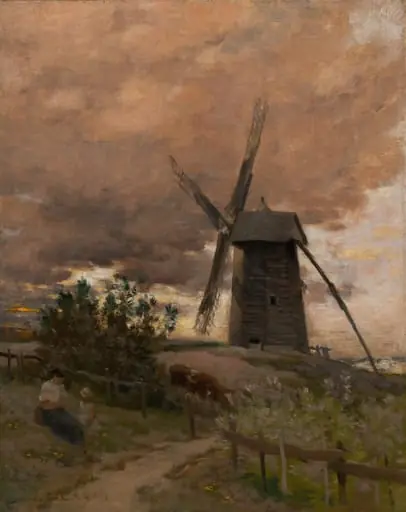
Windmill on a Beach is an oil painting by the Impressionist artist Jean Charles Cazin. It dates from 1898 and is held in the collection of the National Gallery of Ireland.
About this work
Overview
Painted in 1898 by Jean Charles Cazin, Windmill on a Beach is an oil-on-canvas work that captures a quiet coastal landscape.
Painted in 1898 by Jean Charles Cazin, Windmill on a Beach is an oil-on-canvas work that captures a quiet coastal landscape. It resides in the National Gallery of Ireland, where it is recognized for its subdued tonal harmony and contemplative mood. The composition centers on a solitary windmill rising from a stretch of shoreline, framed by modest architecture and natural elements that suggest a remote, unpopulated setting.
Subject & Meaning
The painting presents a windmill and a small dwelling on a windswept beach, both rendered with stillness and isolation. The sails are motionless, the house unoccupied, and the sky hovers in a state of partial cloud cover. There is no human presence, no indication of activity—only the quiet persistence of structures adapted to the elements. The scene evokes solitude rather than narrative, inviting reflection on the relationship between human constructs and the natural world.
Technique & Style
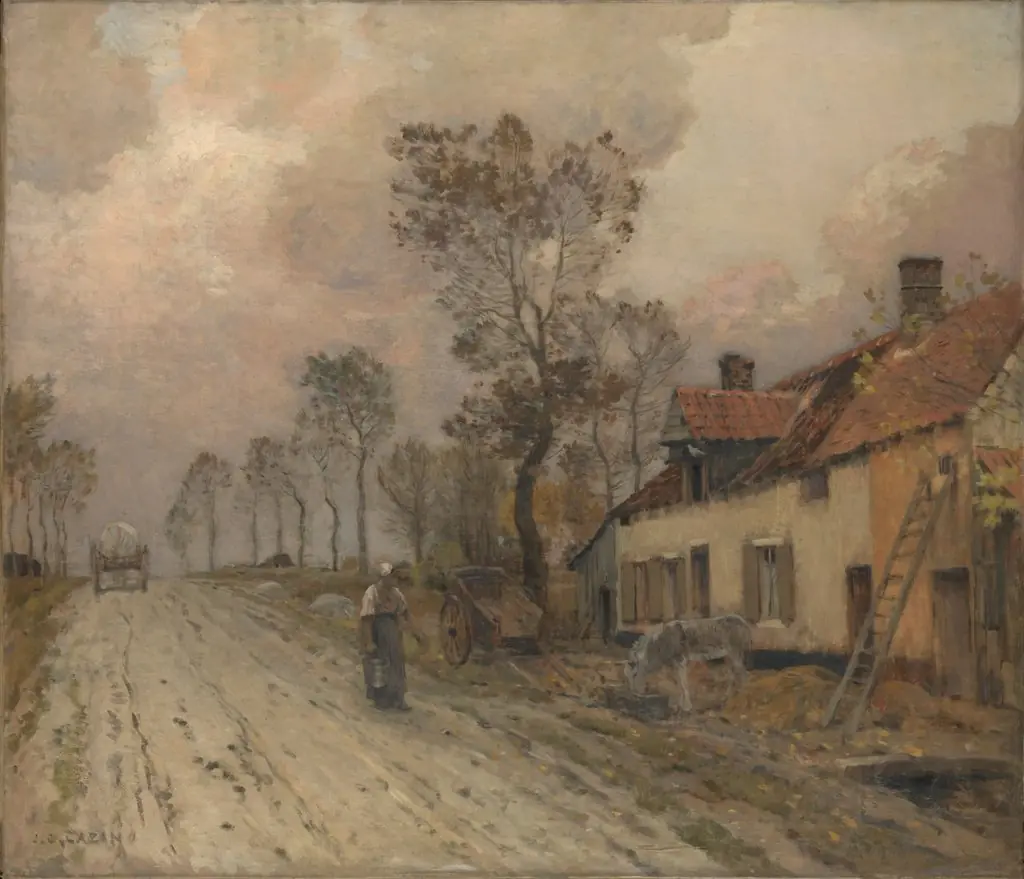
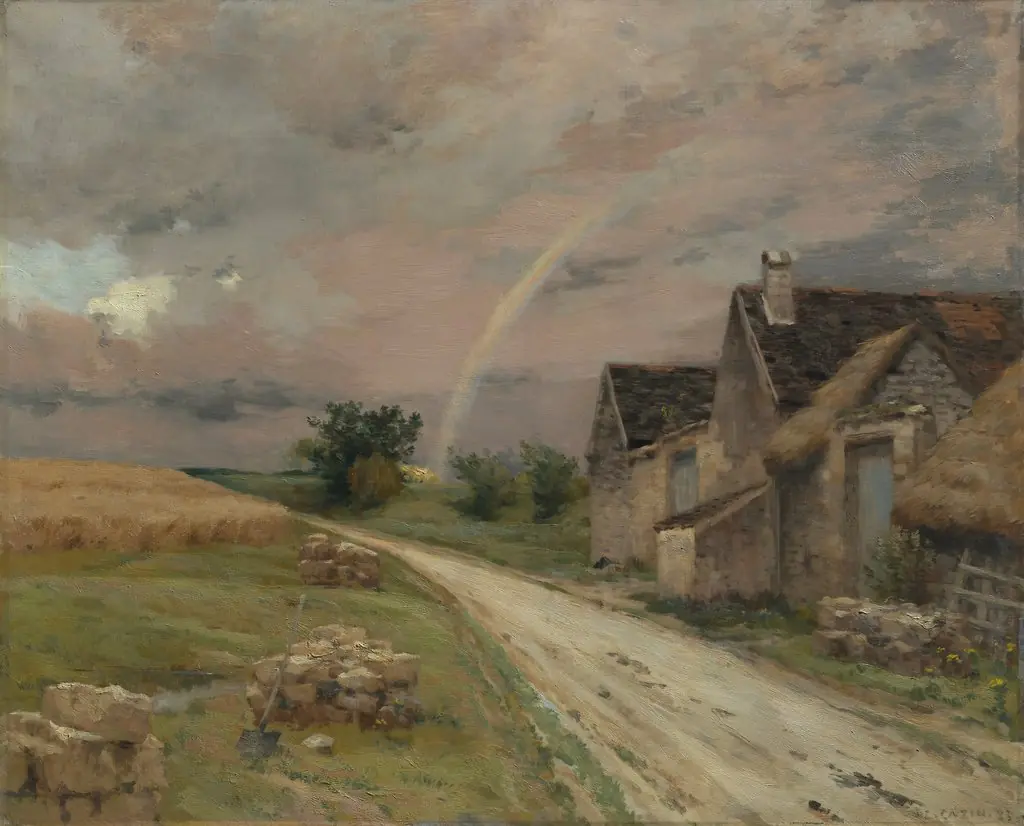
Cazin employs a restrained palette of soft grays, muted ochres, and pale blues to unify the sky, sand, and structure. Brushwork is delicate yet deliberate, with subtle gradations of light suggesting atmospheric depth. The sun, partially obscured by clouds, casts a gentle glow that models forms without harsh contrast. The texture of the windmill’s wood and the grassy patches on the shore are suggested rather than detailed, reinforcing the painting’s meditative tone.
History & Provenance
Created in 1898, the painting entered the collection of the National Gallery of Ireland at an early date, though specific acquisition records are not widely documented. Cazin, a French artist associated with the Barbizon tradition, produced few works focused on coastal subjects, making this piece a rare example of his engagement with seaside landscapes. Its presence in Dublin underscores its recognition beyond French artistic circles during the late 19th century.
Context
Cazin worked during a period when landscape painting was shifting from dramatic Romanticism toward quieter, more introspective modes. His approach aligns with the tonalist movement, emphasizing mood over detail and light over line. Windmill on a Beach reflects this trend, resonating with contemporaries like James McNeill Whistler and the French Impressionists’ quieter experiments, while retaining a sense of structural permanence absent in more fleeting depictions of nature.
Legacy
Though not widely reproduced or celebrated in mainstream art history, the painting remains a quiet example of late 19th-century European landscape sensibility. It contributes to understanding how artists outside the Impressionist core explored atmosphere and stillness. Its continued display in Dublin affirms its value as a representative work of understated, emotionally resonant realism.
Artist & collection

Artist
Jean-Charles Cazin was a French landscapist, museum curator and ceramicist.