Artwork
Untitled
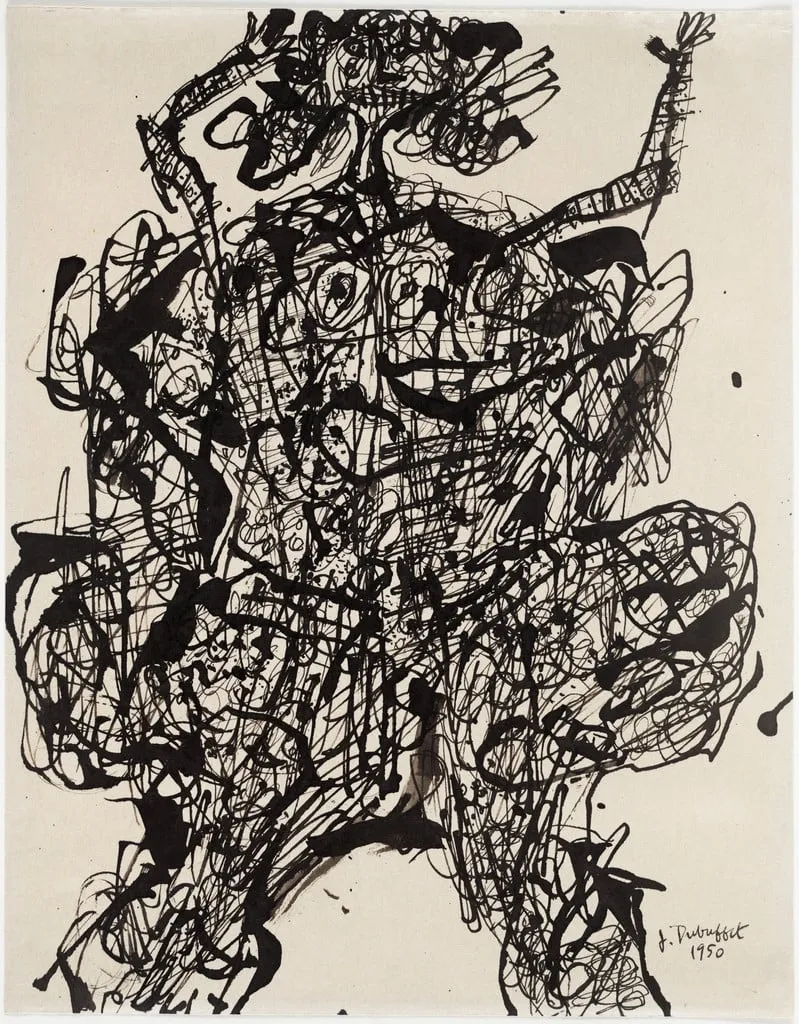
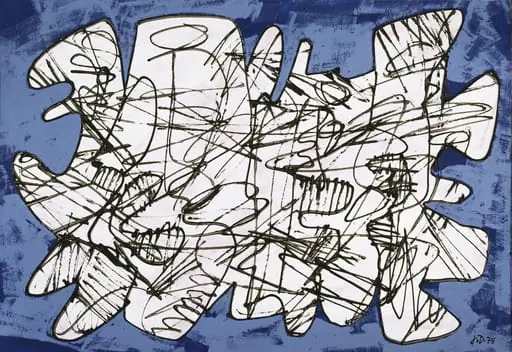
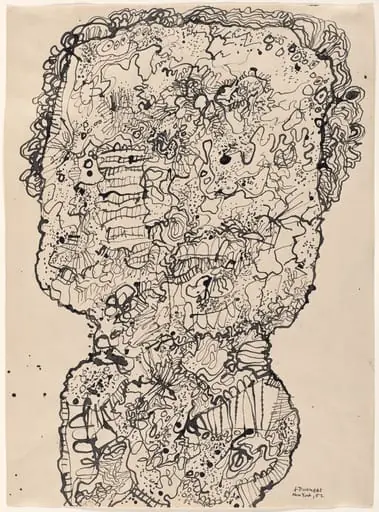
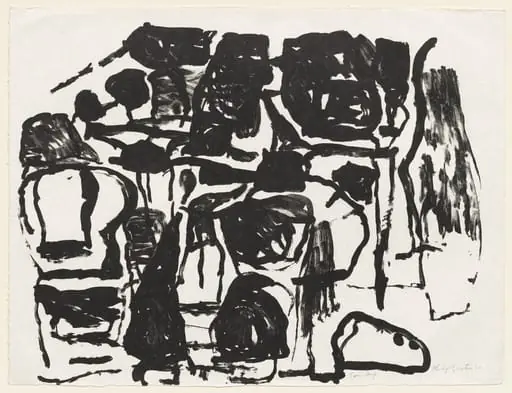
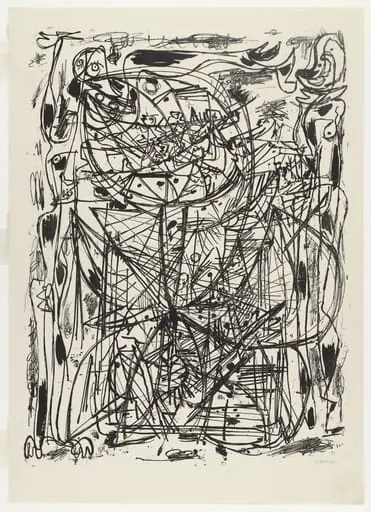
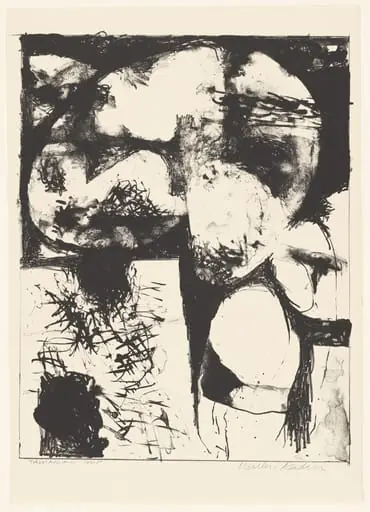
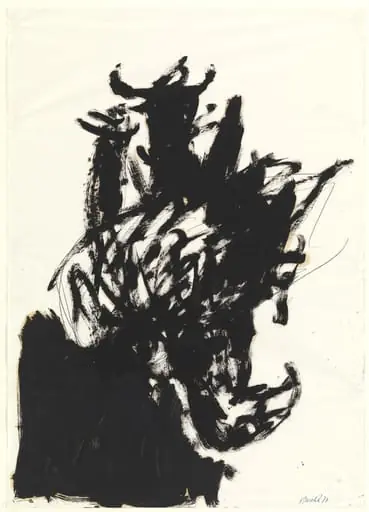
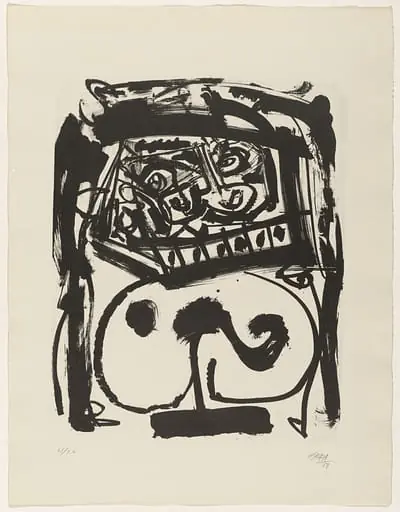
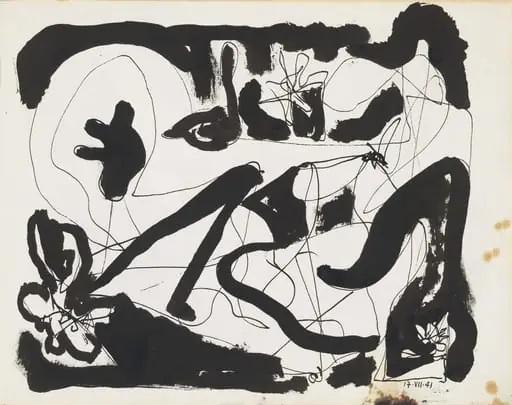
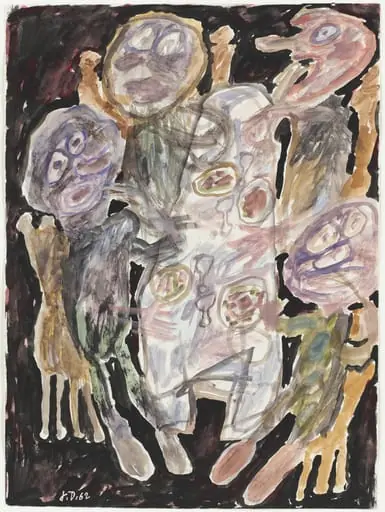
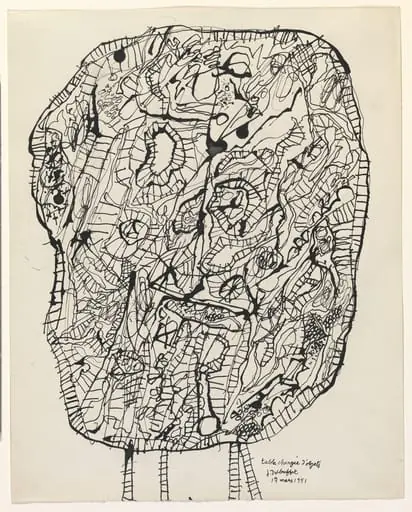
Untitled is an ink drawing by Jean Dubuffet. It dates from 1950 and is held in the collection of the Museum of Modern Art.
About this work
It’s messy but controlled, like someone drew fast but meant every stroke.
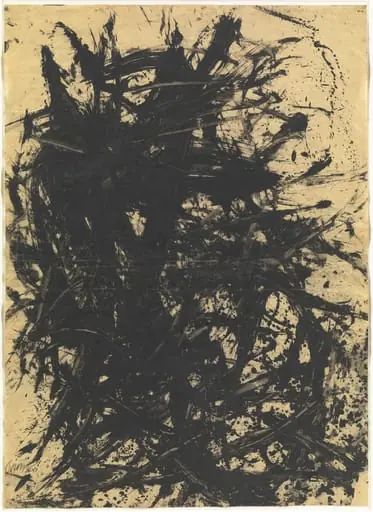
This painting is all black ink on white paper. The lines are wild—twisted, tangled, and overlapping. Some look like scribbles, others like rough shapes. It’s messy but controlled, like someone drew fast but meant every stroke.
The artist signed it in the corner: *J. Dubuffet 1950*. The lines don’t form anything you’d recognize. They’re just ink, but they feel alive.
If you like this style, look up Jean Dubuffet.
Overview
Created in 1950, this ink drawing by Jean Dubuffet exemplifies his commitment to unfiltered expression. Executed with bold, spontaneous strokes on white paper, the work rejects traditional composition and representational form. Its raw energy and deliberate chaos reflect Dubuffet’s broader artistic philosophy, which privileged instinct over refinement. The signature 'J. Dubuffet 1950' anchors the piece in time and authorship, reinforcing its status as a direct record of the artist’s hand.
Subject & Meaning
The drawing resists clear subject matter, offering no recognizable figures or scenes. Instead, it presents a dense network of ink lines that evoke movement, tension, and inner agitation. Dubuffet sought to bypass intellectual interpretation, inviting viewers to respond to the physicality of the marks rather than their symbolic content. The work embodies his belief that authenticity emerges from unmediated gesture, not narrative or aesthetic convention.
Technique & Style
Dubuffet employed ink with rapid, layered strokes, allowing some lines to bleed and overlap while others remain sharp and isolated. The contrast between the dense black pigment and the untouched paper heightens the sense of urgency. Though the surface appears chaotic, each mark is intentional—neither random nor careless. This controlled spontaneity aligns with his interest in the visual language of children, the mentally ill, and self-taught creators.
History & Provenance
The drawing entered the collection of The Museum of Modern Art as part of its broader engagement with postwar European avant-garde practices. Dubuffet’s work gained institutional recognition in the 1950s as his ideas about art brut gained traction in the United States. Its inclusion in MoMA’s holdings reflects the museum’s early commitment to expanding definitions of artistic legitimacy beyond academic norms.
Context
In postwar Europe, Dubuffet positioned himself against the dominance of classical training and modernist abstraction. He collected art made by outsiders—prisoners, psychiatric patients, and autodidacts—arguing that their untrained vision held greater truth. This drawing emerged during a period when he was actively developing the concept of art brut, challenging the art world’s hierarchy and advocating for a more inclusive, raw aesthetic.
Legacy
Dubuffet’s rejection of polish and embrace of disorder influenced later movements such as Art Informel and Neo-Expressionism. His insistence on the value of untrained expression reshaped how institutions viewed marginal artistic practices. This drawing remains a quiet but potent example of his enduring challenge to established norms: that meaning need not be legible to be significant.
Artist & collection
Artist
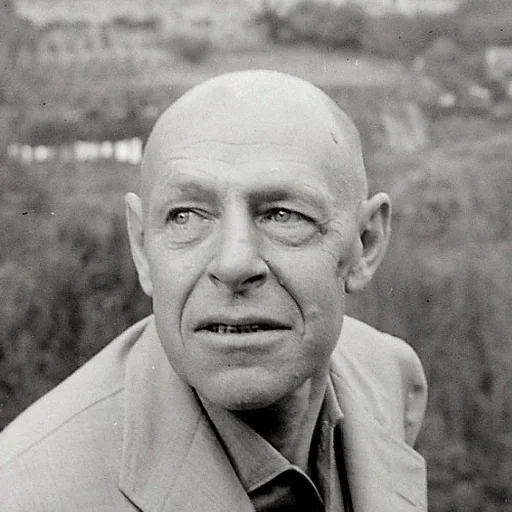
Jean Philippe Arthur Dubuffet (French pronunciation: ; 31 July 1901 – 12 May 1985) was a French painter and sculptor of the École de Paris (School of Paris).