Artwork
A Woman Emptying a Bucket
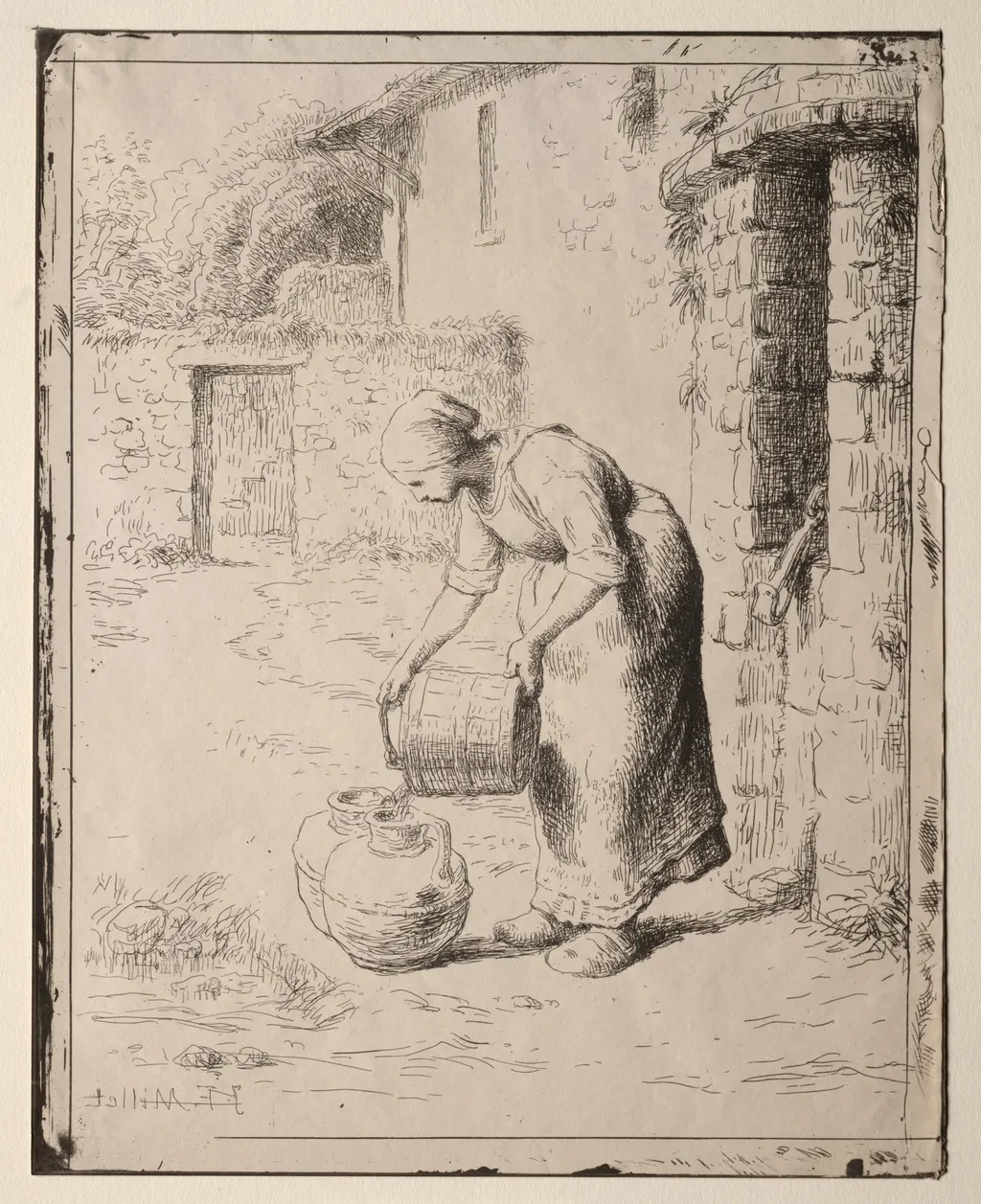
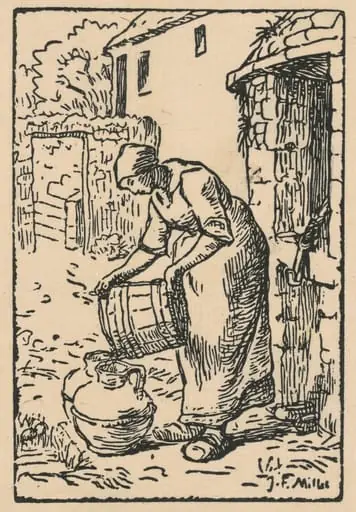
A Woman Emptying a Bucket is a print by the Impressionist artist Jean François Millet. It dates from 1862 and is held in the collection of the Cleveland Museum of Art. Created in 1862, this print by Jean-François Millet captures a moment of domestic labor with minimal detail and no embellishment.
About this work
Overview
Created in 1862, this print by Jean-François Millet captures a moment of domestic labor with minimal detail and no embellishment. Executed in a loose, rapid hand, it belongs to a series of studies focused on rural workers. Unlike finished paintings, this work prioritizes observation over polish, reflecting Millet’s commitment to documenting the rhythms of peasant life without romanticization.
Subject & Meaning
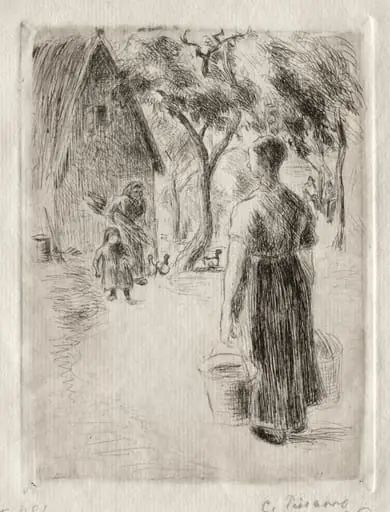
The figure is a woman engaged in a routine chore—emptying a bucket of water onto the earth. Her posture, bent and absorbed, conveys the physicality of daily toil. Millet avoids narrative drama, instead emphasizing the quiet dignity of unglamorous tasks. The subject’s anonymity reinforces the universality of such labor, presenting it as an unremarkable yet essential part of rural existence.
Technique & Style
Millet employed quick, uneven ink lines to suggest form and movement, leaving the composition deliberately sketchlike.
Millet employed quick, uneven ink lines to suggest form and movement, leaving the composition deliberately sketchlike. The background is reduced to faint, gestural marks of trees and a dwelling, offering only contextual hints. The absence of shading or refinement creates a sense of immediacy, as if the scene was recorded in passing. This approach aligns with the artist’s preference for direct observation over idealized composition.
History & Provenance
The work emerged during Millet’s sustained engagement with peasant subjects in the 1850s and 1860s, following his association with the Barbizon artists. While many of his larger paintings entered public collections, this print likely remained in private hands or served as preparatory material. Its survival reflects the artist’s habit of preserving studies as records of his visual inquiries.
Context
In mid-19th century France, urbanization and industrialization reshaped social structures, yet rural labor remained central to the economy. Millet’s focus on peasants countered prevailing artistic trends that favored historical or mythological themes. His sketches like this one contributed to a broader Realist movement that sought legitimacy in the ordinary, challenging elite aesthetic norms.
Legacy
Though not widely exhibited during his lifetime, Millet’s studies of laborers influenced later generations of artists committed to social realism. This print exemplifies his belief that art could derive meaning from unadorned truth. Its rawness continues to resonate as a quiet testament to the visibility of marginalized daily life in visual culture.
Artist & collection
Artist
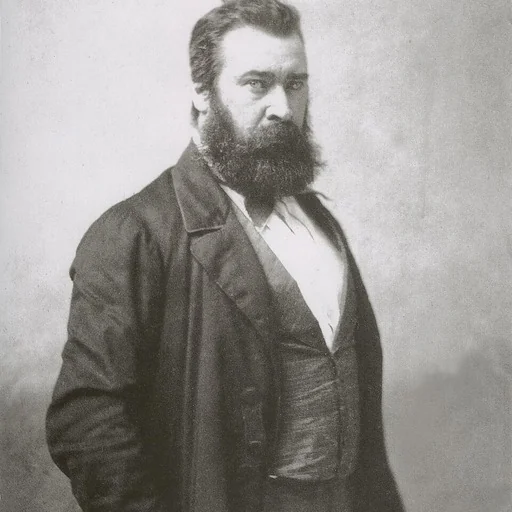
Jean-François Millet (French pronunciation: ; 4 October 1814 – 20 January 1875) was a French painter and one of the founders of the Barbizon school in rural France.

 Woman Filling a Water Jug (Femme vidant un seau)
 Petite Servante
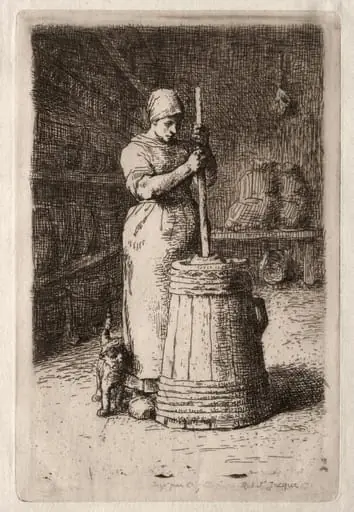 Woman Churning Butter
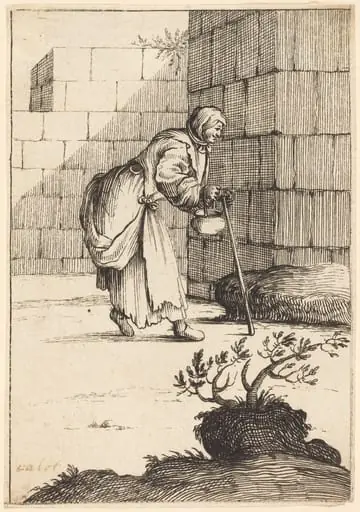 Beggar Woman
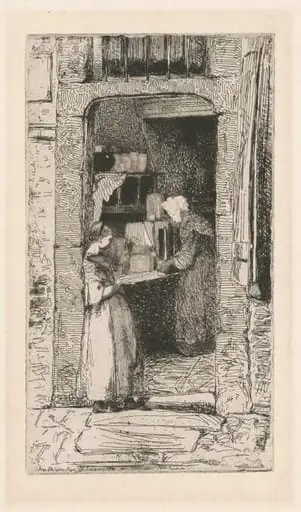 La Marchande de Moutarde
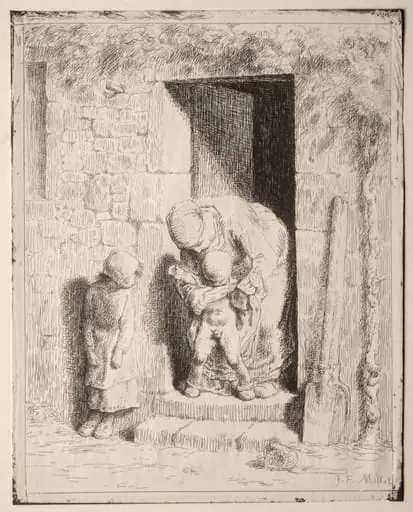 Maternal Precaution
 On the Fortifications at Saint-Ouen
 An Old Courtyard (New Orleans)
 Rustic House
 Specimens of Polyautography: The Lost Apple
 V'la plus de six francs que je perds...
 Peasant Woman Carrying Buckets