Artwork
V'la plus de six francs que je perds...
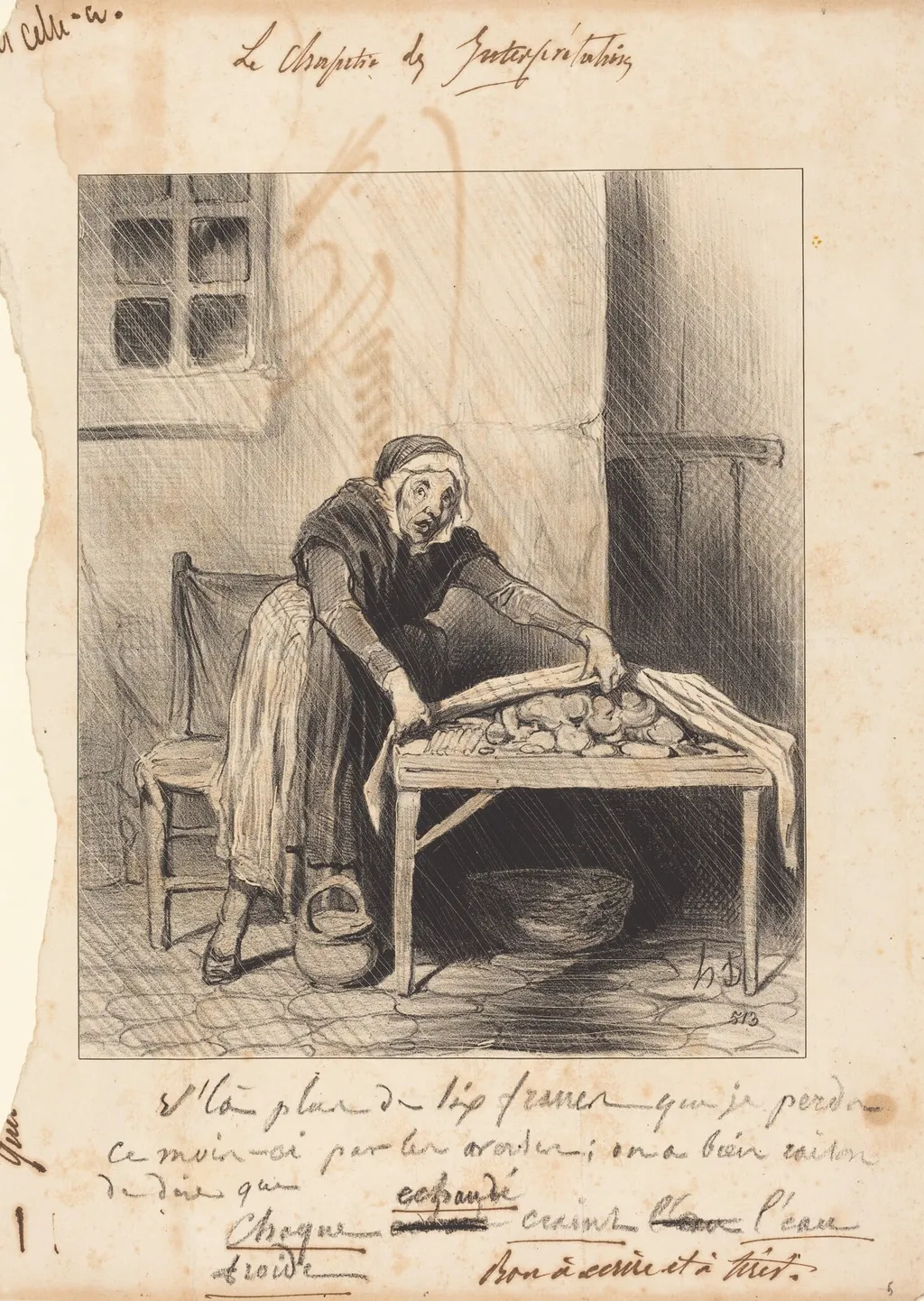
V'la plus de six francs que je perds... is an ink print by the Romanticist artist Honoré Daumier. It dates from 1843 and is held in the collection of the National Gallery of Art.
About this work
Overview
Created during the July Monarchy, the print reflects Daumier’s commitment to depicting the daily realities of ordinary French citizens.
This 1843 lithograph by Honoré Daumier captures a moment of quiet economic strain in a working-class home. Created during the July Monarchy, the print reflects Daumier’s commitment to depicting the daily realities of ordinary French citizens. Unlike grand historical scenes, it focuses on an unassuming figure engaged in a mundane act, revealing the weight of financial hardship through subtle observation rather than overt drama.
Subject & Meaning
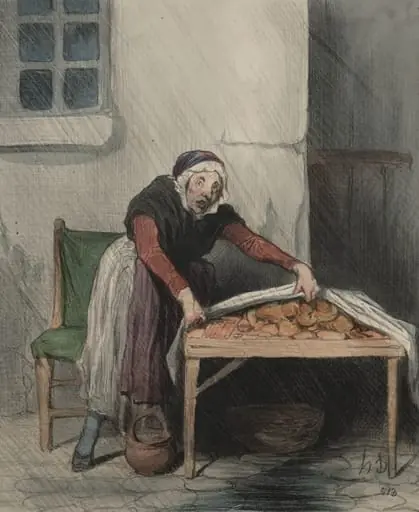
The woman, bent over a table with loaves of bread, appears to be counting or rationing food, her posture suggesting exhaustion and resignation. The scribbled text along the margins—possibly a lament over lost money—anchors the image in material struggle. Daumier frames her not as a caricature but as a silent witness to systemic inequality, transforming a domestic moment into a quiet indictment of economic neglect under the regime.
Technique & Style
Daumier employed lithography to achieve a spontaneous, sketch-like quality. The lines are loose yet deliberate, with textured shading suggesting fabric folds and the rough surface of bread. The cramped interior is rendered with minimal detail—just a chair, a basket, and a window with diamond panes—yet the atmosphere feels tangible. The handwritten notes, integrated into the composition, blur the line between image and testimony.
History & Provenance
Produced during Daumier’s prolific period contributing to satirical journals like *Le Charivari*, this print was likely distributed widely among urban readers. Though not signed or dated on the plate, its style and thematic concerns align with his known works from 1842–1844. Its survival in museum collections reflects its recognition as a significant example of 19th-century social commentary in print form.
Context
In the early 1840s, France faced rising bread prices and labor unrest under King Louis-Philippe. Daumier’s prints responded to these conditions, avoiding direct political figures to focus instead on the human cost. This image resonates with contemporary reports of urban poverty and the erosion of purchasing power among the working poor, making it a visual counterpart to social critiques emerging in literature and journalism.
Legacy
Daumier’s approach influenced later realist and socially engaged artists by demonstrating how everyday scenes could carry profound political weight. His use of lithography to capture fleeting, unidealized moments helped redefine printmaking as a medium for public discourse. This work remains a touchstone for its empathetic portrayal of economic vulnerability without sentimentality or spectacle.
Artist & collection

Artist
Honoré-Victorin Daumier was a French painter, sculptor, and printmaker, whose many works offer commentary on the social and political life in France, from the Revolution of 1830 to the fall of the Second French Empire in 1870.









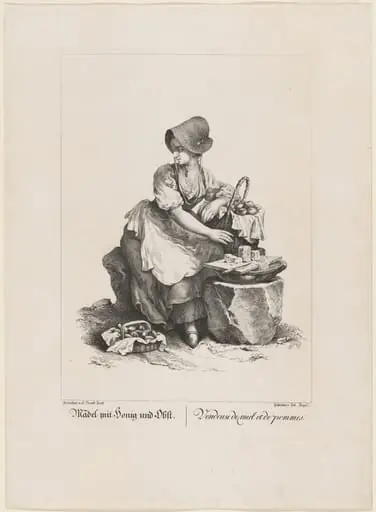 Mädel mit Honig und Obst (Girl Selling Honey and Fruit)
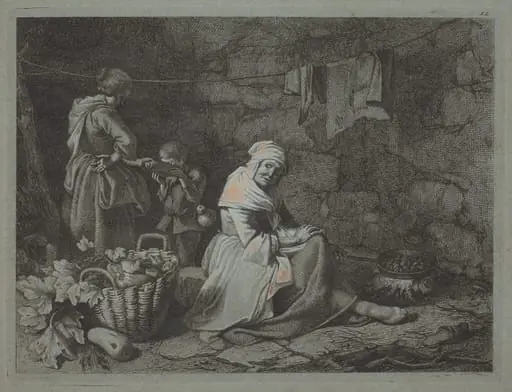 Interior of a House
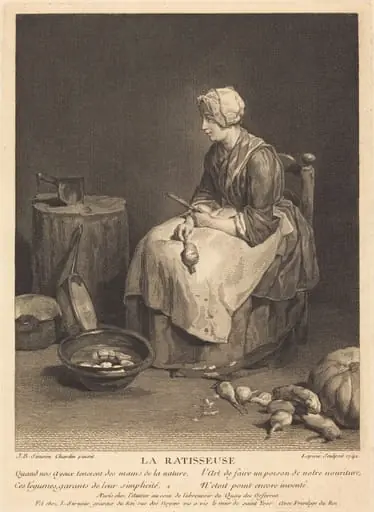 La ratisseuse
 A Woman Emptying a Bucket
 Interior of a Farmhouse
 Every scalded fears cold water.
 Old Woman Working
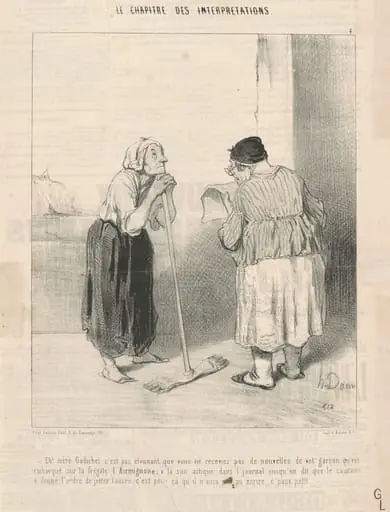 Eh! Mère Godichet c'est pas étonnant ...
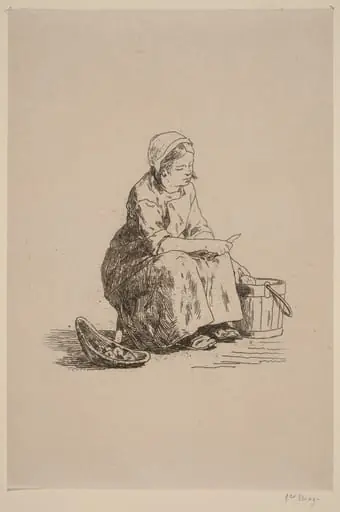 The Little Potato Peeler (La petite peleuse de pommes de terre)
![Oui, madame Chaboulard... vingt-quatre épiciers... [recto], by Honoré Daumier](https://artifactworldgallery.com/img/honore-daumier--oui-madame-chaboulard-vingt-quatre-epiciers-recto--e54ef32ef25a1625-w320.webp) Oui, madame Chaboulard... vingt-quatre épiciers... [recto]
Oui, madame Chaboulard... vingt-quatre épiciers... [recto]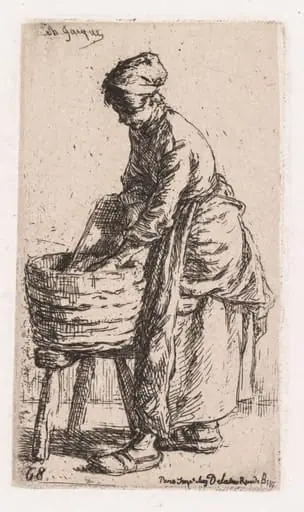 Washerwoman
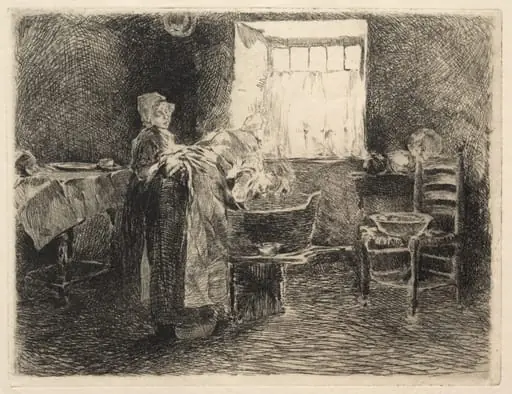 Monday Morning, Holland