Artwork
Beggar Woman
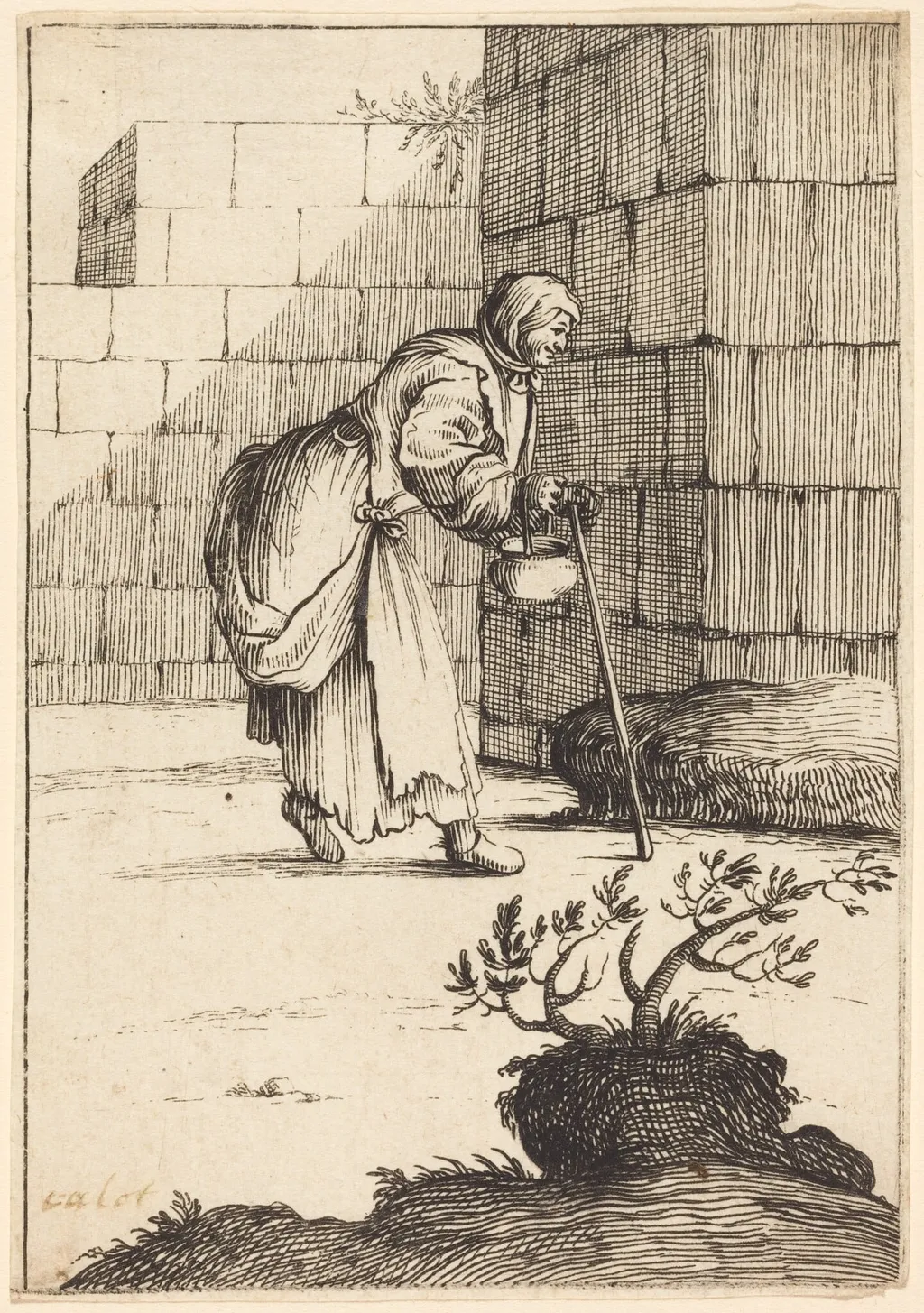
Beggar Woman is an ink print by the Baroque artist French 17th Century. It dates from 1601 and is held in the collection of the National Gallery of Art.
About this work
The details in her face and hands are interesting, they show the artist paid attention to how people lived back then.
This painting shows a woman begging on the street.
She's dressed in simple clothing and looks poor.
The details in her face and hands are interesting, they show the artist paid attention to how people lived back then.
The artist used simple lines to draw her, but you can still see her emotions.
This style was common for drawings of everyday people in the 17th century.
You can learn more about this style by looking into the technique: etching.
Overview
Beggar Woman is an etching on laid paper depicting a woman in a state of poverty. The print showcases the artist's attention to detail and ability to convey emotion through simple lines.
Subject & Meaning
The subject is a woman begging on the street, dressed in simple attire. Her facial expression and hand details convey a sense of hardship and vulnerability.
Technique & Style
The etching technique allowed the artist to achieve a range of tonal values and textures. The use of simple lines to convey emotion was characteristic of 17th-century depictions of everyday people.
Artist & collection

Artist
Seventeenth-century French printmakers turned ink into story. Their tools were burin and acid, paper their stage. Look at the Beggar Woman with Rosary (1622), etched on laid paper, her hands folded around faith, or The…


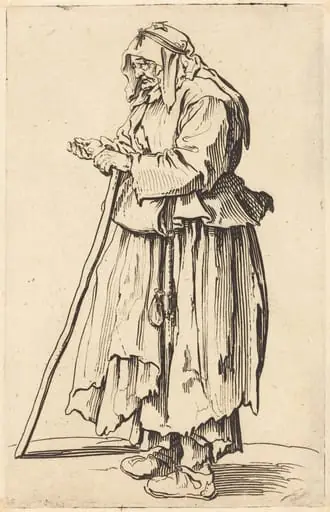 Beggar Woman Receiving Charity
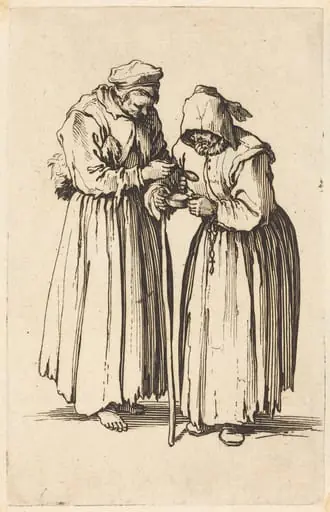 Two Beggar Women
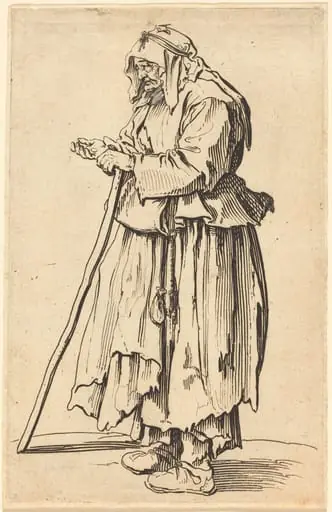 Beggar Woman Receiving Charity
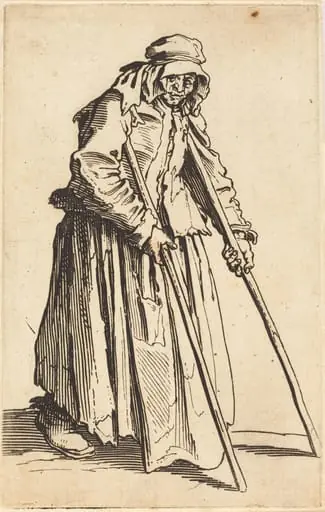 Beggar Woman with Crutches
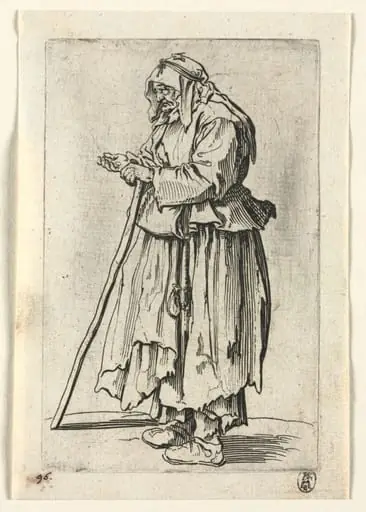 The Beggars: Beggar Woman Coming to Receive Alms
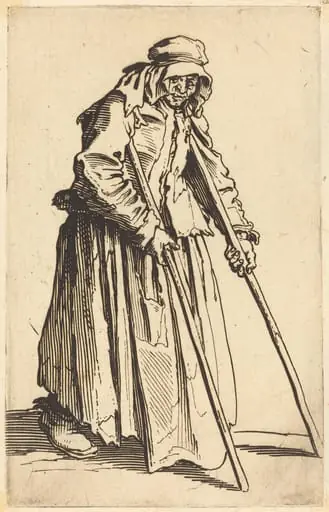 Beggar Woman with Crutches
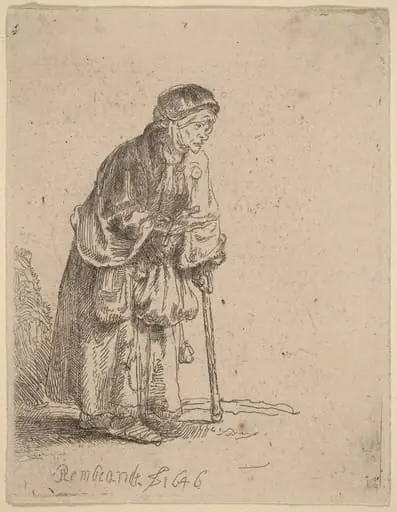 Beggar Woman Leaning on a Stick
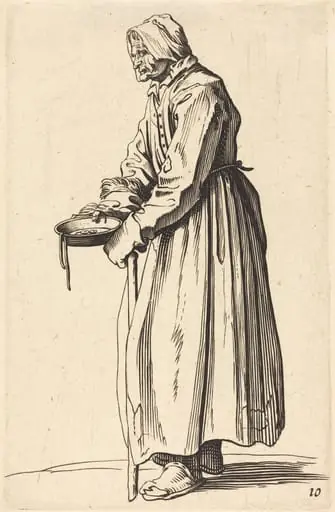 Beggar Woman with Pan
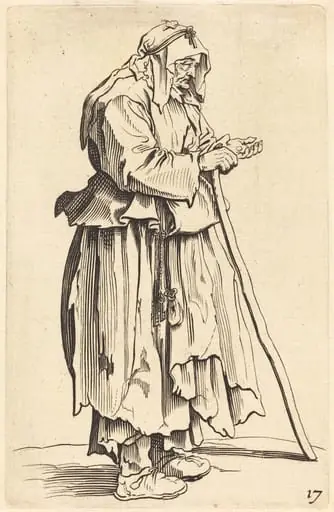 Beggar Woman Receiving Charity
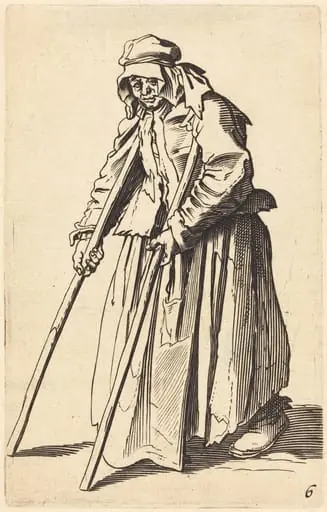 Beggar Woman with Crutches
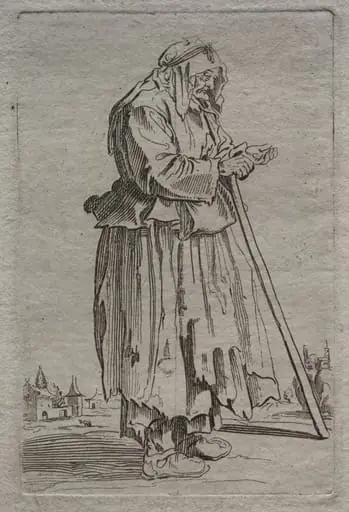 Old Beggar Woman
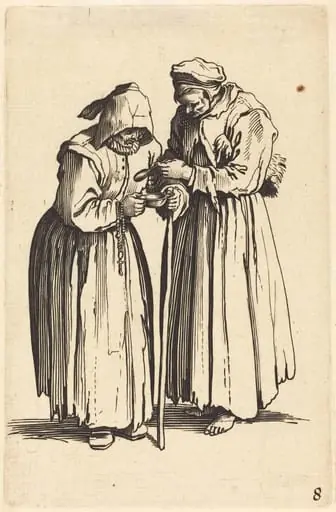 Two Beggar Women