Artwork
Landscape with a Terminal Figure
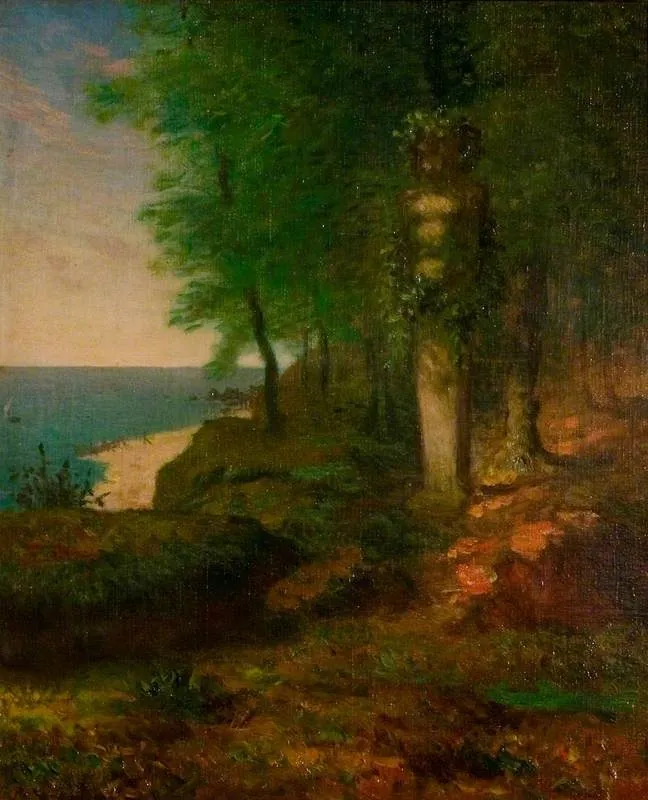
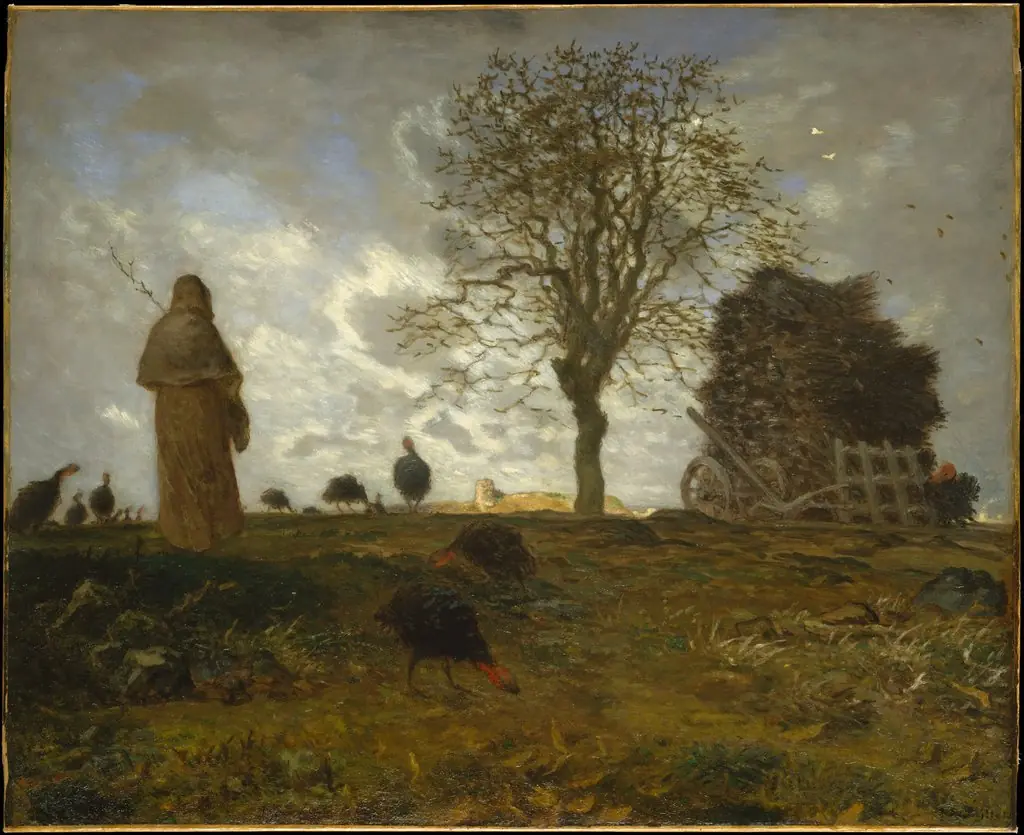
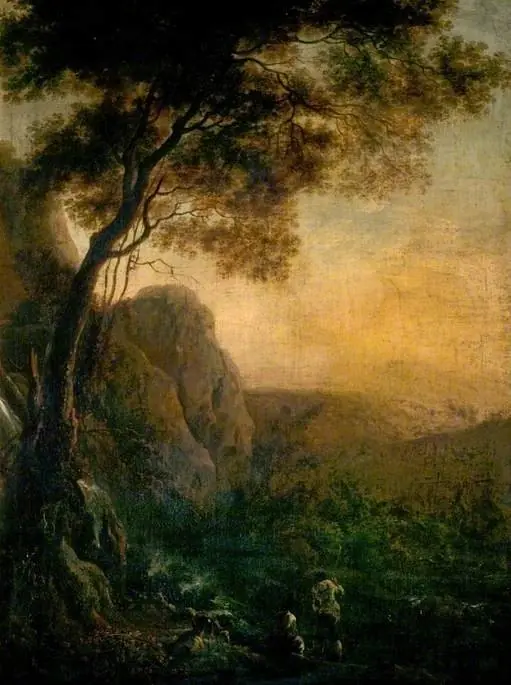
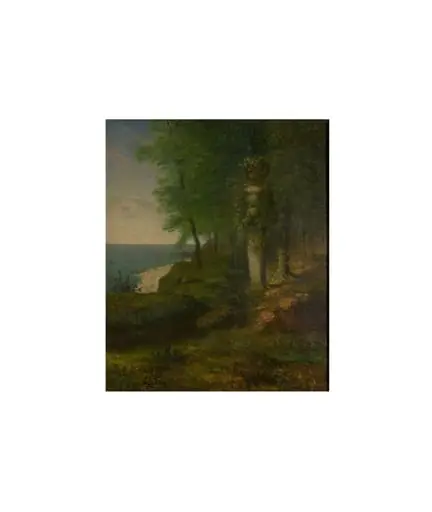
Landscape with a Terminal Figure is an oil painting by the Barbizon school artist Jean François Millet. It dates from 1864 and is held in the collection of the Victoria and Albert Museum.
About this work
Overview
Painted in 1864, *Landscape with a Terminal Figure* is an oil on canvas work by Jean-François Millet, reflecting his later shift from rural labor scenes to contemplative landscapes. Though associated with the Barbizon school’s commitment to naturalism, this piece marks a quieter phase in his career, where the human presence becomes a subtle element within nature rather than its central subject. It resides in the Victoria and Albert Museum’s collection.
Subject & Meaning
A solitary figure, cloaked in a long coat and hat, stands at the edge of a cliff, staff in hand, gazing toward the open sea.
A solitary figure, cloaked in a long coat and hat, stands at the edge of a cliff, staff in hand, gazing toward the open sea. The figure’s stillness and isolation suggest introspection or resignation, not narrative action. Unlike Millet’s earlier peasant studies, this person is anonymous, merged with the terrain. The scene evokes solitude and the quiet passage of time, inviting reflection rather than storytelling.
Technique & Style
Millet employed loose, textured brushwork to render the cliffside vegetation and rolling sea, avoiding fine detail in favor of atmospheric suggestion. The palette is restrained—dominated by earthy greens, muted browns, and soft grays—enhancing the painting’s somber tone. The composition directs the eye from the foreground figure toward the horizon, using subtle tonal gradations to convey depth and stillness without dramatic contrast.
History & Provenance
Created during Millet’s later years, the painting emerged as he increasingly turned from human subjects to the emotional resonance of land and sky. It entered the Victoria and Albert Museum’s collection in the late 19th or early 20th century, likely through acquisition or donation. Its provenance reflects the growing institutional interest in Barbizon works during that period, though it never achieved widespread public recognition.
Context
In the 1860s, Millet distanced himself from the social themes that defined his earlier career, influenced by personal reflection and the Barbizon school’s broader turn toward lyrical landscape. While contemporaries like Corot and Daubigny explored similar moods, Millet’s approach retained a grounded, almost austere quality. This work aligns with a wider 19th-century European interest in nature as a space for quiet contemplation, away from industrialization’s pace.
Legacy
Though less celebrated than his peasant scenes, *Landscape with a Terminal Figure* exemplifies Millet’s evolving sensitivity to mood and environment. It contributed to the legitimacy of landscape as a vehicle for emotional expression within Realism. Later artists, particularly those drawn to tonal harmony and subdued emotion, found in it a precursor to more abstracted naturalism in the early 20th century.
Artist & collection
Artist
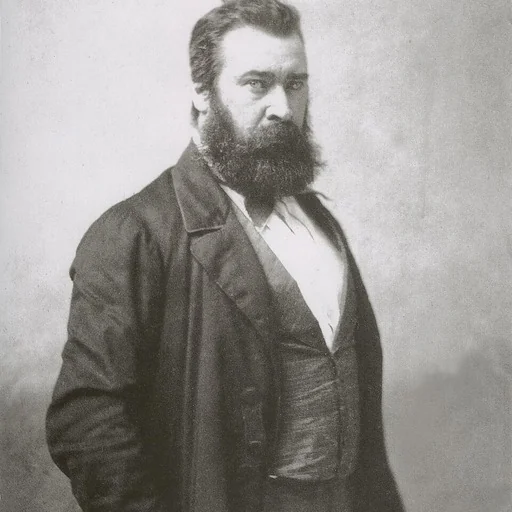
Jean-François Millet (French pronunciation: ; 4 October 1814 – 20 January 1875) was a French painter and one of the founders of the Barbizon school in rural France.