Artwork
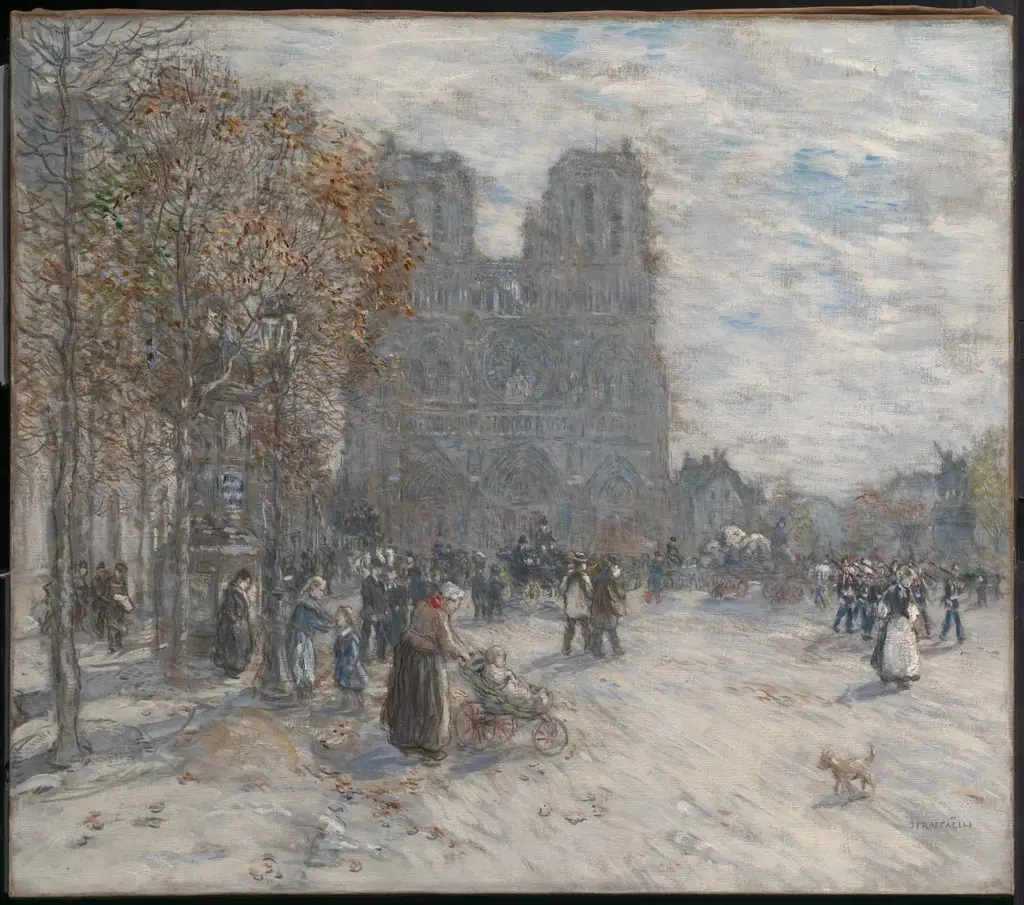
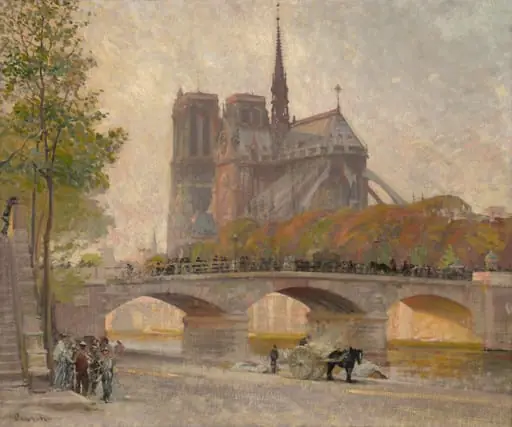
Notre Dame Seen from the Quai de la Tournelle
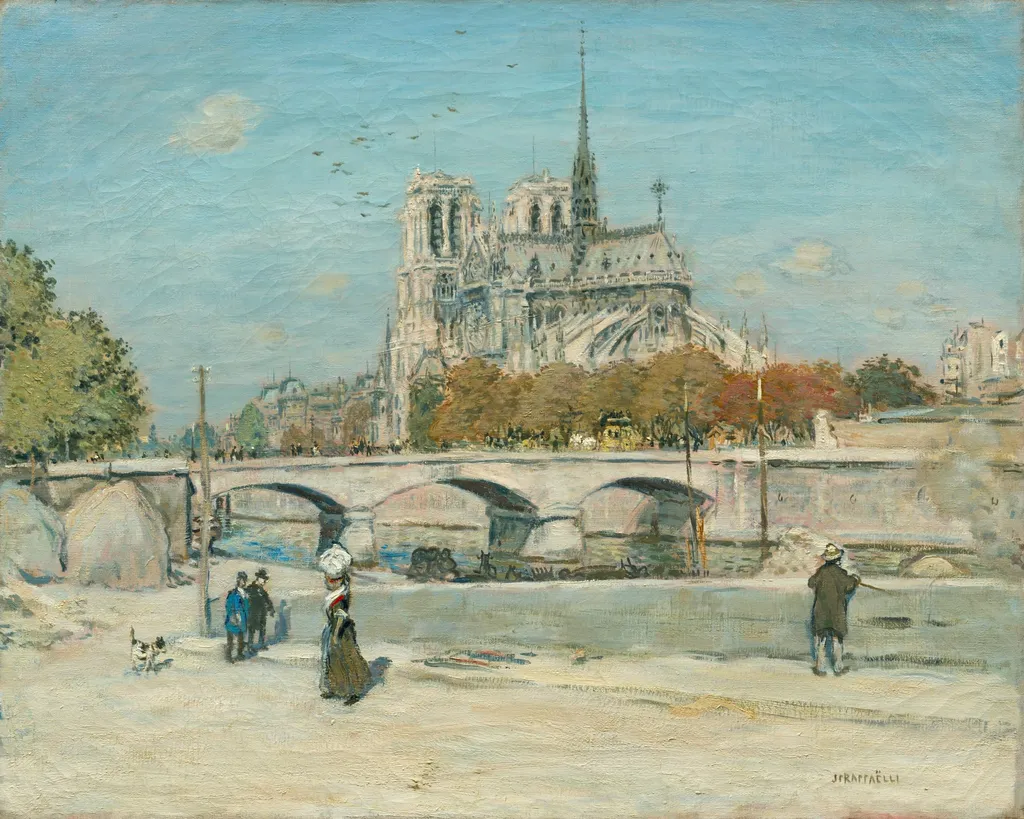
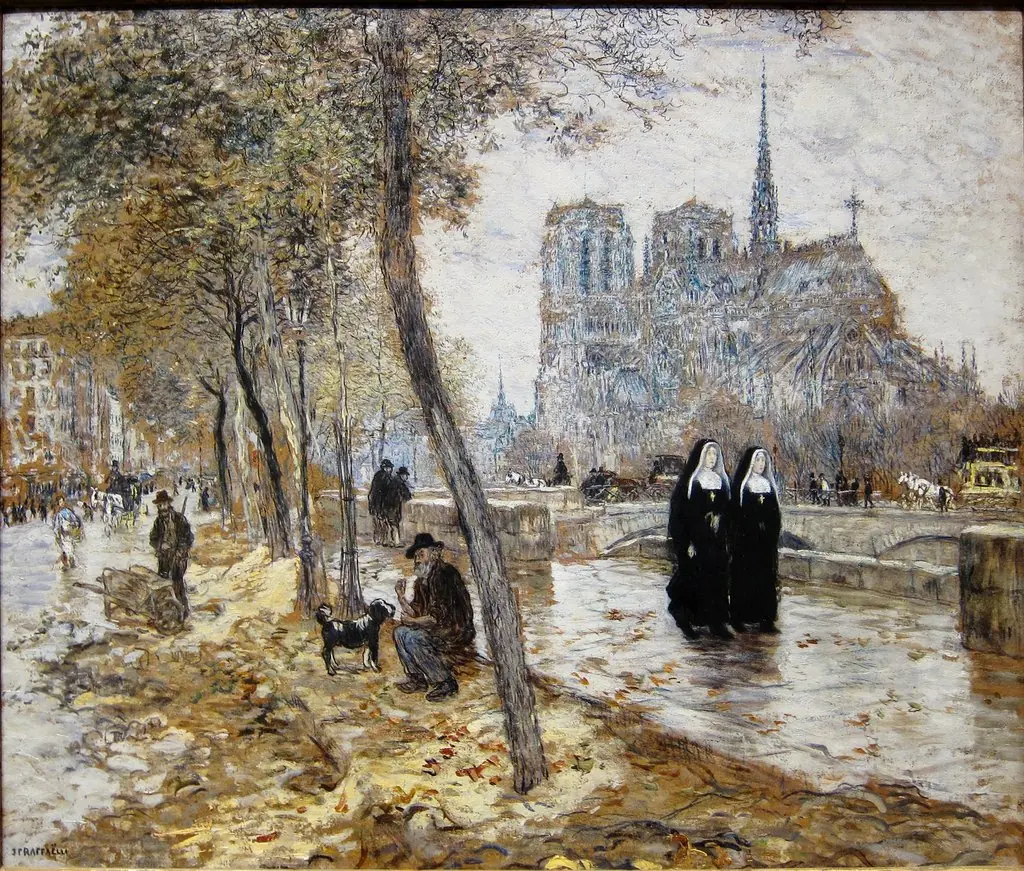
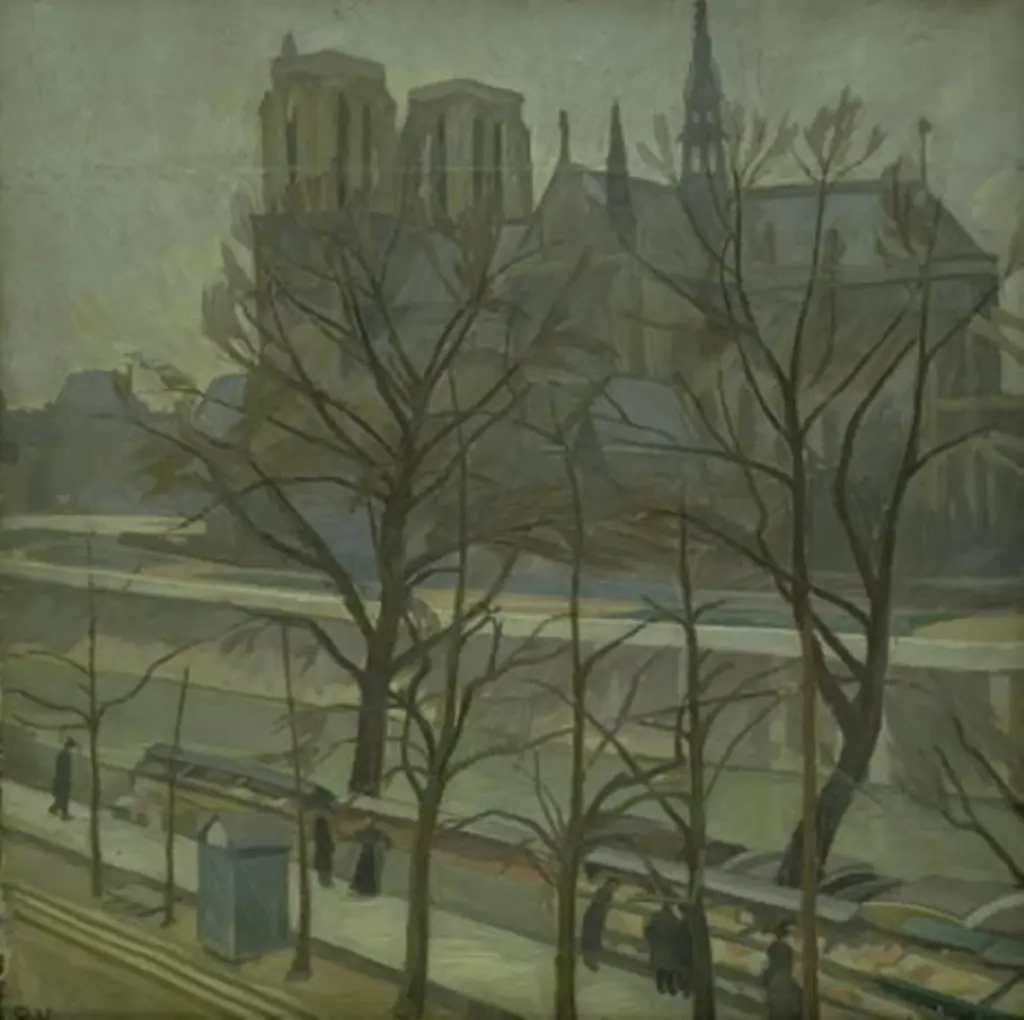
Notre Dame Seen from the Quai de la Tournelle is an unspecified painting by the Impressionist artist Jean-François Raffaëlli. It dates from 1900 and is held in the collection of the Cleveland Museum of Art.
About this work
Overview
Painted around 1900 by Jean-François Raffaëlli, this work captures a quiet riverside view of Notre-Dame Cathedral from the Quai de la Tournelle in Paris.
Painted around 1900 by Jean-François Raffaëlli, this work captures a quiet riverside view of Notre-Dame Cathedral from the Quai de la Tournelle in Paris. Though associated with the Impressionist exhibitions, Raffaëlli’s approach aligns more closely with post-Impressionist tendencies, emphasizing structure and atmosphere over fleeting light effects. The painting is part of the Cleveland Museum of Art’s permanent collection, reflecting its significance in late 19th-century French urban observation.
Subject & Meaning
The scene presents an unidealized moment of daily life along the Seine, with pedestrians—among them a woman in a long dress, a figure with a dog, and a man crouching—moving subtly through the foreground. Notre-Dame dominates the background, its Gothic spires rising above the trees, anchoring the composition in both physical and cultural space. The painting conveys a sense of quiet continuity, framing the cathedral not as a monument but as an ever-present element of ordinary existence.
Technique & Style
Raffaëlli employs loose, rapid brushwork to suggest form and movement without precise definition. The sky, water, and architecture are rendered with soft, broken strokes that convey atmosphere rather than detail. While reminiscent of Impressionist methods, the underlying structure of the bridge and cathedral is more deliberate, indicating a move toward post-Impressionist concerns with solidity and spatial organization beneath the surface immediacy.
History & Provenance
Created near the turn of the century, the painting emerged during a period when Raffaëlli was actively exhibiting alongside Impressionists, though his style remained distinct. It entered the Cleveland Museum of Art’s collection through established acquisition channels, likely in the early 20th century, as part of broader efforts to document French realist and post-Impressionist developments. Its provenance reflects institutional interest in artists who bridged naturalism and modernist experimentation.
Context
Raffaëlli’s depiction of Notre-Dame from the riverbank aligns with a broader trend among Parisian artists who turned to the city’s edges and everyday vistas rather than grand historical narratives. The Quai de la Tournelle, a modest public space, offered a view unmediated by tourism or ceremony. This perspective reflects a shift in artistic focus toward authentic, unembellished urban experience during a time of rapid modernization.
Legacy
Though less celebrated than his Impressionist contemporaries, Raffaëlli’s work contributes to the understanding of how realism evolved into more structured modern approaches. His treatment of architecture and pedestrian life influenced later artists interested in the interplay between urban form and human activity. The painting remains a quiet testament to the dignity of ordinary observation in a changing Paris.
Own this work as a print
Artist & collection
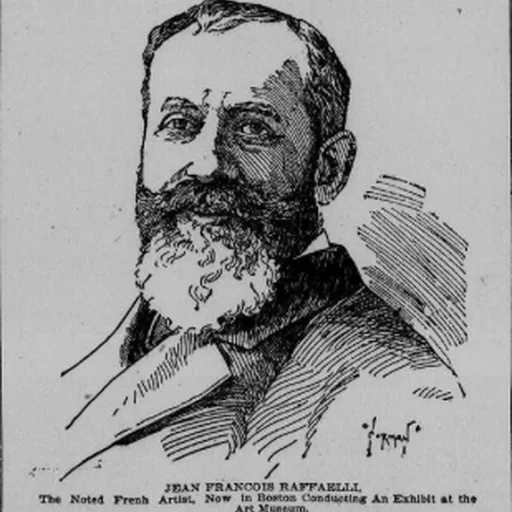
Artist
Jean-François Raffaëlli (April 20, 1850 – February 11, 1924) was a French realist painter, sculptor, and printmaker who exhibited with the Impressionists. He was also active as an actor and writer.