Artwork
St.-Etienne-du-Mont, Paris
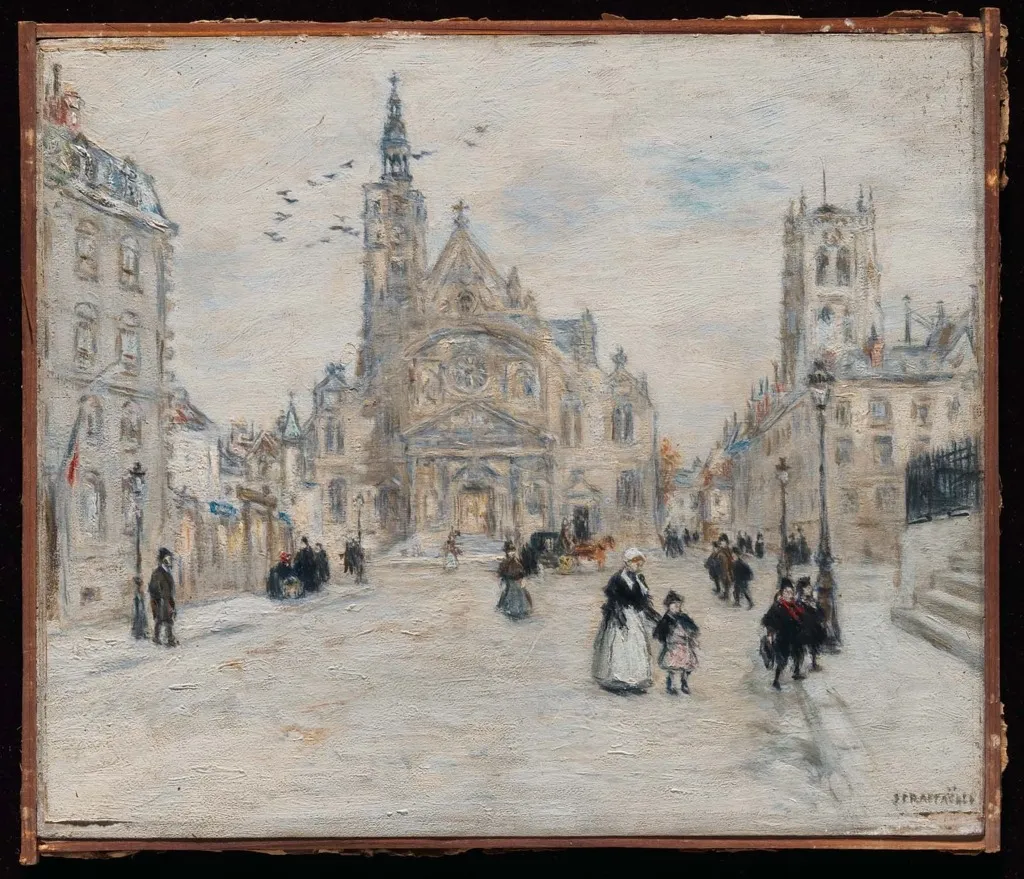
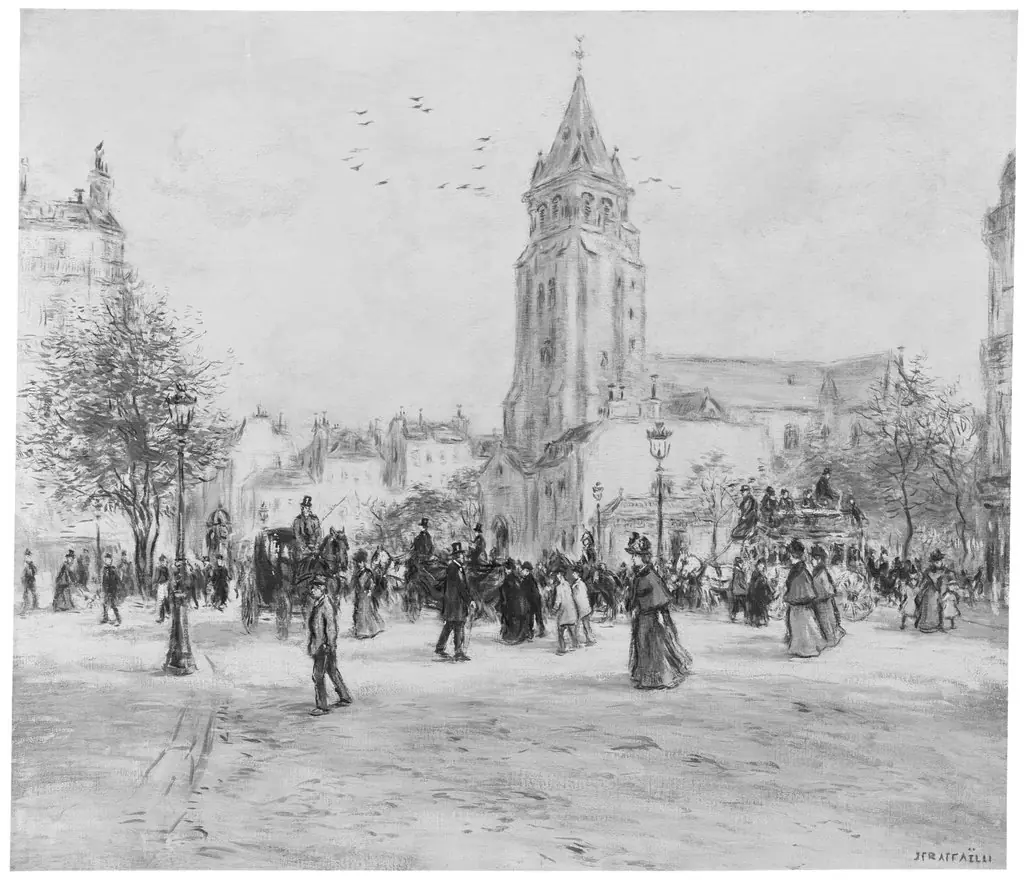
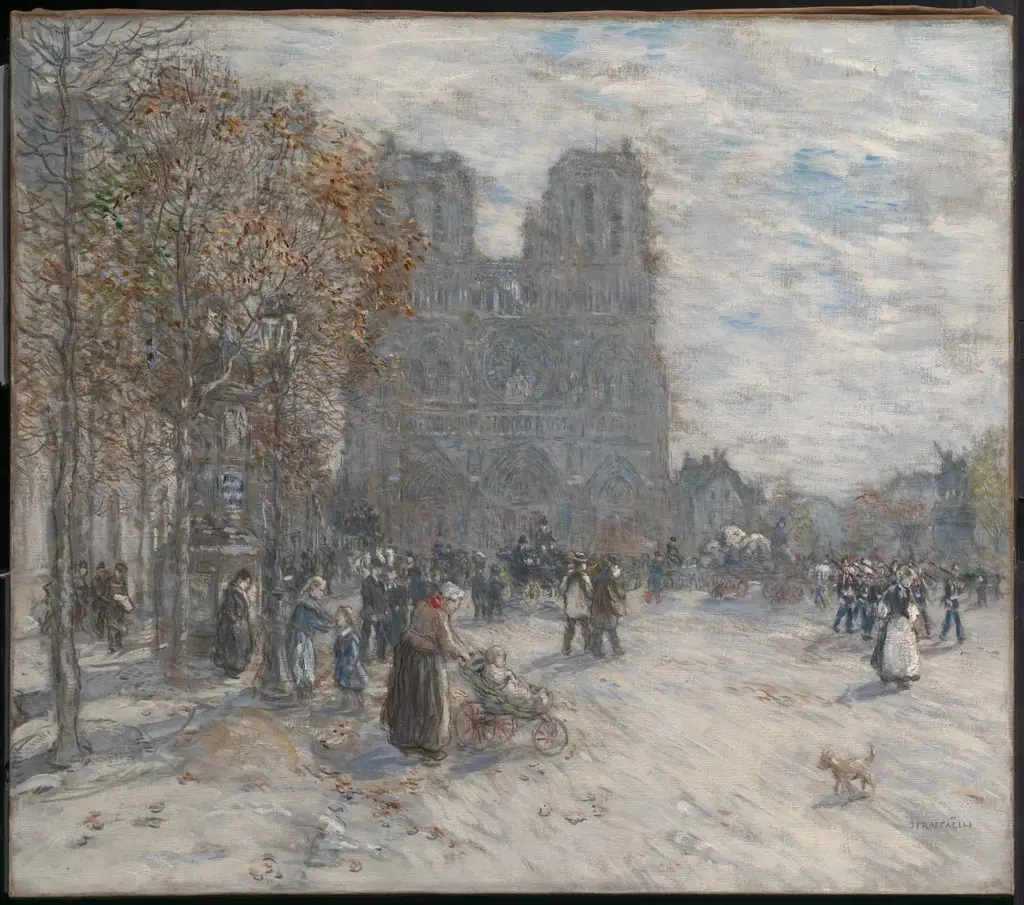
St.-Etienne-du-Mont, Paris is an unspecified painting by the Post-Impressionist artist Jean-François Raffaëlli. It dates from 1899 and is held in the collection of the Museum of Fine Arts Boston.
About this work
Overview
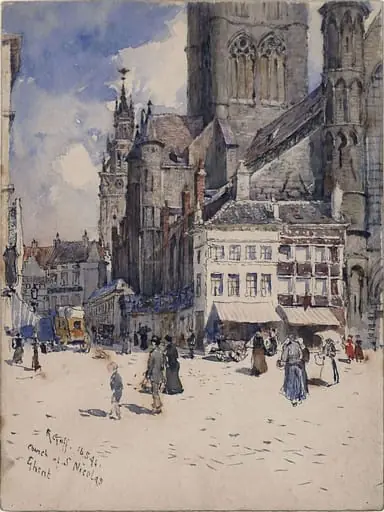
Painted in 1899, this work by Jean-François Raffaëlli presents a quiet urban vista centered on the Parisian church of Saint-Étienne-du-Mont.
Painted in 1899, this work by Jean-François Raffaëlli presents a quiet urban vista centered on the Parisian church of Saint-Étienne-du-Mont. Executed in a realist mode, it reflects the artist’s interest in ordinary city life rather than idealized or dramatic subjects. Though associated with the Impressionist exhibitions, Raffaëlli’s approach here leans toward careful observation over atmospheric effect, capturing the texture of daily movement around a historic landmark.
Subject & Meaning
The painting centers on the church’s ornate façade, a fixture of Parisian religious and civic identity, framed by a street populated by pedestrians in varied attire. Figures move with subdued purpose—some in formal coats, others in simpler garments—suggesting a cross-section of urban society. The church stands not as a symbol of grandeur, but as a quiet anchor in the rhythm of everyday life, its presence woven into the fabric of the neighborhood rather than towering above it.
Technique & Style
Raffaëlli employed a restrained palette of grays, browns, and beiges to convey the muted light of a Parisian day. Brushwork is precise yet unobtrusive, emphasizing architectural detail without ornamentation. The figures are rendered with economical strokes, their forms suggested rather than fully modeled, allowing the structure of the church to dominate the composition. This method aligns with realist traditions that prioritize observational accuracy over expressive brushwork.
History & Provenance
Created in 1899, the painting entered the collection of the Museum of Fine Arts, Boston, where it remains today. Raffaëlli, known for his depictions of Parisian street life and working-class subjects, produced this work during a period when he was increasingly focused on architectural scenes. Its acquisition by the museum reflects early 20th-century interest in French realist depictions of urban environments beyond the more celebrated Impressionist subjects.
Context
In late 19th-century Paris, artists increasingly turned to the city’s evolving streetscapes as subjects. Raffaëlli’s depiction of Saint-Étienne-du-Mont aligns with a broader trend of documenting architectural heritage amid modernization. Unlike the fleeting moments favored by Impressionists, his work emphasizes permanence—the enduring presence of the church against the transient flow of pedestrians, offering a counterpoint to the era’s rapid urban change.
Legacy
Raffaëlli’s painting contributes to a body of work that documented Parisian life with quiet dignity, avoiding both romanticism and overt social commentary. While less widely known than his Impressionist peers, his focus on ordinary scenes and architectural detail influenced later realist and urban landscape painters. The work endures as a measured record of a specific place and time, valued for its unembellished observation rather than stylistic innovation.
Artist & collection
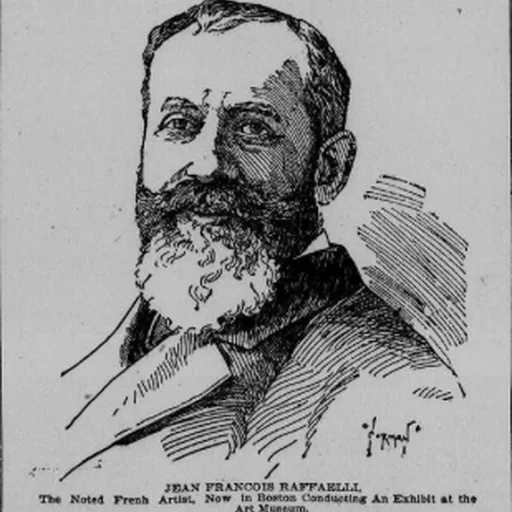
Artist
Jean-François Raffaëlli (April 20, 1850 – February 11, 1924) was a French realist painter, sculptor, and printmaker who exhibited with the Impressionists. He was also active as an actor and writer.