Artwork
Chartres Cathedral
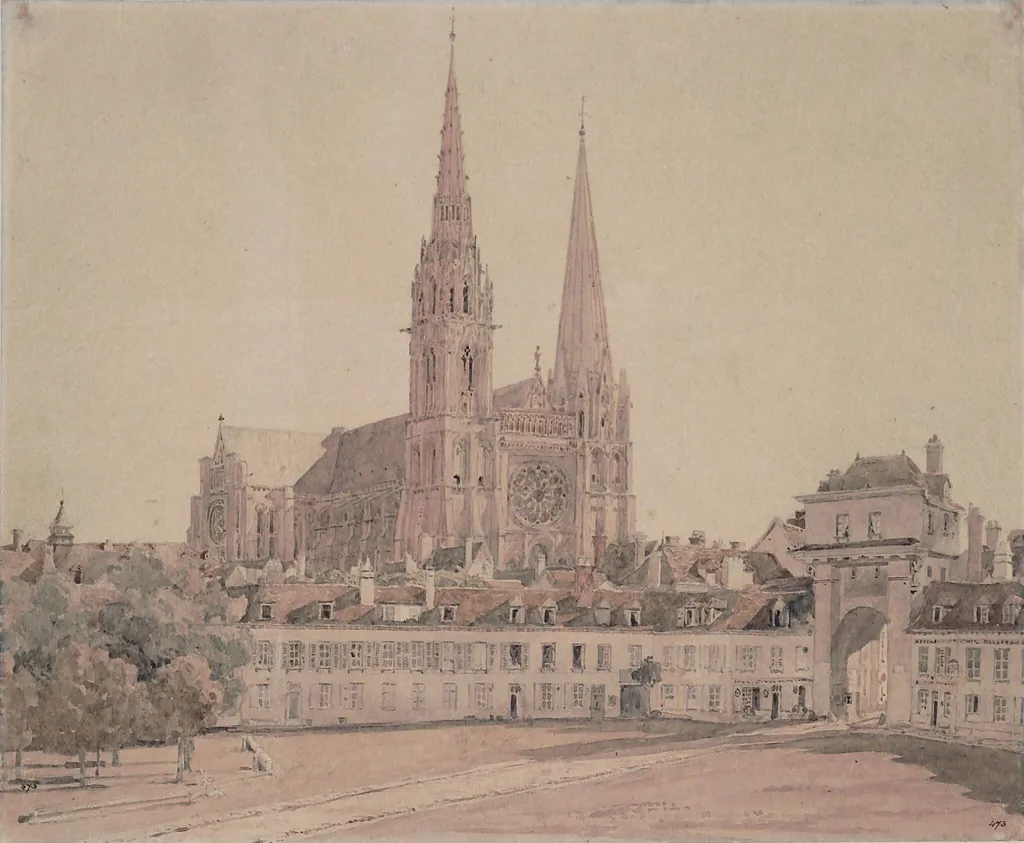
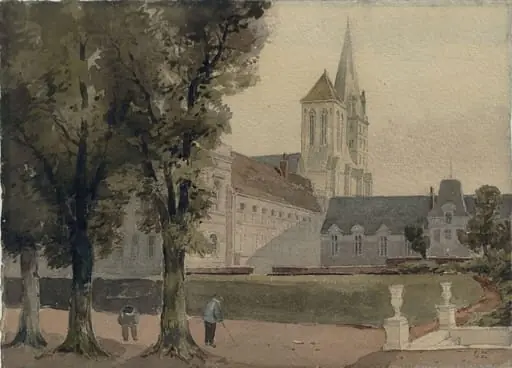
Chartres Cathedral is a watercolor work on paper by the Romanesque artist Charles Wild. It dates from 1850 and is held in the collection of the Victoria and Albert Museum.
About this work
Overview
Charles Wild’s watercolor of Chartres Cathedral, dated around 1850, is part of the Victoria and Albert Museum’s collection. The work depicts the French Gothic structure with its twin spires, stone façades, and numerous arched windows, set against a modest foreground of trees and adjacent buildings.
Subject & Meaning
The composition focuses on the cathedral’s architectural grandeur, emphasizing the vertical thrust of its spires and the rhythmic pattern of its arches. By placing the edifice within a tranquil landscape, Wild highlights the interplay between sacred architecture and its surrounding environment.
Technique & Style
Executed in watercolor, the painting achieves a delicate atmospheric quality. Wild employs a restrained palette of light and dark tones to model volume, while the fluid washes convey the stone’s texture and the subtle gradations of sky and foliage, creating depth without heavy detailing.
History & Provenance
Created circa 1850, the piece entered the Victoria and Albert Museum’s holdings, where it remains accessible to the public. Its attribution to Wild, a noted 19th‑century British watercolourist, situates the work within the period’s broader interest in documenting historic European architecture.
Artist & collection
Artist
Charles Wild painted precise watercolours of grand old buildings in early 19th-century England.

 Lisieux, Normandy
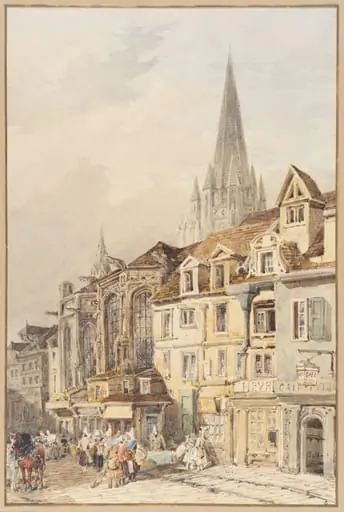 View at Caen, Normandy
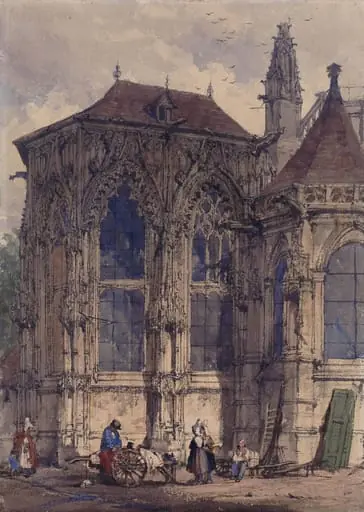 East End of the Church of St. Jacques, Dieppe
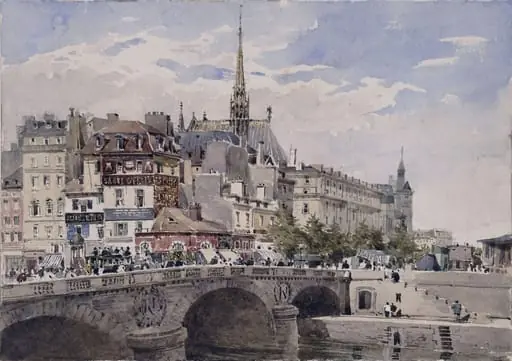 Sainte Chapelle, Palais de Juste, Paris,
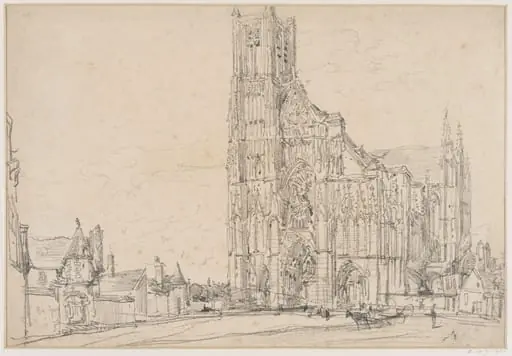 Exterior view of a church in France
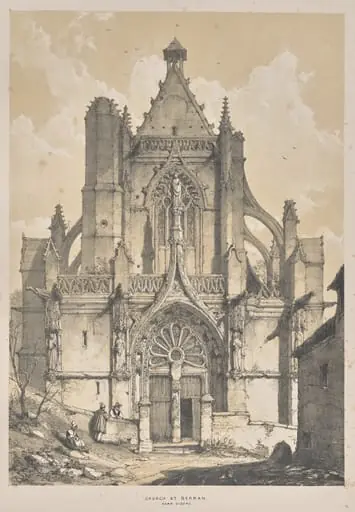 Architecture of the Middle Ages: Church at Serran, near Gisore
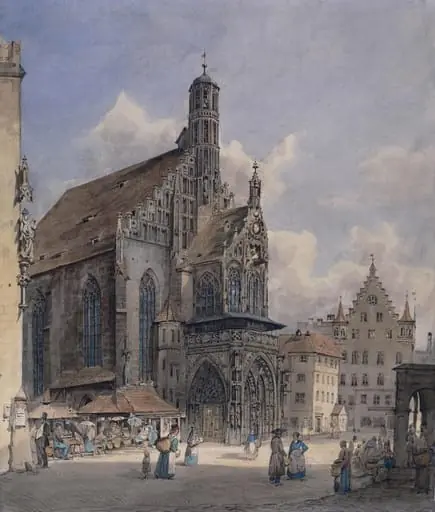 Market place, Nuremberg
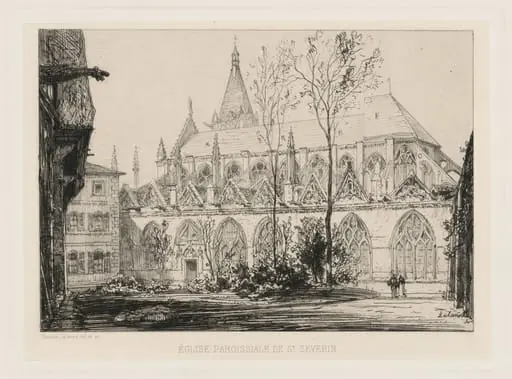 Église Paroissiale de St. Séverin
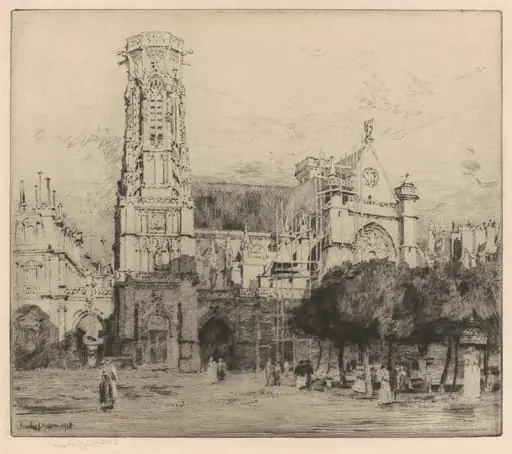 Saint Germain, L'Auxerrois