Artwork
View at Caen, Normandy
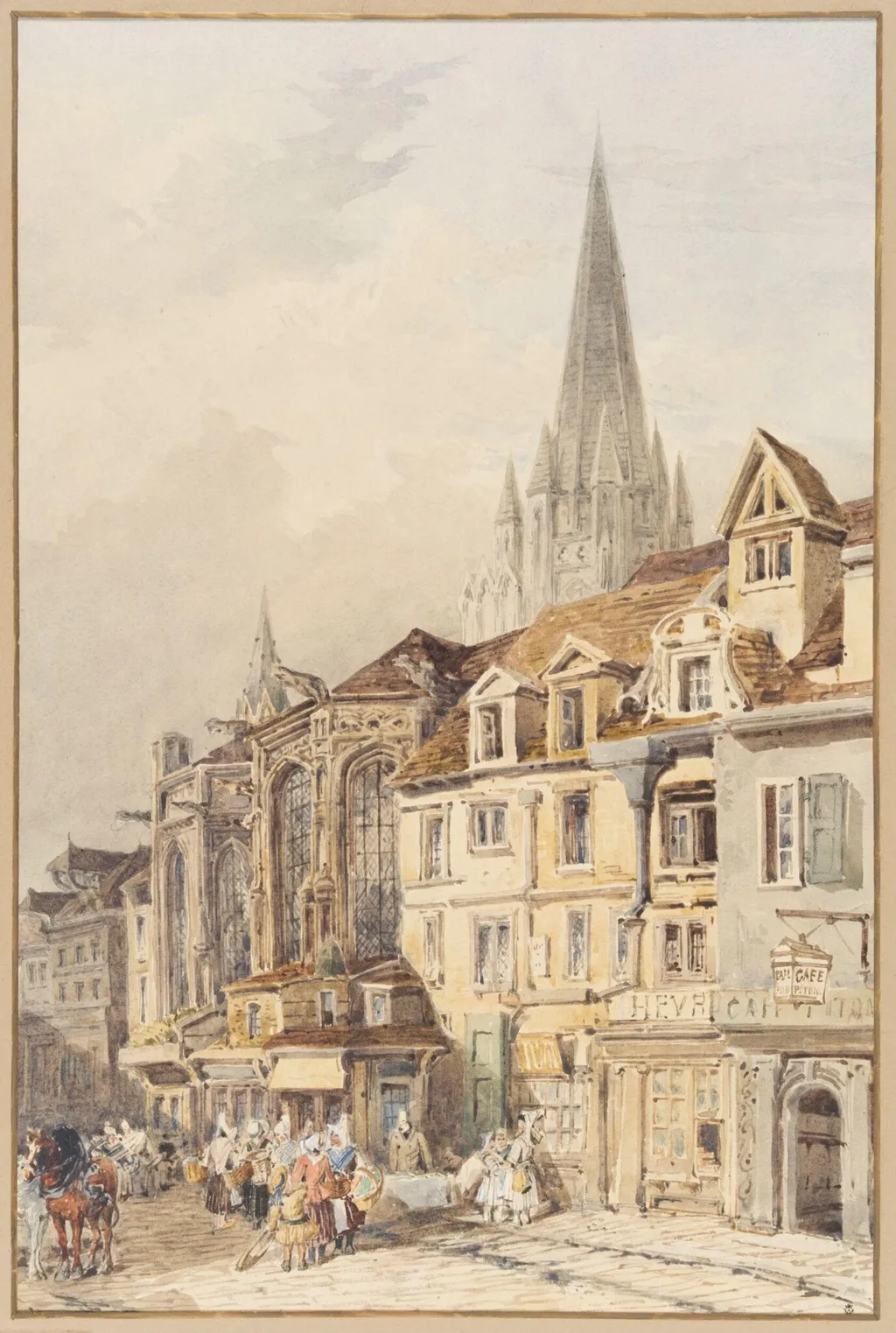
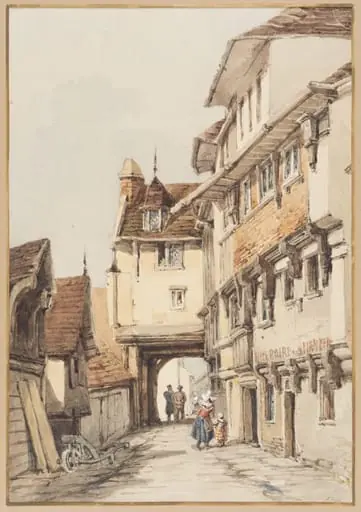
View at Caen, Normandy is a watercolor work on paper by Charles Claude Pyne. It dates from 1850 and is held in the collection of the Victoria and Albert Museum. This watercolour captures a quiet yet active street in Caen, Normandy, rendered in soft, translucent washes.
About this work
Overview
The artist’s delicate handling of light and atmosphere suggests a momentary pause in daily life, neither bustling nor still.
This watercolour captures a quiet yet active street in Caen, Normandy, rendered in soft, translucent washes. The composition centers on a narrow urban thoroughfare lined with closely spaced buildings featuring steeply pitched roofs. A prominent cathedral spire rises behind the scene, anchoring the view in place and time. The artist’s delicate handling of light and atmosphere suggests a momentary pause in daily life, neither bustling nor still.
Subject & Meaning
The scene portrays ordinary urban life in 19th-century Caen, with market stalls and pedestrians engaged in routine activities. Figures in long coats and wide-brimmed hats move along the cobbled street, accompanied by horse-drawn carriages. The presence of a café sign and market goods implies local commerce, while the cathedral looms as a constant civic and spiritual landmark. The painting reflects the rhythm of provincial French town life without overt narrative or symbolism.
Technique & Style
Executed in watercolour, the work employs loose, fluid brushwork and layered washes to suggest texture and depth without sharp definition. Buildings are rendered with minimal detail, their forms suggested through tone and shadow rather than precise line. The sky and pavement are softly graded, allowing natural light to unify the scene. The technique prioritizes mood over precision, characteristic of topographical watercolours of the period.
History & Provenance
The watercolour is part of a collection held by the Victoria and Albert Museum, acquired as part of a broader effort to document British and European topographical art. Its origin traces to the mid-19th century, likely painted by a British artist traveling in Normandy. No specific artist has been definitively identified, but the style aligns with amateur and professional watercolourists who recorded regional architecture during the period.
Context
In the 1800s, watercolour was widely used for recording landscapes and urban scenes, especially among travelers and amateur artists. Caen, with its medieval architecture and post-revolutionary stability, attracted such observers. This work fits within a tradition of documentary watercolours that valued accuracy in setting over dramatic expression, serving as visual records for those unable to travel themselves.
Legacy
Though unsigned and unattributed, the painting contributes to a historical archive of French provincial life as seen through foreign eyes. Its preservation in a major museum underscores its value as an example of 19th-century topographical watercolour practice. It remains a quiet testament to the everyday textures of a town whose architectural character has endured into the present.
Artist & collection

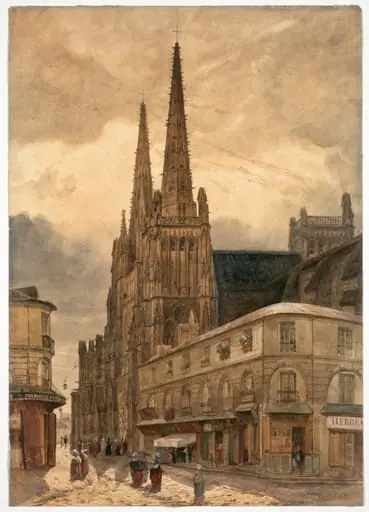 Cathédrale Sainte-André de Bordeaux
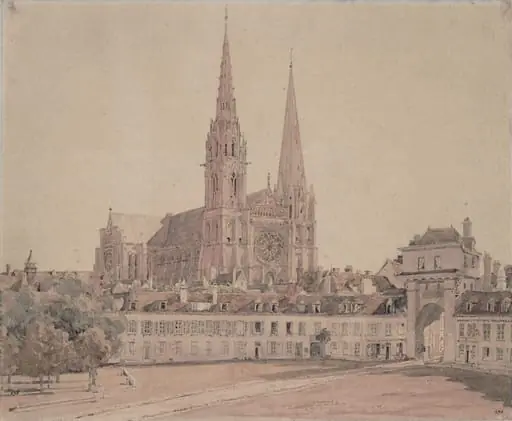 Chartres Cathedral
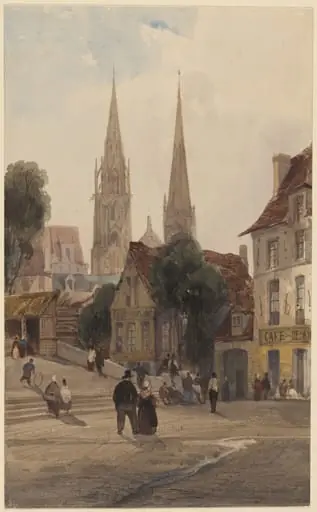 A Street in Chartres
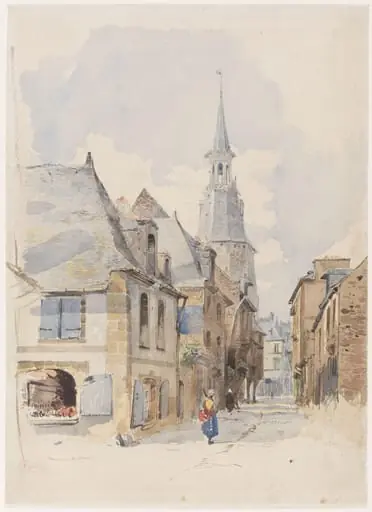 Street in Dinan
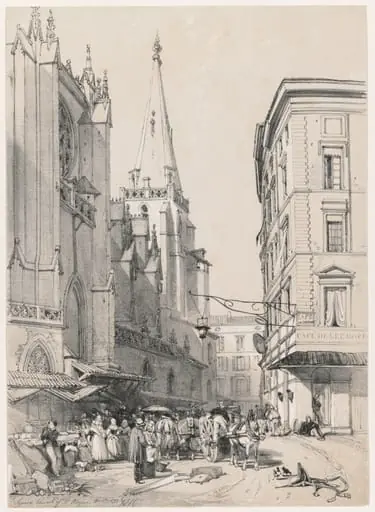 Sketches at Home and Abroad: Lyons Church of St. Hezier, October 1832
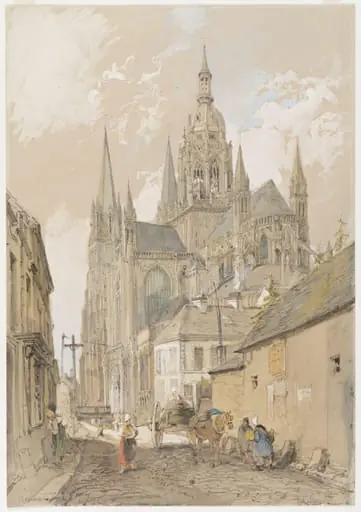 Bayeux Cathedral: View from the South-East
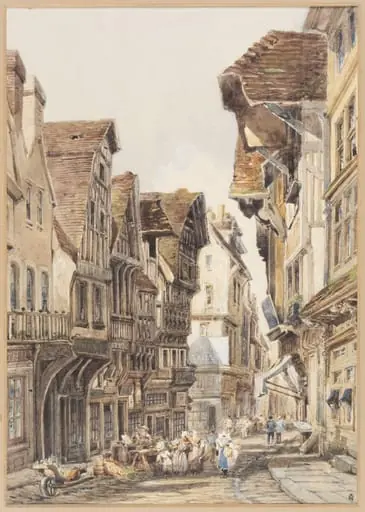 Old Houses at Lisieux, Normandy
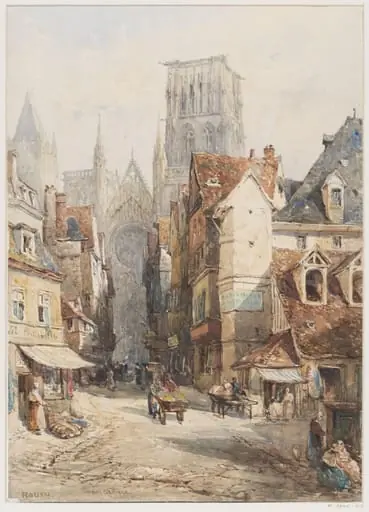 Rouen. The South Porch and Towers of the Cathedral, seen from Rue du Bac
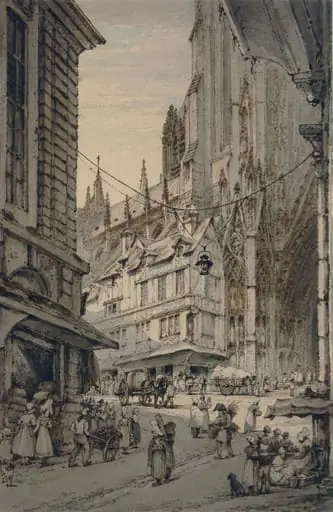 Rouen
Rouen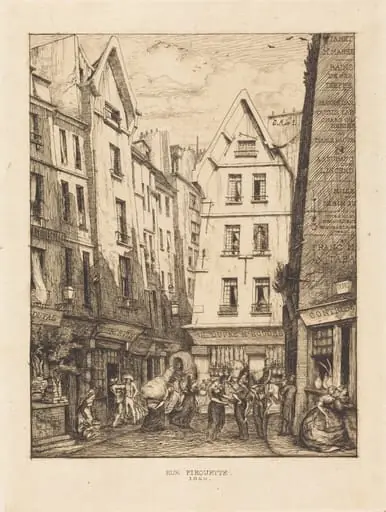 La Rue Pirouette aux halles, Paris (Pirouette Street, Near the Markets, Paris)
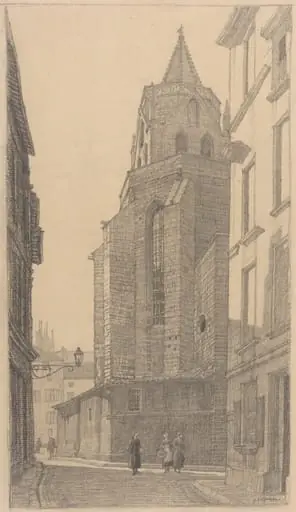 Apse of St.-Didier, Avignon
 Timber Houses, Normandy