Artwork
Bacchanales: Nymph Astride a Satyr
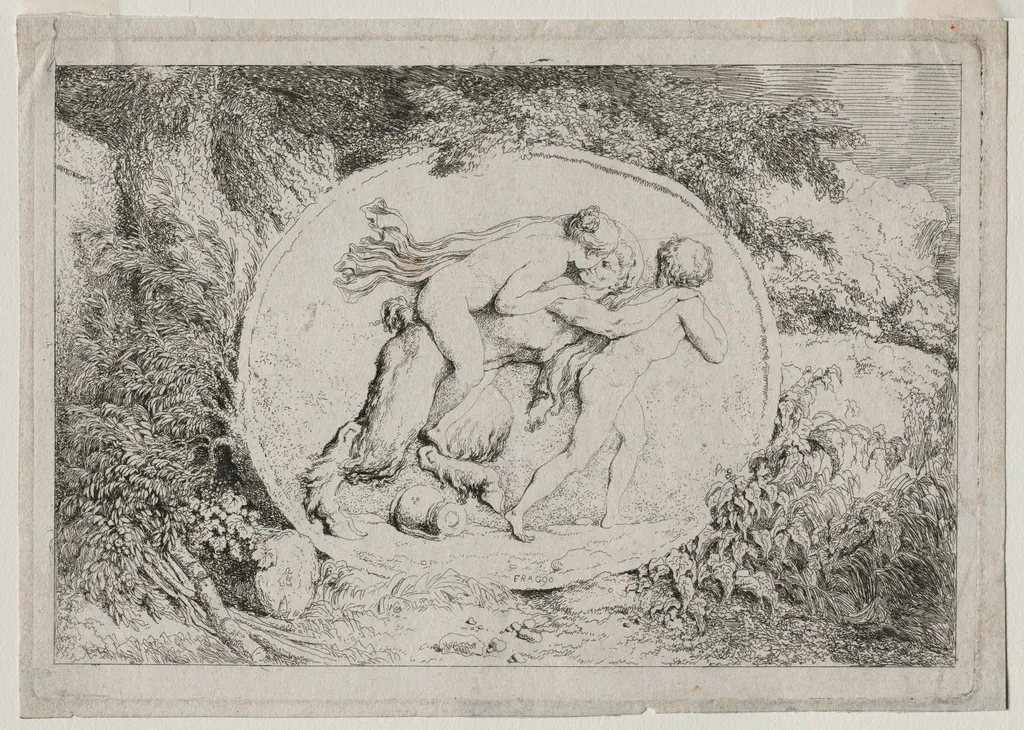
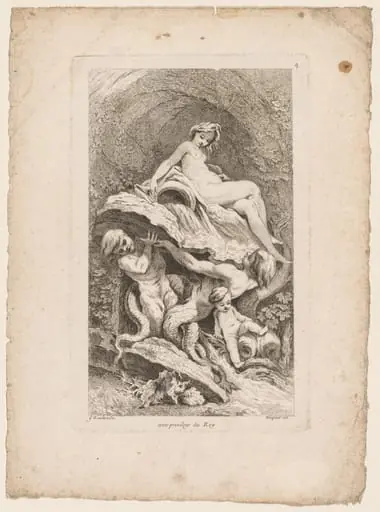
Bacchanales: Nymph Astride a Satyr is a print by the Romanticist artist Jean Honoré Fragonard. It dates from 1763 and is held in the collection of the Cleveland Museum of Art. Created in 1763, this etching depicts a nymph astride a satyr, clutching a vine while the satyr smiles broadly.
About this work
The nymph holds a vine while the satyr grins, his fur and muscles drawn with quick, bouncy lines.
This playful 1763 etching shows a nymph riding a satyr like a horse. The nymph holds a vine while the satyr grins, his fur and muscles drawn with quick, bouncy lines. Their bodies twist in a lively dance.
Fragonard made these four prints after studying ancient art in Italy. He skipped the wine god Bacchus and focused on the rowdy fun of his followers instead.
Look up Jean-Honoré Fragonard (French, 1732–1806) to see more of his loose, joyful style.
Overview
Created in 1763, this etching depicts a nymph astride a satyr, clutching a vine while the satyr smiles broadly. The figures are rendered with swift, lively lines that emphasize muscular form and fur, set against a backdrop of tangled foliage and what appears to be a fragment of stone, suggesting a low‑relief composition.
Subject & Meaning
Rather than presenting Bacchus himself, the image concentrates on the exuberant activities of his followers. The playful pose, with the nymph riding the satyr as if a horse, conveys a sense of erotic merriment and the chaotic joy associated with bacchanalian celebrations.
Technique & Style
Fragonard employed etching to achieve a light, sketch‑like quality, using rapid, bouncing strokes to suggest texture in the satyr’s fur and the nymph’s drapery. The composition mimics a shallow relief carved into stone, a visual echo of classical sculpture that he had studied during his Italian sojourn.
History & Provenance
The print belongs to a set of four etchings Fragonard produced shortly after returning to Paris from Italy, where he examined antique subjects and sculpture. He may also have drawn inspiration from Jacques François Joseph Saly’s vase designs, integrating classical motifs into his own work.
Context
These bacchanalian scenes contributed to a broader French fascination with outdoor revelry in the late eighteenth century, influencing garden design, architecture, and decorative arts that celebrated nature’s festive aspects.
Artist & collection

Artist
Jean-Honoré Fragonard was born on 5 April 1732 in Grasse, the son of a glover, and moved with his family to Paris in 1738.

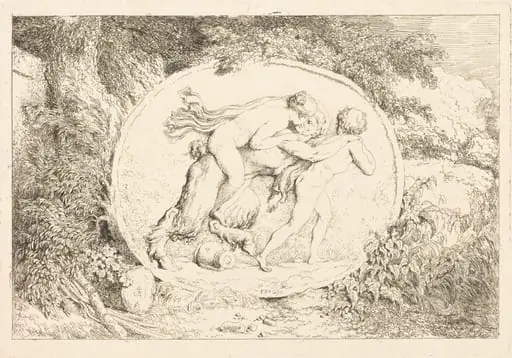 Nymph Astride a Satyr (Jeune fille a califourchon sur un satyre)
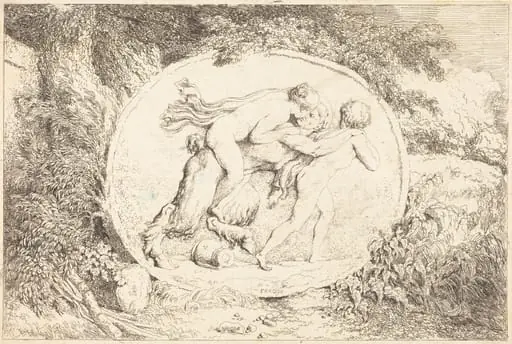 Nymph Astride a Satyr (Jeune fille a califourchon sur un satyre)
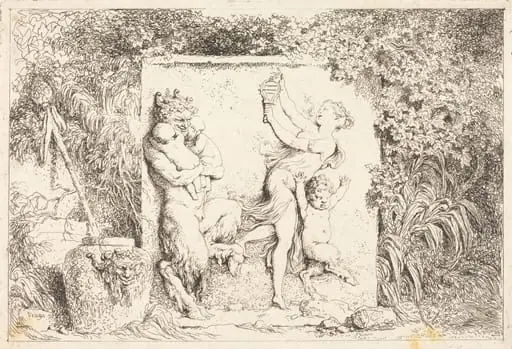 The Satyrs' Dance (Danse de satyres)
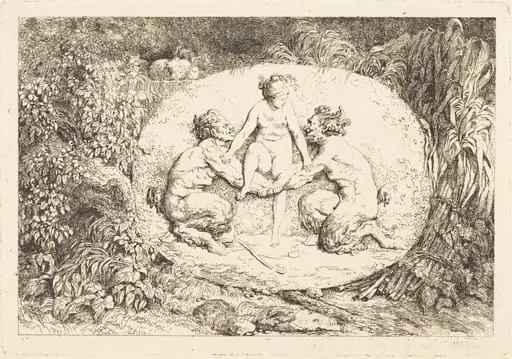 Nymph Supported by Two Satyrs (Nymphe s'asseyant sur les mains de deux satyres)
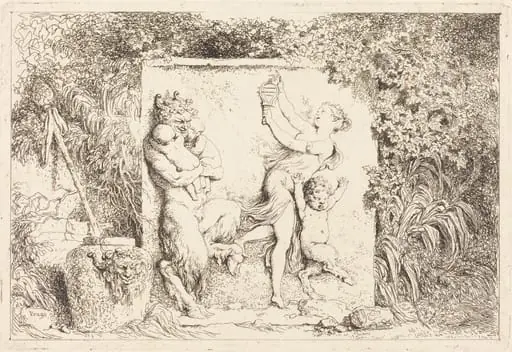 The Satyrs' Dance (Danse de satyres)
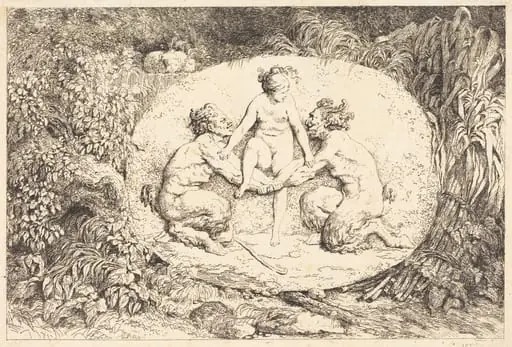 Nymph Supported by Two Satyrs (Nymphe s'asseyant sur les mains de deux satyres)
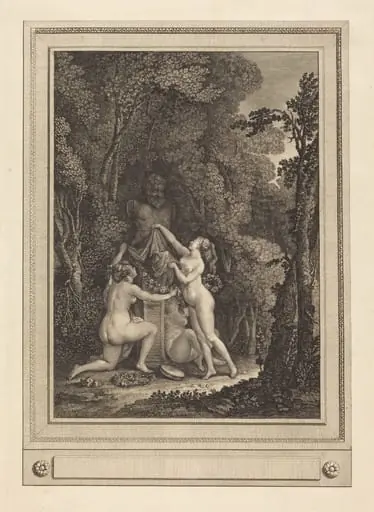 Les nymphes scrupuleuses
 Book of Fountains: No. 4