Artwork
The Gardener
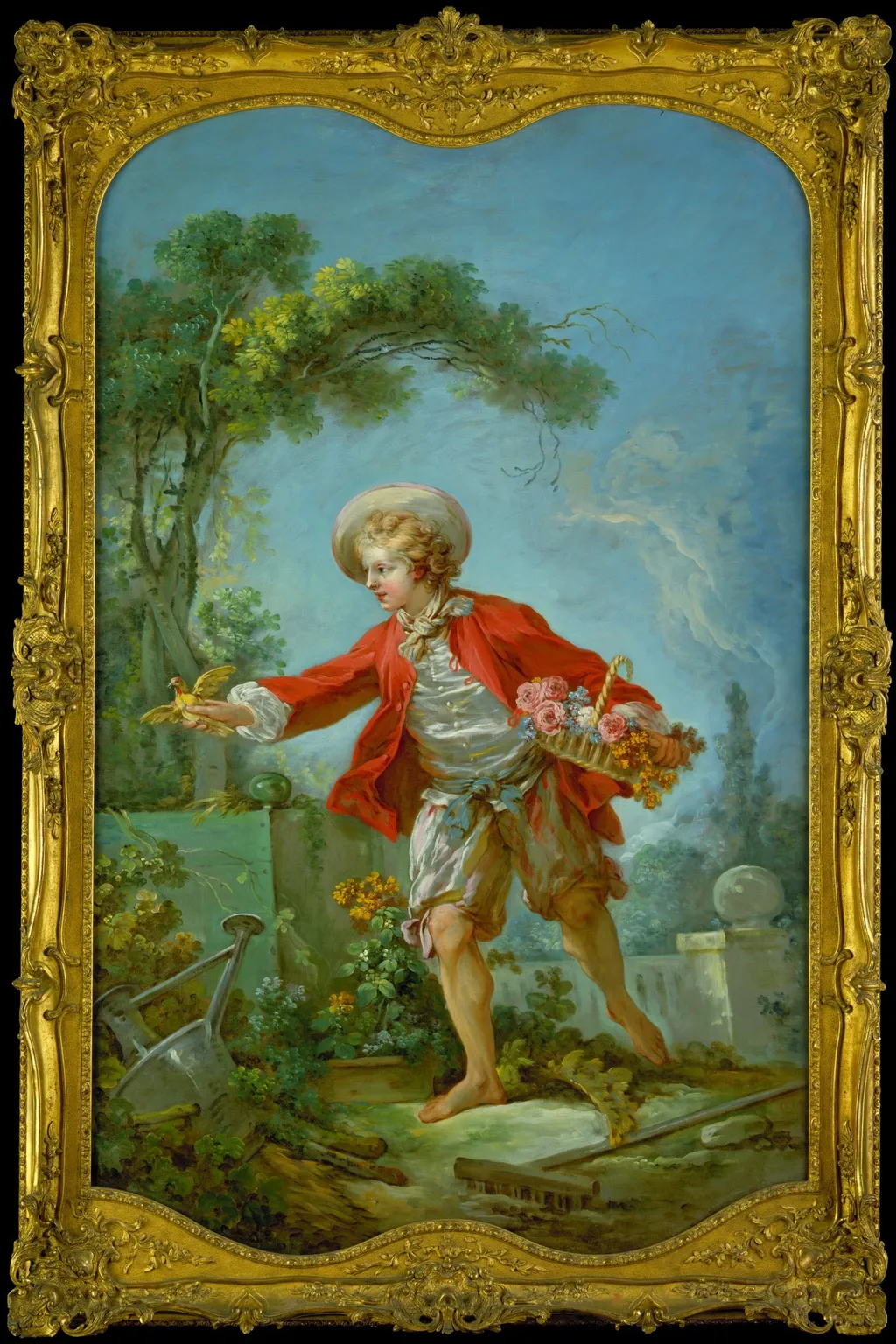
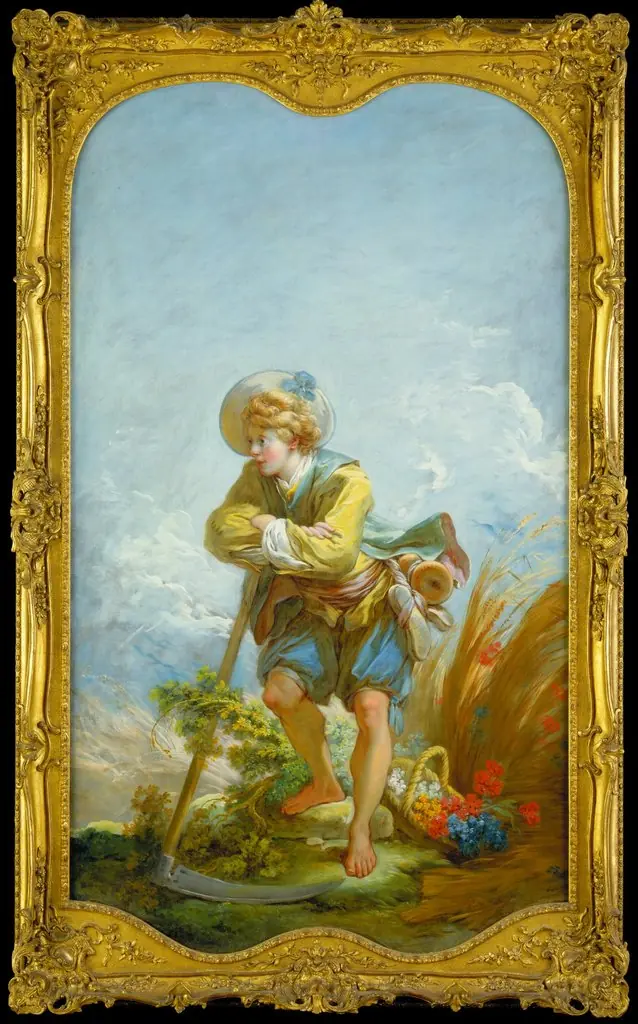
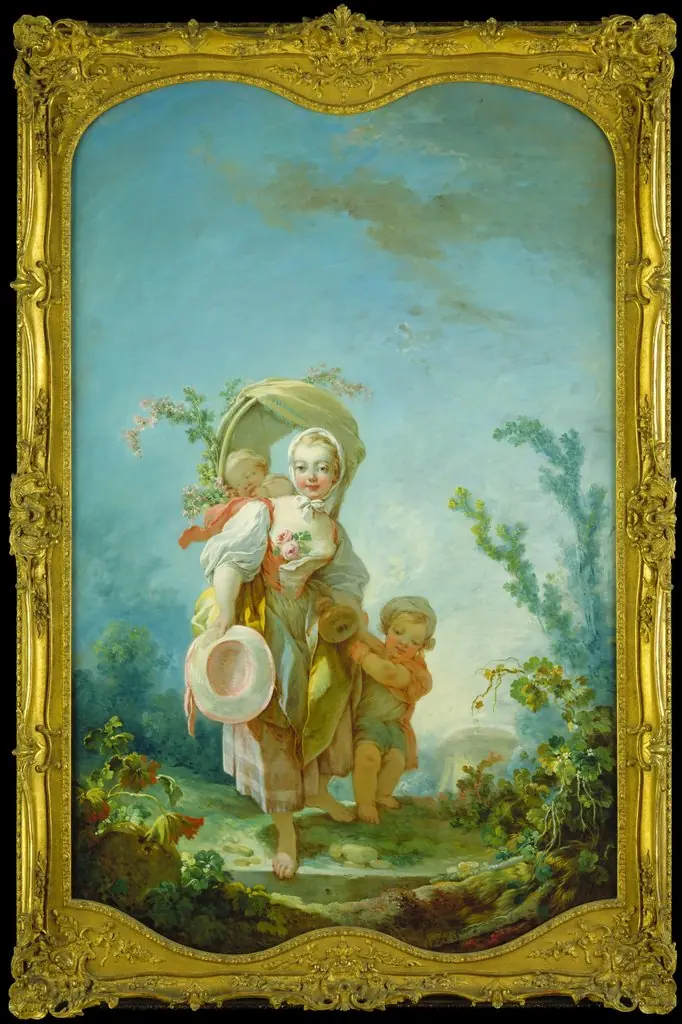
The Gardener is an oil painting by the Rococo painting artist Jean Honoré Fragonard. It dates from 1754 and is held in the collection of the Detroit Institute of Arts.
About this work
Overview
Jean‑Honoré Fragonard’s oil work titled The Gardener was executed in 1754 and now belongs to the collection of the Detroit Institute of Arts. The composition presents a youthful figure on a stone bench, surrounded by a bright sky and a low wall, rendered in the painter’s characteristic Rococo palette.
Subject & Meaning
The central figure is a boy dressed in a vivid red jacket, white shirt and tan shorts, barefoot and wearing a wide‑brimmed hat. He cradles a basket of assorted blossoms in his left hand while his right hand gently supports a small yellow bird, suggesting a harmonious relationship between the child and the natural world.
Technique & Style
Fragonard applies soft, fluid brushstrokes to convey the texture of fabric and foliage, while employing chiaroscuro to model the boy’s form against the luminous sky. The contrast of deep shadows beneath the bench with the bright, sunlit background creates a subtle three‑dimensionality typical of his late‑Rococo sensibility.
History & Provenance
Painted in the mid‑18th century, The Gardener entered the Detroit Institute of Arts’ holdings through a donation in the early 20th century, though the precise chain of ownership prior to its acquisition remains sparsely documented. Its presence in the museum’s European collection underscores Fragonard’s range beyond his more celebrated erotic scenes.
Context
Created during a period when French artists often idealized pastoral leisure, the work reflects contemporary tastes for intimate, genre‑type subjects. The inclusion of a child gardener aligns with Enlightenment ideas about education and the moral benefits of nature, themes frequently explored in decorative arts of the era.
Artist & collection

Artist
Jean-Honoré Fragonard was born on 5 April 1732 in Grasse, the son of a glover, and moved with his family to Paris in 1738.