Artwork
View of the Bridge and Part of the Town of Cava, Kingdom of Naples
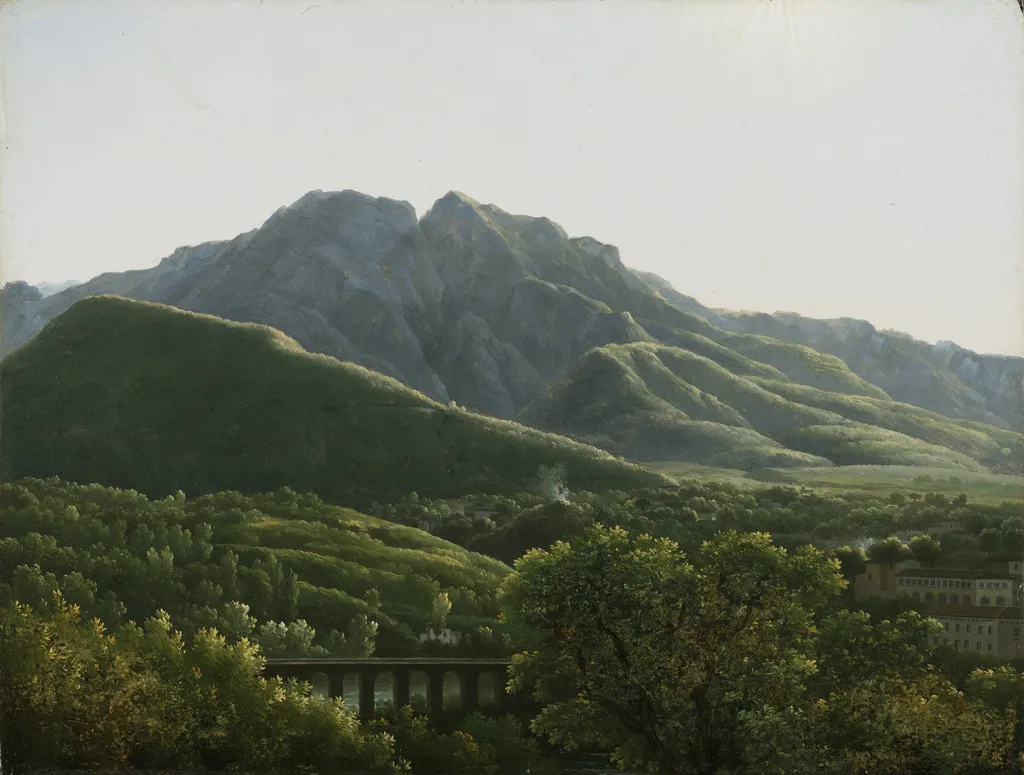
View of the Bridge and Part of the Town of Cava, Kingdom of Naples is an unspecified painting by the Neoclassicist artist Jean-Joseph-Xavier Bidauld. It dates from 1794 and is held in the collection of the J. Paul Getty Museum. Jean‑Joseph‑Xavier Bidaud’s 1794 oil painting captures a tranquil riverside scene in the Kingdom of Naples.
About this work
Overview
Jean‑Joseph‑Xavier Bidaud’s 1794 oil painting captures a tranquil riverside scene in the Kingdom of Naples. A modest stone bridge arches over calm water, framed by verdant foliage and scattered dwellings on gentle hills. Beyond the settlement, mist‑cloaked mountains rise, lending the composition a sense of spaciousness and quiet repose.
Subject & Meaning
The work presents a bucolic vista that emphasizes the harmony between human construction and the natural environment. The bridge serves as a focal point, symbolizing connection and passage, while the surrounding landscape invites contemplation of the serene, idealized countryside typical of late‑eighteenth‑century travel views.
Technique & Style
Executed in a neoclassical manner, the painting employs a balanced arrangement of forms and a restrained palette. Bidaud manipulates light and shadow to model the terrain, creating depth through gradual tonal shifts. The clear delineation of architectural elements alongside atmospheric perspective reflects the period’s emphasis on order and clarity.
History & Provenance
Born in Carpentras, Bidaud trained under his brother in Lyon before moving to Paris and later spending five years in Rome. He first showed at the Paris Salon in 1791, and the Naples view was completed three years later, likely during his Italian travels. The painting’s subsequent ownership records remain limited, but it has been documented in several 19th‑century collection inventories.
Context
The composition aligns with the era’s fascination with picturesque travel scenes, especially those depicting southern Italy’s scenic locales. Such works catered to a growing market of patrons interested in visual records of the Grand Tour, offering both documentary value and aesthetic pleasure within the neoclassical framework.
Own this work as a print
Artist & collection

Artist
Jean-Joseph-Xavier Bidauld (10 April 1758 – 20 October 1846) was a French painter.

 Lake Fucino and the Abruzzi Mountains
 The Bridge at La Cava, Kingdom of Naples
 View of the Waterfalls at Tivoli
 View of the bridge and the town of Cava, Kingdom of Naples
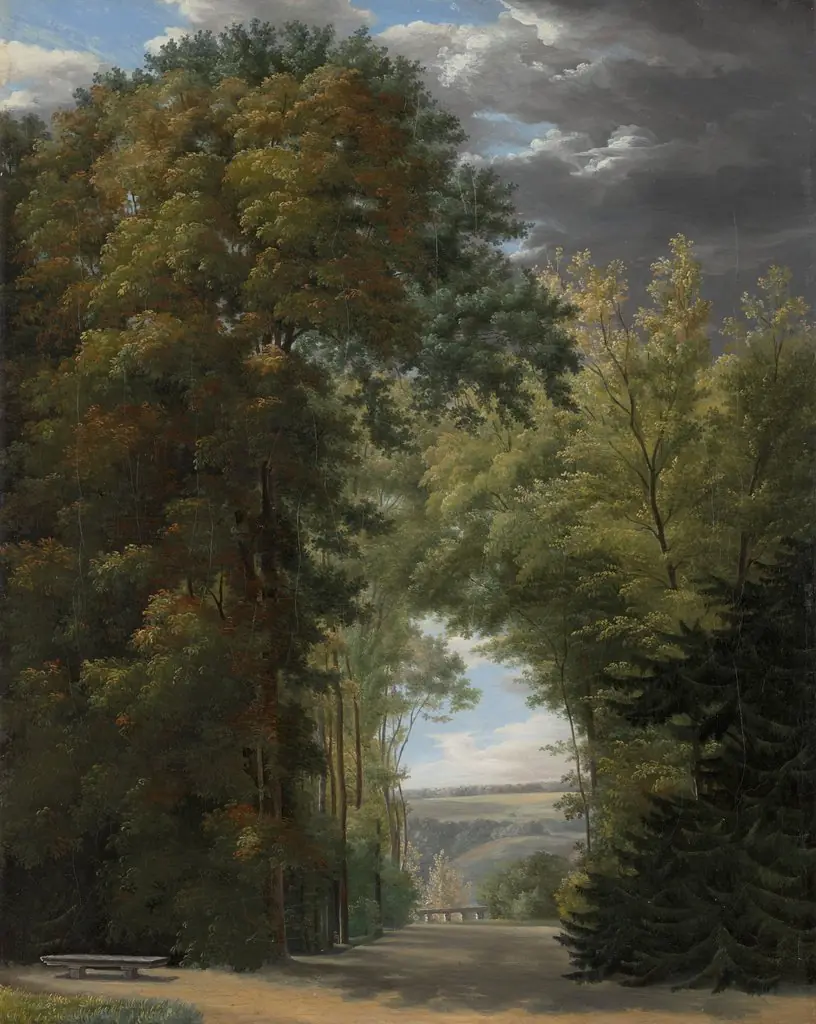 An Alley of Trees in a Park
 The Heights of Sannois Seen from the Plain of Argenteuil
 Running Stream at San Cosimato
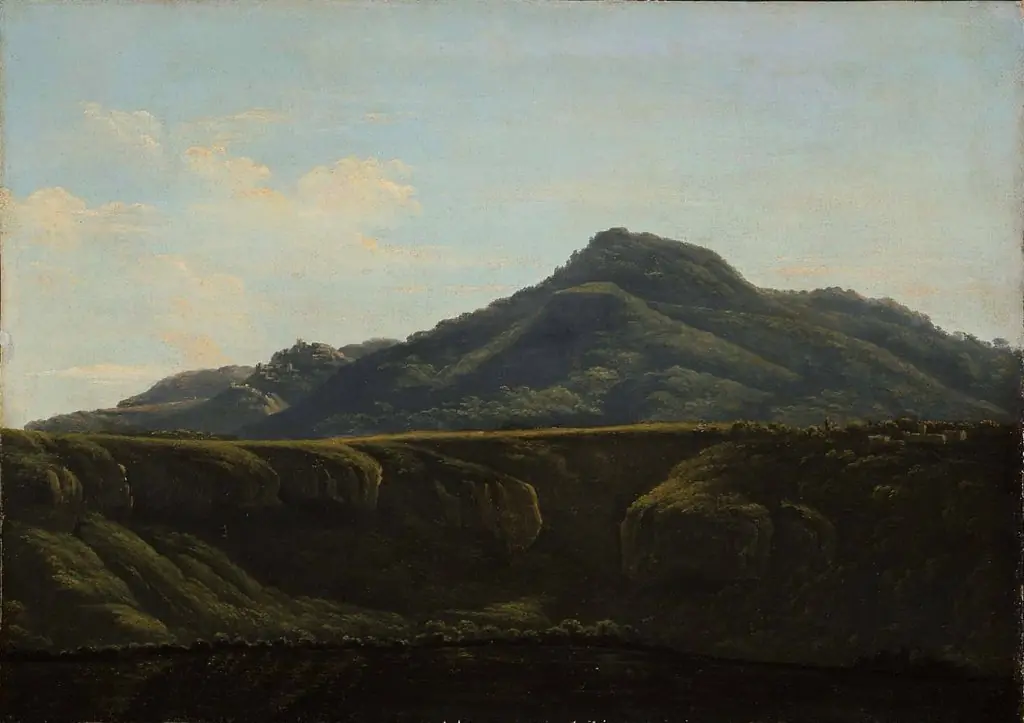 Monte Cavo from Lake Albano