Artwork
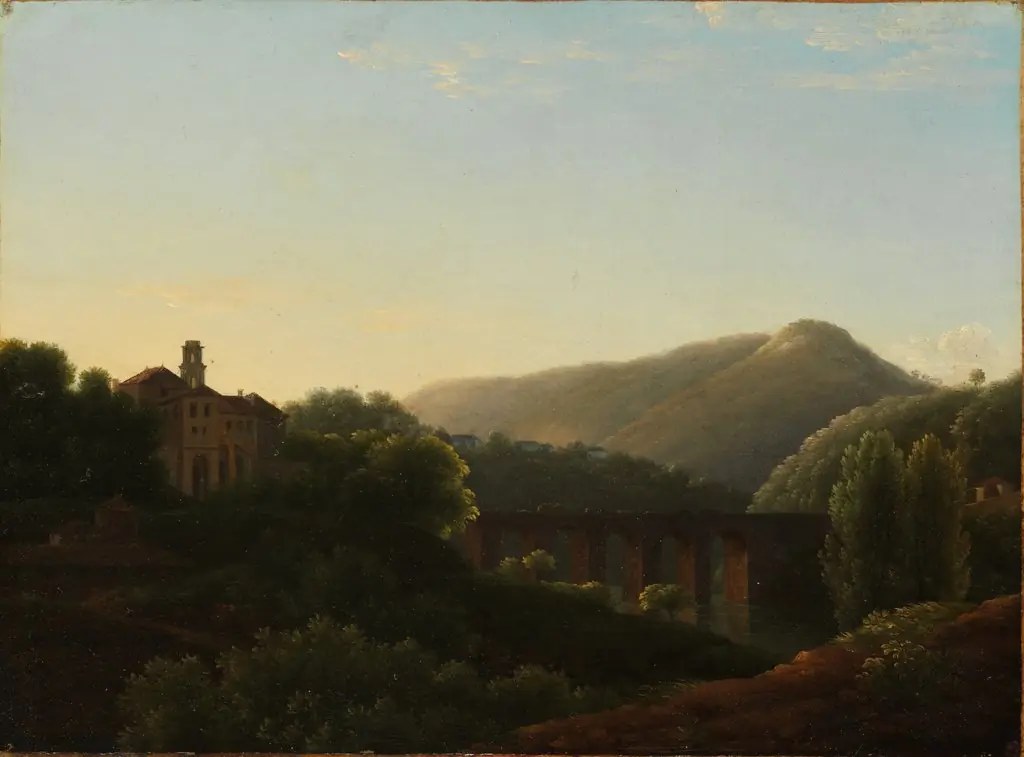
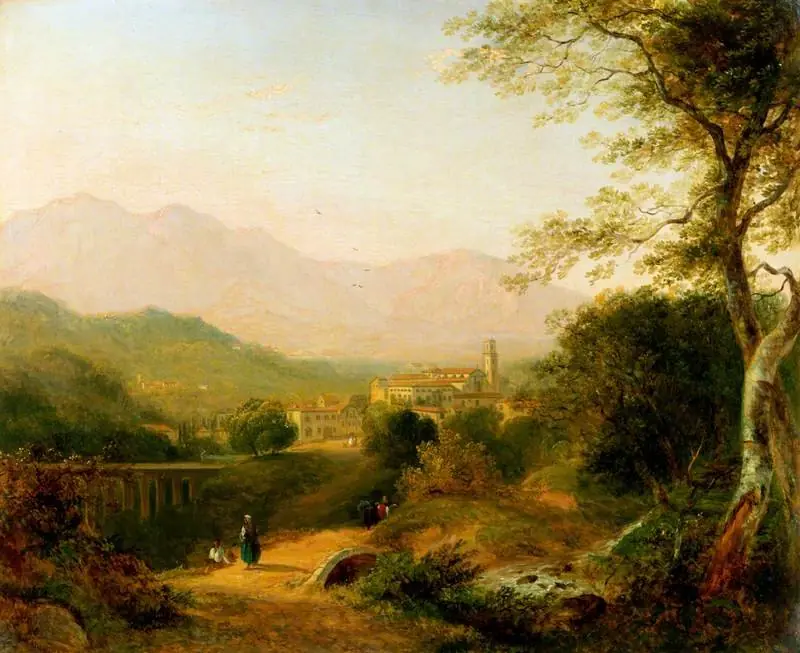
View of the bridge and the town of Cava, Kingdom of Naples
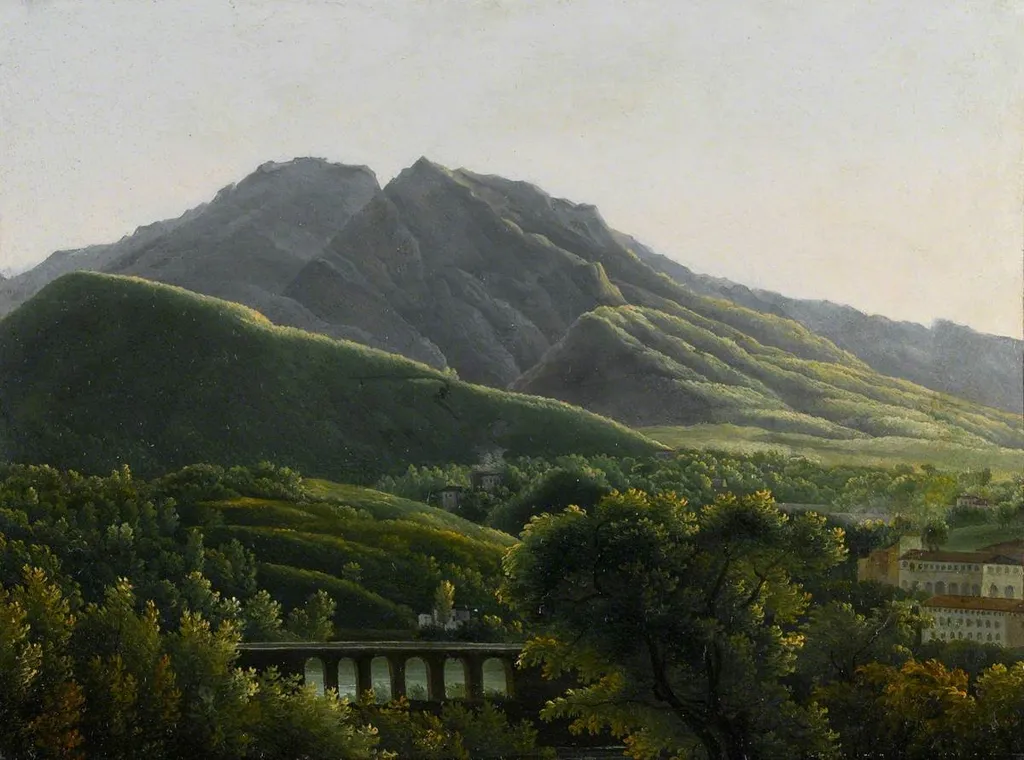
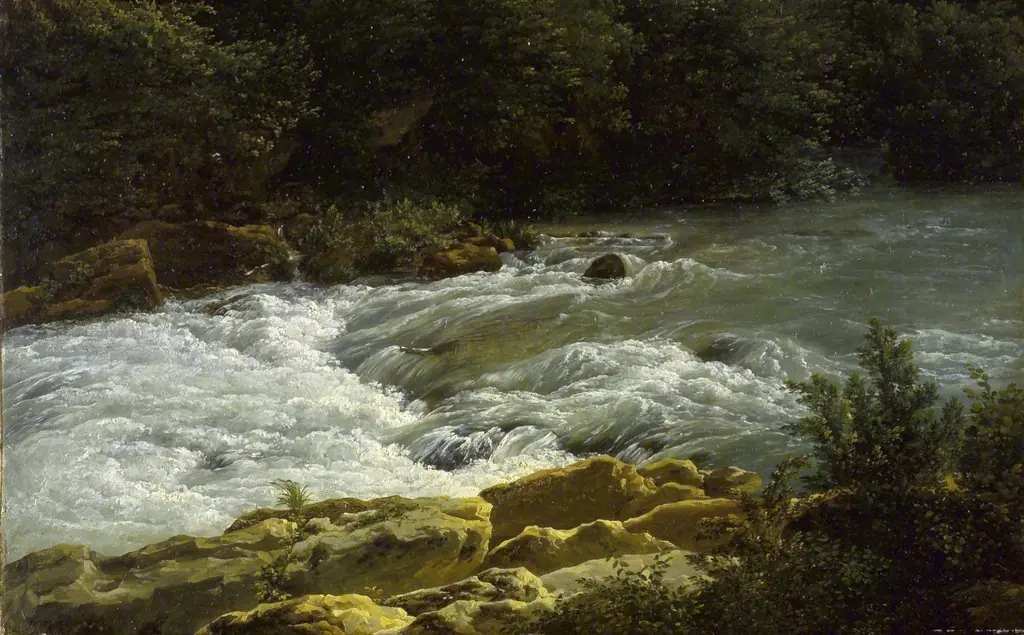
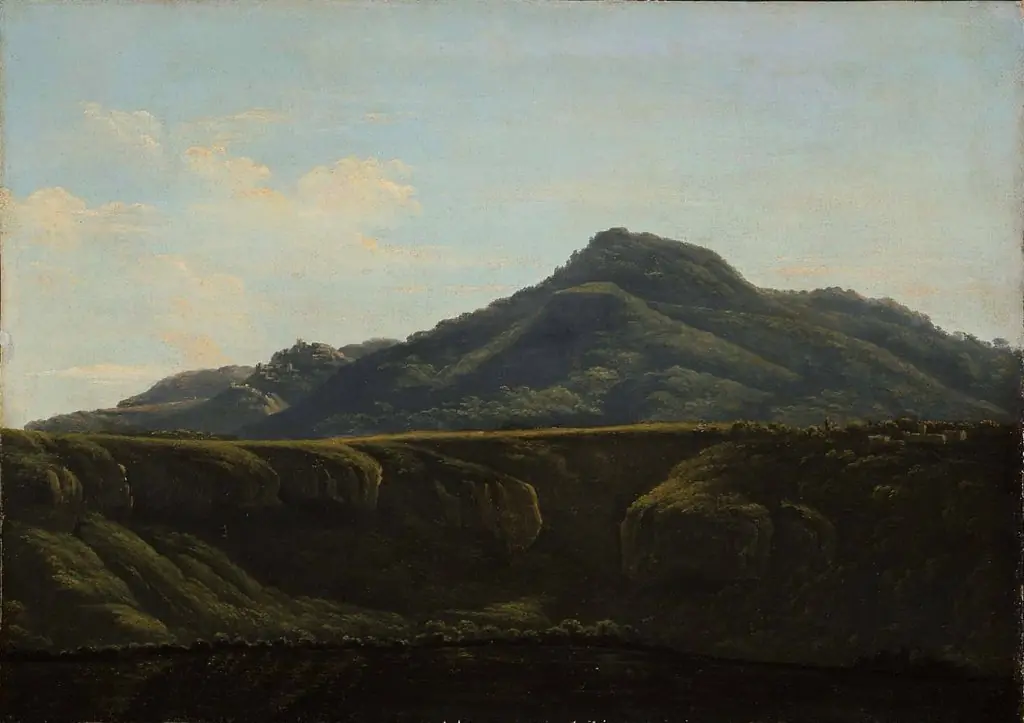
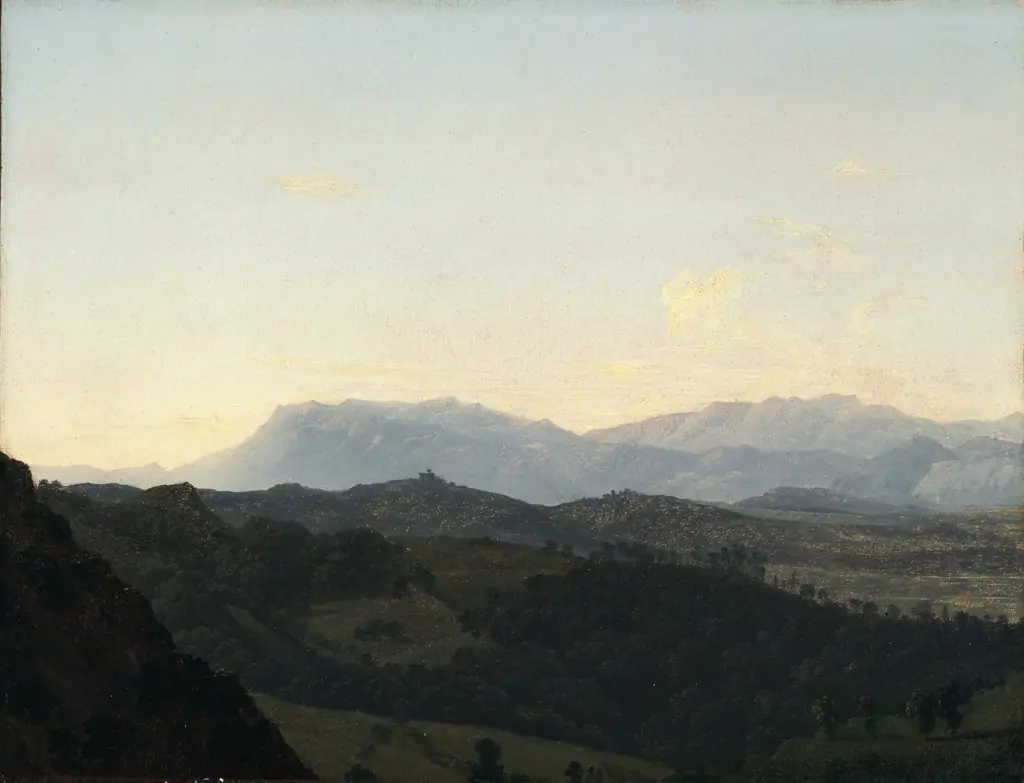
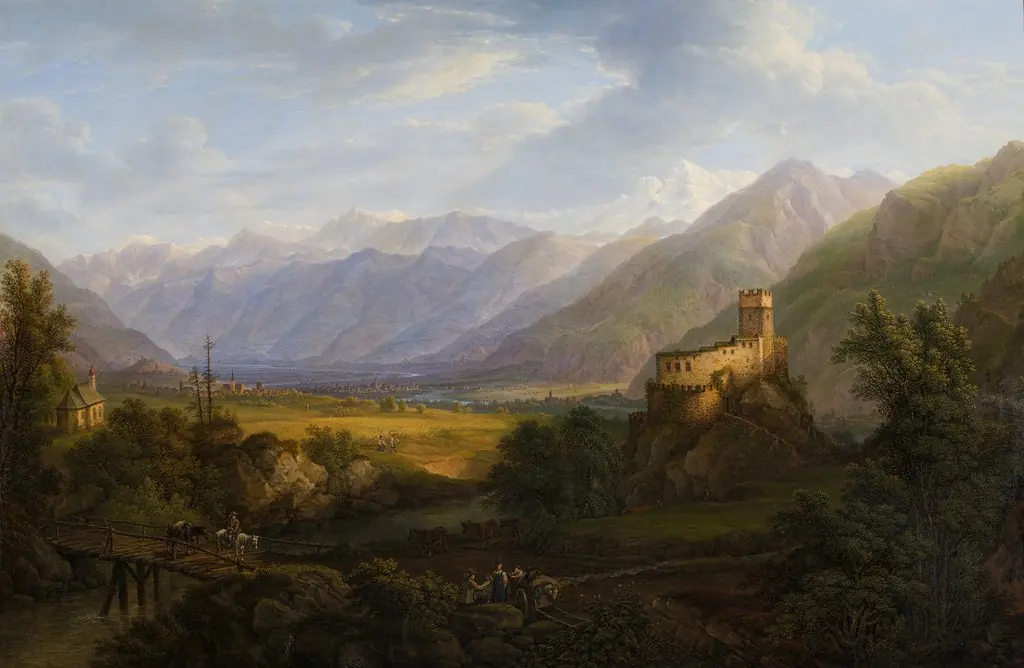
View of the bridge and the town of Cava, Kingdom of Naples is an oil painting by Jean-Joseph-Xavier Bidauld. It dates from 1808 and is held in the collection of the Fitzwilliam Museum.
About this work
Overview
After initial training in Lyon and exposure to Parisian art circles, he received patronage that supported five years of travel across the Italian peninsula.
Jean-Joseph-Xavier Bidauld, a French artist born in 1758, painted this landscape around 1808 during an extended stay in Italy. After initial training in Lyon and exposure to Parisian art circles, he received patronage that supported five years of travel across the Italian peninsula. The work captures a view of Cava de' Tirreni in the Kingdom of Naples, reflecting his engagement with southern Italian scenery during his formative years abroad.
Subject & Meaning
The painting presents a quiet, unidealized view of Cava de' Tirreni, with its stone buildings clustered along a hillside beneath Monte Finestra. A stone bridge spans the foreground, connecting the viewer to the settlement without dominating it. The scene conveys a sense of place rather than narrative, emphasizing harmony between human habitation and the natural topography of the region.
Technique & Style
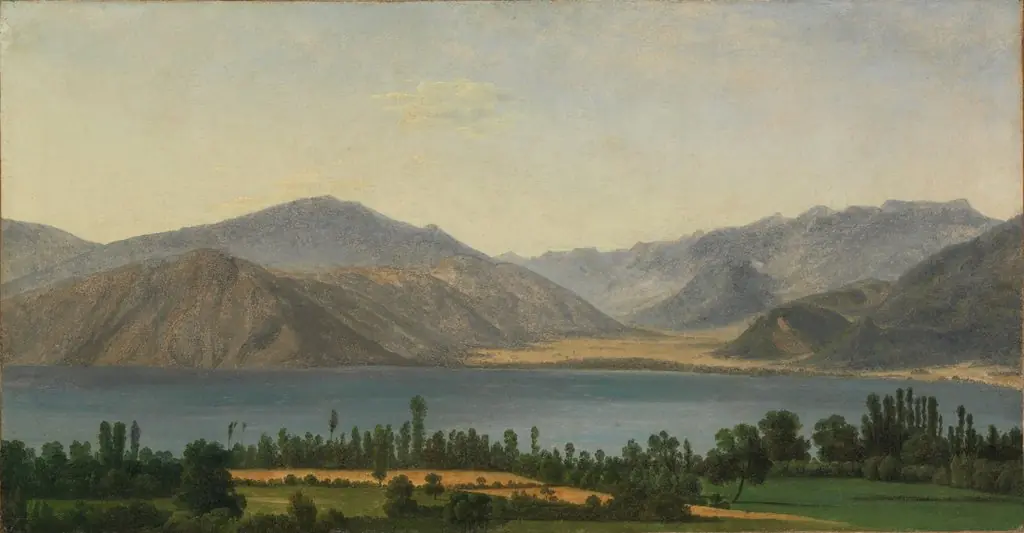
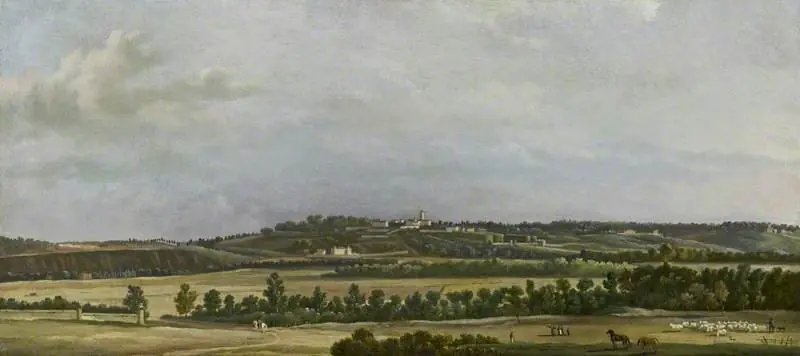
Bidauld employed subtle gradations of light and shadow to model the architecture and terrain, enhancing the three-dimensionality of the landscape. His brushwork is controlled, with soft transitions between tones that avoid dramatic contrast. The composition is structured to guide the eye from the foreground bridge through the town to the distant mountains, creating a layered sense of spatial depth.
History & Provenance
The painting entered the Fitzwilliam Museum’s collection as part of its broader acquisition of 18th- and early 19th-century European landscapes. Its journey from Italy to Cambridge is not fully documented, but its preservation suggests it was valued by collectors interested in French artists working abroad during the Napoleonic era.
Context
Bidauld’s time in Italy coincided with a broader European fascination with classical and picturesque landscapes. While many artists idealized Roman ruins, he focused on lesser-known towns, capturing everyday topography with quiet precision. His work reflects a shift toward topographical accuracy over romanticized grandeur, aligning with emerging trends in landscape observation.
Legacy
Though not widely known today, Bidauld’s Italian views contributed to a generation of French painters who documented regional Italian scenes with observational rigor. His work remains a quiet example of how travel shaped artistic development in the early 19th century, offering a counterpoint to more celebrated Romantic landscapes of the period.
Artist & collection

Artist
Jean-Joseph-Xavier Bidauld (10 April 1758 – 20 October 1846) was a French painter.