Artwork
Tityus
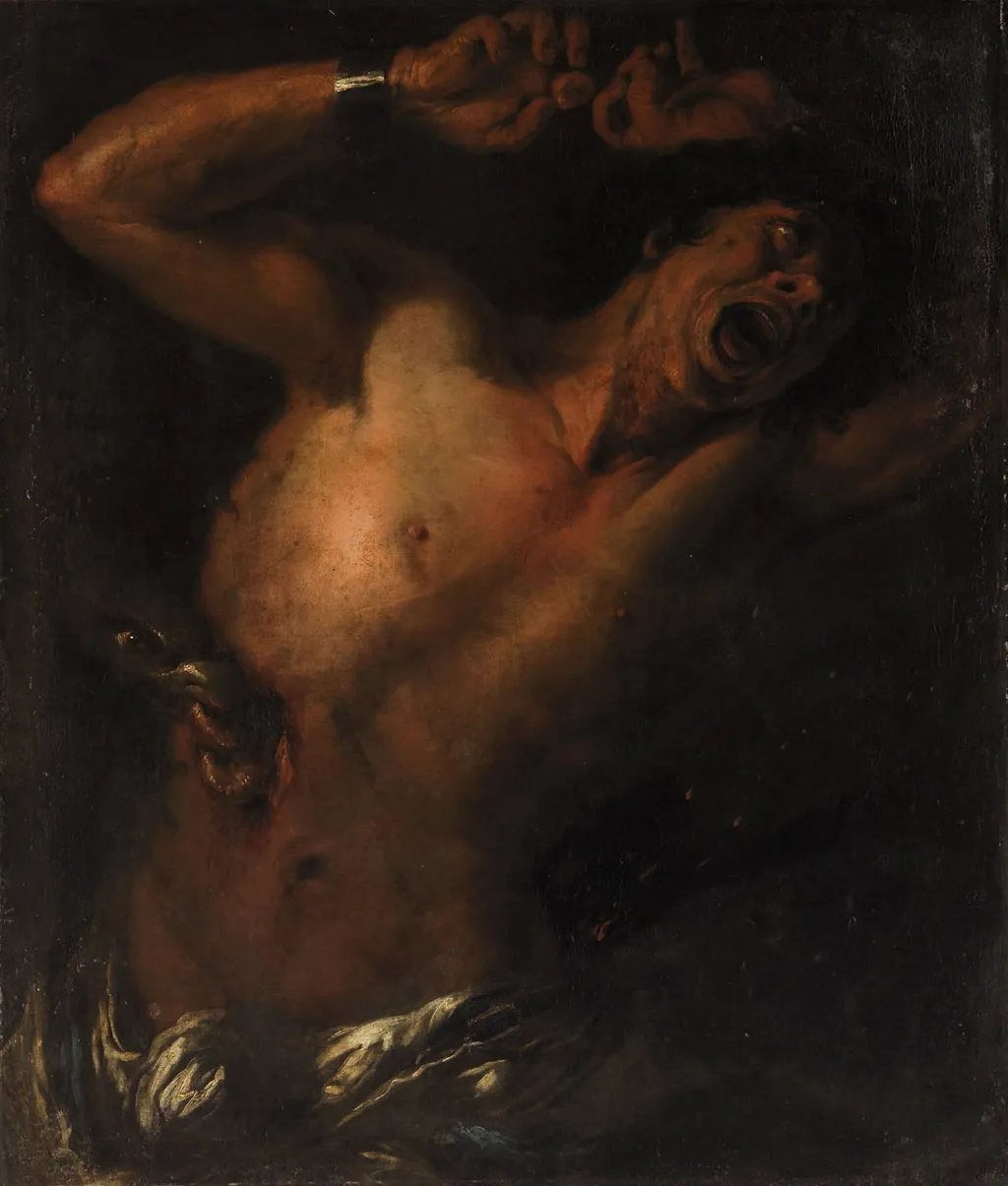
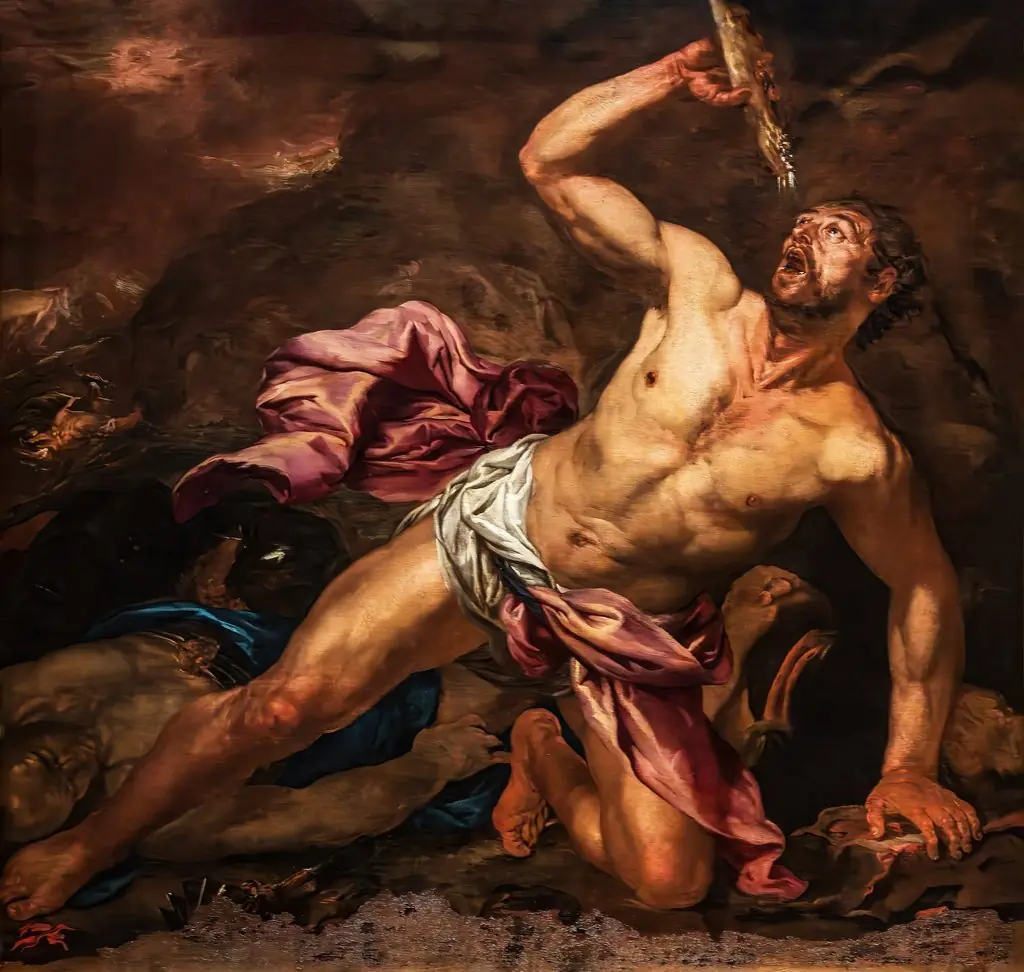
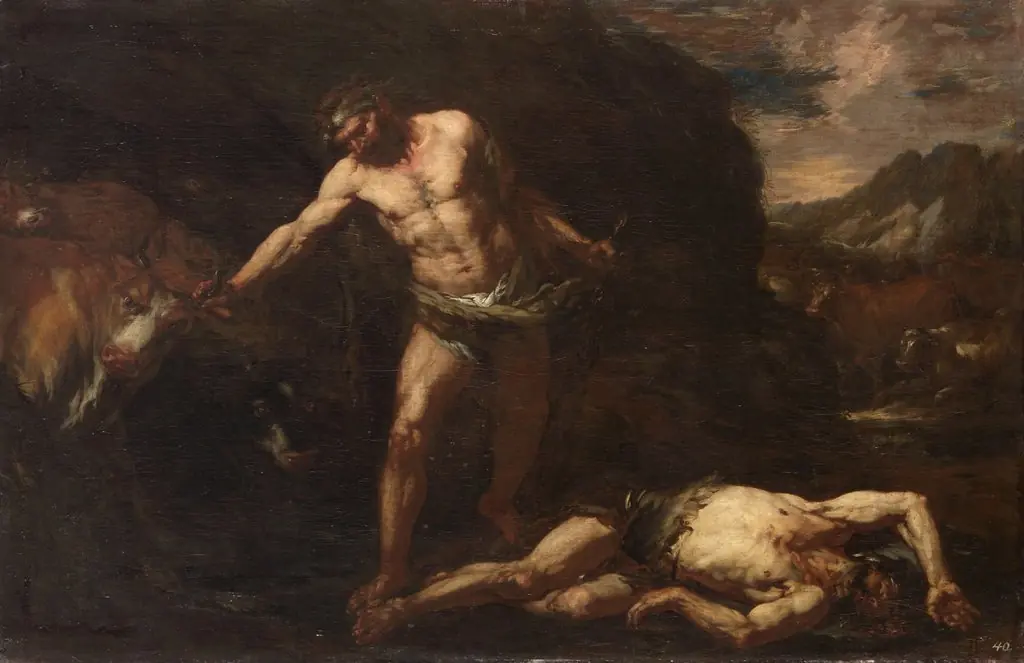
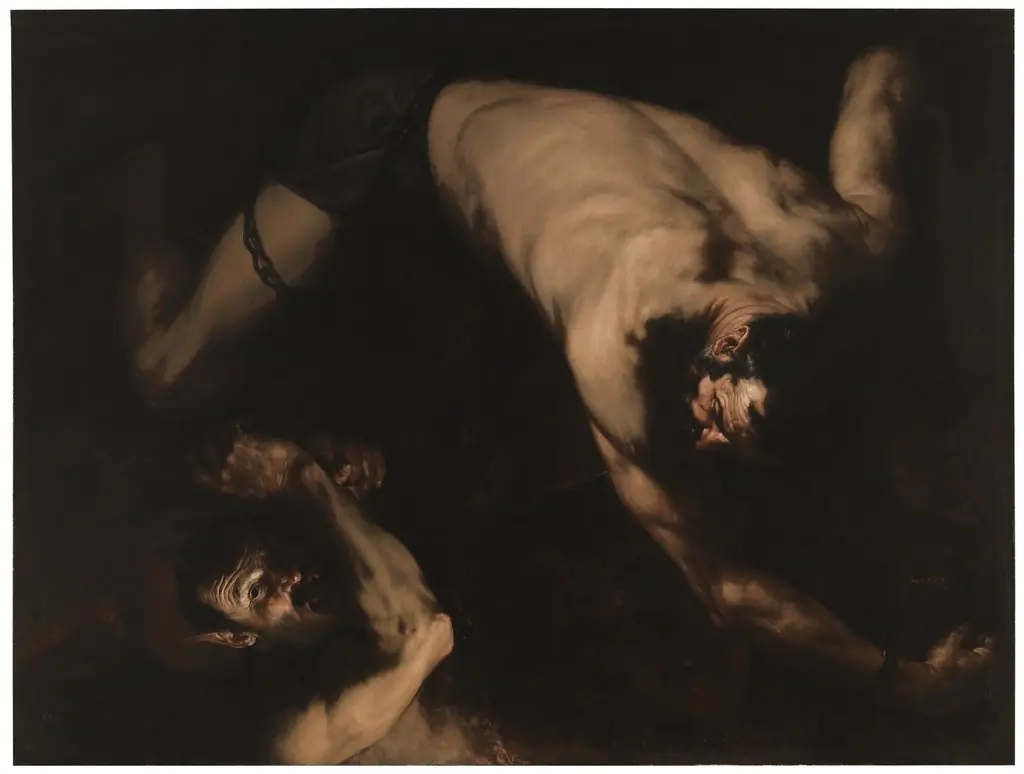
Tityus is an unspecified painting by Giovan Battista Langetti. It dates from 1660 and is held in the collection of the Kunsthistorisches Museum.
About this work
Overview
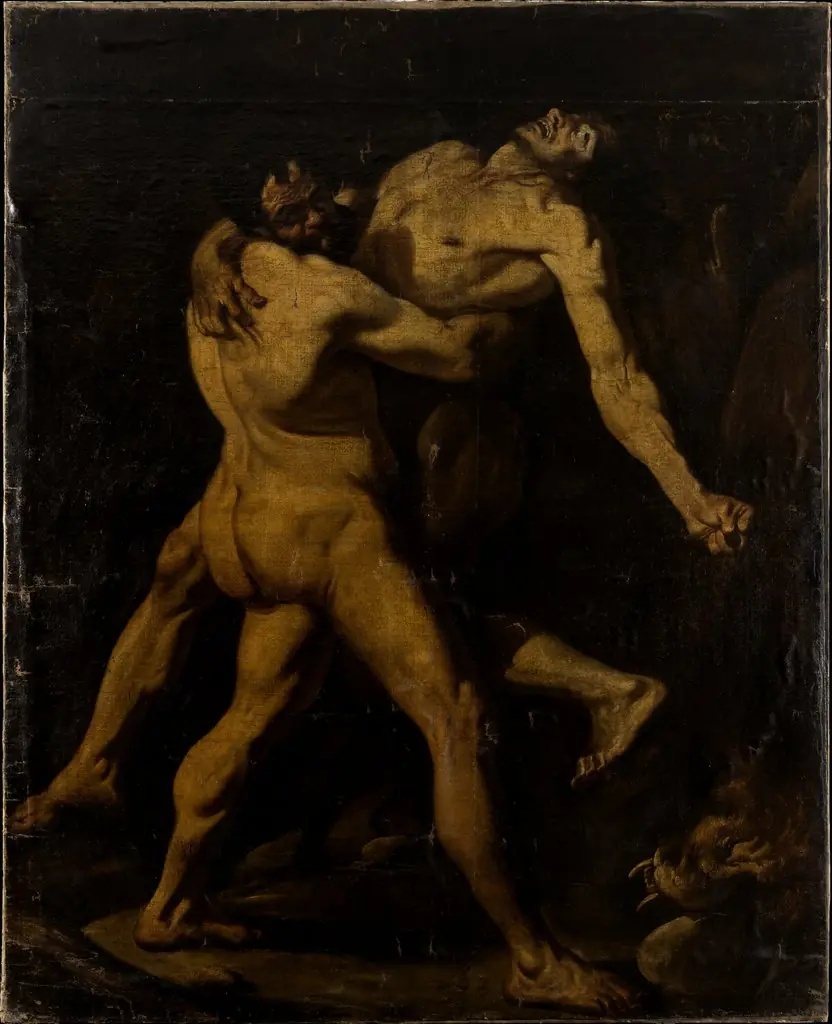
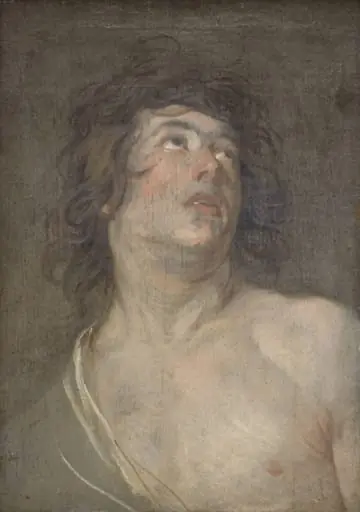
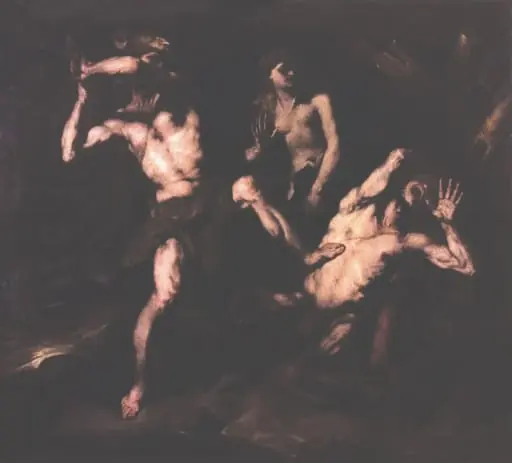
Created circa 1660 by the Italian painter Giovanni Battista Langetti, *Tityus* is an oil work that belongs to the late‑Baroque period. The canvas is part of the collection of the Kunsthistorisches Museum in Vienna and exemplifies the artist’s turn toward heightened drama and stark lighting that characterises his mature output.
Subject & Meaning
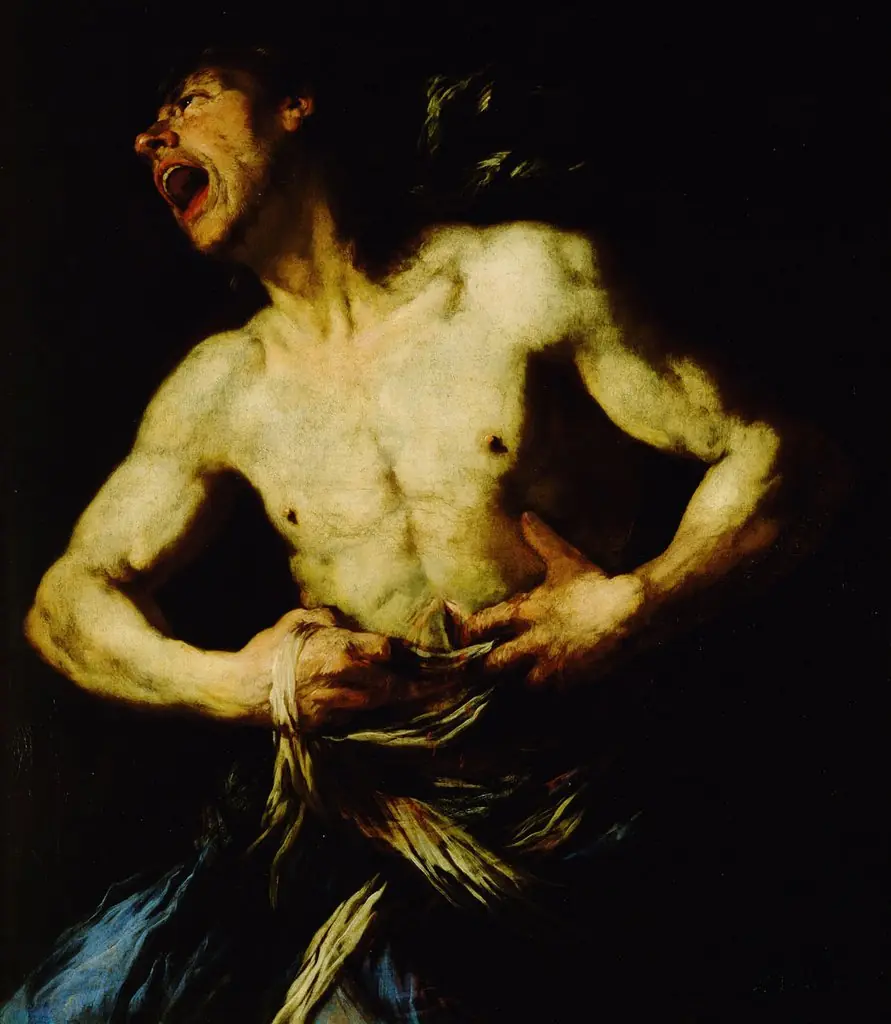
The composition portrays the mythic giant Tityus, condemned to perpetual torment in the underworld for his transgressions. He is shown bound, his limbs restrained by chains, while his torso twists in a scream and his eyes roll back, suggesting both physical pain and psychological anguish. The work visualises the ancient narrative of divine retribution.
Technique & Style
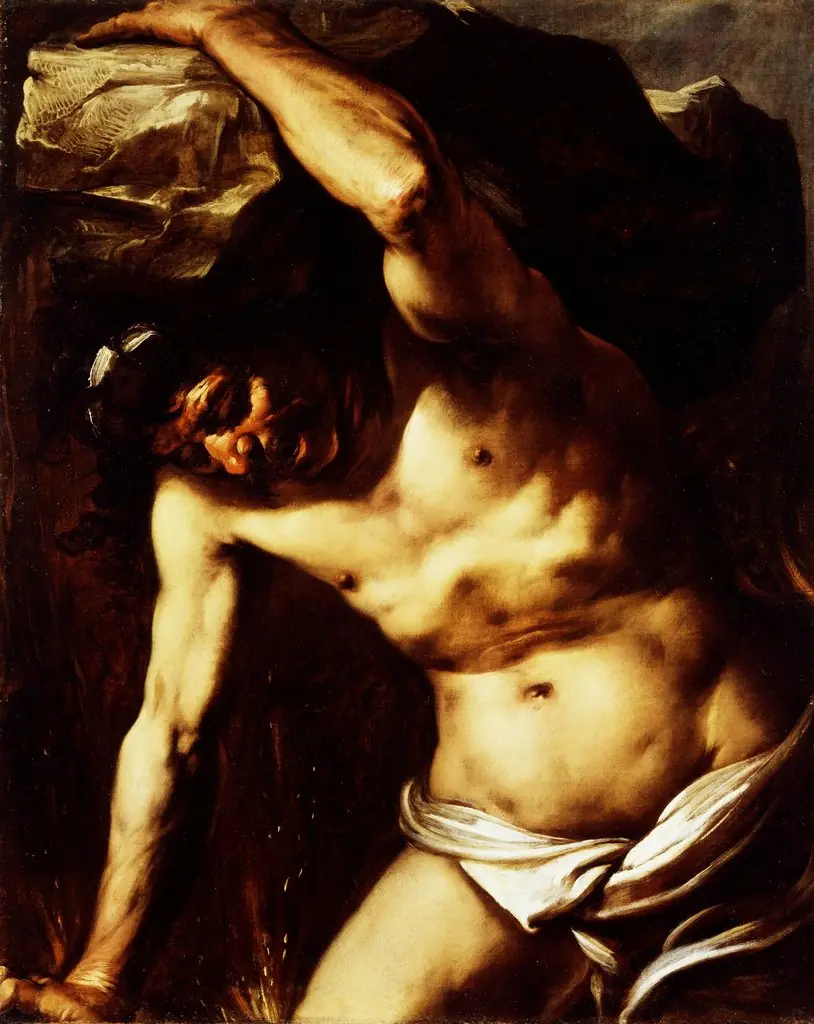
Langetti employs a tenebrist palette of browns, grays and occasional red highlights to model the muscular figure against an almost black background. Strong chiaroscuro creates deep shadows that isolate the body, while the illuminated flesh conveys volume and movement. The brushwork is vigorous, emphasizing the rawness of the wounds and the intensity of the scene.
History & Provenance
After its execution in the 1660s, the painting entered private collections before being acquired by the Kunsthistorisches Museum, where it remains on display. Its provenance reflects the broader interest of 19th‑century European institutions in gathering Baroque works that illustrate dramatic narrative and technical virtuosity.
Artist & collection
Artist
Giovanni Battista Langetti (1635 – 22 October 1676), also known as Giambattista Langetti, was an Italian late-Baroque painter. He was active in his native Genoa, then Rome, and finally for the longest period in Venice.