Artwork
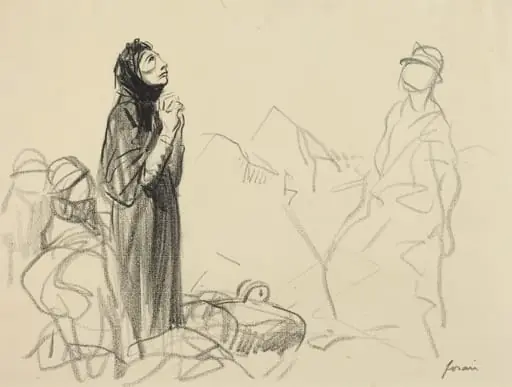
It Was Our House
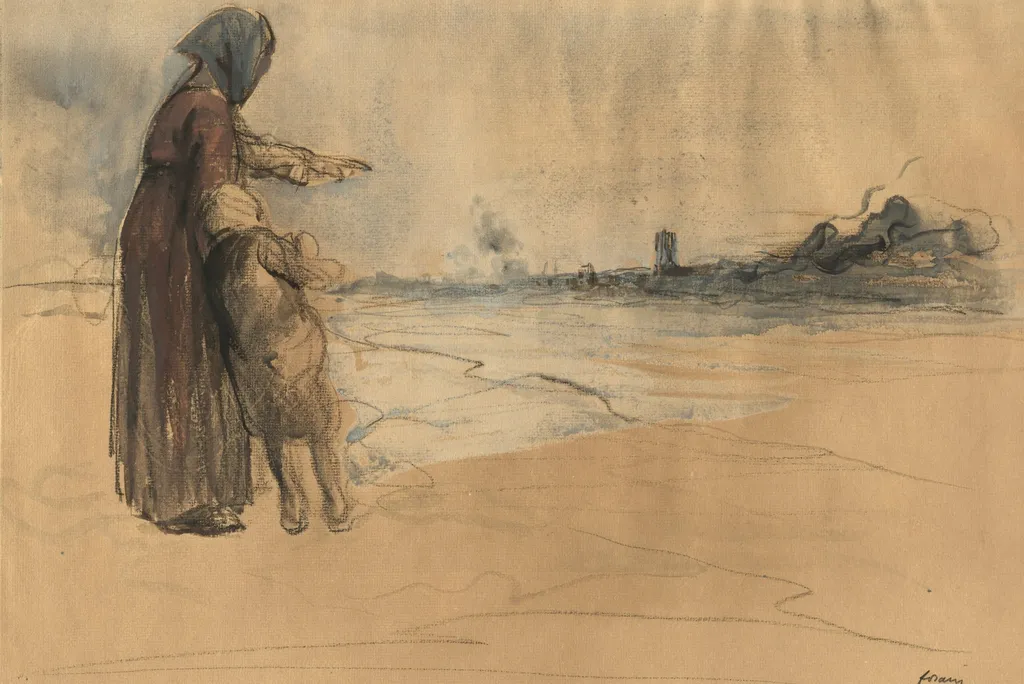
It Was Our House is a drawing by the Impressionist artist Jean-Louis Forain. It dates from 1892 and is held in the collection of the Cleveland Museum of Art.
About this work
Overview
Executed in a loose, sketchlike manner, it reflects the artist’s interest in fleeting moments and quiet observation.
Created in 1892 by Jean-Louis Forain, this drawing captures a solitary figure on a shoreline. Executed in a loose, sketchlike manner, it reflects the artist’s interest in fleeting moments and quiet observation. The work is part of the collection at The Cleveland Museum of Art, where it is held as an example of late 19th-century draftsmanship grounded in everyday experience rather than idealized narrative.
Subject & Meaning
A woman in a dark, long coat stands on a beach, her gesture directed toward the horizon where a distant ship sails with a faint trail of smoke. Her stillness contrasts with the movement of the sea and vessel, suggesting contemplation or memory. The absence of facial detail universalizes her presence, inviting interpretation as a moment of personal reflection rather than a specific story.
Technique & Style
Forain employed rapid, fluid strokes with a dry medium, likely charcoal or pastel, to suggest form without definition. The dark coat stands out against the pale sand and sea, rendered in soft, blurred tones. There are no sharp outlines; instead, shapes emerge through tonal contrasts and suggestive lines, aligning with the spontaneous aesthetic of observational drawing rather than polished finish.
History & Provenance
The drawing entered The Cleveland Museum of Art’s collection through documented acquisition, though its earlier ownership history remains unrecorded in public sources. Created during Forain’s active period in Paris, it reflects his engagement with contemporary life outside formal studio settings. Its preservation suggests early recognition of its artistic value within the broader context of French graphic art.
Context
Made during a time when Realist and Impressionist artists turned toward ordinary scenes, this work aligns with a shift away from historical or mythological subjects. Forain, known for his depictions of urban and coastal life, captured transient moments with minimal intervention. The beach setting, common in late 19th-century French art, reflects growing public access to seaside leisure and the artist’s interest in unadorned reality.
Legacy
The drawing exemplifies how sketch-like techniques could convey emotional resonance without narrative elaboration. While not widely reproduced, it contributes to understanding Forain’s role in elevating informal drawing as a serious artistic practice. Its quiet composition continues to inform discussions on the expressive potential of restraint in modern graphic art.
Artist & collection

Artist
Jean-Louis Forain (French pronunciation: ; 23 October 1852 – 11 July 1931) was a French Impressionist painter and printmaker, working in media including oils, watercolour, pastel, etching and lithograph.

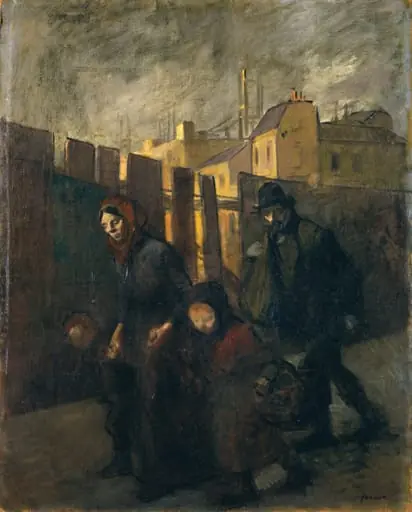
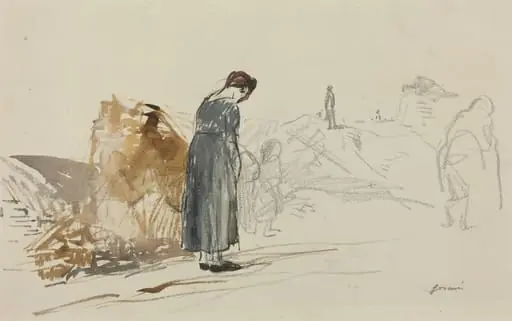 a) Les Allemandes sont partis (recto); b) Sketch of a Man (verso)
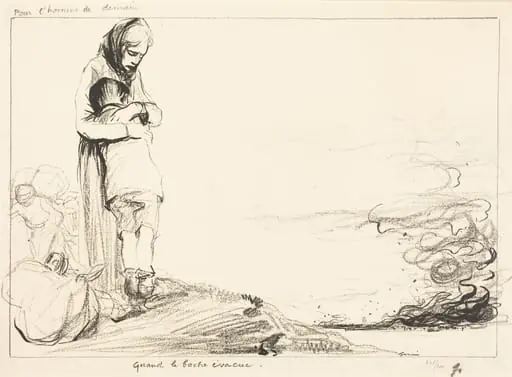 Pour l'homme de demain
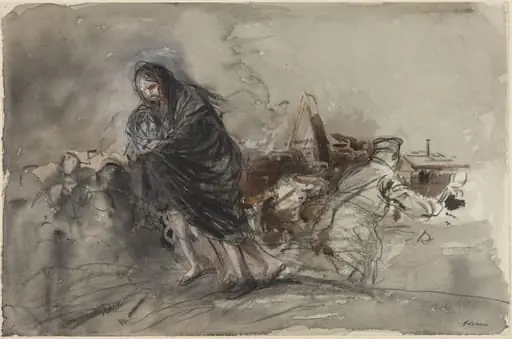 a) Après Douai (After Douai) (recto); b) Figure (verso)
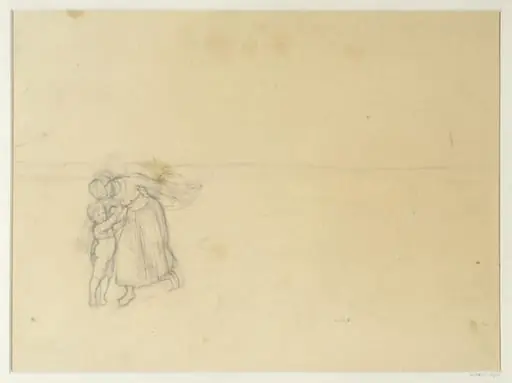 The Right of Way
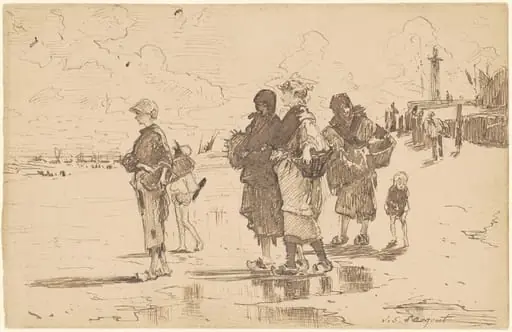 En route pour la pêche (Setting Out to Fish)
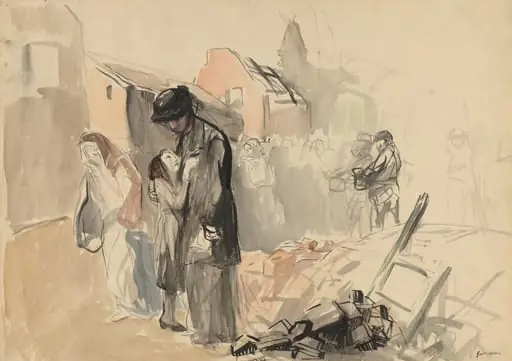 Reconquered Territory (recto)
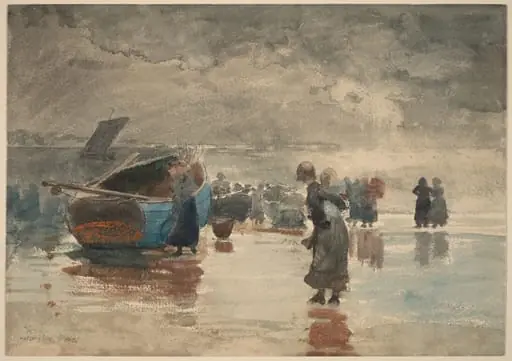 On the Sands
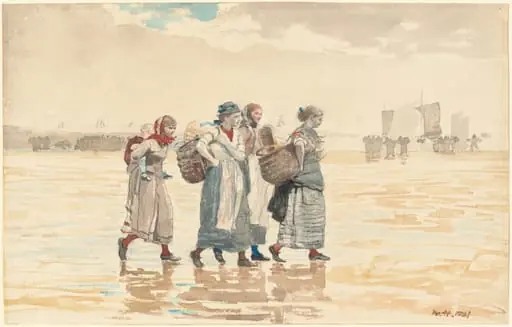 Four Fishwives on the Beach
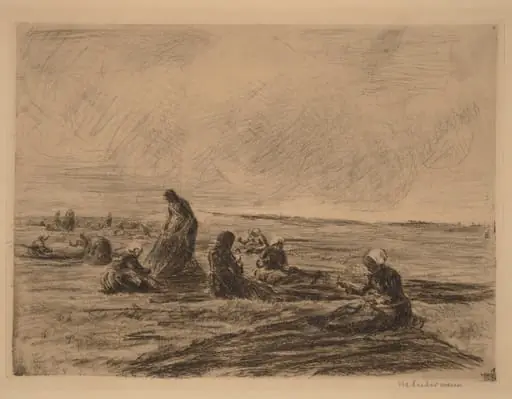 Mending the Nets
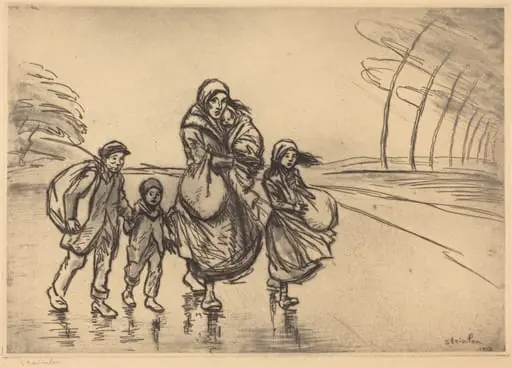 In the Rain: Mother and Children (Sous la pluie: La mere et les enfants)
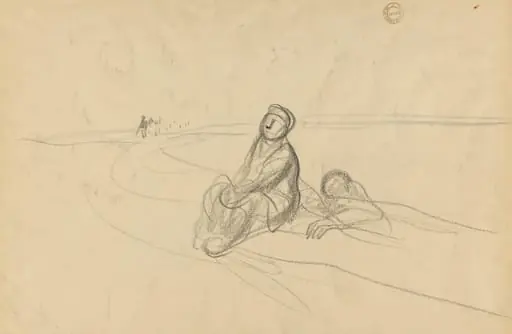 Two Figures on a Road (verso)
 During the Armistice