Artwork
On the Sands
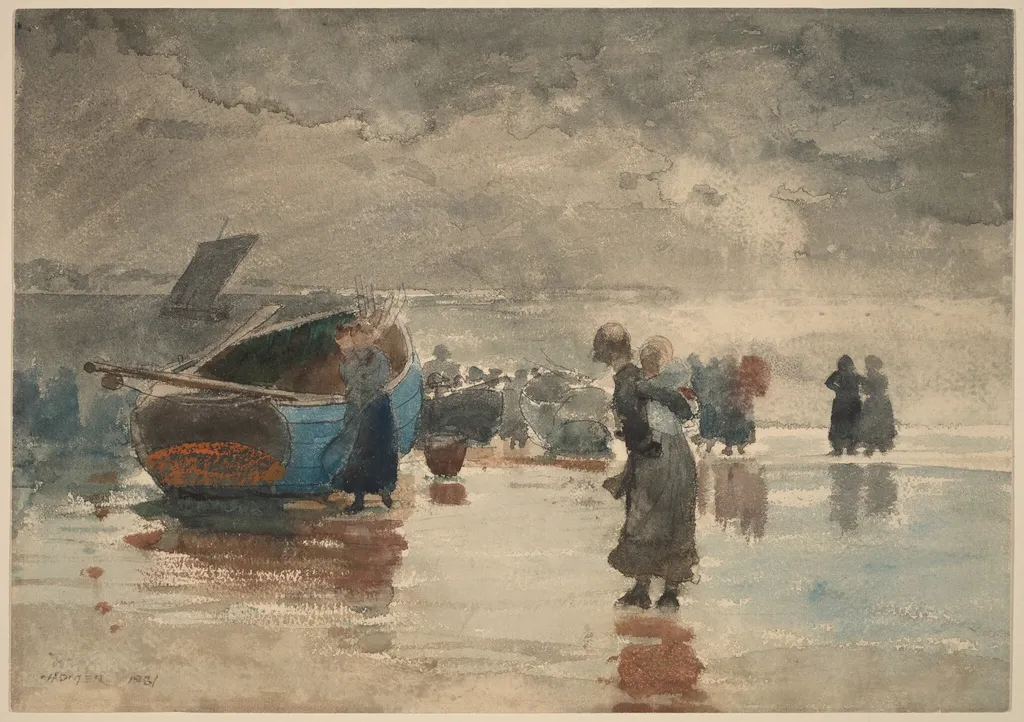
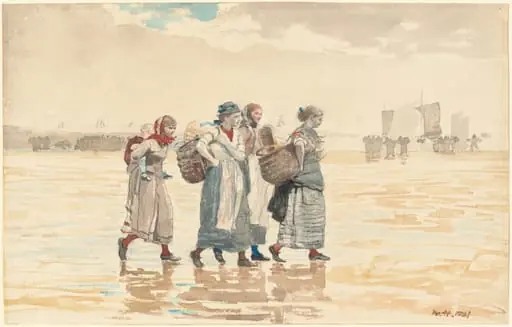
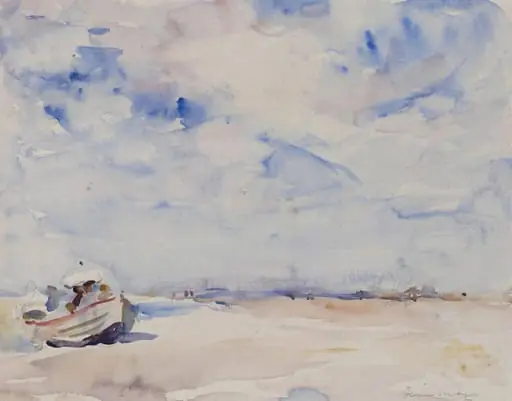
On the Sands is an ink drawing by the Impressionist artist Winslow Homer. It dates from 1881 and is held in the collection of the National Gallery of Art.
About this work
Overview
On the Sands is a drawing by Winslow Homer, executed in 1881, combining watercolor, gouache, pen, black ink, and graphite. It depicts a serene beach scene with small boats, a figure in a long coat, and a predominantly cloudy sky.
Subject & Meaning
The subject is a quiet, everyday beach scene, focusing on the interaction between figures, boats, and the coastal environment. The inclusion of a red-orange bucket amidst muted tones may symbolize a subtle, warming presence within the otherwise subdued atmosphere.
Technique & Style
Homer employed quick, loose brushstrokes characteristic of watercolor to evoke light, movement, and the play of water on sand. The dominant blues and grays, punctuated by the warm bucket, reflect a 19th-century American aesthetic that leveraged watercolor's capacity for capturing ephemeral effects of light and mood.
History & Provenance
Created in 1881, specific details regarding the artwork's commission, initial reception, or early ownership are not provided in the available information.
Context
On the Sands aligns with 19th-century American artistic tendencies, emphasizing outdoor, quotidian scenes. The use of watercolor for such subjects was popular, particularly for capturing the fleeting effects of natural light and coastal scenes.
Legacy
While specific legacy details of On the Sands are not provided, it contributes to the broader appreciation of Homer's work in capturing American life and landscapes through watercolor, influencing subsequent generations of artists in depicting everyday, outdoor scenes.
Own this work as a print
Artist & collection

Artist
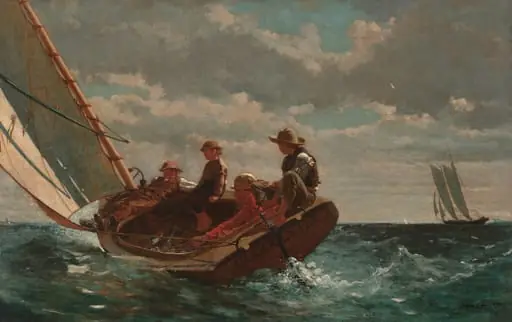
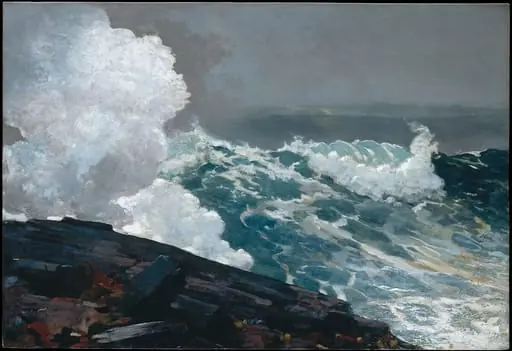
Winslow Homer (February 24, 1836 – September 29, 1910) was an American landscape painter and illustrator, best known for his marine subjects.