Artwork
During the Armistice
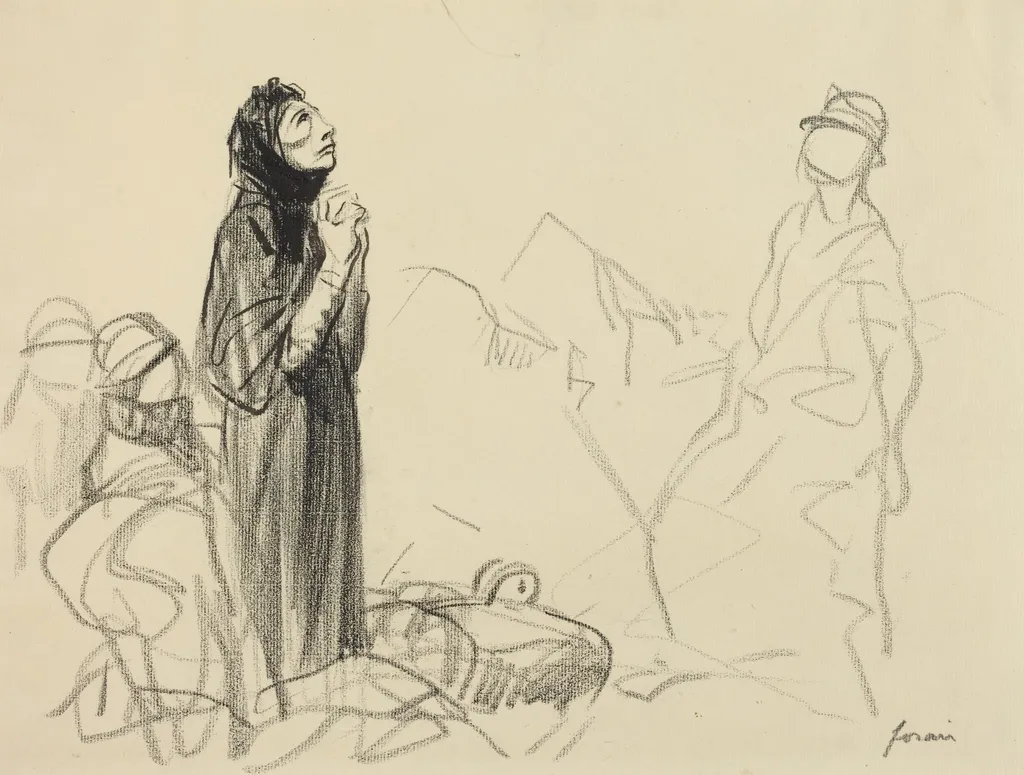
During the Armistice is an ink drawing by Jean-Louis Forain. It dates from 1916 and is held in the collection of the National Gallery of Art.
About this work
Overview
Though best known for his paintings and prints, Forain turned to drawing to convey immediate, unvarnished observations of civilian life.
Created around 1916 by French artist Jean-Louis Forain, this drawing employs black crayon and ink on laid paper to capture a quiet moment during the First World War armistice period. Though best known for his paintings and prints, Forain turned to drawing to convey immediate, unvarnished observations of civilian life. The work is part of a broader body of sketches that respond to the social tensions and emotional weight of wartime France.
Subject & Meaning
Two figures occupy the scene: one stands upright, head tilted upward, hands clasped, wrapped in a long coat and hat; the other sits slumped on the ground, face hidden, with a dog resting nearby. The contrast between standing still and seated despair suggests a moment of private reflection amid collective uncertainty. The drawing avoids narrative clarity, instead evoking the psychological stillness that followed the war’s pauses—contemplation, grief, or exhaustion.
Technique & Style
Forain uses rapid, fluid lines to suggest form without definition, favoring expressive gesture over detail. Cross-hatching and varying pressure create texture in clothing and shadow, while the absence of washes keeps the tone austere. The sketchiness of the work mirrors the urgency of its moment—lines feel unpolished, almost spontaneous, as if recorded in real time. This approach aligns with his broader practice of capturing fleeting human behavior with minimal means.
History & Provenance
The drawing emerged during a period when Forain increasingly focused on political and social subjects, moving beyond the lighter scenes of Parisian life that had once defined his reputation. Though commercially successful in his lifetime, his later works, including this one, received less public attention after his death. The piece remains in private or institutional collections, valued for its intimate documentation of wartime civilian experience.
Context
Produced during the height of the First World War, the drawing reflects a France under strain—civilian morale fragile, public spaces charged with unspoken grief. While many artists depicted battlefields or soldiers, Forain turned to quiet, off-stage moments: the pauses between conflict, the weight of waiting. His choice to focus on non-combatants aligns with a broader shift in wartime art toward psychological realism rather than heroism.
Legacy
Though overshadowed in later decades by more celebrated Impressionists, Forain’s drawings like this one offer a grounded, unsentimental record of everyday resilience during war. His ability to distill complex emotion through minimal line work influenced later generations of illustrators and social realists. The work endures not as a grand statement, but as a quiet testament to the unrecorded lives caught in history’s margins.
Artist & collection

Artist
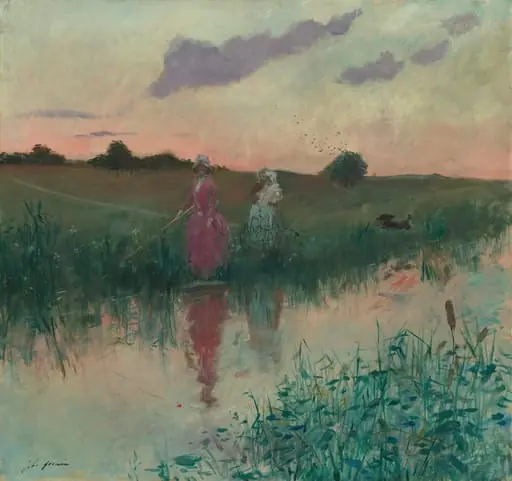
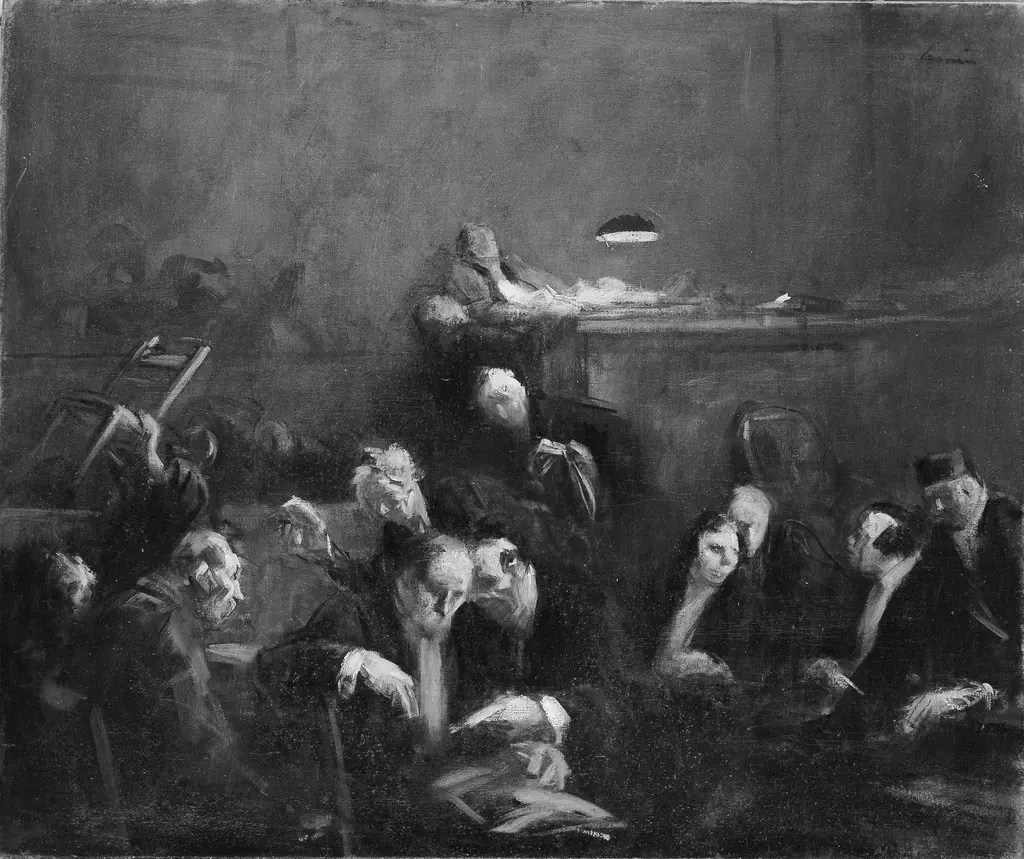
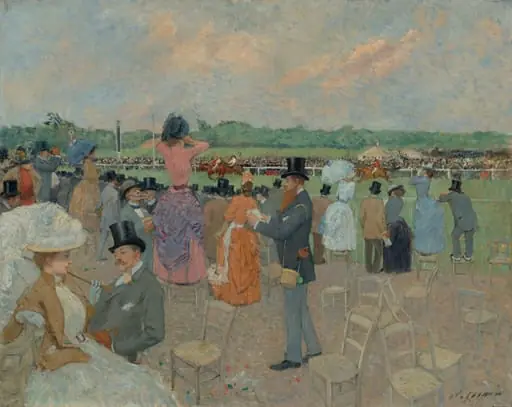
Jean-Louis Forain (French pronunciation: ; 23 October 1852 – 11 July 1931) was a French Impressionist painter and printmaker, working in media including oils, watercolour, pastel, etching and lithograph.

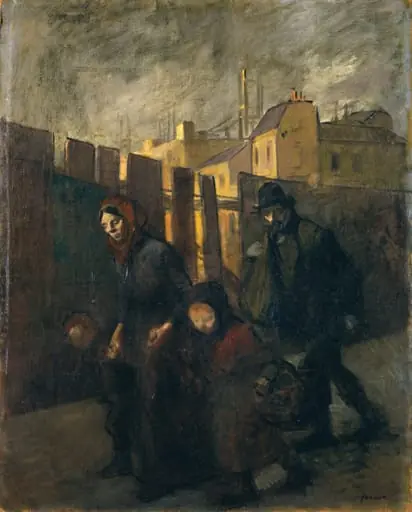
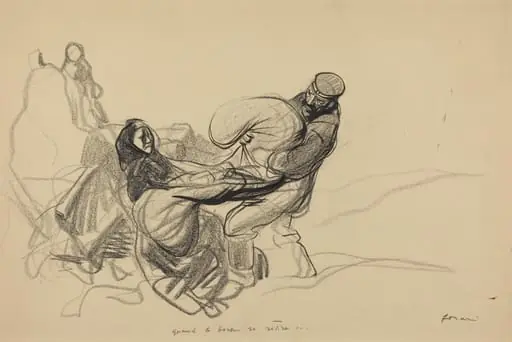 Quand le boche se retire...
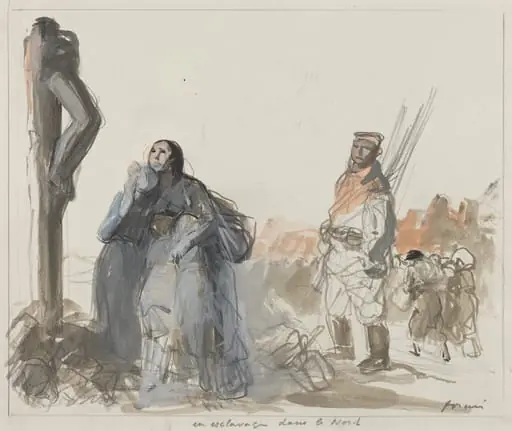 En esclavage dans le Nord
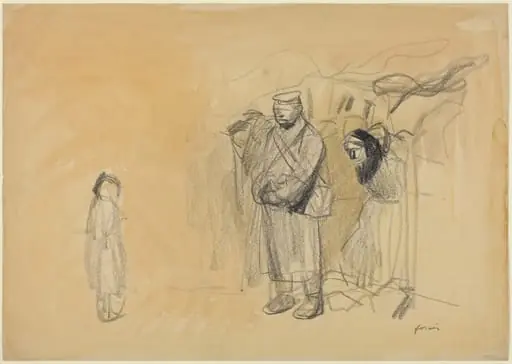 a) German Soldiers and French Child (recto); b) Woman and Child (verso)
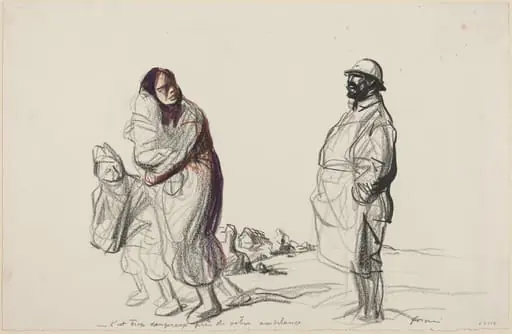 a) C'est trop dangereux pres de votre ambulance (recto); b) Study of Mother and Children (verso)
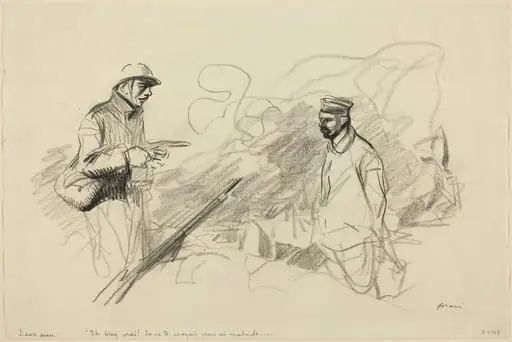 Poilu Acknowledging German Soldier
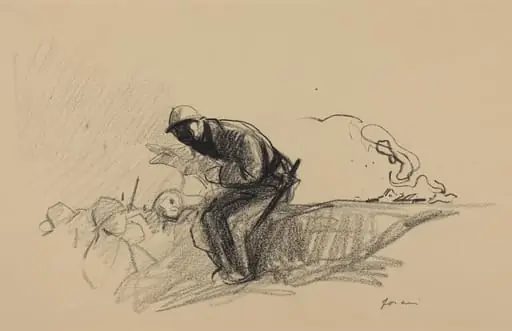 News in the Trenches
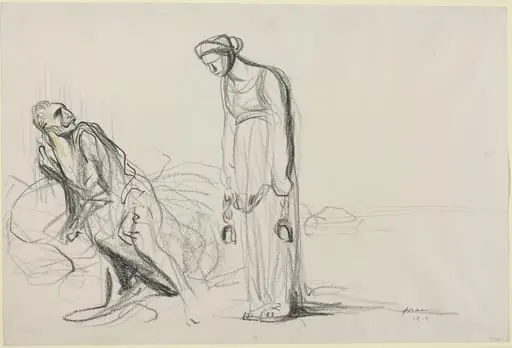 a) Fetters (recto); b) Sketch for Fetters (verso)
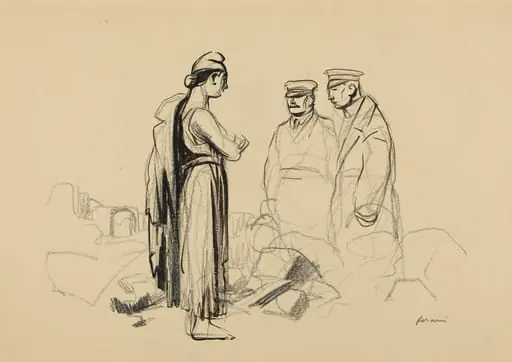 Toward Peace
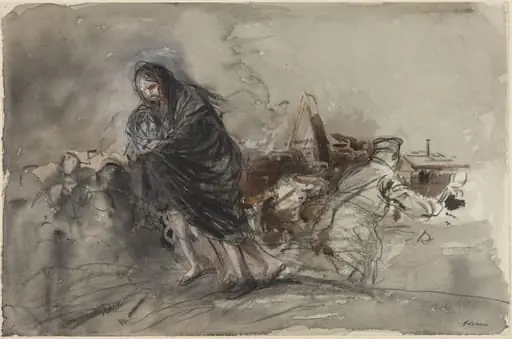 a) Après Douai (After Douai) (recto); b) Figure (verso)
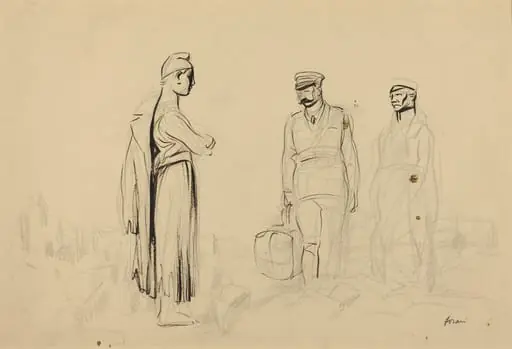 Toward Peace