Artwork
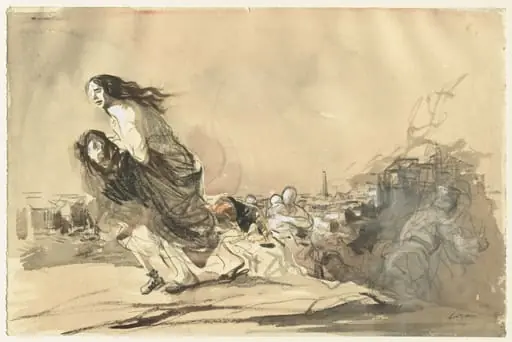
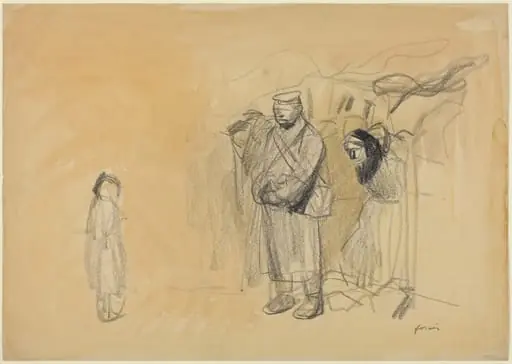
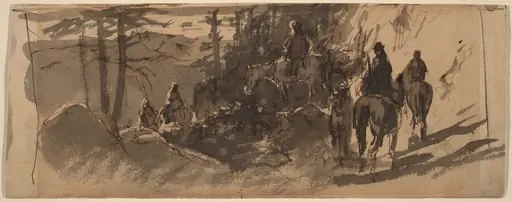
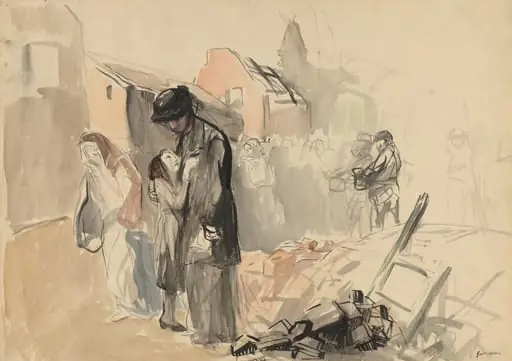
a) Après Douai (After Douai) (recto); b) Figure (verso)
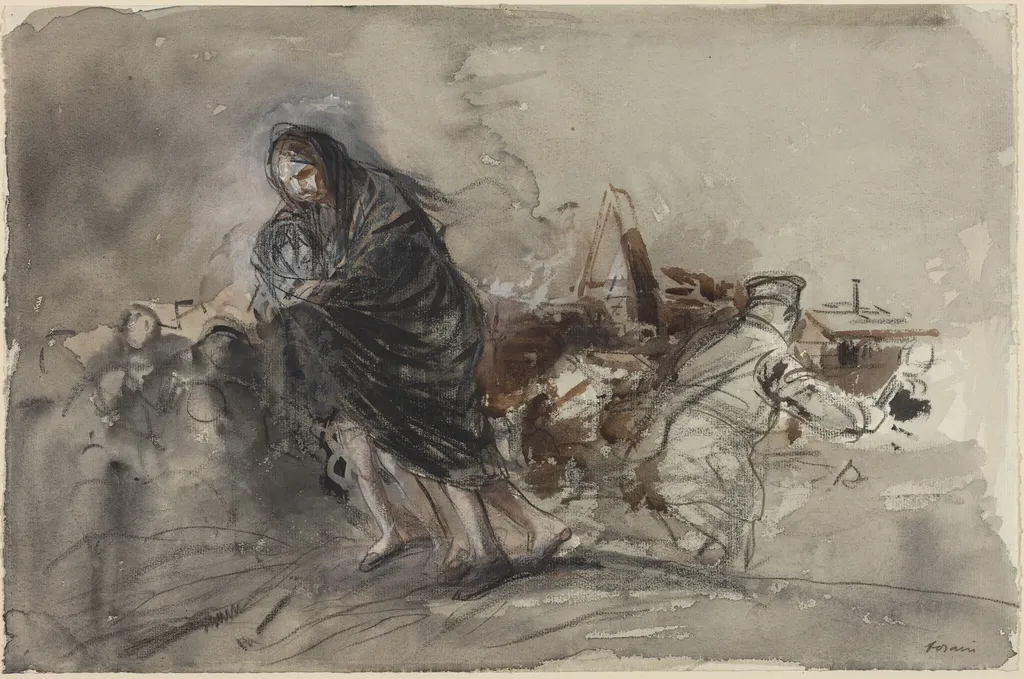
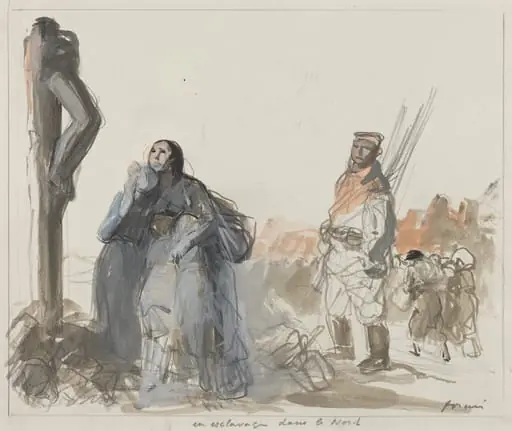
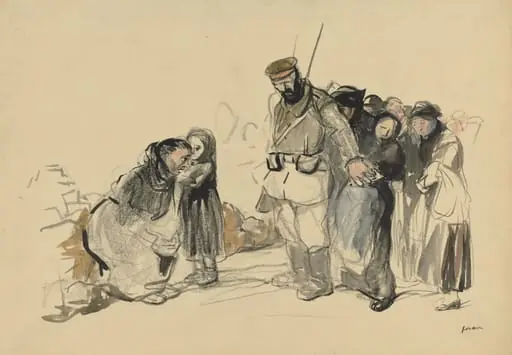
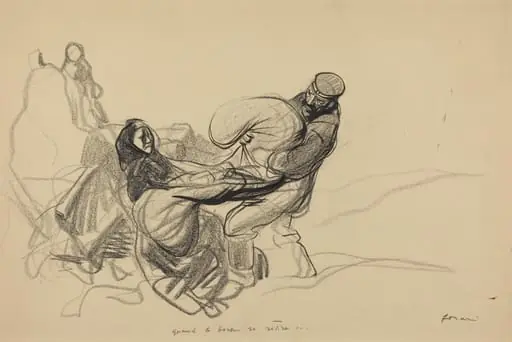
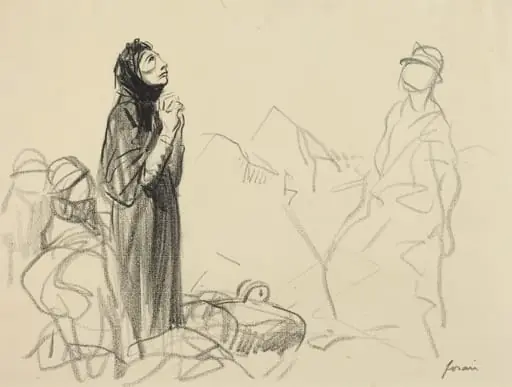
a) Après Douai (After Douai) (recto); b) Figure (verso) is an ink drawing by Jean-Louis Forain. It dates from 1918 and is held in the collection of the National Gallery of Art.
About this work
Overview
Après Douai (After Douai) and Figure are two sides of a single work on paper by Jean-Louis Forain, created circa 1918. The recto features Après Douai, executed in watercolor, brush and black ink, and black crayon, while the verso presents Figure, rendered solely in black crayon.
Subject & Meaning
The subjects of both drawings are not explicitly defined, suggesting they may serve as quick studies or exploratory sketches rather than finished, narrative-driven pieces. Figure on the verso appears to be a more subdued, possibly abstracted, counterpart to Après Douai.
Technique & Style
Both sides exhibit Forain's engagement with Impressionist techniques, characterized by loose, expressive brushwork on the recto and bold, form-defining linework. The verso's use of black crayon with minimal detail contrasts with the recto's layered media, highlighting Forain's versatility.
History & Provenance
Created around 1918, these works reflect Forain's prolific output across various mediums during a period of established success. Provenance details are not provided, but the pieces align with Forain's known practice of rapid sketching, often in casual settings like cafés.
Context
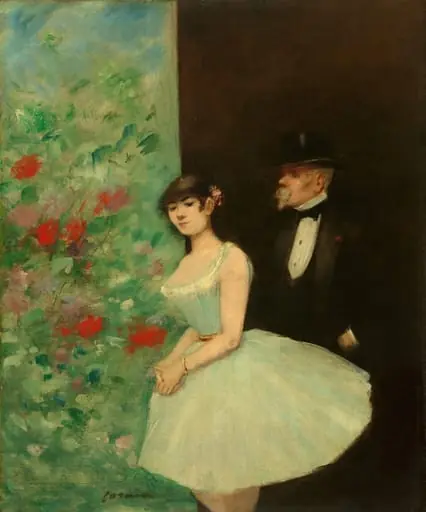
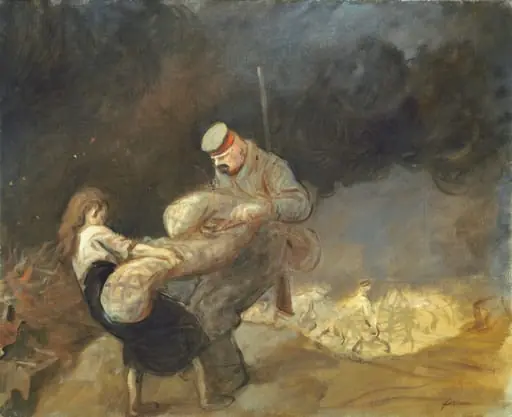
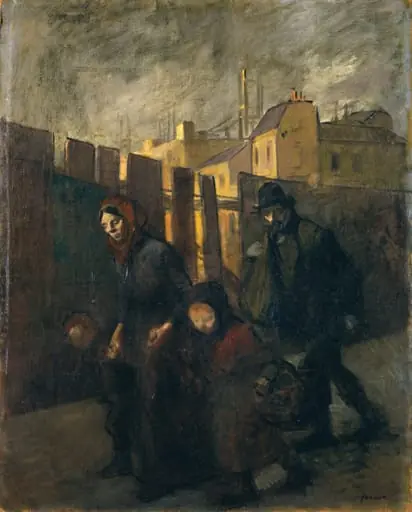
These sketches embody Forain's Impressionist approach to capturing fleeting impressions. The visible laid paper texture and thin ink application underscore the ephemeral, quick-note nature of the works, consistent with his habit of working rapidly in public venues.
Artist & collection

Artist
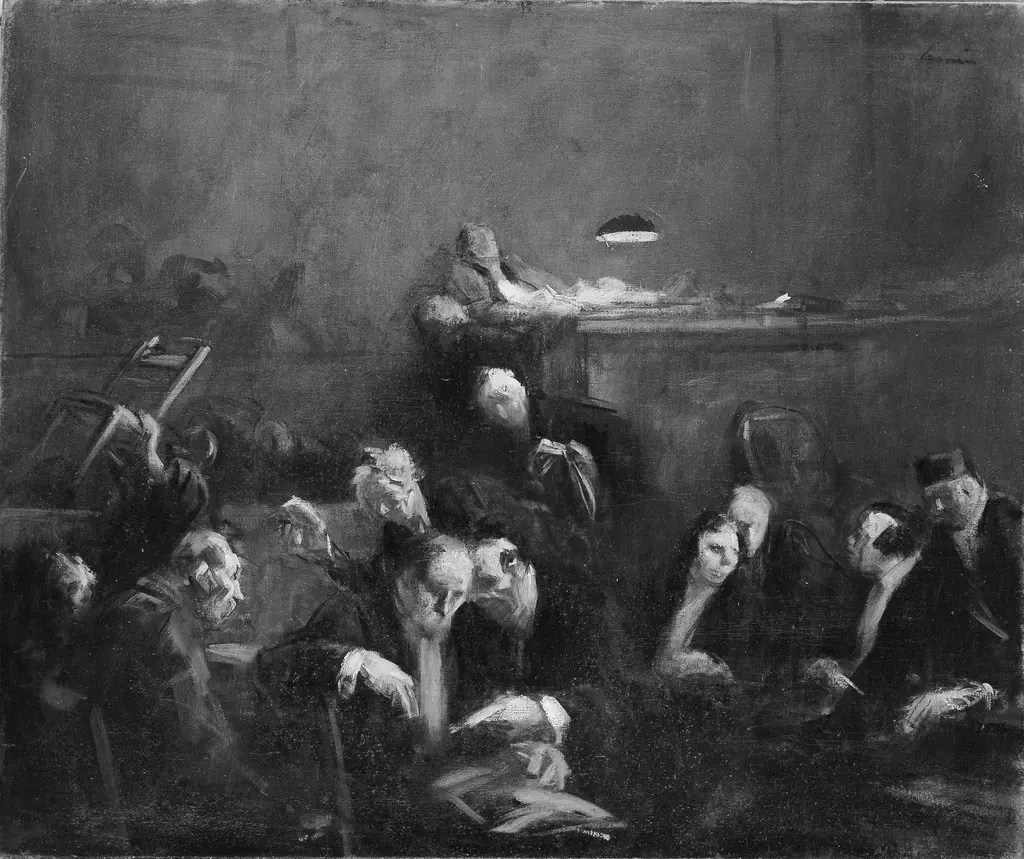
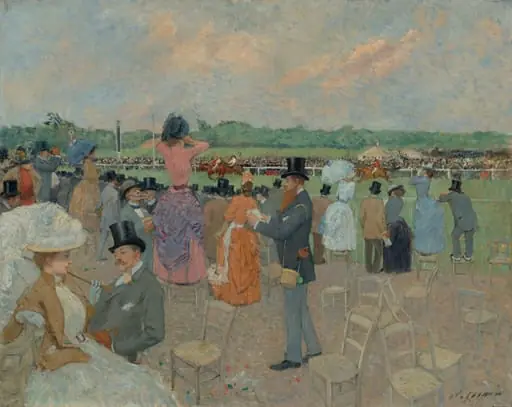
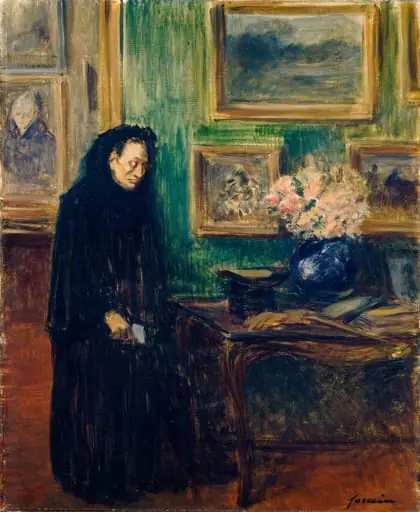
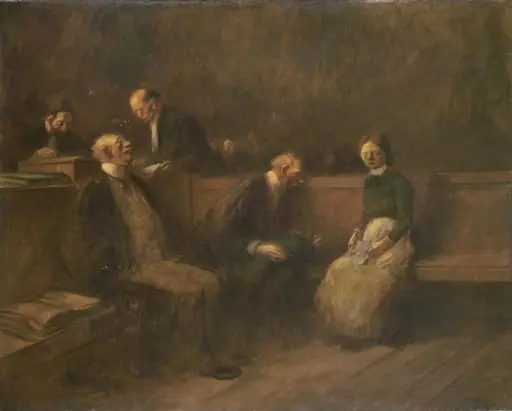
Jean-Louis Forain (French pronunciation: ; 23 October 1852 – 11 July 1931) was a French Impressionist painter and printmaker, working in media including oils, watercolour, pastel, etching and lithograph.